


The landscape of flexible-screen mobile technology appears poised for a significant realignment following the emergence of internal documentation suggesting Motorola is preparing to launch its inaugural book-style foldable device, tentatively dubbed the "Motorola Razr Fold." This information, purportedly originating from a confidential Lenovo presentation and disseminated by prominent industry observer Evan Blass, signals a pivotal strategic pivot for the brand, moving beyond its established dominance in the vertical-clamshell or "flip" foldable category. If confirmed, this introduction marks Motorola’s serious entry into the direct competitive arena against established titans like Samsung’s Galaxy Z Fold series and Google’s Pixel Fold.
For several generations, the Motorola Razr revival has been synonymous with nostalgia and the compact, pocket-friendly flip design. Devices like the recent Razr Ultra, positioned as a premium offering, have catered to consumers prioritizing portability and retro aesthetics. However, the leaked slide explicitly references the "Razr Fold" as the company’s "first in the fold form factor," a phrasing that strongly implies a horizontal, tablet-expanding design akin to current market leaders. This distinction is crucial: the flip form factor maximizes compactness when closed, while the book form factor prioritizes expanded screen real estate for productivity and media consumption.
The implications of Motorola entering the book-style foldable market are profound, extending far beyond a simple addition to their product roster. It suggests a maturing internal confidence within Lenovo’s mobile division regarding the critical technological hurdles that have historically plagued this segment: hinge durability, screen creasing visibility, and the optimization of software for dual-screen environments. Historically, Motorola has utilized the Razr brand to launch innovative form factors, often leaning into design heritage. Now, to compete in the high-stakes book-fold arena, the execution must meet, or ideally surpass, current benchmarks in engineering and user experience.
The leaked presentation slide further tantalizes potential customers with promises of "brilliant displays, intelligent AI, and an advanced, boundary-breaking camera system." While these descriptors are standard marketing hyperbole in the flagship space, their inclusion in documentation for a book-style device suggests Motorola is aiming for a comprehensive, no-compromise flagship experience. This contrasts slightly with the Razr flip line, which often balances cutting-edge features with design compromises to maintain its thin profile. A book-style device offers greater internal volume, potentially allowing for larger batteries, more robust cooling solutions, and superior camera optics—components often constrained in the thinner flip chassis.
The projected timeline, suggesting a preview later this year, positions the Razr Fold strategically against the expected refresh cycles of its primary competitors. If Motorola aligns its launch closer to the unveiling of the Samsung Galaxy Z Fold 8, for instance, it enters the conversation during a period of peak consumer and media interest in new foldable technology. This calculated timing could maximize initial media impact and consumer awareness, capitalizing on the anticipation built around established annual releases.
The Context of Foldable Market Maturation
To fully appreciate the significance of this potential launch, one must examine the evolution of the global foldable market. Since Samsung first commercialized the book-style foldable concept, the category has seen steady, albeit niche, growth. Early iterations were plagued by durability concerns and high price points that limited mass adoption. Over the last two years, however, improvements in UTG (Ultra-Thin Glass) technology, refined hinge mechanisms that reduce the visible crease, and better software integration have begun to normalize the technology. Competitors like Google, Oppo, Honor, and Xiaomi have refined their own takes, pushing the envelope on weight reduction and form factor aesthetics.
Motorola’s previous hesitation to enter the book-fold market might be attributed to several factors: resource allocation, patent licensing complexities regarding hinge technology, or perhaps a strategic decision to dominate the flip category first. The flip segment is less technically demanding in terms of internal component stacking and software multitasking complexity, making it a safer initial foray into foldables. However, the flip market is rapidly becoming commoditized, with numerous players offering compelling alternatives. By introducing the Razr Fold, Motorola acknowledges that long-term viability and higher average selling prices in the foldable space reside with the productivity-focused, book-style devices.
Industry Implications and Competitive Dynamics
The entry of a major, established player like Motorola into the book-fold sector is a net positive for the overall health and innovation of the flexible display market. Increased competition forces incumbents to innovate faster and potentially lower prices, benefiting consumers.
For Samsung, the market leader, the Razr Fold represents a direct challenge to its flagship status in the segment it essentially created. Samsung’s success has been built on the refinement of its hinge design and the maturity of its One UI software experience tailored for large, foldable screens. Motorola will need to demonstrate tangible advantages—perhaps in hinge smoothness, display quality (specifically in crease mitigation), or a unique software overlay—to sway users from the entrenched Galaxy ecosystem.
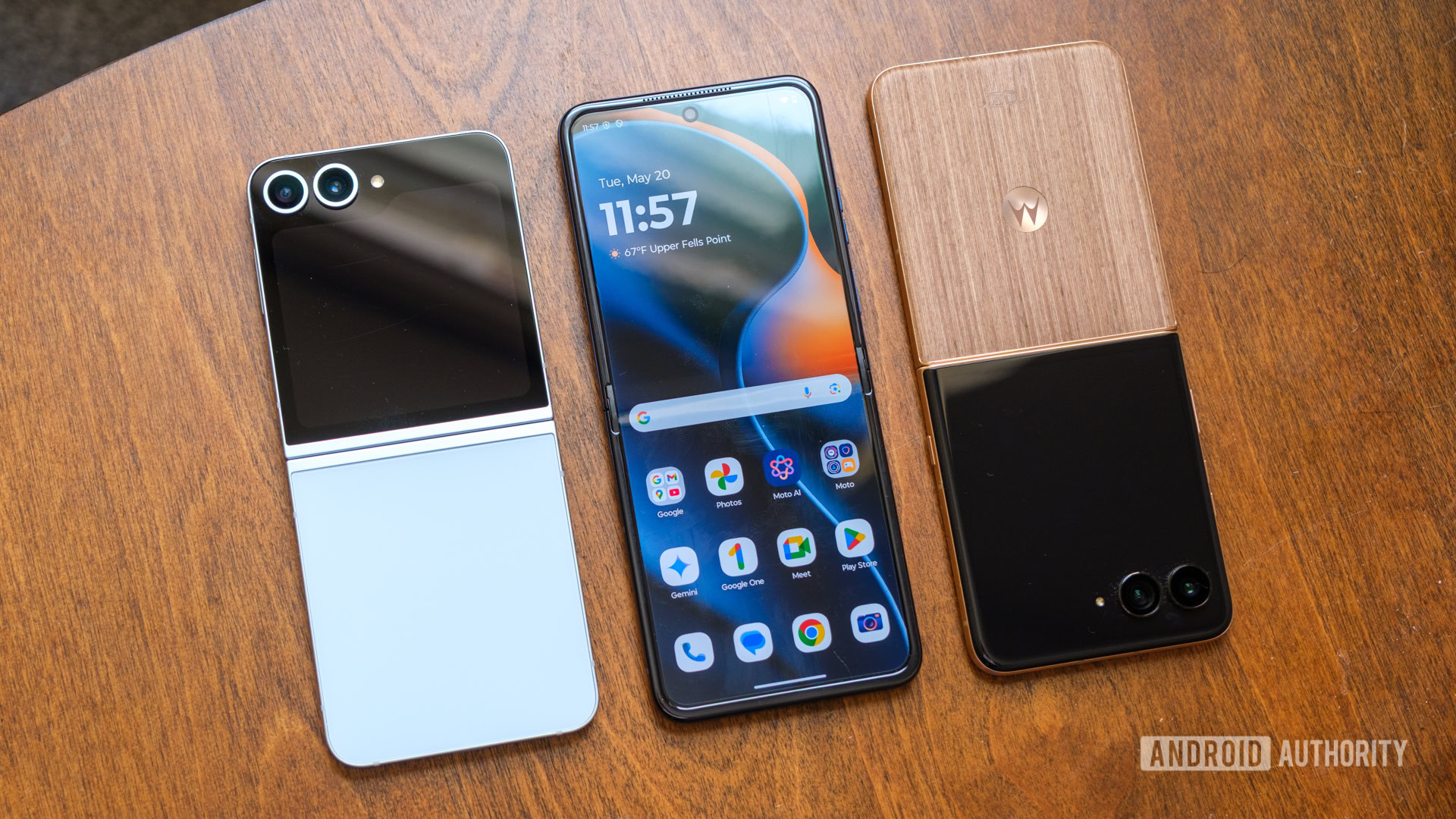
For Google, whose Pixel Fold established the "wider" book-style design philosophy, Motorola’s entry raises questions about design direction. Will the Razr Fold adopt the taller, narrower aspect ratio favored by some Asian manufacturers, or will it mirror the wider, tablet-like internal display of the Pixel Fold? The choice of aspect ratio profoundly affects the user experience, particularly for reading and standard app usage.
Furthermore, Motorola’s association with Lenovo provides access to a vast supply chain and expertise in large-screen manufacturing, which could translate into a cost advantage or superior material science application in the final product. The mention of "intelligent AI" is also timely. As AI integration becomes the primary differentiator in 2025 and beyond, the Razr Fold’s success may hinge less on the physical folding mechanism and more on proprietary, optimized AI features that utilize the expanded screen real estate effectively—perhaps for real-time translation, advanced multitasking modes, or enhanced camera processing.
Expert Analysis: Engineering Hurdles Ahead
The key technical battlegrounds for the Razr Fold will be the hinge and the internal display panel.
-
Hinge Engineering: The modern book-style foldable requires a hinge capable of supporting a large, thin display without leaving a significant gap when closed, while simultaneously minimizing the visible crease when open. Competitors are striving for near-flat folds. Motorola will need a hinge mechanism that is either mechanically superior (offering better longevity or a smoother deployment) or aesthetically cleaner than current offerings. Any significant gap when closed will be immediately scrutinized by reviewers as a sign of an inferior design compared to established leaders.
-
Display Quality and Durability: While the source mentions "brilliant displays," the market demands more than just high resolution. It requires high refresh rates, excellent color accuracy, and, critically, resistance to debris ingress. The industry is continually fighting against dust and fine particles that can penetrate the hinge mechanism and damage the flexible OLED screen. A "boundary-breaking" camera system also implies a significant step up from the Razr flip line, likely necessitating a substantial sensor package that must be integrated without adding excessive bulk to the folded profile.
-
Software Synergy: The leap from optimizing software for a small cover screen and a clamshell fold (Razr) to optimizing for a full tablet interior requires a different engineering mindset. Android’s native multitasking tools are improving, but manufacturers still rely heavily on proprietary layer additions (like Samsung DeX or specific split-screen presets) to make the large screen genuinely useful for power users. Motorola’s utilization of "intelligent AI" must translate into practical, daily productivity gains that justify the expected premium cost of a book-style foldable.
Future Impact and Trajectory
If the Motorola Razr Fold debuts successfully, it validates the ongoing diversification strategy within the foldable market. It indicates that consumers are ready to embrace multiple form factors, moving beyond the novelty phase into genuine utility segmentation.
The long-term impact hinges on Motorola’s ability to sustain this momentum. The company must establish a credible, iterative roadmap for the Razr Fold line, much like Samsung has done with the Z Fold series. A single entry risks being dismissed as a one-off experiment. A successful launch, however, could reposition Motorola as a serious contender in the premium Android space, attracting consumers who appreciate the brand’s legacy but require the functionality of a tablet-sized foldable.
Furthermore, the introduction of a premium book-style foldable could drive down the entry cost for future generations of flip phones, as R&D costs for hinge technology and advanced displays are amortized across a broader product portfolio. Conversely, if the Razr Fold struggles—perhaps due to delays, overpricing, or technical shortcomings—it could reinforce the perception that only one or two players truly master the complexity of the book-fold design, slowing broader market adoption.
Given the current technological climate, Motorola is entering this arena not just to sell phones, but to assert relevance in the most innovative segment of the smartphone industry. The success of the Razr Fold will be a crucial barometer for Lenovo’s commitment to long-term innovation in the face of fierce, well-resourced competition. While the internal presentation provides strong evidence of intent, the final execution, set to unfold later this year, will determine whether Motorola can truly redefine boundaries or merely join the existing competition. The industry awaits further details, particularly regarding the hinge design and the specific AI features promised to underpin this ambitious new device. The anticipation surrounding CES 2026, mentioned as a potential reveal window, underscores the high stakes of this anticipated technological unveiling.
