


The cybersecurity landscape is witnessing a structural shift in how malicious operators weaponize trusted developer platforms. Rather than confining attacks to traditional supply-chain vectors—such as embedding data-stealing payloads or malicious installation scripts directly into software packages—threat actors are increasingly turning to public package registries for high-trust utility hosting. Recent intelligence from multiple security entities reveals a concerning trend: cybercriminals are uploading seemingly harmless packages containing malicious HTML documents to the Node Package Manager (npm) registry. This methodology exploits automated content-mirroring services to establish resilient, free-of-charge hosting environments for deceptive redirection pages, bypassing conventional security controls through the implicit trust granted to major domain names.
This emerging campaign was initially brought to light when independent security researchers analyzed suspicious packages disguised under legitimate enterprise monikers, such as a package designated as ‘china_airlines.’ Subsequent deep-dive analyses conducted by specialized threat intelligence teams uncovered dozens of parallel entries across the broader npm ecosystem and its secondary mirroring networks. Crucially, these packages deviate sharply from conventional software supply-chain threats. When a developer downloads or integrates one of these components, their local environment remains entirely uncompromised. There are no executable payloads, no hidden infostealers, and no remote access Trojans deployed to the workstation. The package itself is an empty shell designed for a singular purpose: to secure validated storage on a globally trusted registry.

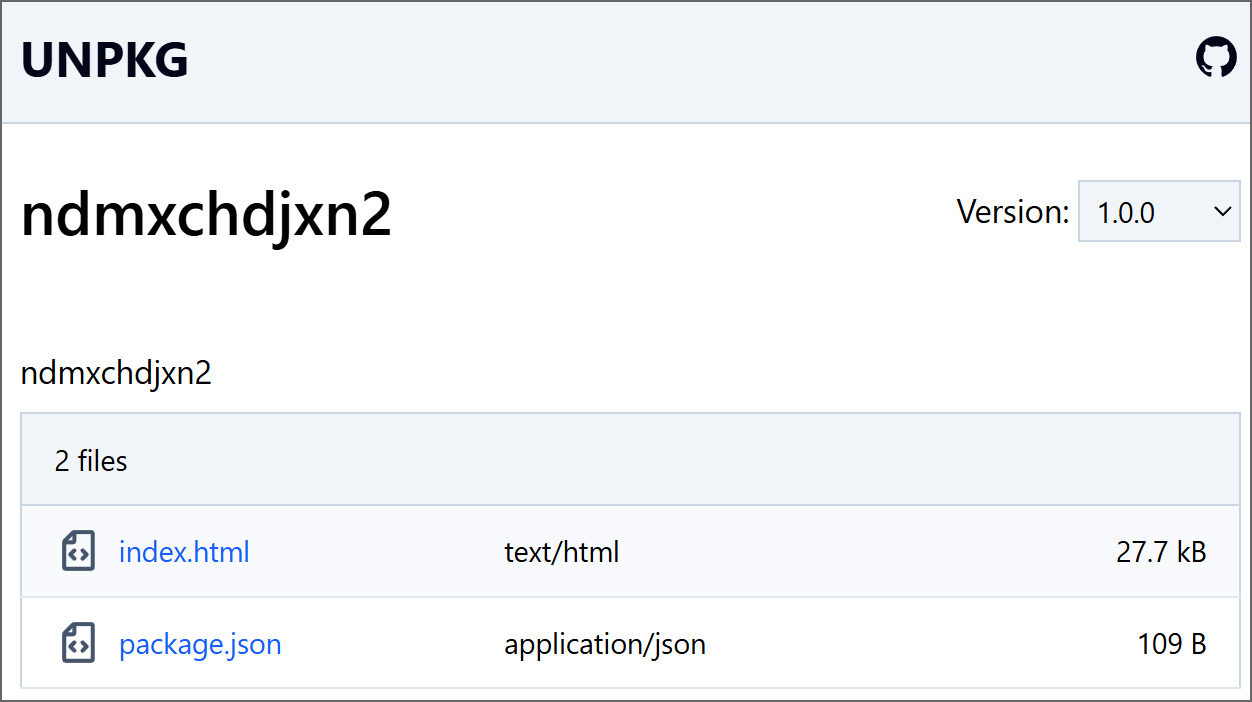
The core vulnerability enabling this technique lies in the architecture of modern open-source distribution networks. Official registries rely on a vast web of independent content delivery networks, caching layers, and public mirrors—prominent examples include platforms like UNPKG and npmmirror—to ensure low-latency access for developers worldwide. Many of these auxiliary platforms permit direct browser access to individual files contained within a package, rendering index structures and static assets instantly viewable via standardized URL structures. Threat actors exploit this behavior by publishing minimal packages containing only a standard metadata configuration file and a targeted HTML document. Once synchronized by the mirroring platforms, the malicious HTML file can be requested directly in a web browser using the legitimate domain of the mirror.
Operating behind the cryptographic and infrastructural reputation of these trusted domains offers a profound tactical advantage to malicious actors. Web filtering solutions, corporate firewalls, and endpoint protection agents are inherently engineered to evaluate connections against known threat intelligence feeds. When a web page is served directly from a high-reputation domain like UNPKG, traditional security heuristics often fail to flag the request as anomalous. The browser renders the content seamlessly, treating it as legitimate frontend code hosted by a trusted provider. This establishes a powerful cloak of institutional trust, effectively neutralizing perimeter defenses that would otherwise intercept direct traffic headed toward newly registered, low-reputation attacker infrastructure.
Security analysts examining the structure of these rogue packages have mapped out specific technical patterns utilized by the campaign. Typically, the payload consists of a lightweight HTML file paired with a basic package descriptor that explicitly defines the HTML document as the primary entry point. When accessed through a browser-accessible mirror link, the page initiates a carefully crafted impersonation sequence. The most prominent variant observed in the wild mimics security verification screens, specifically leveraging authentic Cloudflare Turnstile CAPTCHA components to build immediate psychological credibility with the visitor. The presence of a recognized, functional security challenge drastically lowers the user’s guard, convincing them that the verification process is standard administrative friction.

Regardless of whether the user successfully completes the CAPTCHA interaction, the underlying script immediately executes deeply obfuscated JavaScript routines designed to pivot the browser session toward secondary destinations. Intelligence gathered by specialized research teams highlights the fluid nature of these redirection chains. Earlier iterations of the campaign directed traffic through a succession of domains, occasionally terminating at legitimate authentication portals such as enterprise mail login pages, which suggests an intent to harvest credentials through sophisticated browser-based social engineering. More recent variations have modernized this orchestration by integrating with third-party, legitimate key-value storage APIs. By pulling encrypted redirection parameters dynamically from these external utility platforms, the malicious operators retain the ability to alter final destination URLs on the fly without needing to modify, update, or republish the original npm packages.
This dynamic decoupling of storage and direction introduces severe compliance and incident response challenges for maintainers of open-source repositories. Even when automated abuse-detection mechanisms or manual community reports succeed in identifying and removing malicious packages from the central npm registry, the asynchronous nature of third-party mirroring networks means that the content often persists on auxiliary platforms indefinitely. Because these mirrors operate independently with their own caching lifecycles and retention policies, dead or purged packages can continue to serve phishing pages long after the primary registry has scrubbed the threat. This persistence transforms the global developer infrastructure into a self-sustaining archive for malicious web assets.
The broader implications of this trend point toward an evolving philosophy in cyberattack design. Threat actors are increasingly recognizing that the greatest value of an enterprise-grade platform is not always its user base or its computing resources, but its reputation. By abusing trusted public services—ranging from code repositories and document-sharing platforms to cloud storage buckets and developer mirrors—attackers effectively weaponize the implicit trust that defensive tooling places in those environments. Security software is fundamentally built to scrutinize unknown entities; when malicious payloads are nested within universally trusted infrastructure, the burden of detection shifts dramatically away from automated perimeters and toward behavioral analytics and deep-content inspection.
Mitigating this category of threat requires a fundamental reevaluation of how security architectures handle developer tooling and public package consumption. Organizations must move beyond the traditional binary mindset of treating software supply-chain security solely as an issue of endpoint malware prevention. Software Composition Analysis (SCA) tools and internal package vetting pipelines must expand their scope to look beyond known vulnerabilities and malicious install scripts, incorporating heuristic evaluations of package contents for unexpected file types, such as standalone HTML documents or non-standard frontend assets within backend or utility modules. Furthermore, security operations teams are advised to monitor and treat direct, browser-based HTML retrieval requests pointing toward package registry mirror domains as inherently suspicious indicators of compromise.
As open-source ecosystems continue to scale in complexity and volume, the intersection of software distribution and web hosting will remain a prime target for creative exploitation. The transition from active host-based infection to passive infrastructure abuse underscores a broader industry reality: threat actors will continue to exploit the path of least resistance wherever systemic trust is embedded into the developer workflow. Addressing this challenge demands a collaborative, ecosystem-wide defense strategy involving registry maintainers, mirror operators, and enterprise security leaders working in unison to seal the structural gaps that allow public code repositories to be repurposed as front-end phishing staging grounds.
