

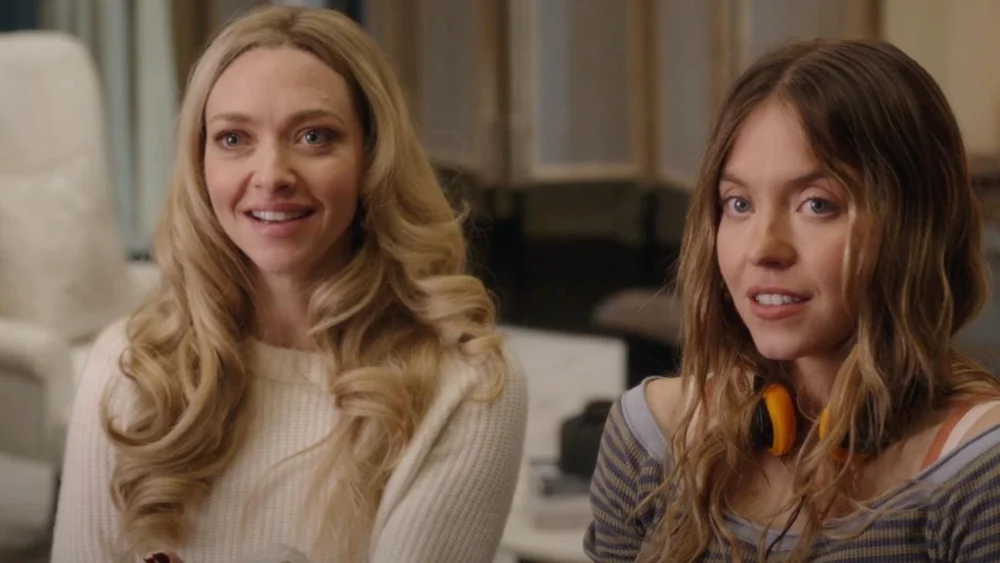
The contemporary cinematic landscape is frequently defined by a polarizing divide between low-budget indie darlings and billion-dollar tentpole franchises. However, the recent commercial performance of Lionsgate’s The Housemaid has provided a compelling case study for the resurgence of the mid-budget psychological thriller. Despite the daunting challenge of opening in the shadow of James Cameron’s Avatar: Fire and Ash—a film that has comfortably crossed the billion-dollar threshold—The Housemaid has carved out a significant niche, proving that counter-programming remains a potent strategy in a crowded theatrical marketplace. With the film’s financial trajectory showing remarkable stability, discussions have already shifted toward the inevitable expansion of the property, a sentiment echoed by the film’s own cast.
The financial metrics surrounding The Housemaid paint a picture of a "sleeper hit" that refused to be overshadowed. Produced on a relatively modest budget of approximately $35 million, the film has demonstrated incredible "legs"—a term used by industry analysts to describe a film’s ability to maintain a steady audience over several weeks rather than crashing after a big opening weekend. In its most recent frame, the film saw a negligible drop in earnings of roughly 6%, a statistic that suggests strong word-of-mouth and a high degree of audience satisfaction. To date, the film has amassed $75 million in the domestic market and $133 million globally. Crucially, these figures are expected to climb significantly as the film prepares for its rollout in several major international territories that have yet to experience the domestic noir thriller.
For Lionsgate, this success represents more than just a healthy return on investment; it validates a specific brand of star-driven, genre-focused storytelling. The film’s primary draw is undoubtedly Sydney Sweeney, who portrays the protagonist, Millie. Sweeney’s career has been a subject of intense scrutiny within the industry, as she navigated a series of projects with varying degrees of commercial success. While her 2023 romantic comedy Anyone but You became a surprise juggernaut with a $220 million global haul, subsequent projects struggled to find the same footing. The Housemaid effectively snaps that losing streak, re-establishing Sweeney as a bankable lead capable of anchoring a franchise. Her performance in the film is not merely a vehicle for her celebrity status but a calculated move to diversify her portfolio beyond the red-carpet appearances and social media discourse that often dominate her public persona.
Opposite Sweeney is Brandon Sklenar, an actor whose profile is currently on a precipitous rise. While perhaps not yet a household name to general audiences, Sklenar has become a focal point of "fancasting" and industry rumors. His work in the western series 1923 caught the eye of both critics and influential figures like James Gunn. Social media platforms have been abuzz with speculation regarding Sklenar’s potential involvement in the new DC Universe (DCU), with many pointing to him as a top contender for the role of Batman. His presence in The Housemaid adds a layer of contemporary relevance to the cast, drawing in viewers who are following his career trajectory toward potential superhero stardom.
However, many critics agree that the emotional and dramatic anchor of the film is Amanda Seyfried. Seyfried, an Emmy winner for her transformative portrayal of Elizabeth Holmes and a veteran of box-office hits like the Mamma Mia! franchise, brings a level of prestige to the production. It was Seyfried who recently fueled the fire of sequel speculation during an interview with Variety. When questioned about the possibility of a follow-up, Seyfried was remarkably candid, stating that while official word had not yet been handed down from the studio, she "guarantees" a second installment will happen. She further speculated that while the story would likely move forward with Sweeney’s character, she herself would likely return in a cameo capacity.
The confidence expressed by Seyfried is backed by more than just box office receipts; it is supported by the existence of a ready-made literary franchise. The Housemaid is based on the bestselling novel by Frieda McFadden, a writer who has become a titan in the "BookTok" and Kindle Direct Publishing spheres. McFadden has already authored two sequels: The Housemaid’s Secret and The Housemaid is Watching. This provides Lionsgate with a clear roadmap for a cinematic trilogy, eliminating the need for extensive script development from scratch and ensuring a built-in audience of millions of readers who are already invested in the narrative arc of Millie and Nina.

The narrative structure of the first film strategically positions itself for this expansion. In a move that mirrors the source material, the film concludes with a moment of dark solidarity between Sweeney’s Millie and Seyfried’s Nina. After the duo collaborates to handle Nina’s abusive and psychopathic husband, Nina recommends Millie to a new household where another woman is being mistreated. This "vigilante housemaid" premise provides a modular format for sequels, allowing the franchise to explore different settings and domestic horrors while maintaining the core chemistry between its leads.
From an industry perspective, the success of The Housemaid signals a shift in how studios view the "domestic noir" genre. For years, these types of mid-budget thrillers were often relegated to streaming services, with platforms like Netflix and Hulu finding great success with "original" movies that felt like 1990s throwbacks. However, the theatrical performance of The Housemaid suggests that audiences are willing to leave their homes for a well-executed thriller, provided it offers high production values and a compelling cast. This trend is a boon for the theatrical ecosystem, which has struggled to fill the gaps between massive superhero releases.
Furthermore, the film’s performance against Avatar: Fire and Ash offers a masterclass in demographic targeting. While the Avatar franchise appeals to a broad, four-quadrant audience with its emphasis on spectacle and technical innovation, The Housemaid leans into a specific demographic: adult women and fans of psychological drama. By offering a grounded, character-driven alternative to the CGI-heavy blockbusters, Lionsgate successfully captured a segment of the market that might have otherwise stayed home. This "counter-programming" strategy is essential for the long-term health of movie theaters, ensuring that there is variety on the marquee regardless of what the season’s biggest tentpole happens to be.
The future impact of The Housemaid as a franchise could be transformative for Sydney Sweeney’s career. While she has been a fixture of the cultural zeitgeist due to Euphoria and her various fashion partnerships, establishing a recurring film character would provide her with the kind of professional stability enjoyed by previous generations of movie stars. In an era where "the movie star is dead" is a common refrain, Sweeney is making a strong case for the continued relevance of the lead actor as a brand. If Lionsgate proceeds with the full trilogy, Sweeney will have a consistent theatrical presence that can balance out her more experimental or indie projects.
As the industry looks toward the official announcement of The Housemaid 2 (likely to be titled The Housemaid’s Secret), the focus will turn to the directorial and creative choices that will define the sequel. Maintaining the tension and atmospheric dread of the first film while expanding the scope of Millie’s "work" will be a delicate balancing act. However, with the financial foundation already laid and the star power firmly in place, the path forward appears clear.
The broader implications for the film industry are also significant. The "McFadden-verse," as some fans have dubbed it, represents a new model of literary adaptation where the speed of the author’s output matches the studio’s desire for rapid-fire content. Unlike the long wait times associated with adapting massive fantasy epics or historical biographies, these tight, focused thrillers can be produced relatively quickly and efficiently. This allows the studio to strike while the iron is hot, keeping the brand fresh in the minds of the audience.
In conclusion, The Housemaid has proven to be a vital success story in a transitional year for Hollywood. It has demonstrated that there is still a massive appetite for mid-budget, R-rated thrillers that prioritize plot twists and psychological depth over digital explosions. With a global audience still growing and a sequel all but confirmed by its primary stars, the film stands as a testament to the power of smart casting, strategic release timing, and the enduring appeal of a well-told mystery. As the "guarantee" of a sequel moves toward a formal greenlight, the industry will undoubtedly be watching to see if Millie’s next assignment can replicate the lightning-in-a-bottle success of her debut.
