

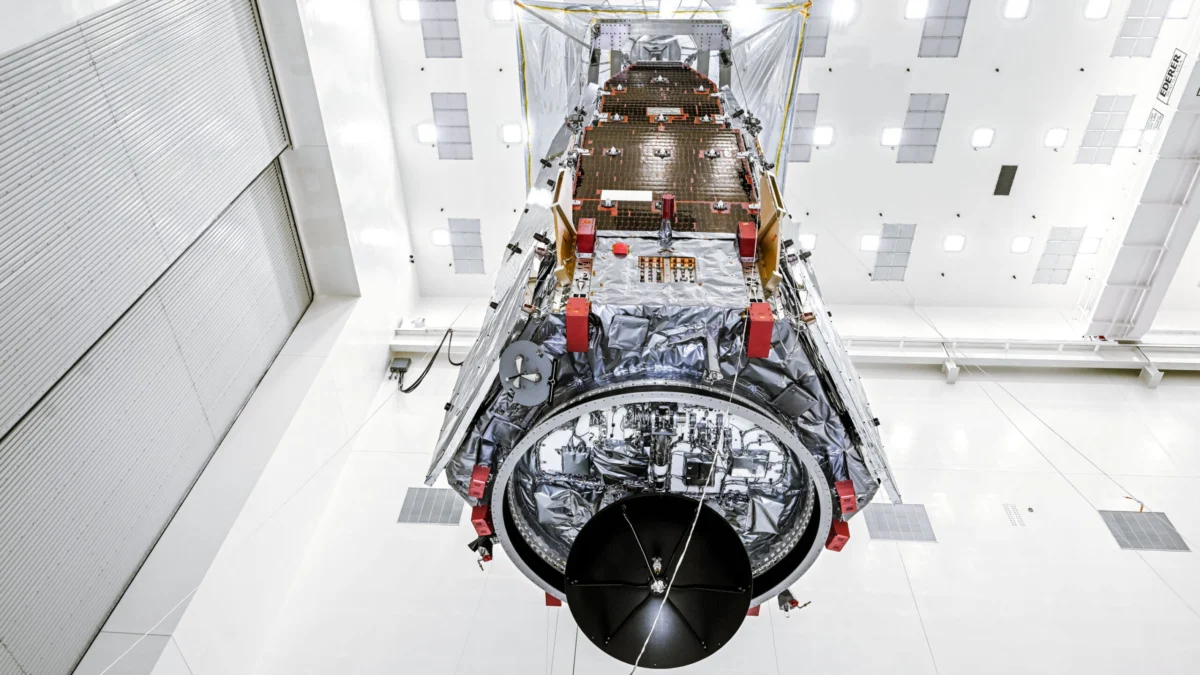
When NASA prepares to launch the Nancy Grace Roman Space Telescope from the Kennedy Space Center in Florida, the astronomical community will celebrate the arrival of one of the most powerful deep-space observatories ever built. Designed primarily to untangle two of the most profound mysteries in fundamental physics—dark matter, the invisible scaffolding holding galaxies together, and dark energy, the mysterious force driving the accelerated expansion of the universe—Roman represents a generational leap in cosmic mapping. Yet beyond its ambitious cosmological mandates, a interdisciplinary effort among planetary scientists, optical engineers, and orbital dynamicists has revealed that the observatory possesses a secondary capability of vital importance: acting as an advanced sentinel for planetary defense.
By leveraging Roman’s unique optical architecture and wide-field infrared coverage, researchers have outlined a operational protocol that allows the telescope to scan for, identify, and characterize potentially hazardous near-Earth objects (NEOs). Though not originally designed as a planetary defense platform, Roman’s technical specifications render it extraordinarily capable of spotting elusive space rocks, computing high-precision orbital trajectories, and evaluating physical compositions—all while simultaneously conducting its primary deep-sky astronomical surveys.
The Power of Wide-Field Infrared Optics
Named in honor of NASA’s first chief astronomer, Nancy Grace Roman—widely remembered as the "Mother of Hubble"—the observatory is built around a primary mirror 2.4 meters in diameter, matching the light-gathering capability of the Hubble Space Telescope. However, the fundamental difference lies in Roman’s focal plane architecture. Equipped with a 300-megapixel infrared focal plane array composed of advanced mercury-cadmium-telluride detectors, Roman captures a field of view roughly 100 times larger than that of Hubble.
This expansive viewing swath allows the telescope to execute massive astronomical surveys with unprecedented efficiency. Over its primary mission lifespan, Roman is slated to discover thousands of exoplanets via gravitational microlensing, catalog tens of thousands of distant supernovae, and map the positions of more than one billion galaxies with extreme clarity.
Yet, the very feature that allows Roman to survey billions of light-years into the cosmos makes it uniquely suited for capturing objects within our own solar neighborhood. When scanning vast patches of sky, fast-moving near-Earth asteroids cross the telescope’s field of view. In standard deep-field astrophysics pipelines, transient streaks caused by moving foreground objects or cosmic ray strikes are flagged as anomalies and automatically filtered out to produce pristine images of stationary galaxies.
Planetary defense scientists recognized that these discarded image artifacts contained high-value orbital data. By modifying the data processing algorithms running on ground networks, astronomers can capture these discarded optical trails. Rather than ignoring the streaks, specialized software can isolate them, track their movement across successive optical frames, and immediately calculate preliminary orbital elements for previously unknown space rocks.
Sizing Up the Cosmic Threat Matrix
The necessity for space-based planetary defense capabilities stems from a stark statistical reality: humanity’s inventory of near-Earth space rocks remains dangerously incomplete. While international tracking networks have successfully cataloged over 90 percent of global extinction-scale asteroids—those measuring one kilometer (0.62 miles) or larger—the overwhelming majority of smaller, highly destructive objects remain unmapped.
NASA’s Planetary Defense Coordination Office and global scientific agencies prioritize objects measuring 140 meters (460 feet) or larger. An impact by a body of this scale would unleash kinetic energy equivalent to hundreds of megatons of TNT, capable of obliterating a major metropolitan region and causing widespread regional devastation. Current models estimate that approximately 25,000 such "city-killer" asteroids inhabit near-Earth space, yet less than half have been detected and cataloged to date.
Even smaller asteroids present severe local hazards. Objects around 50 meters (165 feet) in length number an estimated 230,000 in near-Earth orbits, with less than 10 percent discovered. A historical precedent occurred in 2013 over Chelyabinsk, Russia, when a relatively small space rock—roughly 20 meters (60 feet) across—entered the atmosphere undetected at hypersonic speeds. The resulting high-altitude airburst unleashed energy equivalent to roughly 500 kilotons of TNT, generating a blast wave that damaged thousands of buildings and injured over 1,500 people.
Researchers evaluating Roman’s operational capabilities have demonstrated that the telescope’s extreme infrared sensitivity can reliably identify objects down to the 20-meter Chelyabinsk threshold within its field of view. By identifying these smaller threats well before they approach Earth’s atmospheric entry corridor, space agencies gain critical lead time to plan response measures.
The Limitations of Ground-Based Tracking and the Space-Based Advantage
Historically, planetary defense has relied heavily on an array of ground-based optical survey telescopes. While ground observatories have performed admirably, they face insurmountable physical constraints. Earth’s turbulent atmosphere distorts incoming light, attenuates infrared wavelengths, and prevents high-resolution observation during local daylight or overcast weather conditions. Furthermore, ground-based instruments face severe geometric blind spots, unable to easily spot asteroids approaching from the direction of the Sun.
Space-based infrared observatories bypass atmospheric interference entirely. Asteroids absorb solar radiation and re-emit that energy as heat, making them glow brightly in infrared wavelengths against the cold background of space. In contrast to visible light surveys—where a small, highly reflective asteroid can look identical to a large, dark-surfaced object—infrared observations allow scientists to measure an asteroid’s thermal emission directly. This thermal signature provides an accurate calculation of the object’s physical size and albedo (surface reflectivity).
Recognizing these optical dynamics, NASA is preparing to launch the Near-Earth Object (NEO) Surveyor, a dedicated space telescope designed specifically to hunt for hazardous space rocks from a vantage point near the Sun-Earth L1 Lagrange point. NEO Surveyor is projected to discover up to 90 percent of the remaining unmapped 140-meter asteroids within several years of operation. However, effective planetary defense requires more than initial discovery; it demands rapid trajectory refinement, precise orbital calculations, and physical composition analysis—tasks where Roman excels as a force multiplier.
The Multi-Observatory Planetary Defense Architecture
Rather than operating in isolation, the modern planetary defense enterprise functions as an integrated network of observational assets across space and ground. Roman will occupy a distinct place in this ecosystem, working synergistically with NEO Surveyor, the James Webb Space Telescope (JWST), and advanced ground facilities such as the Vera C. Rubin Observatory in Chile.
The Vera Rubin Observatory, conducting its decade-long Legacy Survey of Space and Time (LSST), is expected to discover tens of thousands of near-Earth asteroids using visible light optics. When ground systems or NEO Surveyor detect a candidate object with a non-zero probability of Earth impact, initial orbital trajectories often contain significant statistical uncertainty. Refining these paths usually requires weeks of follow-up observations.
This is where Roman’s structural design provides an decisive advantage. Operating from the Sun-Earth L2 Lagrange point—located 1.5 million kilometers (930,000 miles) opposite the Sun—Roman offers a baseline viewing angle distinct from ground stations and L1-stationed observatories. By directing Roman’s wide-angle camera toward sky regions containing newly flagged candidate asteroids, astronomers can apply trigonometric parallax across distinct space baselines. In a matter of days, Roman can reduce orbital position uncertainties by orders of magnitude, swiftly determining whether a space rock poses a genuine impact risk or will pass safely by.
Furthermore, while JWST possesses unmatched infrared sensitivity, its narrow field of view makes scanning broad areas of space impractical. Pointing JWST at unconfirmed targets requires significant allocation of highly contested observing time. Roman serves as a high-speed orbital filter: its wide field of view allows it to survey multiple questionable asteroids simultaneously, confirming which targets require deep, single-object follow-up by JWST or ground-based radar networks.
Assessing Physical Composition for Deflection Missions
Beyond tracking trajectories, Roman’s spectroscopic and multi-band infrared capabilities provide critical data regarding an asteroid’s structural makeup. Infrared signatures allow scientists to classify an asteroid’s mineralogical composition—distinguishing between dense metallic bodies, stony silicate rocks, and porous, carbon-rich aggregates.
Determining an object’s physical mass, density, and structural integrity is vital when designing an active deflection strategy. Following NASA’s Double Asteroid Redirection Test (DART) mission—which successfully altered the orbit of the asteroid moon Dimorphos via kinetic impact—planetary defense specialists established that kinetic momentum transfer depends heavily on an asteroid’s internal structure and mass distribution.
If an incoming asteroid is a loose "rubble pile" of weakly bound rocks, a kinetic impactor spacecraft might yield vastly different momentum transfer dynamics compared to an impact on a solid metallic or stony body. In extreme scenarios where kinetic redirection is insufficient and nuclear deflection options must be evaluated, precise knowledge of the target’s density, thermal inertia, and mass is mandatory to prevent catastrophic fragmentation into multiple hazardous pieces. Roman’s observational data will provide these critical parameters well in advance of any mission launch.
Strategic Policy Implications and Dual-Use Science
The realization that Roman can serve a vital role in planetary defense carries significant science policy and budgetary implications. Complex, flagship space observatories require billions of dollars in public capital and face long, multi-year engineering cycles. Historically, astronomical projects focused exclusively on fundamental research have faced political scrutiny and budget cuts during changing legislative priorities.
By demonstrating that deep-space astrophysics assets can yield tangible benefits for planetary protection, scientific leadership bridges the gap between fundamental research and practical security applications. Demonstrating dual-use scientific capabilities reinforces the mission’s public value proposition, proving to taxpayers and policymakers that tools built to explore the distant universe can simultaneously protect life on Earth.
The Future of Automated Deep-Space Surveillance
As Roman prepares to begin its operational mission, the future of astronomical surveillance is shifting toward fully automated, machine-learning-driven data pipelines. Modern observational astronomy produces vast petabytes of high-resolution imagery that exceed manual human analysis capabilities.
Future software upgrades integrated into Roman’s ground processing framework will employ advanced computer vision models trained to parse wide-field infrared exposures in near real-time. These neural networks will automatically screen for faint optical streaks, filter out transient noise, cross-reference candidate movements against existing orbit databases, and automatically issue alert triggers to planetary defense networks worldwide.
When the Nancy Grace Roman Space Telescope opens its cover at the Sun-Earth L2 point, its primary focus will remain trained on the deepest reaches of cosmic history, decoding the subtle forces shaping our expanding universe. Yet, as its 300-megapixel sensors sweep across the deep sky, this remarkable instrument will quietly maintain watch over our celestial neighborhood—ensuring that while we peer into the origins of the cosmos, we remain protected from the rocks traveling within our own cosmic backyard.
