

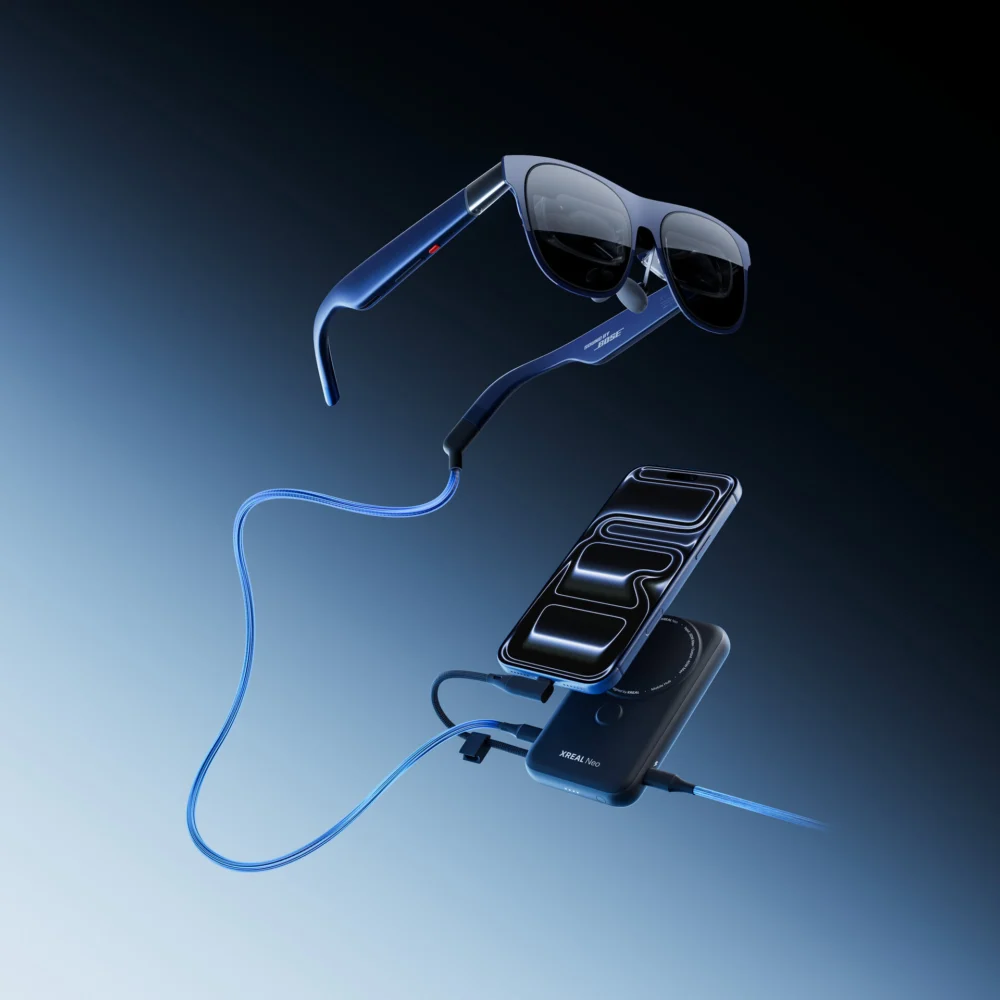
The augmented reality (AR) landscape is experiencing a significant inflection point, driven not by the monolithic giants of Silicon Valley, but by nimble innovators focused on consumer accessibility and practical utility. At the forefront of this movement, XREAL—a key protagonist in the tethered AR sector—has just unveiled the XREAL 1S. This device is strategically positioned as a "mid-generation refresh" to the successful XREAL One, yet the term "refresh" dramatically undersells the substantial evolutionary leaps contained within this new hardware package. Announced just ahead of the sprawling Consumer Electronics Show (CES), the XREAL 1S doesn’t just iterate; it redefines the baseline for what consumers should expect from entry-to-mid-level spatial computing eyewear, delivering superior performance metrics while simultaneously achieving a more aggressive price point than its predecessor.
The core proposition of XREAL’s product line remains consistent: transforming any compatible host device with a USB-C video output into a vast, private, virtual display system. The proprietary magic happens behind the lenses, where sophisticated micro-OLED panels project an immersive digital canvas into the user’s field of view. However, the XREAL 1S elevates this experience across several critical dimensions. Where the XREAL One offered 1080p resolution per eye, the 1S bumps this significantly to 1200p per eye. This 20% increase in vertical resolution, coupled with a shift in aspect ratio from 16:9 to a more modern and versatile 16:10, translates directly into sharper text, richer detail in applications, and a less constrained virtual workspace. For professionals relying on multi-monitor setups replicated in AR, or for media consumers watching cinematic content, this resolution bump is not incremental—it is foundational to usability.
Furthermore, the visual field has been meaningfully expanded. The XREAL 1S boasts a 52-degree field of view (FoV), a notable widening compared to the previous model. While true "retinal immersion" remains elusive in consumer-grade form factors, maximizing the FoV is crucial for reducing the feeling of looking through "digital binoculars." A wider FoV makes the virtual display feel more integrated with the user’s peripheral awareness, enhancing immersion and reducing eye strain associated with scanning a narrower window. Coupled with displays that are also reportedly brighter, the 1S promises a superior visual experience even in moderately lit environments where the previous generation might have struggled with washout.
Crucially, the engineering philosophy underpinning the XREAL 1S emphasizes continuity of core capability while enhancing the user experience. The glasses retain the specialized XREAL X1 spatial computing chip. This dedicated silicon is vital, as it handles the complex mathematics required for head tracking, ensuring that virtual objects remain convincingly anchored to specific points in the user’s physical environment—a cornerstone of effective augmented reality. Without this robust spatial awareness processing, the virtual screens would drift or wobble, shattering the illusion. By retaining a proven, high-performance chip, XREAL mitigates integration risks associated with launching entirely new processing platforms while focusing their R&D expenditure on display technology and cost reduction.
The modularity of the ecosystem remains intact. The XREAL 1S is fully compatible with the XREAL Eye camera add-on. This peripheral accessory serves dual purposes: first, it provides the capability to capture first-person photos and videos directly through the glasses, moving the form factor closer to a truly ubiquitous wearable. More technically significant, however, is its role in enhancing spatial anchoring. External cameras provide richer environmental data, improving depth perception and allowing the spatial tracking algorithms to maintain anchor stability with greater precision, especially during rapid head movements. This symbiotic relationship between the core display unit and optional accessories showcases XREAL’s strategy of providing a scalable platform rather than a static product. Audio integration, another hallmark feature, is also carried over: custom-tuned, Bose-branded speakers are embedded within the arms of the glasses, delivering private, open-ear audio without the need for intrusive earbuds.
The Strategic Significance of Pricing and Console Compatibility
The most jarring element of the XREAL 1S announcement is the pricing structure. The new glasses launch at $449, representing a direct $50 reduction from the launch price of the XREAL One. In the technology sector, achieving significant hardware upgrades—higher resolution, wider FoV, brighter panels—while simultaneously decreasing the retail price is a difficult feat of supply chain optimization and engineering efficiency. This aggressive pricing strategy signals XREAL’s intent to capture market share rapidly, positioning the 1S not just as an upgrade for existing users, but as a compelling alternative to established media consumption devices.
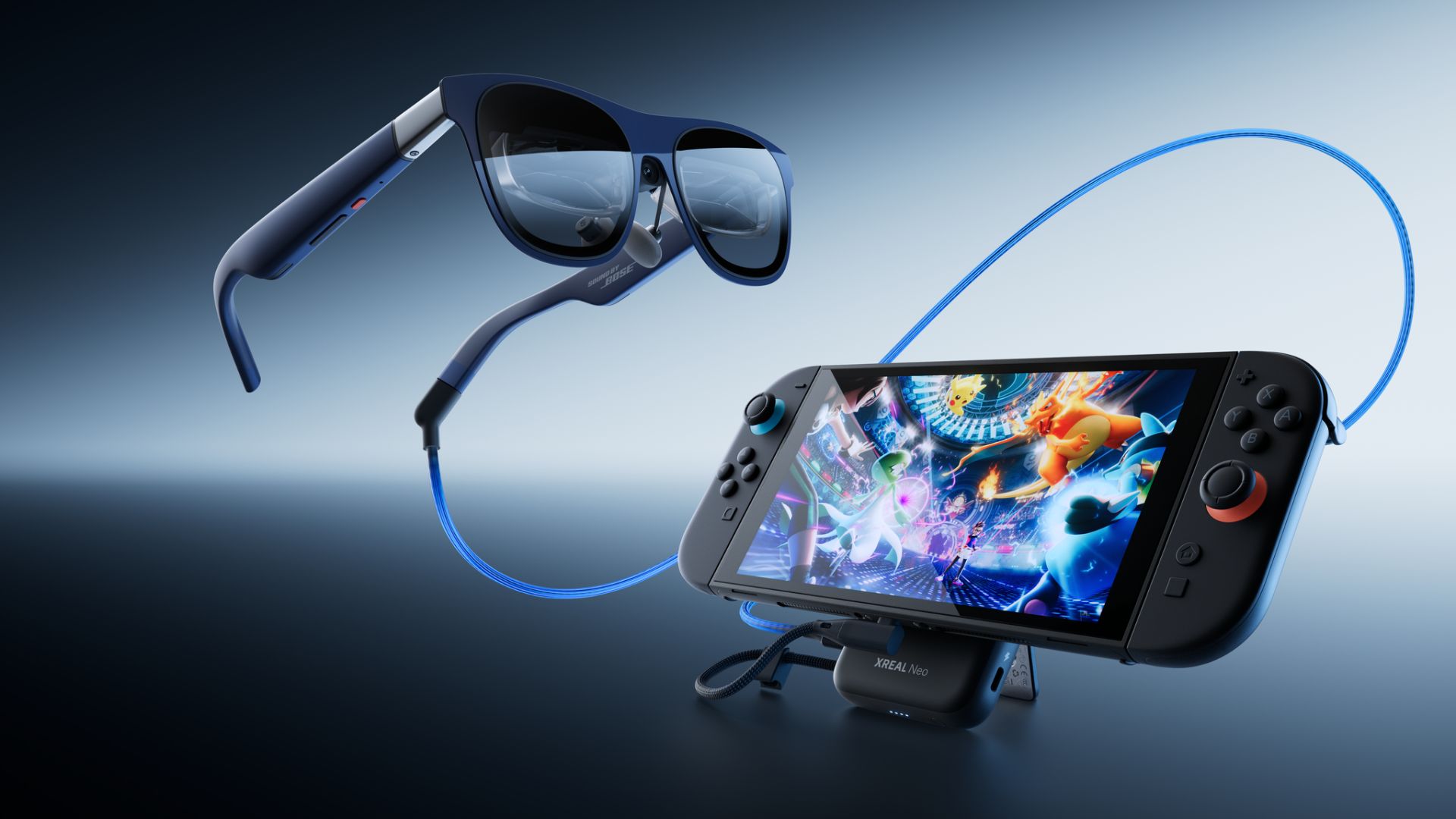
This pricing push is amplified by the introduction of the XREAL Neo accessory. The Neo is a multi-functional tethered hub, combining a substantial 10,000 mAh battery pack with video processing capabilities. While the 1S itself is a passive display tethered via USB-C, many devices require specific handshake protocols or auxiliary power for video output or stabilization. The Neo solves this, providing extended operational time for the glasses while simultaneously acting as a compatibility bridge.
The standout feature enabled by the XREAL Neo is compatibility with the Nintendo Switch family of consoles. This is an industry-relevant detail often overlooked in discussions of AR technology. While many portable gaming devices like the Steam Deck or modern Android/Windows laptops natively support DisplayPort Alt Mode over USB-C (which the XREAL glasses utilize directly), proprietary console hardware often presents hurdles. The Neo effectively acts as an intermediary that handles the necessary protocol translation, allowing the 1S to display the Switch’s output. For a segment of consumers who desire a massive, private screen for console gaming on the go, the XREAL ecosystem—now unified by the Neo—becomes immediately viable. A 1200p AR display offers a significantly more immersive experience than the Switch’s native 720p screen, making this accessory an essential gateway for gamers.
The initial pricing for the XREAL Neo further underscores the strategic value proposition: $99 during an introductory period (ending February 4th), before settling at $119. Bundling the enhanced glasses ($449) with the specialized hub ($99) keeps the total entry cost below $550, a highly competitive price point in the emerging market for tethered spatial displays.
Industry Implications: The Democratization of Spatial Computing
The launch of the XREAL 1S speaks volumes about the current maturation curve of consumer AR. For years, the industry narrative was dominated by two extremes: the bulky, enterprise-focused headsets demanding significant processing power (like early HoloLens iterations), or high-end, computationally intensive devices aiming for full spatial mapping (like the early concepts from Meta or Apple). XREAL, alongside competitors focusing on the "smart glasses" niche, has championed the "tethered display" model. This approach cleverly offloads the heavy computational load—the operating system, the application processing, the primary rendering pipeline—to the host device (smartphone, PC, gaming console).
This tethered strategy has profound implications for mass adoption:
- Form Factor Reduction: By relying on an external brain, the glasses themselves can be designed to resemble conventional eyewear, addressing the critical barrier of social acceptance and comfort. The 1S, being a mid-generation refinement, likely maintains or slightly improves upon the established lightweight profile.
- Cost Control: Eliminating the need for a high-end, onboard System-on-a-Chip (SoC) dedicated solely to AR processing dramatically reduces the Bill of Materials (BOM). This allows manufacturers to channel savings directly into display quality, which is the most immediate sensory payoff for the user.
- Platform Agnosticism: The USB-C video standard ensures broad compatibility across the vast ecosystem of Android devices, modern laptops (MacBook, Dell XPS, etc.), and now, via the Neo, key gaming consoles. This avoids the costly, proprietary software lock-in that plagues other platforms.
XREAL’s decision to upgrade the display specifications (1200p, wider FoV) while lowering the price suggests a confidence in their ability to scale production of these micro-OLED components economically. This is a classic market penetration tactic: create a product that is objectively better than the previous version on primary consumer metrics (resolution, field of view) while making it financially easier to acquire. This signals a shift from targeting early adopters willing to pay a premium for novelty, to attracting mainstream consumers looking for genuine utility upgrades over traditional monitors or tablets.
Expert Analysis: The Micro-OLED Arms Race
The move to 1200p micro-OLED technology is indicative of an ongoing technological arms race in the display segment for AR wearables. Micro-OLEDs (or MicroLEDs, depending on the exact manufacturing process) offer superior contrast ratios, true blacks, and extremely high pixel density compared to traditional LCD or even standard OLED solutions used in earlier prototypes.
The jump to 1200p is significant because it pushes the perceived pixel density (Pixels Per Degree, or PPD) closer to the threshold where the human eye struggles to resolve individual pixels, especially when the display is magnified by the optics. For developers, this higher resolution provides a larger canvas to work with, allowing for more sophisticated user interfaces that can stack information without appearing cluttered or fuzzy.
Furthermore, the aspect ratio change to 16:10 is more than cosmetic. In productivity contexts, 16:10 offers slightly more vertical screen real estate than 16:9, which is marginally better suited for reading documents or viewing web pages without excessive scrolling. In media consumption, while 16:9 is standard for most contemporary video, the flexibility ensures that future content standards or custom application layouts can be accommodated without awkward letterboxing or cropping artifacts.
The integration of the Bose audio components, while perhaps less headline-grabbing than the display upgrades, is crucial for the holistic "wearable" experience. Good spatial audio is essential for maintaining presence and immersion, and leveraging a reputable audio brand like Bose provides instant credibility in the sound department, an area where many first-generation AR devices fall short with tinny, underpowered speakers.
Future Trajectories: Beyond the Tether
While the XREAL 1S represents the zenith of the tethered display model, the announcement implicitly points toward the industry’s ultimate destination: untethered, self-contained AR glasses. XREAL’s continued investment in spatial computing capabilities via the X1 chip and the optional camera accessory suggests that the company is utilizing the current generation to refine the software and tracking algorithms necessary for a future standalone device.
The XREAL Neo, while currently serving as a battery/compatibility bridge, hints at the modular future of AR. If XREAL were to release a future iteration of the X1 chip as a standalone module that slots into the Neo, the user could upgrade the processing power without discarding their display hardware. This "component-based evolution" is a savvy way to manage the rapid obsolescence cycle inherent in cutting-edge consumer electronics.
The immediate impact of the 1S, however, is on the competitive landscape. By offering superior visual fidelity at a lower cost, XREAL pressures rivals—both established tech giants exploring early AR hardware and smaller players focused on niche markets. If the consumer base begins to associate high-quality AR experiences with the sub-$500 price tag established by the 1S, it sets a difficult benchmark for any competitor aiming to launch a product with inferior specifications at a higher price.
The XREAL 1S, alongside the utility-enhancing XREAL Neo, is not just an iterative update; it is a calculated market maneuver. It solidifies XREAL’s position as the leading provider of accessible, high-utility spatial displays, effectively lowering the barrier to entry for consumers eager to experience large-scale virtual workspaces and entertainment systems without the bulk or prohibitive cost associated with fully self-contained spatial computers. The convergence of better optics, lower pricing, and expanded device compatibility positions the 1S as a potential tipping point product for the wider adoption of personal augmented reality displays in the coming year.
Both the XREAL 1S glasses and the XREAL Neo battery/video hub are available for purchase immediately through XREAL’s direct channels, as well as major retailers like Amazon and Best Buy. The aggressive introductory pricing on the Neo ($99 until February 4th, then $119) is designed to incentivize immediate adoption of the full ecosystem, ensuring users can leverage the enhanced capabilities across their entire suite of compatible devices, from smartphones to their coveted Nintendo Switch. This integrated launch strategy ensures that the improved hardware experience is immediately accessible, a vital component for maintaining momentum in the fast-paced consumer electronics arena.
