

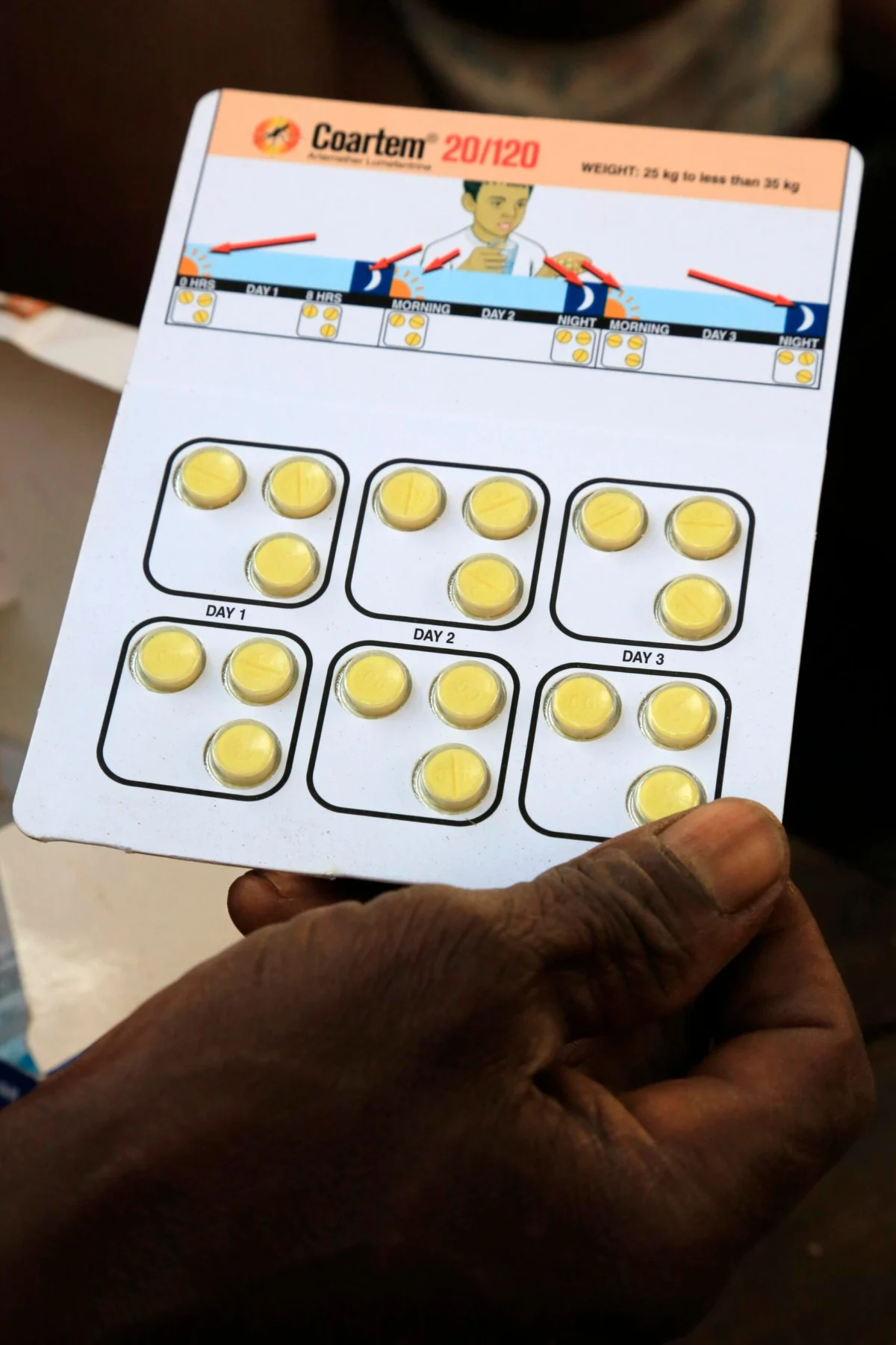
For decades, the global health community has viewed the fight against malaria as a manageable, albeit difficult, war of attrition. In much of sub-Saharan Africa, the rhythm of infection and recovery is a familiar part of the social fabric. A patient feels the onset of characteristic chills, followed by bone-deep aches and debilitating lethargy; they seek a diagnostic test, receive a course of medication, and within days, the parasite is cleared from their bloodstream. This predictable cycle, however, relies entirely on the continued efficacy of a single class of chemical compounds: artemisinins. Today, that foundation is showing signs of structural failure, threatening to unleash a public health catastrophe that could roll back half a century of progress.
The current gold standard for treatment is Artemisinin-based Combination Therapy (ACT). These drugs, derived from the sweet wormwood plant, revolutionized tropical medicine when they were introduced at scale. By pairing a fast-acting artemisinin derivative with a longer-lasting partner drug, ACTs provided a "one-two punch" that effectively cleared even high-density infections. But as the malaria parasite, Plasmodium falciparum, evolves to survive these treatments, the international community faces a daunting question: What happens when the world’s most effective weapon no longer works?
To understand the gravity of the current situation in Africa, one must look to the history of Southeast Asia. In the early 2000s, the Greater Mekong Subregion became the first theater of artemisinin resistance. Patients there began failing to clear infections despite receiving full courses of ACTs. The global response was swift and resource-intensive. Donors poured millions into elimination programs, deploying caseworkers to track every resistant case and rotating drug combinations to keep the parasite off-balance. These efforts were largely successful in containing the threat, with the notable exception of Myanmar, where political instability hindered public health interventions.
However, epidemiologists warn that the "Southeast Asian Playbook" is fundamentally unsuited for the African context. Maciej Boni, a leading epidemiologist at Temple University, emphasizes the staggering difference in scale. When resistance emerged in Asia, the task was to manage roughly 100,000 cases. In Africa, resistant parasites are emerging into a landscape of hundreds of millions of cases annually. The sheer volume of transmission makes the containment strategies used in the Mekong—such as intensive contact tracing and localized elimination—practically impossible to implement. Furthermore, the genetic diversity of the parasites in Africa presents a more complex biological hurdle than those found in Asia.
The biological mechanism of this resistance is centered on a specific genetic marker known as the Kelch13 gene. Understanding the role of Kelch13 requires a deep dive into the microscopic life cycle of the malaria parasite. Tobias Spielmann, head of the Malaria Cell Biology research group at the Bernhard Nocht Institute for Tropical Medicine, describes the Kelch13 protein as a vital component of the parasite’s "machinery"—almost like a piece of Lego that is essential for growth.
Microscopy experiments have revealed a paradoxical truth: resistance is often caused by a reduction in Kelch13 activity. Under normal circumstances, the parasite in its early "ring stage" in human blood digests hemoglobin to fuel its growth. Artemisinin is a "prodrug," meaning it is inactive until it is triggered by the byproducts of this hemoglobin digestion. When mutations in Kelch13 occur, the parasite slows its consumption of hemoglobin. While this might seem like it would weaken the parasite, it actually protects it; by eating less, the parasite prevents the artemisinin from being activated, allowing it to survive the initial drug exposure and persist in the body. This "crazy resistance," as Spielmann calls it, highlights the sophisticated evolutionary adaptability of Plasmodium falciparum.
The geographical spread of these mutations is currently the most scrutinized data point in global health. The first signs of artemisinin-resistant parasites in East Africa appeared roughly a decade ago, but the situation has reached a critical juncture in Uganda. There, high levels of resistant parasites are colliding with a high overall malaria burden, creating a perfect storm for transmission. Partial resistance has also been confirmed in Rwanda, Tanzania, and Eritrea, with suspicions of emergence in several other nations.
The primary tool for managing this threat is surveillance, but the quality of that surveillance is dangerously inconsistent. In West Africa, researchers are engaged in a race against time to determine if the mutations seen in the East have migrated or emerged independently. Countries like Tanzania and Burkina Faso have established relatively robust molecular surveillance systems capable of identifying genetic mutations quickly. However, even these systems are strained. Issiaka Soulama, who leads the Molecular Biology Laboratory at Burkina Faso’s National Center for Research and Training on Malaria (CNRPF), notes that they are currently operating with a two-year data lag. To establish a reliable baseline for policy changes, scientists need three consecutive years of real-time data—a luxury many health ministries cannot afford.

In Nigeria, the continent’s most populous country and a major hub for malaria transmission, the "surveillance void" is particularly troubling. Michael Audu, an independent malaria policy researcher, warns that resistance could be spreading through Nigerian states entirely undetected. Without systematic tracking of the Kelch13 gene, health officials are essentially flying blind. The World Health Organization (WHO) recommends replacing a first-line treatment once it fails in more than 10% of cases. Without proactive molecular monitoring, the 10% threshold might only be recognized once clinical failures become widespread and death rates begin to climb.
The economic implications of this surveillance gap are profound. Audu argues that skimping on surveillance is a "false economy." In Nigeria, the trade-off is often framed as a choice between buying tablets for current patients or funding labs to track future resistance. However, the long-term costs of drug failure are astronomical. Estimates suggest that the establishment of widespread resistance across West Africa could result in an economic loss of $78 billion over the next 15 years. This loss stems not just from healthcare costs, but from decreased productivity and the immense burden on families.
The financial landscape for malaria control has become even more precarious following the dissolution of the U.S. Agency for International Development’s specific bilateral aid structures in certain regions last year. Historically, USAID was a cornerstone of malaria funding. Audu’s analysis indicates that for every dollar saved by cutting short-term malaria aid, the long-term cost generated by the resulting amplification of resistance is between $11 and $48. This represents a catastrophic return on investment for the global community.
Despite these challenges, there are reasons for cautious optimism on the technological front. For the first time in 25 years, a new class of antimalarial drugs is on the horizon. GanLum, a novel compound, has shown promising early results and offers a mechanism of action entirely different from artemisinin. If successful, GanLum could provide a vital fallback for when ACTs eventually fail. Additionally, researchers are trialing triple-combination ACTs—adding a third drug to the standard duo—to make it even harder for the parasite to develop resistance.
However, new drugs are not a silver bullet. History shows that parasites will eventually develop resistance to any chemical compound if the underlying health systems are broken. Audu emphasizes that releasing new drugs into a "broken system" only guarantees that the cycle of resistance will repeat. This necessitates a shift in focus toward strengthening African health infrastructure and, crucially, fostering local pharmaceutical manufacturing. By producing antimalarials on the continent, African nations can reduce costs, secure their supply chains, and react more nimbly to emerging resistance patterns.
Some countries are already taking proactive steps. Rwanda has implemented drug rotation strategies to keep the parasite "guessing," and Burkina Faso is moving toward a policy of multiple first-line therapies. By diversifying the drugs used across different regions or time periods, health officials can slow the selection pressure that drives resistance.
Ultimately, the fight against antimalarial resistance is a battle of timing and urgency. Maciej Boni compares the spread of resistance to a "broken dam" rather than a "forest fire." A fire eventually burns itself out, but a flood from a broken dam continues to advance until the breach is repaired or the water finds a new level. If the global community does nothing, the "flood" of drug-resistant malaria will move forward, reclaiming the territories where progress was once so hard-won.
The current moment requires a shift in how we value public health intelligence. Surveillance is not a luxury; it is the shield that protects the effectiveness of every antimalarial tablet purchased today. As Issiaka Soulama bluntly states, when it comes to preparing for the end of artemisinin’s dominance, the continent simply does not have a choice. The alternative—a return to the era of untreatable malaria—is a price that neither Africa nor the world can afford to pay. The transition from a reactive to an anticipatory health strategy is no longer a policy preference; it is a survival mandate for the 21st century.
