

The global technology landscape is currently undergoing a series of profound, interconnected shifts. From the corridors of geopolitical power to the intimate realms of personal health and neural interfaces, the boundaries of what is scientifically and commercially viable are being redrawn. As the United States and China lock horns in an escalating battle for artificial intelligence supremacy, regulatory bodies in Europe are dismantling the foundational monopolies of Big Tech. Simultaneously, breakthroughs in biotechnology are offering new hope for neurological recovery, while the commercialization of women’s health highlights the urgent need for scientific literacy in an era of digital misinformation.
The Geopolitical AI Chessboard: China’s Open-Source Gambit
For the past several years, the prevailing consensus among Western technology analysts was that the United States maintained an insurmountable lead in frontier artificial intelligence. Driven by massive capital deployment from companies like OpenAI, Microsoft, Google, and Anthropic, Silicon Valley appeared to hold a monopoly on the state of the art. However, this gap has narrowed dramatically.
A prominent Chinese artificial intelligence startup has disrupted the market by releasing the world’s largest open-source AI model. This development represents a strategic pivot in the global tech cold war. While American firms have largely favored proprietary, "closed-loop" systems to safeguard their intellectual property and mitigate safety risks, Chinese enterprises are betting heavily on open-source frameworks. By democratizing access to high-performance models, Chinese developers are positioning their technology as the default infrastructure for global software engineering, particularly in the developing world.
The market impact of this release was immediate and severe. Global semiconductor and AI-related stocks experienced a sharp downturn as investors recalculated the competitive moats of Western tech giants. The model’s performance metrics indicate that it can go toe-to-toe with flagship offerings from Anthropic and OpenAI, challenging the narrative that US export controls on advanced lithography and graphics processing units (GPUs) would permanently cripple China’s domestic AI capabilities.
This technological leap is aligned with a clear state strategy. At the World Artificial Intelligence Conference in Shanghai, Chinese leadership articulated a vision where the nation does not merely adopt foreign technologies but establishes the global standards for AI architecture and governance. By positioning itself as a benevolent partner to the Global South through accessible, open-source AI, China is building an alternative ecosystem independent of Western licensing and political influence.
Crucially, this software-level advancement is supported by a rapidly maturing domestic hardware pipeline. Facing stringent US restrictions on Nvidia’s flagship chips, Chinese tech firms have accelerated the development of domestic silicon alternatives. Local chipmakers are projecting massive sales increases as domestic demand surges, signaling that the supply-chain decoupling intended to isolate China’s tech sector may have instead catalyzed its self-sufficiency.
The Monetization of Wellness: Dismantling the Perimenopause Mythos
While the geopolitical sphere wrestles with algorithmic power, a different kind of information war is being waged in the consumer health sector. In recent years, perimenopause—the transitional phase leading up to menopause—has transitioned from a historically taboo medical subject to a highly lucrative marketing category.
While the destigmatization of middle-age women’s health is a positive societal shift, the resulting market vacuum has been rapidly filled by predatory wellness brands, social media influencers, and television personalities. The commercial discourse around perimenopause is increasingly dominated by pseudoscience and unsubstantiated claims.
A primary point of contention is the marketing of diagnostic tests. Dozens of direct-to-consumer digital health platforms now offer expensive blood or saliva tests claiming to determine whether a woman has entered perimenopause. From a clinical perspective, these claims are highly misleading. During the perimenopausal transition, female hormone levels fluctuate wildly on a daily, and sometimes hourly, basis. A single diagnostic snapshot cannot provide a reliable clinical assessment.
This lack of diagnostic validity has not stopped companies from prescribing customized, expensive, and often unproven hormone replacement therapies or proprietary supplement stacks. Many of the symptoms attributed to shifting hormones—such as fatigue, cognitive fog, and sleep disturbances—are multi-causal and can be linked to general aging, lifestyle factors, or underlying cardiovascular conditions. By attributing every midlife ailment to a singular hormonal deficit, the wellness industry risks over-prescribing unnecessary treatments while ignoring other vital aspects of preventative healthcare.

Compounding this medical misinformation is a severe digital privacy crisis. As women turn to digital tools to track their menstrual cycles and log physical symptoms, the apps facilitating this tracking are facing intense scrutiny. Recent investigations have revealed that many popular period-tracking platforms are sharing highly sensitive health data with third-party data brokers and advertisers. In a post-regulatory environment where health data can be weaponized, the lack of robust privacy protections in femtech represents a profound systemic vulnerability.
Antitrust and Open Platforms: The EU’s Campaign Against Google
Across the Atlantic, the European Union is continuing its aggressive regulatory campaign to de-monopolize the digital economy. In its latest antitrust mandate, the European Commission has targeted Google’s search dominance and the vertical integration of its Android operating system.
Under the new directives, Google will be legally compelled to share its proprietary search data with competing search providers. This move is designed to lower the barrier to entry for smaller search engines that have historically struggled to compete with the sheer scale of Google’s index.
Furthermore, the EU is forcing Google to open its Android ecosystem to rival artificial intelligence assistants. Historically, Google has utilized its operating system dominance to default users into its own ecosystem of apps and AI services. By requiring Android to natively host and integrate third-party AI bots, the EU is attempting to prevent the monopolization of the next generation of consumer computing interfaces. This regulatory intervention could set a global precedent, forcing a structural separation between operating systems and the AI layers that sit on top of them.
Neuroplasticity and Recovery: Bypassing Spinal Cord Injuries
In the field of medical technology, clinical researchers have achieved a landmark breakthrough in neuro-engineering. Using a novel brain-computer interface (BCI), scientists have successfully restored sensory feedback and motor control in the paralyzed hand of a human subject.
The implant operates via a "neural bypass," intercepting motor signals from the brain, routing them around the damaged spinal cord, and delivering targeted electrical stimulation directly to the nerves and muscles of the hand. For the first time, the recipient was able to perform complex daily tasks, such as feeding himself and drinking from a cup, with a high degree of precision.
Perhaps the most significant finding of the study was that the patient’s motor control persisted even after the active neurostimulation was deactivated. This suggests that sustained BCI therapy may encourage neuroplasticity—the brain’s ability to reorganize and form new neural pathways—offering the potential for long-term biological recovery rather than mere mechanical compensation.
As the West celebrates this academic milestone, the global race for neural commercialization is intensifying. China has recently approved its first domestically developed clinical brain-computer chip, highlighting that the frontier of neural interfaces will be a highly contested geopolitical arena in the coming decade.
Frontier Science: Space Biology, Autonomous Failure, and Circular Tech
The rapid pace of technological innovation is producing notable breakthroughs and cautionary tales across several adjacent fields:
- Astronaut Biology: A study conducted on the International Space Station has shed light on the molecular mechanisms of space-induced muscle wasting. Researchers discovered that microgravity severely disrupts mitochondrial function, the powerhouses of cellular energy. This disruption leads to a dramatic drop in protein synthesis, explaining why astronauts experience rapid physical degeneration despite rigorous exercise regimens. Understanding this pathway is critical for planning long-duration crewed missions to Mars.
- The Human Factor in Autonomous Driving: A National Transportation Safety Board (NTSB) investigation into a fatal Tesla crash in Texas has underscored the dangers of driver over-reliance on automation. Investigators determined that the driver bypassed the vehicle’s Full Self-Driving (FSD) safeguards by manually depressing the accelerator pedal to 100%, overriding the system’s automated braking protocols. The incident highlights a growing consensus among safety experts: the transition period between human driving and full autonomy is highly dangerous due to confusing human-machine interface designs.
- Stealth Engineering: Defense researchers have unveiled an experimental stealth drone that utilizes rapid rotational physics to achieve visual invisibility. By spinning at extremely high frequencies, the drone’s physical silhouette blurs into the background, making it virtually undetectable to the naked eye. However, engineers admit the platform faces a major operational hurdle: it remains highly audible, meaning its acoustic signature must be addressed before it can be deployed in active combat zones.
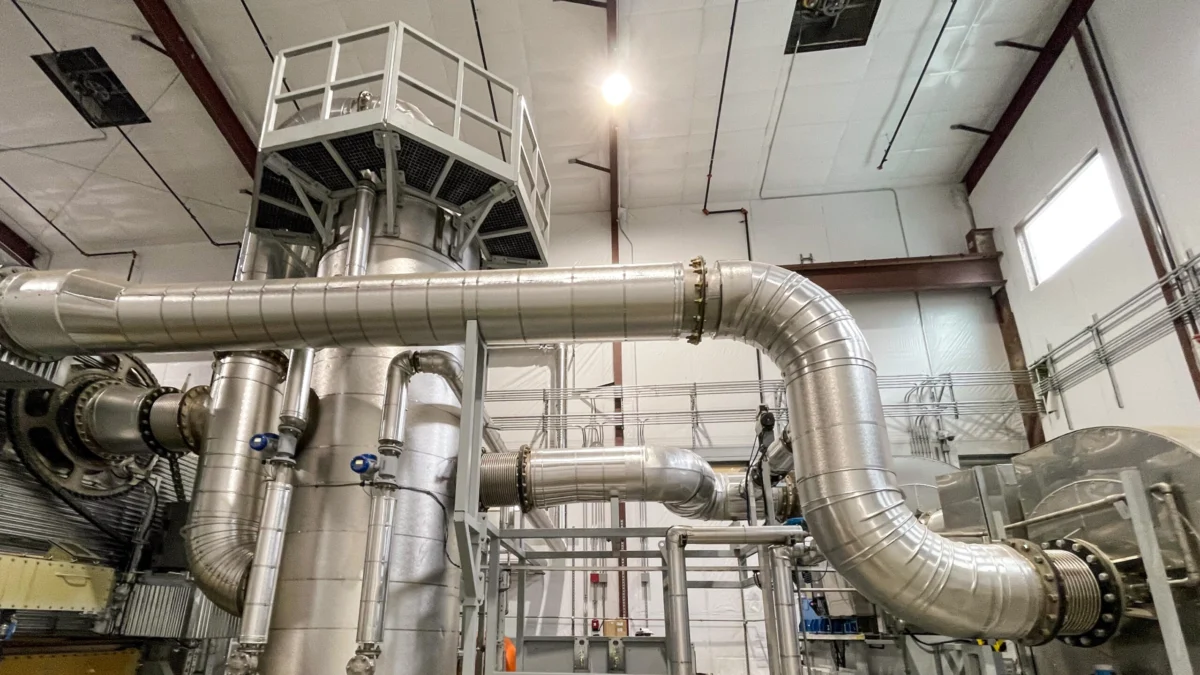
- Circular Bioeconomy: In environmental technology, a pioneering industrial facility near Seattle is demonstrating how to transform human and agricultural waste into high-value organic fertilizer. By utilizing advanced thermal and mechanical separation technologies, the facility sanitizes fecal waste while extracting concentrated nitrogen and phosphorus. This approach addresses two environmental crises at once: the ecological damage caused by untreated agricultural runoff and the global shortage of synthetic fertilizers necessary to maintain agricultural yields.
Conclusion
The intersection of these diverse technological trajectories reveals a fundamental truth about the modern era: innovation is no longer confined to isolated silos. The progress of artificial intelligence is bound to the geopolitics of semiconductor supply chains; the expansion of personal health tracking is limited by the ethics of data privacy; and the realization of advanced medical therapies relies on the convergence of computing and biology. As these systems continue to evolve, the challenge for society will be to foster innovation while building the regulatory, ethical, and scientific frameworks necessary to manage their profound implications.
