

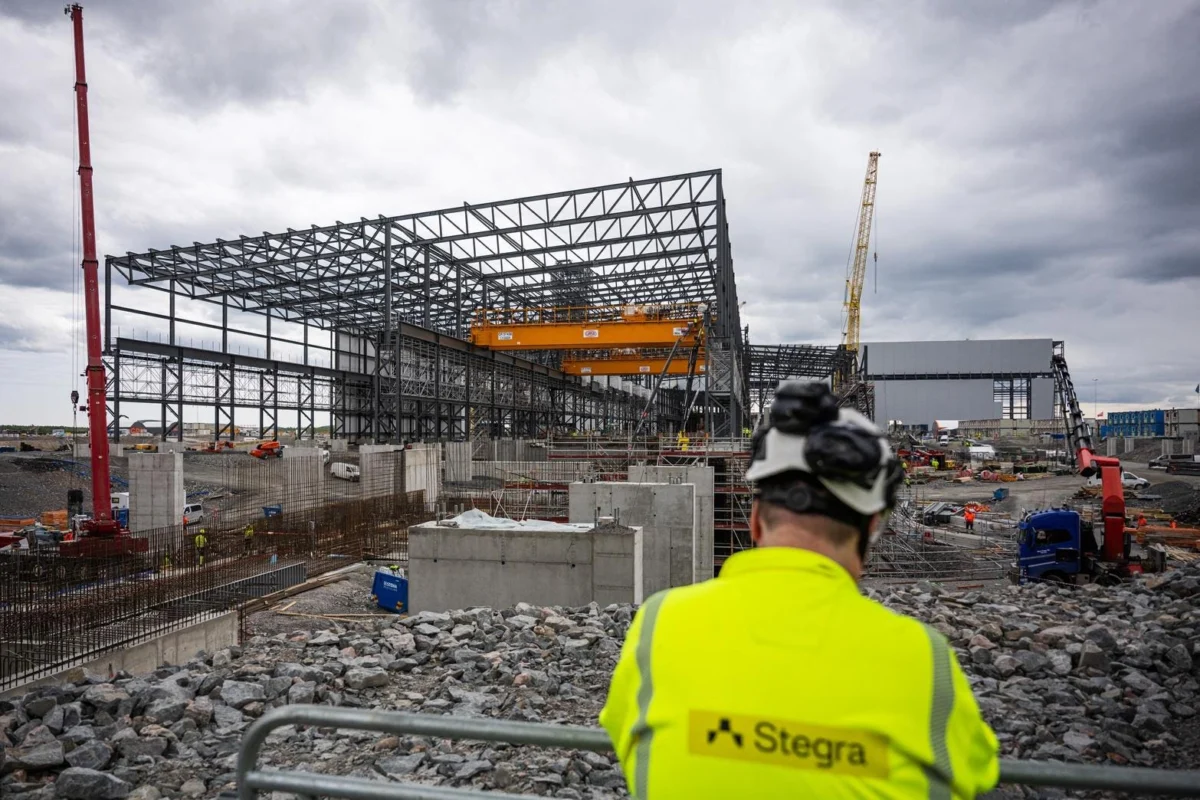
In the frozen expanse of Boden, Sweden, just a few miles south of the Arctic Circle, the future of heavy industry is currently being forged in steel and hydrogen. Here, the startup Stegra is constructing a facility designed to do what was once thought impossible: produce primary steel without the use of coking coal. This project, alongside SSAB’s massive transition in Luleå, represents an €11 billion bet on a single, fundamental premise: that the European Union would remain steadfast in its commitment to making pollution expensive.
For years, the European Union’s Emissions Trading System (ETS) has functioned as the world’s most sophisticated carbon market, operating on a legislated schedule of scarcity. The math was simple for investors: every year, the number of available carbon allowances would shrink, driving up the cost of fossil-fuel-based production until, by approximately 2040, the supply would effectively hit zero. This predictable "cap-and-trade" trajectory provided the financial bedrock for green hydrogen projects. The business case was never that green steel would be cheaper today, but that coal-based steel would be prohibitively expensive tomorrow.
However, a new proposal from the European Commission threatens to rewrite that "tomorrow." Under the guise of a "technical adjustment" to protect industrial competitiveness, the Commission has proposed a significant slowdown in the rate at which carbon permits are removed from the market. This shift represents more than a mere administrative tweak; it is a fundamental alteration of the European carbon contract that could leave early movers in the clean technology space stranded while providing a decade-long lifeline to the continent’s heaviest polluters.
The Mathematics of a Policy Pivot
The ETS is the centerpiece of the European Green Deal, covering roughly 40% of the bloc’s greenhouse gas emissions. Since its inception in 2005, it has successfully halved emissions in the sectors it regulates. Its power lies in the Linear Reduction Factor (LRF)—the fixed percentage by which the total cap of allowances shrinks each year. Currently set at 4.3% and scheduled to rise to 4.4% in 2028, the LRF is the engine of European decarbonization.
The Commission’s new proposal suggests a two-stage deceleration. Starting in 2031, the reduction factor would drop to 3.7%. By 2036, it would plummet further to a mere 1.7%. Simultaneously, the phase-out of free allowances for heavy industry—originally set to conclude by 2034—would be extended to 2038.
While these percentages may seem incremental, their cumulative impact is staggering. An analysis of the proposed trajectory reveals that this shift would inject approximately 2.4 billion additional carbon allowances into the market over the lifetime of the system. Each allowance represents one tonne of CO2. To put that figure in perspective, 2.4 billion tonnes is more than half of the entire European Union’s annual emissions. It is equivalent to everything Sweden has emitted since the early 1970s.
The Commission’s own impact assessment acknowledges a portion of this "carbon gap," modeling roughly 911 million tonnes of extra emissions by 2040. However, the full scope of the proposal extends the life of the carbon market into the 2050s, a full decade past the previous "zero-cap" horizon of 2039–2040. By moving the goalposts, the EU is effectively creating room for fossil-fuel pollution to persist in the heavy industry sector for an extra ten years.
The Nordic Backlash and the Price of Trust
The reaction from Northern Europe, where the majority of the world’s planned hydrogen-based steel capacity is located, has been one of immediate alarm. Sweden’s Prime Minister Ulf Kristersson, typically a voice of moderate industrial pragmatism, characterized the proposal as "unfair" to the companies that have led the transition. In a joint letter with Finnish Prime Minister Petteri Orpo, he warned Commission President Ursula von der Leyen that eroding the ETS framework would "penalize early movers" and send a "damaging signal" to global investors.
The frustration is rooted in the specific economics of deep decarbonization. Projects like Stegra are not backed by speculative venture capital; they are supported by institutional giants like Wallenberg Investments. These investors require regulatory certainty to justify the "green premium"—the higher cost of clean production that must be recouped through carbon pricing or market demand.
When the EU flattens the carbon price path, it effectively subsidizes the status quo. If coal-based steel producers are granted free allowances until 2038 instead of 2034, the competitive advantage of a hydrogen-based plant is delayed by four critical years. In a capital-intensive industry where margins are thin and payback periods are measured in decades, a four-year delay can be the difference between a successful project and a stranded asset.
A Pattern of Regulatory Retreat
The ETS revision does not exist in a vacuum. It follows a controversial decision regarding the Sustainable Finance Disclosure Regulation (SFDR), Europe’s rulebook for "green" investing. Just weeks ago, the EU Council agreed that companies expanding oil and gas production could still qualify for a "transition" investment label, provided a fraction of their capital expenditure is directed toward green projects.

Taken together, these two moves suggest a disturbing pattern. The EU made its industrial pioneers two core promises: a label that would provide access to cheaper "green" capital, and a carbon price that would penalize fossil-fuel competitors. By diluting the SFDR label and flattening the ETS price curve, Brussels is retreating on both fronts simultaneously.
This creates a "market for lemons" scenario, an economic phenomenon where buyers cannot distinguish between high-quality and low-quality products, leading the honest actors to be crowded out. If an oil major can claim a transition label while expanding drilling, and a coal-based steel mill can avoid carbon costs until the late 2030s, the financial incentive to innovate evaporates.
The Competitive Dilemma: Europe vs. The World
The Commission’s defense of the proposal centers on the "unlevel playing field." Ten of the EU’s largest economies, including Poland and Italy, have argued that high energy prices and carbon costs are driving "carbon leakage"—the relocation of industry to regions with laxer environmental standards.
This is a legitimate concern, but it ignores the EU’s own primary solution: the Carbon Border Adjustment Mechanism (CBAM). CBAM was designed specifically to level the playing field by applying a carbon tariff to imports of steel, cement, and electricity. The logic of the Green Deal was that CBAM would protect industry from outside competition, allowing the internal ETS cap to tighten aggressively. By slowing the ETS while CBAM is still being implemented, the Commission appears to be losing nerve in its own mechanism.
Furthermore, the "competitiveness" argument is increasingly being turned on its head. A recent consensus from the World Economic Forum highlighted that Europe’s true vulnerability lies in its continued dependence on volatile fossil fuel imports. Weakening the carbon price—the very tool that incentivizes the shift to homegrown, renewable electrification—is a counter-intuitive response to an energy security crisis.
Europe currently leads the world in green steel technology, holding two-thirds of global announced capacity. However, as seen previously with solar panels and electric vehicle batteries, technological leadership does not guarantee industrial dominance. If European policy wavers, the capital and the scaling of these technologies will inevitably move to the United States (under the Inflation Reduction Act) or China.
The Political Divide: Early Movers vs. Late Arrivals
The battle over the ETS is often framed as a conflict between environmentalists and industry, but the reality is more nuanced. The true dividing line is between the companies that have already invested in the future and those that are lobbying to preserve the past.
Interestingly, this divide exists within the same political families. The EPP (European People’s Party), to which both President von der Leyen and the Swedish and Finnish Prime Ministers belong, is currently at war with itself. The EPP leadership in Brussels lobbied for the softer carbon path to appease industrial heartlands in Germany, Poland, and Italy. Meanwhile, EPP leaders in the Nordics are fighting to protect the multi-billion-euro clean industries their countries have birthed.
Climate Commissioner Wopke Hoekstra has argued that the new proposal is "fully in line" with the EU’s 2040 climate targets. This is technically possible only if the emissions cuts not achieved in heavy industry are made up elsewhere—in agriculture, transport, or through unproven carbon removal technologies. In essence, the proposal shifts the burden of decarbonization from the sectors most capable of technological shifts (like steel) to sectors where cutting emissions is politically and practically much harder.
Conclusion: The Negotiating Table
As negotiations between the Commission, the European Parliament, and member states begin, the stakes extend far beyond the 2.4 billion tonnes of CO2. The real asset on the table is the credibility of European law.
If the EU demonstrates that its most foundational climate policies can be diluted whenever lobbying pressure reaches a certain threshold, it will introduce a "political risk premium" into every future green investment. Boardrooms will no longer model their projects based on the law; they will model them based on the likelihood of the law being changed.
The Nordic steel plants in Boden and Luleå are currently the only full-scale proofs of concept for a decarbonized heavy industry. They are the "sequel" to the European solar and battery story—one that was supposed to have a different ending. Whether that ending remains one of European industrial leadership or becomes another tale of technological flight depends entirely on whether Brussels decides to honor its original carbon contract. The clock is honest, and the atmosphere does not accept technical adjustments. The next year of negotiations will determine if Europe remains a leader in the green transition or merely a cautious observer of its own decline.
