

The evolution of mobile imaging technology has reached a critical inflection point, moving beyond mere sensor upgrades to a profound reliance on sophisticated computational algorithms. For nearly a decade, the Google Pixel line has championed this philosophy, transforming the everyday smartphone into a powerful, accessible photographic instrument. This year, having traversed the historical tapestries of Europe with the Pixel 9 Pro XL and the cutting-edge capabilities of the subsequent Pixel 10 Pro XL, the output—totaling over 5,000 captured moments—demands rigorous curation. This selection process, which winnowed thousands of frames down to a definitive portfolio, underscores the maturation of Google’s imaging stack, particularly its advancements in zoom fidelity, high-dynamic-range (HDR) handling, and the innovative expansion of specialized modes like panorama capture.
The legacy of the Pixel series rests on its ability to democratize high-quality photography. Where once a photographer needed to meticulously balance ISO, shutter speed, and aperture, or lug specialized equipment like mirrorless bodies and telephoto lenses, the modern Pixel offers near-instantaneous, context-aware results. The primary objective of this annual photographic audit is to assess how effectively these devices translate real-world, unscripted experiences—from the sun-drenched ochre quarries of Southern France to the moody, neon-lit canals of the Low Countries—into compelling visual narratives, all while strictly adhering to the principle of minimal post-processing.
Crucially, these images are presented in their near-raw state. No cosmetic alterations to color saturation, sharpening algorithms, or detail enhancement were applied. The only permissible intervention involved minor rotational adjustments or compositional cropping, necessary primarily due to the inherent challenges of maintaining perfect alignment during handheld extended optical or hybrid zoom sequences (2x, 5x, and 10x). This commitment to fidelity allows for an unvarnished evaluation of the hardware and software integration that defines the Pixel experience in 2025. For those seeking a deeper dive into the full catalog of retained imagery, a comprehensive collection is available for review, offering a broader scope of the year’s photographic output.
The Defining Images of 2025: A Portfolio of 25 Highlights
Every year yields a signature image—a frame that encapsulates the device’s capabilities under a specific set of demanding conditions. In 2025, that distinction belongs to an expansive panorama captured from the rooftop terrace of the Anglais Athens, framing the ancient ruins of Hadrian’s Library. While purists might note the intrusion of contemporary urban detritus—the visible refuse bins, parked vehicles, and an errant skip—these elements paradoxically anchor the shot in the present day. The visual impact is arresting: the stark, sun-bleached tones of the classical stone architecture serve as a canvas for unexpected bursts of vibrant green vegetation, creating a high-contrast palette reminiscent of early 2000s web design aesthetics—a compelling visual juxtaposition of antiquity and modernity.
This particular shot is a testament to the enhanced utility of the Pixel 10 Pro XL’s refined panorama function, especially when utilized at extended focal lengths. The ability to seamlessly stitch a high-resolution, contextually aware panorama while simultaneously utilizing the 5x optical zoom marks a significant algorithmic achievement, overcoming traditional stitching distortions common in previous generations when attempting zoomed panoramic sweeps. This stands as the apex of the year’s panoramic efforts.
The subsequent photographic achievements focus heavily on manipulating perspective and leveraging environmental geometry. One frame, shot from an elevated vantage point atop the Palais des Papes in Avignon, utilizes a narrow stone aperture to perfectly frame the distant city hall’s bell tower. The composition is defined by its geometric precision and the subtle, muted pastel colors characteristic of the Provençal light. In stark contrast, a second image presents an optical illusion captured near the Oostende train station. Observing the wavy, elongated reflections of two imposing modern structures cast upon a stretch of water, the photographer intentionally rotated the Pixel to capture the distortion. The resulting photograph possesses a surreal, almost science-fiction quality, transforming mundane architecture into fluid, abstract forms reflected in the liquid surface.
The exploration of texture and pattern led to a memorable capture on the Roussillon’s Ochres trail. The image of the segmented stone steps evokes a deliberate sense of visual disruption, akin to a forced pixelation effect where the frame appears intentionally torn and rejoined. This geological anomaly, a striking deposit of yellow-orange pigment rarely associated with Western Europe, offered a palette more common to the arid landscapes of the American Southwest or the Australian outback. This discovery, made incidentally during a detour from Avignon, highlights the spontaneity that high-quality mobile cameras facilitate, negating the need for dedicated landscape scouting. Complementing this earthy tone is a classic scene from Bruges: a canal view dominated by an explosion of brightly colored floral arrangements cascading over a historic bridge, solidifying the quintessential, postcard-ready charm the city offers.
Mid-year travel brought the opportunity to document the fleeting bloom of the Luberon region’s lavender fields in June. This ephemeral window, perfectly timed for the lavender’s peak purple saturation, yielded an archive rich in violet hues. Two images from the Senanque Abbey vicinity stand out. One possesses an almost accidental "vintage film" character—a subtle grain and color shift that defies the device’s digital nature. The other exemplifies controlled composition: meticulously aligned rows of purple blossoms leading the eye toward the stoic abbey structure, balanced by muted greens and purples that evoke a sense of profound tranquility.
Shifting to the urban environment, the portfolio transitions into an exploration of artificial illumination. A dedicated session in Oostende involved patiently waiting for the precise moment the Ferris wheel cycled through its brightest sequence, captured perfectly reflected in a strategically located puddle—a study in light refraction and symmetry. Adjacent to this, a frame from Budapest’s Neverland bar isolates the "Good Vibes" neon sign. Framed against a single, starkly lit table, the sign oscillates between an inviting beacon and an almost unsettling, isolated presence, demonstrating the Pixel’s ability to manage high-contrast interior lighting without clipping highlights or burying shadows entirely.
The return to grand natural scenery is marked by images from a demanding hike around Lac Blanc in the Vosges. The sheer scope of the landscape provided ample material, yet two frames were selected for their distinct compositional merits: one utilizing a dramatic interplay between sharply focused foreground elements and the distant, hazy background, and the other celebrating a moment of pure, minimalist mountain vista. This theme of scale continued with an image emphasizing the diminutive presence of a solitary cow observing the sweeping panorama of the Vosges, juxtaposed against a more intimate study of a figure seemingly enveloped by the towering marram grass along the dunes of De Haan beach—a visual commentary on humanity’s place within the vastness of nature.
The mastery of timing, often the most challenging aspect of smartphone photography, is showcased next. In Budapest, a significant investment of time—upwards of twenty minutes—was required to secure a clear, unobstructed shot of a passing tram. Simultaneously, patience paid dividends when capturing a macro-adjacent view of bees actively pollinating an artichoke flower. The discovery of the artichoke’s unexpected, vibrant purple bloom proved a delightful, unexpected addition to the visual record, underscoring the richness found in minute observation.
The photographer’s self-declared thematic preference—the comforting combination of "green, blue, and water"—is heavily represented, suggesting a subconscious search for visual serenity throughout 2025. This manifests in two iconic European locations: Gordes, the famed perched village in France, where the texture of ancient stone houses contrasts beautifully with the rolling green hills; and the orderly, imposing symmetry of the Kinderdijk windmills in the Netherlands, where geometric repetition creates a powerful visual rhythm.
Computational Excellence in Challenging Light
Night and twilight photography remain the litmus test for any mobile imaging system, traditionally struggling with noise management, accurate color rendition under mixed lighting, and deep shadow detail preservation. The Pixel 9 and 10 series, however, demonstrated notable proficiency here. Three images serve as prime examples of computational success overcoming low-light physics. First, the Hungarian Parliament Building in Budapest, illuminated dramatically across the Danube at night, showcases excellent color preservation and minimal light spill. Second, a sunset scene from The Hague jetty, featuring distant windfarms, evokes a cinematic, almost apocalyptic mood due to the deep shadows and silhouetted structures. Finally, a classic Rotterdam sunset, highlighted by the distinct architectural lines of the Erasmusbrug, bursts with a rich, saturated orange and black contrast, perfectly managed by the device’s advanced HDR pipeline.
The journey concluded with a series of compositions emphasizing stark geometry and atmosphere. The Grand Ballon radar dome, a brutalist, retro-futuristic structure dominating the Vosges mountains, was rendered with an almost uncanny resemblance to fictional orbital installations—a testament to its surreal form captured against the sky. In Oostende, a visit to the Klein Strand revealed a protected seal colony. While capturing clear images of the seals themselves in the fading light proved elusive despite leveraging advanced night video modes, the resulting photograph beautifully captures their shadows cast upon the wet sand as they retreated at dusk—a memory preserved, even if the primary subjects remained just beyond the sharpest capture threshold.
The final selection zeroes in on the interplay of light and shadow during the longest day of the year, the Summer Solstice (June 21st). In The Hague, as sunset lingered past 10:00 PM, a fisherman on the jetty provided a study in dynamic action. The chosen frame freezes the perfect moment of extension just before the rod snaps toward the water. The second penultimate shot offers an interior architectural study from Notre Dame de Paris, taken during a moving visit with family. The deep, saturated blues emanating from the stained-glass windows create an astonishing contrast with the shadowy stone framework, an outcome where Google’s Auto-HDR processing clearly delivered nuanced tonal separation between the brilliant light source and the profound darkness.
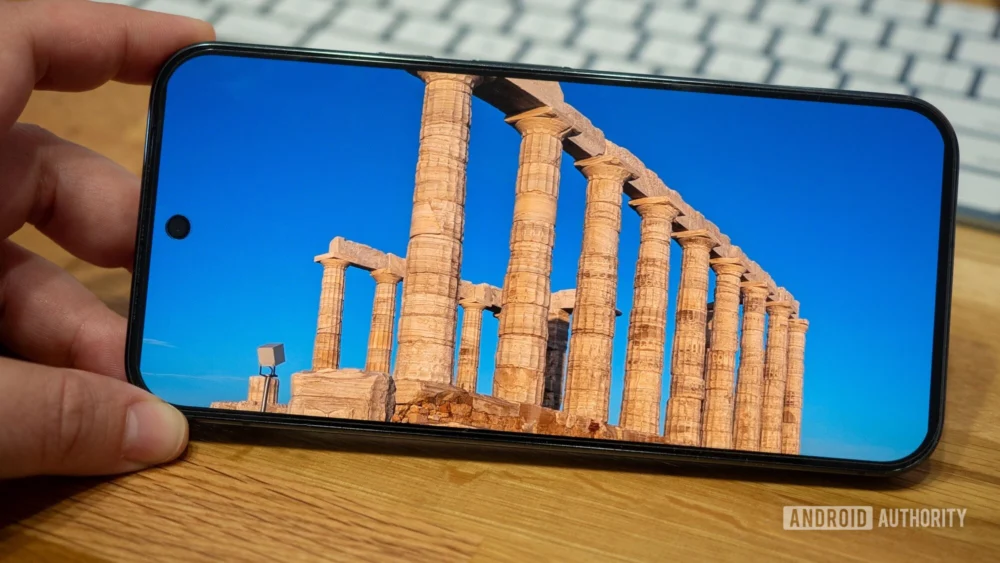
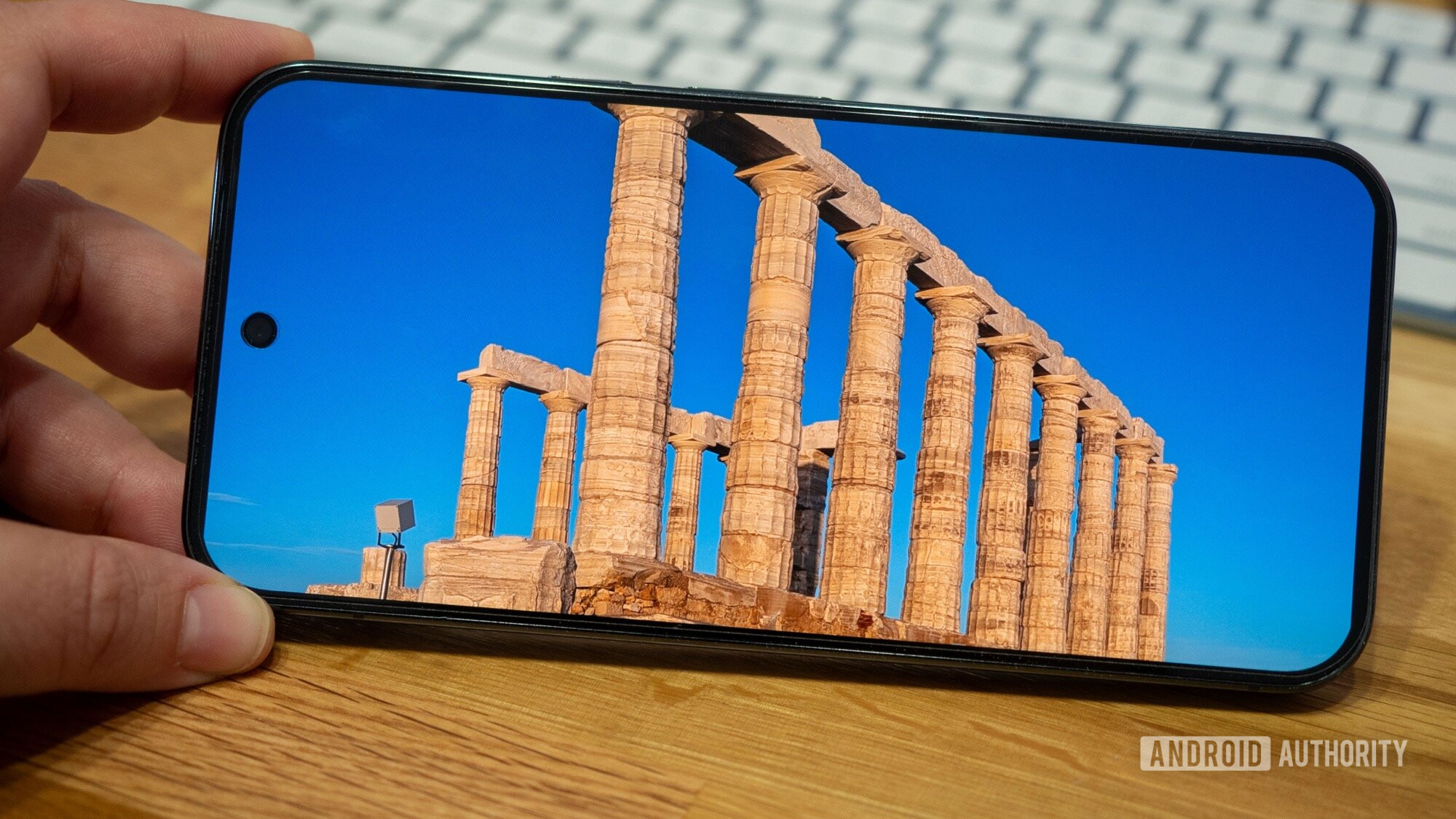
The true finale, however, required a slight bending of the rules: a triptych captured during the golden hour at the Temple of Poseidon in Sounion, Greece. These three adjacent shots, taken at slightly different moments during the descent of the sun, were intended to tell a sequential story of color transition. While the persistent crowds prevented meticulous alignment for a true single composite, the individual merit of each frame—its unique hue, saturation, and atmospheric quality—justifies their inclusion as a collective narrative device.
Beyond the Top Tier: The Photographic Imperative
The initial selection of 25 images, while representing the pinnacle of the year’s output, inherently excludes hundreds of technically and emotionally resonant frames. The process of reduction from over 5,000 initial captures to a few hundred keepers, and subsequently to this shortlist, highlights a crucial trend in the smartphone imaging sector: the increasing competence across all focal lengths and lighting scenarios. The Pixel 9 and 10 Pro XL models have significantly narrowed the gap between "snapshot" and "professional-grade documentation," particularly in handling complex, mixed-light environments that previously required extensive manual correction.
The industry implication here is clear: the era of the dedicated point-and-shoot camera is effectively over. Manufacturers like Google are now competing not just on sensor size, but on the sophistication of their Tensor processing units and the iterative refinement of machine learning models that predict and render scenes more accurately than the human eye can immediately perceive them. The advanced, zoomed panorama feature on the Pixel 10 Pro XL, for example, represents a software innovation that compensates for the physical constraints of small optics, effectively creating a virtual wide-angle lens with telephoto fidelity—a feat unimaginable a decade ago without complex sensor-shift stabilization and computational stitching.
Looking forward, the trend points toward even more seamless integration of spatial computing into photography. The expectation for 2026 and beyond will be for devices to not only capture the light and color of a scene but to deeply understand its three-dimensional layout, enabling real-time depth mapping for hyper-realistic focus pulls or instantaneous relighting. The subjective aesthetic preferences noted—the draw toward muted greens and blues suggesting a search for calm—are themselves data points that future AI imaging engines may learn to optimize for the individual user’s emotional response to their environment. This portfolio, raw and unfiltered, serves as a benchmark for how far computational photography has advanced, making the world’s wonders accessible, instantly beautiful, and ready for immediate sharing or deep archival appreciation. The hundreds of other treasured moments, available for further exploration, confirm that the most powerful camera is indeed the one carried consistently.
