

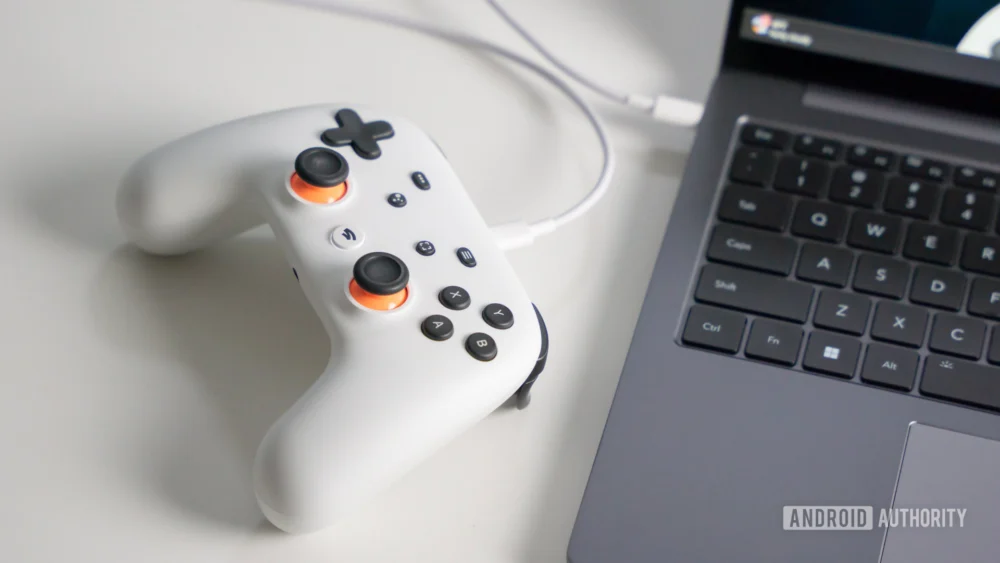
The narrative surrounding Google Stadia, the ambitious cloud-gaming endeavor that ultimately shuttered its servers in early 2023, is one defined by bold vision colliding with operational reality. While the platform’s demise was a significant setback for the nascent cloud gaming market, Google made a commendable, if perhaps belated, effort to salvage some residual value for its dedicated hardware ecosystem. Central to this salvage operation was the introduction of a firmware update that unlocked standard Bluetooth connectivity for the proprietary Stadia Controller, transforming it from a single-purpose network peripheral into a universally compatible input device. However, this lifeline was never intended to be permanent, and the evolving deadlines surrounding the official web-based flashing tool present a critical, and perhaps final, moment for users wishing to secure their controller’s long-term utility.
The Technical Pivot: From Cloud Dependency to Universal Compatibility
The core innovation of the Stadia Controller was its unique architecture, designed explicitly to minimize input latency inherent in streaming services. Unlike conventional controllers that communicate directly with the local device (PC, mobile, or console), the Stadia controller utilized a dedicated Wi-Fi connection to stream inputs directly to Google’s cloud infrastructure. This proprietary method bypassed local processing bottlenecks, offering a near-instantaneous response crucial for competitive gaming experiences streamed over the internet. When the Stadia service was deactivated, this connectivity model rendered the hardware functionally inert for its primary purpose.
Recognizing the investment made by early adopters, Google engineered a firmware patch. This update essentially re-flashed the controller’s operating system, enabling the onboard radio to switch from the dedicated Wi-Fi protocol to the ubiquitous Bluetooth Low Energy (BLE) standard. This transformation was a significant concession, acknowledging the hardware’s physical quality—many users praised the tactile feel and ergonomic design—even as the service supporting it evaporated. With Bluetooth enabled, the controller could interface seamlessly with PCs, Android devices, and potentially other platforms supporting standard HID (Human Interface Device) protocols, offering a second life as a generic wireless gamepad.
The Shifting Sands of the Deadline
What made the transition particularly noteworthy, and ultimately confusing for consumers, was the imposition of an artificial expiration date on the official means of update. Google initially stipulated that the web-based flashing utility, hosted via a specialized portal, would cease operation by the close of 2023. This created a clear, if aggressive, timeline for users to act.
However, in a pattern that has become familiar in the tech industry when managing sunsetting services, the deadline was not rigidly enforced. Google provided extensions, first pushing the window back to the end of 2024, and subsequently extending it once more to the final moments of the current calendar year. This repeated deferral arguably dampened the urgency among the remaining user base. Yet, as the clock ticks toward the transition into the new year—the threshold of 2026—the official communications have remained silent on any further reprieve. Expert analysis suggests that when official extensions are announced, they typically precede the expiration date with substantial lead time. The current silence suggests a high probability that the utility hosted by Google will indeed be retired as the calendar flips. For any user who still possesses a controller and desires this foundational update, the window is now critically narrow.
The procedure itself, requiring a charged controller, a USB cable, and the Google Chrome browser (which facilitates the necessary WebUSB access for flashing), is relatively simple, yet it depends entirely on Google maintaining the server-side infrastructure hosting the firmware files and the JavaScript execution environment for the flasher tool.
Industry Implications: Hardware Sunset and Community Preservation
The Stadia controller saga offers several salient points for the wider technology and gaming industries, particularly concerning the lifecycle management of specialized hardware tied to proprietary services.
Firstly, it underscores the inherent risk in purchasing hardware deeply integrated with a single cloud ecosystem. While the promise of cloud gaming is accessibility, the reality is that the provider maintains ultimate control over the hardware’s functionality. When the service fails, the hardware’s value collapses unless the manufacturer intervenes to unlock its capabilities. Google’s decision to provide the Bluetooth unlock was an outlier; many companies might have simply allowed the devices to become e-waste upon service termination. This action, while pragmatic, also sets a challenging precedent regarding consumer expectations for hardware longevity.
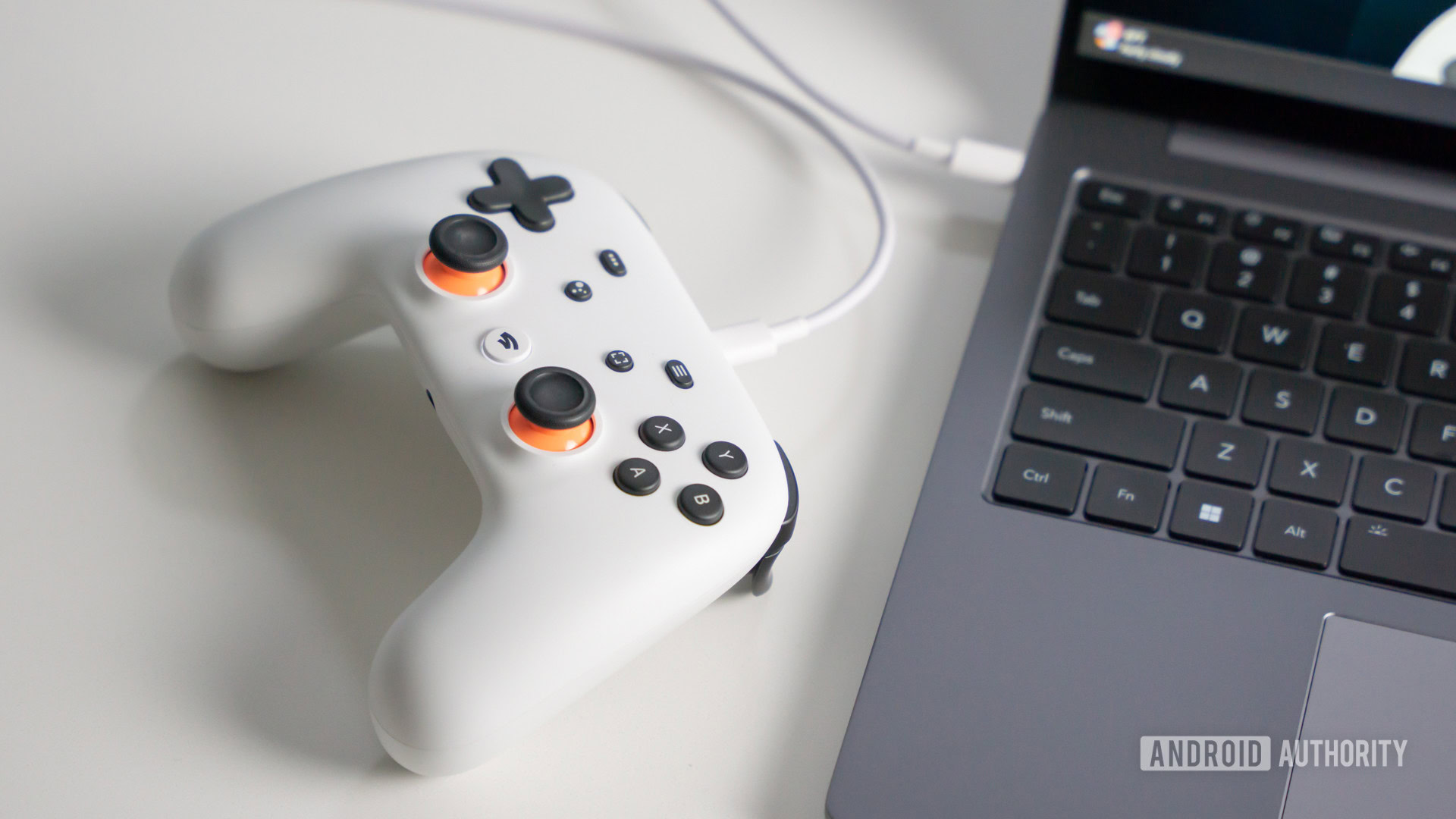
Secondly, the community response to the looming official deadline highlights the power of open-source preservation in mitigating corporate sunsetting. The proactive efforts by dedicated users to reverse-engineer and archive the necessary components—both the firmware binaries and the web flasher application—represent a crucial counter-narrative. These efforts ensure that the hardware retains its value beyond the manufacturer’s stated support window. This phenomenon is increasingly common in digital preservation circles, where the community steps in to maintain access to software or tools deemed obsolete by their original creators.
Expert Analysis of Unofficial Alternatives
For those who discover this critical deadline too late, or perhaps those who prefer a solution insulated from Google’s eventual server shutdown, the community-driven alternatives provide a viable, albeit riskier, path forward. The work spearheaded by independent developers, such as the comprehensive tool archived on GitHub by Luigi Mannoni, serves as a crucial contingency plan.
These unofficial tools often surpass the capabilities of the original utility. Mannoni’s implementation, for instance, is noted for offering the functionality to revert the firmware back to the original Wi-Fi mode. While reverting might seem counterintuitive given the death of the Stadia service, this feature offers users a degree of control over the device’s state that the official tool never did. It speaks to a deeper engagement with the device’s underlying capabilities. Furthermore, these community tools are frequently designed to run locally, eliminating reliance on Google’s live web portal altogether, thus future-proofing the update process against immediate server decommissioning.
However, utilizing any unofficial firmware flashing utility inherently involves calculated risk. The core principle in electronics modification is that the user assumes liability for the process. A failed flash, a power interruption, or incompatibility with future operating system security updates could render the controller permanently bricked—a fate worse than being limited to Wi-Fi only. For most users, given that the original function is already defunct, this risk is often deemed acceptable for the reward of a functional, standard Bluetooth controller. The calculus changes from "Is this update worth the effort?" to "Is the risk of modification lower than the certainty of obsolescence?"
Future Trends: Modular Hardware and Consumer Rights
The Stadia controller episode offers valuable insights into the future trajectory of gaming peripherals and consumer electronics longevity.
Modular Functionality: The success in repurposing the Stadia controller via firmware suggests a growing market demand for hardware that is not entirely locked into a single service provider. Future peripheral design, especially in subscription-heavy ecosystems like cloud gaming, may need to incorporate multi-protocol support or easily swappable firmware modules to maintain consumer trust. Hardware manufacturers are increasingly realizing that a well-built device, even if orphaned by a service failure, retains residual value if its core input mechanisms can be unlocked.
The Role of Open Standards: The necessity of the community stepping in to maintain the Bluetooth flash highlights the fragility of closed-system support. If Google had chosen a standardized, open protocol for the controller from the outset, this entire firmware exercise would have been unnecessary. The industry trend is moving toward greater adherence to established standards (like standard Bluetooth or USB HID) for peripherals to ensure cross-compatibility, even when the associated cloud service ends.
Digital Obsolescence and Preservation: The situation forces a discussion on digital obsolescence. Unlike a physical object that can be repaired or repurposed with generic parts, proprietary hardware often relies on manufacturer-controlled software to function. When the manufacturer ceases support, the hardware dies digitally. The community archiving effort is a microcosm of broader digital preservation movements, suggesting that hardware associated with defunct digital services will increasingly require third-party intervention to retain any utility.
In conclusion, while the initial panic surrounding the Stadia controller update deadline may have subsided due to extensions, the fundamental situation remains: the official method of liberation is drawing to a close. The transition from a cloud-dependent input device to a generic Bluetooth gamepad represents a small victory for consumer advocacy against the backdrop of a major corporate exit. Users still holding these specialized controllers must now decide whether to utilize Google’s potentially expiring official channel or migrate to the community-maintained, albeit riskier, archival solutions to ensure their hardware doesn’t become an expensive paperweight as the year concludes. The fate of this controller serves as a tangible reminder of the contractual fine print underpinning digital services and the proactive vigilance required by consumers to safeguard their physical investments.
