


The landscape of enterprise security is currently facing a stark reminder of the perils of technical debt and delayed patching: an alarming number of internet-facing Fortinet firewalls remain vulnerable to a sophisticated two-factor authentication (2FA) bypass flaw disclosed back in mid-2020. Recent monitoring efforts by independent security researchers have identified more than 10,000 devices still exposed online, susceptible to adversaries weaponizing CVE-2020-12812. This vulnerability, which rates a near-perfect severity score of 9.8 out of 10, underscores a persistent challenge in critical infrastructure security—the lifespan of a zero-day vulnerability often far outlasts the operational lifespan of the patching cycle for many organizations.
This critical security gap resides within the FortiGate SSL VPN component of the FortiOS operating system. The technical mechanism of the exploit is rooted in an improper authentication check. Specifically, attackers can circumvent the mandatory second factor of authentication—such as FortiToken—by manipulating the case sensitivity of the username during the login attempt. For environments where username case-insensitivity was not explicitly disabled on the vulnerable platform, this flaw provided a direct path past MFA controls.
Fortinet initially responded to this vulnerability (also identified internally as FG-IR-19-283) in July 2020, issuing patches across multiple FortiOS branches, including versions 6.4.1, 6.2.4, and 6.0.10. Crucially, recognizing that immediate patching might not be feasible for all global deployments, the vendor provided a temporary mitigation: disabling username case-sensitivity within the configuration. This workaround effectively neutralized the specific exploitation vector tied to case manipulation.
The persistence of these unpatched systems became a headline concern once more last week, when Fortinet publicly confirmed observing "recent abuse" of CVE-2020-12812 in active threat campaigns. This resurgence of exploitation activity is particularly concerning because the threat actors appear to be focusing on configurations where the Lightweight Directory Access Protocol (LDAP) integration is active, suggesting targeted reconnaissance against environments utilizing centralized directory services for authentication.

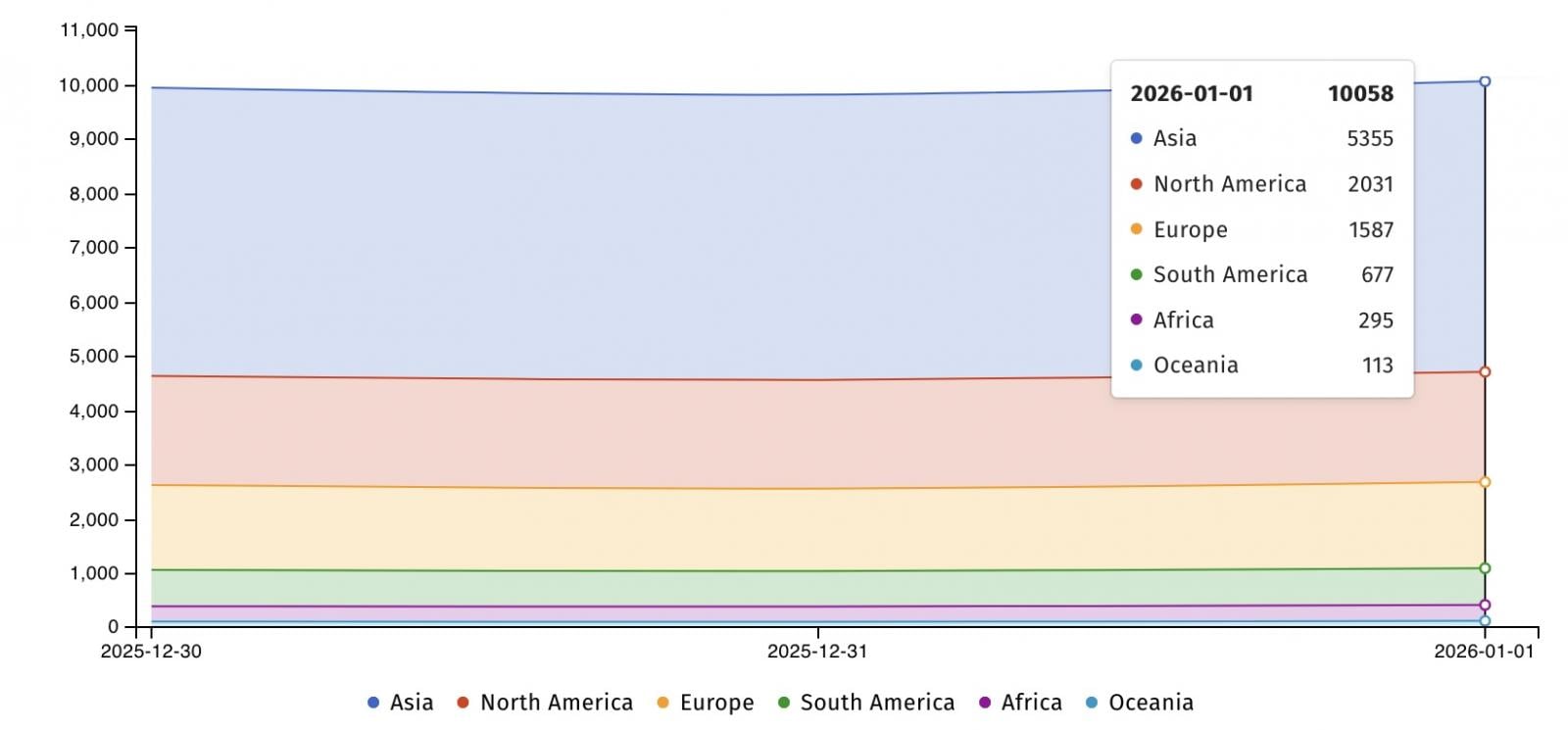
The scope of the exposure was quantified by the Shadowserver Foundation, a global security watchdog. Their latest telemetry indicates that over 10,000 Fortinet firewalls accessible via the public internet have not implemented the necessary patches or mitigations for this five-year-old vulnerability. The geographical distribution highlights a significant domestic risk within the United States, where Shadowserver data points to over 1,300 potentially compromised IP addresses. This staggering number serves as a critical indicator of widespread configuration drift and vulnerability management failure across numerous sectors.
The Shadow of State-Sponsored Activity and Regulatory Scrutiny
The history of CVE-2020-12812 is intrinsically linked to high-stakes cyber espionage. As early as April 2021, intelligence and law enforcement agencies, including the U.S. Cybersecurity and Infrastructure Security Agency (CISA) and the FBI, issued joint warnings. These advisories explicitly detailed how state-sponsored hacking groups were actively targeting Fortinet FortiOS instances, leveraging multiple vulnerabilities, with CVE-2020-12812 being a known vector for achieving unauthorized access by sidestepping MFA.
The severity of this persistent threat led CISA to formally place CVE-2020-12812 onto its Known Exploited Vulnerabilities (KEV) Catalog just seven months after its initial disclosure. Inclusion on the KEV catalog carries significant weight; it mandates that U.S. federal executive branch agencies must remediate the vulnerability by a specified deadline—in this case, May 2022—to protect systems handling sensitive government data. The fact that the vulnerability remains widely unpatched two years past that federal deadline suggests a much broader vulnerability management crisis extending into the private sector and critical infrastructure. Furthermore, CISA noted its exploitation in connection with ransomware operations, raising the stakes from espionage to potential operational disruption and financial extortion.
Industry Implications: The Ecosystem of Neglected Patches
The ongoing exploitation of CVE-2020-12812 is not an isolated incident but symptomatic of a broader, systemic issue plaguing the cybersecurity industry: the "n-day vulnerability" problem. Once a patch is released, a vulnerability transitions from being an unknown risk to a known, public liability. Organizations that fail to apply these patches promptly expose themselves to predictable, automated attacks utilizing publicly available exploit code.
Fortinet, a vendor whose hardware often serves as the frontline defense for networks globally, has unfortunately become a frequent target for sophisticated threat actors. This pattern of high-profile exploitation, often involving zero-days, places immense pressure on administrators responsible for securing these devices. The historical context reveals a relentless cycle:

- Rapid Exploitation: Threat actors, sometimes state-sponsored (like the Chinese Volt Typhoon group, which leveraged older FortiOS flaws like CVE-2023-27997 and CVE-2022-42475 to deploy custom malware like Coathanger), quickly integrate new vulnerabilities into their toolkits.
- Vendor Alerts: Fortinet consistently issues timely advisories for newly discovered issues, such as the recent reports concerning authentication bypasses via malicious Single Sign-On (SSO) logins (e.g., CVE-2025-59718) or actively exploited FortiWeb zero-days (e.g., CVE-2025-58034 and CVE-2025-64446, the latter patched silently due to widespread abuse).
- Patch Lag: A significant segment of the installed base fails to keep pace, leaving a large attack surface open for months or even years.
The implications of this lag are severe. For organizations utilizing FortiGate devices as the primary gateway for remote access, an unmitigated 2FA bypass translates directly into the potential compromise of internal networks, data exfiltration, and the deployment of destructive payloads.
Expert Analysis: The Failure of Configuration Management
From a security architecture standpoint, the continued exposure to CVE-2020-12812 suggests deeper failures in governance beyond simple patching oversight. The vulnerability requires two conditions to be met for successful exploitation: the device must be unpatched, and the configuration must permit LDAP authentication, with case-sensitivity enabled (or not explicitly disabled).
Security experts often point to the "configuration entropy" inherent in large, complex security ecosystems. Firewalls, especially those configured years ago, often retain default or outdated security settings that are never revisited. In the case of CVE-2020-12812, the mitigation—disabling case sensitivity—was a simple administrative toggle, yet thousands of administrators either missed the advisory, lacked the visibility into their SSL VPN configurations, or failed to enforce the change organization-wide.
Furthermore, the reliance on external identity providers via LDAP, while common, introduces systemic risk. When the directory service (the primary authentication source) is linked to a security appliance with a known flaw, the integrity of the entire access control plane is jeopardized. This scenario highlights the need for comprehensive asset inventory tools that can not only track device versions but also map critical security configurations against vendor advisories in real-time. The 10,000 exposed devices likely represent a diverse set of organizations, ranging from small businesses lacking dedicated security teams to large enterprises with sprawling, complex IT environments where legacy hardware or branch office appliances have slipped through centralized management oversight.
Future Impact and Trends: Moving Beyond Perimeter Defense
The longevity of attacks exploiting CVE-2020-12812 serves as a powerful illustration of why modern security strategies must evolve beyond traditional perimeter-centric defense models. The assumption that perimeter devices—like firewalls—will be perfectly patched and configured is demonstrably false.
Zero Trust Architecture (ZTA) as a Necessary Evolution: The failure to enforce 2FA bypass in this instance underscores the fundamental weakness of relying solely on perimeter controls supplemented by a single layer of MFA. ZTA principles, which demand verification for every access attempt regardless of location, become paramount. Even if an attacker exploits the SSL VPN flaw to gain initial network access, ZTA frameworks should ensure that subsequent lateral movement or access to sensitive resources requires re-authentication and granular authorization checks.
The Supply Chain Risk of Firmware: The continuous stream of vulnerabilities affecting Fortinet devices (and similar platforms from other major network vendors) forces organizations to re-evaluate vendor risk management. Security teams must incorporate continuous firmware auditing into their vulnerability management programs, treating appliance firmware with the same scrutiny as application code. The expectation that major security vendors will maintain perfectly secure products indefinitely is unrealistic; the expectation must shift to vendors providing rapid, effective patches and organizations demonstrating rapid, effective deployment of those patches.
Automated Remediation and Security Orchestration: The sheer volume of exposed devices suggests that manual remediation processes are insufficient for the speed of modern threats. Future security operations will increasingly rely on Security Orchestration, Automation, and Response (SOAR) platforms capable of ingesting threat intelligence feeds (like CISA KEV alerts) and automatically querying device management interfaces to enforce configuration changes—such as disabling case-sensitivity for LDAP authentication—across thousands of devices simultaneously, often before a human analyst can even triage the initial alert.
The continued active exploitation of a five-year-old authentication flaw in Fortinet SSL VPNs is more than just a technical footnote; it is a critical data point illustrating the persistent gap between security advisories and operational reality. For the thousands of organizations whose network perimeters are currently defined by these vulnerable firewalls, the risk of compromise remains immediate, driven by threat actors who specialize in weaponizing organizational negligence. Mitigation is no longer optional; it is an urgent prerequisite for maintaining basic network integrity.
