

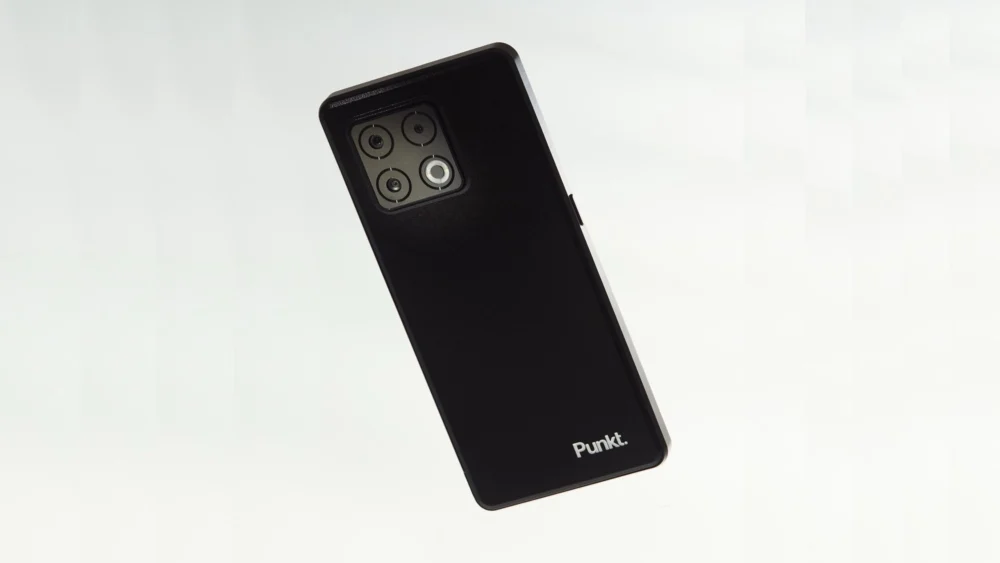
The ongoing tension between ubiquitous connectivity and personal data sovereignty has birthed a niche but increasingly vital segment of the mobile technology market: the privacy-centric smartphone. At the forefront of this movement, Swiss manufacturer Punkt has unveiled its latest iteration, the MC03, following the groundwork laid by the MC02. Unveiled during the recent CES 2026 ecosystem showcase, the MC03 represents a calculated maturation of Punkt’s philosophy, moving beyond merely restricting access to actively architecting segregated digital spaces. This device is not just a phone; it is a statement against the prevailing, data-extractive model of mainstream mobile operating systems.
Contextualizing the Privacy Imperative
To fully appreciate the MC03’s design ethos, one must understand the current landscape. Modern smartphone operating systems, predominantly Android and iOS, function on a model predicated on deep integration with cloud services and extensive telemetry collection—often necessary for core functionalities like personalized advertising, location services, and app performance monitoring. For many consumers, this trade-off—convenience for data—has become tacitly accepted. However, a growing segment of technologically literate individuals and professionals (journalists, activists, executives) view this inherent data leakage as an unacceptable operational risk.
The prior generation, the MC02, initiated this conversation by focusing heavily on software hardening and stripping out non-essential tracking components. The MC03, however, introduces a more sophisticated architectural solution: the explicit separation of the digital life into two distinct, auditable realms, powered by its proprietary AphyOS. This approach acknowledges the reality that total digital abstinence is often impractical in the contemporary professional world.
The Architectural Innovation: Vault vs. Wild Web
The core innovation of the MC03 is the formal division between the Vault and the Wild Web. This is not merely a set of sandboxed applications; it is a fundamental partitioning of the operating system environment, designed to enforce policy differences at the kernel level where possible.
The Vault environment is the sanctum. It hosts only privacy-vetted applications and services, pre-approved by Punkt. The critical addition here is the deep integration of the Proton suite—Mail, Calendar, Drive, VPN, and Pass. This strategic partnership leverages two companies rooted in jurisdictions (Switzerland) known for strong data protection laws. By embedding Proton services directly within the Vault, Punkt offers users a complete, end-to-end encrypted ecosystem that operates outside the typical Google or Apple services framework. The underlying promise is that applications within the Vault adhere to a philosophy where revenue is derived from user subscription fees, rather than the monetization of behavioral data.
Conversely, the Wild Web section functions as a controlled, semi-open environment. Users can install applications from external sources or standard app stores, recognizing the necessity of certain tools that do not meet the strict criteria for the Vault. However, this freedom is tightly governed. The Wild Web is characterized by enhanced visibility and granular control over application permissions, background processes, and network egress. The operating system actively surfaces data flows, allowing the user to make informed decisions about which non-vetted applications can access sensors, location, or the network, and under what conditions. This pragmatic approach addresses the user need for flexibility while imposing an immediate, visible cost to any relinquished privacy.
Deep Dive into AphyOS and Control Mechanisms
The bedrock of this architecture is AphyOS, Punkt’s bespoke operating system built upon a hardened foundation, ostensibly derived from the Android Open Source Project (AOSP) but rigorously purged of extraneous telemetry and background processes endemic to commercial OS variants. The system prioritizes minimizing the attack surface and reducing the digital footprint generated passively.
Key features reinforcing this control include:
- Digital Nomad VPN: A permanent, always-on VPN solution integrated into the OS layer, ensuring all network traffic, regardless of the originating application, is encapsulated within a secure tunnel before exiting the device. This is a significant step beyond offering a VPN as a standalone application.
- The Ledger: This feature functions as a centralized, transparent dashboard for application resource management. Where standard operating systems often bury permission settings across multiple menus, Ledger consolidates control over sensor access, network connectivity, and data sharing on a per-application basis. Crucially, the MC03 introduces a novel carbon-reduction view within Ledger. This feature translates application activity (particularly background polling and heavy processing) into an estimated energy consumption metric. While perhaps a secondary privacy benefit, linking resource usage to environmental impact serves as a powerful psychological nudge, encouraging users to restrict data-hungry background tasks.
Hardware Elevation: Closing the Compromise Gap
A critical observation regarding the MC03 is the shift in hardware prioritization compared to its predecessor. Earlier privacy phones often suffered from feeling underpowered or lacking modern quality-of-life features, forcing users to accept significant functional compromises for security. Punkt appears to have addressed this head-on with the MC03.
The specifications now incorporate features expected in premium mid-to-high-range devices: a 120Hz OLED display offers visual fluidity essential for modern user experience; IP68 certification provides robust environmental protection; and the integration of a substantial 5,200mAh removable battery addresses longevity concerns often associated with heavily customized or power-optimized software. The 64MP main camera, while not competing with the computational photography giants, is competent enough for standard documentation needs.
This hardware elevation is strategic. It repositions the MC03 not as a ‘dumb phone’ substitute or a niche security tool for the extremely paranoid, but as a viable, daily-driver device for professionals who simply refuse to sacrifice control over their personal data stream. The price premium is now being justified by both enhanced security architecture and competitive modern hardware standards.
The Subscription Model: A Necessary Hurdle?
Punkt remains committed to a business model that explicitly rejects surveillance capitalism. The MC03 is priced at €699/CHF699/£610, which includes the first year of the AphyOS service. Following this introductory period, continued access to the secure OS features and Proton integration requires a subscription of approximately €9.99 per month, with multi-year discounts available.
From a financial perspective, this model is transparent but faces considerable market inertia. Consumers are conditioned to view the operating system layer as a sunk cost or, more accurately, a free service subsidized by data brokerage. For Punkt, this subscription is the cost of maintaining system integrity, applying necessary security patches without relying on ad revenue models, and underwriting the development of the specialized AphyOS.
Expert analysis suggests that for the target demographic—high-net-worth individuals, corporate security officers, or users for whom data leakage carries significant personal or professional liability—this predictable, auditable operational expense is preferable to the hidden, potentially catastrophic costs associated with data breaches or misuse from ‘free’ platforms. The subscription is a clear demarcation: you are paying for the service, not your attention or your data.
Industry Implications and Future Trajectories
The evolution demonstrated by the Punkt MC03 offers significant implications for the broader technology industry. It validates the growing consumer appetite for digital sovereignty, suggesting that a viable market exists for hardware that prioritizes user rights over platform vendor lock-in.
Firstly, the dual-environment strategy hints at the future of operating system design. If Punkt can successfully implement this clean architectural split on an open-source foundation, it could pressure mainstream vendors to adopt similar, transparent compartmentalization features. While Apple and Google offer elements of sandboxing, Punkt’s approach forces the separation to be the default philosophy, not an optional setting buried deep within menus.
Secondly, the integration of Proton signifies a growing trend toward "Security Stacks" replacing monolithic platforms. Users are increasingly building their digital security layers from best-in-class, specialized, privacy-focused providers (like Proton, Signal, etc.). Punkt is capitalizing on this by packaging these trusted components into a unified, hardware-enforced experience. This modularity contrasts sharply with the closed ecosystems that dictate which services are permissible.
The long-term success of the MC03 will likely depend on its ability to scale its appeal beyond the early adopter phase. As geopolitical tensions increase and corporate espionage becomes more sophisticated, the demand for demonstrably secure mobile endpoints will move from the periphery to the mainstream enterprise procurement list. Punkt is positioning itself to be the established alternative when the next major data scandal forces users to re-evaluate their default mobile choices.
Pre-orders for the MC03 are currently open in European markets, with initial fulfillment slated for late January. While the transition from a Samsung Galaxy or Google Pixel might still represent a significant behavioral shift for the average user, the MC03 presents the most compelling, architecturally sound argument yet for what a modern, privacy-first smartphone can achieve without entirely sacrificing the functional expectations of 2026. It moves the privacy debate from abstract concern to concrete, actionable user interface design.
