

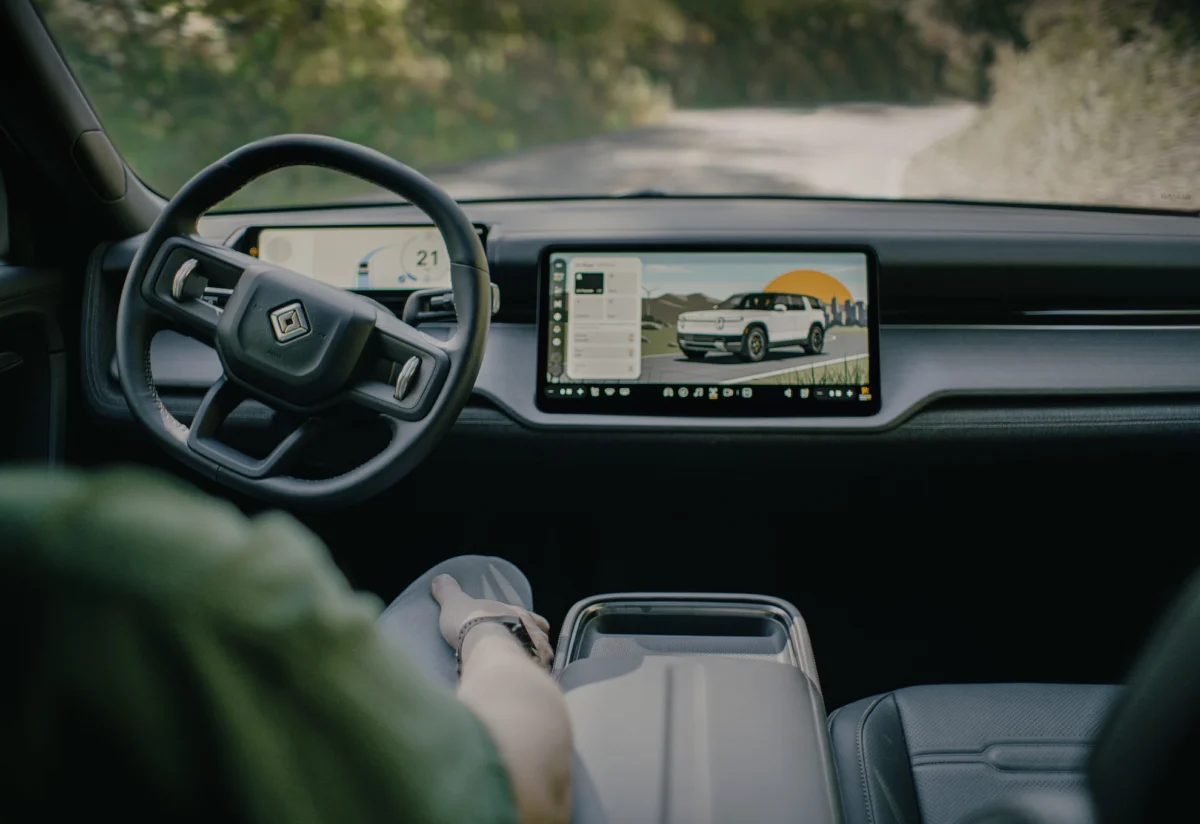
The landscape of urban mobility shifted significantly this week as Uber and Rivian announced a multi-year, multi-billion-dollar strategic partnership aimed at deploying thousands of purpose-built robotaxis across North America and Europe. At the heart of the agreement is Rivian’s highly anticipated R2 SUV, a vehicle that has transitioned from a consumer-facing hope for the electric vehicle (EV) startup to the potential backbone of the world’s largest ride-hailing network. The deal, which could reach a total valuation of $1.25 billion, represents a massive vote of confidence from Uber in Rivian’s technological roadmap, while providing the EV maker with a much-needed capital infusion and a guaranteed long-term customer.
Under the terms of the agreement, Uber is initiating the partnership with a $300 million upfront investment. This capital is earmarked for the development and integration of autonomous systems into the R2 platform. Uber is expected to purchase an initial fleet of 10,000 fully autonomous R2 robotaxis, with a target launch window beginning in 2028. The rollout is slated to commence in San Francisco and Miami—two cities that have become the de facto testing grounds for self-driving technology due to their complex traffic patterns and high demand for ride-sharing.
The scope of the deal extends well into the next decade. Uber retains an option to scale the partnership by purchasing an additional 40,000 R2 SUVs starting in 2030. If fully realized, the collaboration aims to see these autonomous fleets operating in 25 cities across the United States, Canada, and Europe by the end of 2031. Crucially for Rivian, these vehicles will be exclusively available on the Uber network, creating a closed-loop ecosystem that merges Rivian’s hardware and software expertise with Uber’s massive user base and logistical routing algorithms.
A Strategic Pivot for Rivian
For Rivian and its founder and CEO, RJ Scaringe, this deal is the culmination of a radical internal shift. Since 2021, Rivian has been quietly overhauling its approach to automated driving. The company famously abandoned its traditional, rules-based framework for driver assistance—which relied on hard-coded responses to specific scenarios—in favor of an "AI-first" strategy. This new architecture utilizes large-scale neural networks and machine learning models, similar in philosophy to the large language models (LLMs) that power modern generative AI, to train vehicles on how to perceive, interpret, and react to the physical world.
This "Rivian Autonomy Platform" was first introduced in the second-generation R1 vehicles in 2024. However, the R2 platform represents a significant leap forward in processing power and sensor suite capability. To achieve the "hands-off, eyes-off" level of autonomy required for a robotaxi, Rivian is developing an upgraded hardware stack that includes high-resolution lidar sensors and a proprietary "autonomy computer" capable of processing a staggering 5 billion pixels per second.
Scaringe has been vocal about the company’s aggressive timeline, stating at recent industry events that the path to full autonomy in 2027 is the company’s primary capital expenditure. He has argued that the rate of progress in AI-driven navigation is exponential rather than linear, suggesting that the industry’s past struggles are not necessarily indicative of the speed at which these systems will mature over the next five years.
The Uber Strategy: A "Platform of Platforms"
For Uber, the Rivian deal is another brick in its "asset-light" wall. After selling its own internal autonomous driving division, ATG (Advanced Technologies Group), to Aurora in 2020, Uber pivoted from trying to build the technology itself to becoming the premier marketplace for everyone else’s autonomous vehicles.
By partnering with Rivian, Uber is diversifying its portfolio. The company already has active or pending agreements with more than 25 autonomous vehicle (AV) firms, including Alphabet’s Waymo, the Chinese tech giant Baidu, and the U.K.-based AI startup Wayve. However, the Rivian deal is unique in its focus on the R2—a vehicle designed for mass production and consumer appeal. Unlike the specialized, often awkward-looking pods used by some AV startups, the R2 robotaxi will look and feel like a premium consumer SUV, potentially easing the public’s transition toward accepting driverless rides.
The integration of Rivian’s fleet into Uber’s app also solves the "utilization problem" for autonomous vehicles. Developing a robotaxi is prohibitively expensive; the only way to make the economics work is to ensure the vehicles are moving and earning revenue for as many hours of the day as possible. Uber’s global demand engine provides the perfect environment for Rivian to scale its hardware without having to build its own consumer-facing ride-hail app from scratch.
Manufacturing Hurdles and Execution Risks
Despite the optimism surrounding the $1.25 billion figure, the road ahead is fraught with industrial and technical challenges. Rivian is currently in a race against time to bring the R2 to market. Manufacturing of the consumer version of the R2 is not expected to begin until mid-2026, and the vehicle is slated to be built at Rivian’s massive new factory in Social Circle, Georgia. That facility is still under construction and has faced various delays and political scrutiny over state-funded incentives.
Furthermore, Rivian has yet to demonstrate a fully driverless system in a commercial environment. While their current driver-assistance features are competitive with Tesla’s "Full Self-Driving" (Supervised), the leap from Level 2+ (where a human must stay alert) to Level 4 (where the car handles everything within a geofenced area) is a monumental task. Regulatory hurdles are also significant; both San Francisco and Miami have seen public pushback and safety investigations involving other robotaxi operators, meaning Rivian and Uber will be entering a highly scrutinized market.
The success of this partnership hinges on Rivian’s ability to transition from a boutique manufacturer of high-end electric trucks to a mass-producer of sophisticated autonomous computers on wheels. Any delay in the Georgia factory or a high-profile failure in their AI training models could jeopardize the 2028 rollout.
Industry Implications and the Future of Mobility
The Uber-Rivian deal sends a clear signal to the rest of the automotive industry: the future of the car is not just electric, but autonomous and shared. For traditional automakers, the pressure is mounting to decide whether they want to be hardware suppliers to platforms like Uber or attempt to build their own rival networks.
This partnership also highlights the growing importance of vertical integration in software. By designing their own "autonomy computer" and AI stack, Rivian is following the path blazed by Tesla, but with a key difference: they are willing to play within the existing ecosystem of ride-hailing rather than trying to upend it entirely.
As we move toward the 2028 target, the focus will remain on the data. Rivian’s fleet will be constantly feeding video and sensor data back into its AI models, creating a virtuous cycle of improvement. If Scaringe’s prediction holds true—that the next five years will look nothing like the last five—then the R2 robotaxi could become the first vehicle to truly normalize driverless transportation for the average commuter.
For now, the deal provides Rivian with the financial runway and the "north star" objective needed to navigate its next phase of growth. For Uber, it secures a future where the "driver" is no longer a human contractor, but a sophisticated AI housed within a sleek, Georgia-built SUV. The stakes are high, the investment is massive, and the world will be watching to see if these two tech giants can deliver on the promise of a truly autonomous urban future.
