

As the global community grapples with the dual imperatives of decarbonization and energy security, nuclear power is undergoing a profound metamorphosis. The industry is shifting away from the monolithic, water-cooled reactors that have defined the atomic age for seven decades, moving instead toward a "panoply" of advanced designs. These new technologies—ranging from small modular reactors (SMRs) to liquid-metal-cooled fast reactors—promise safer, more flexible, and more efficient carbon-free baseload power. However, this nuclear renaissance brings with it a sophisticated set of challenges regarding the back end of the fuel cycle. While the fundamental laws of physics remain unchanged, the chemical and physical forms of the resulting waste are poised to become significantly more diverse, requiring a reimagining of how we handle the most radioactive materials on Earth.
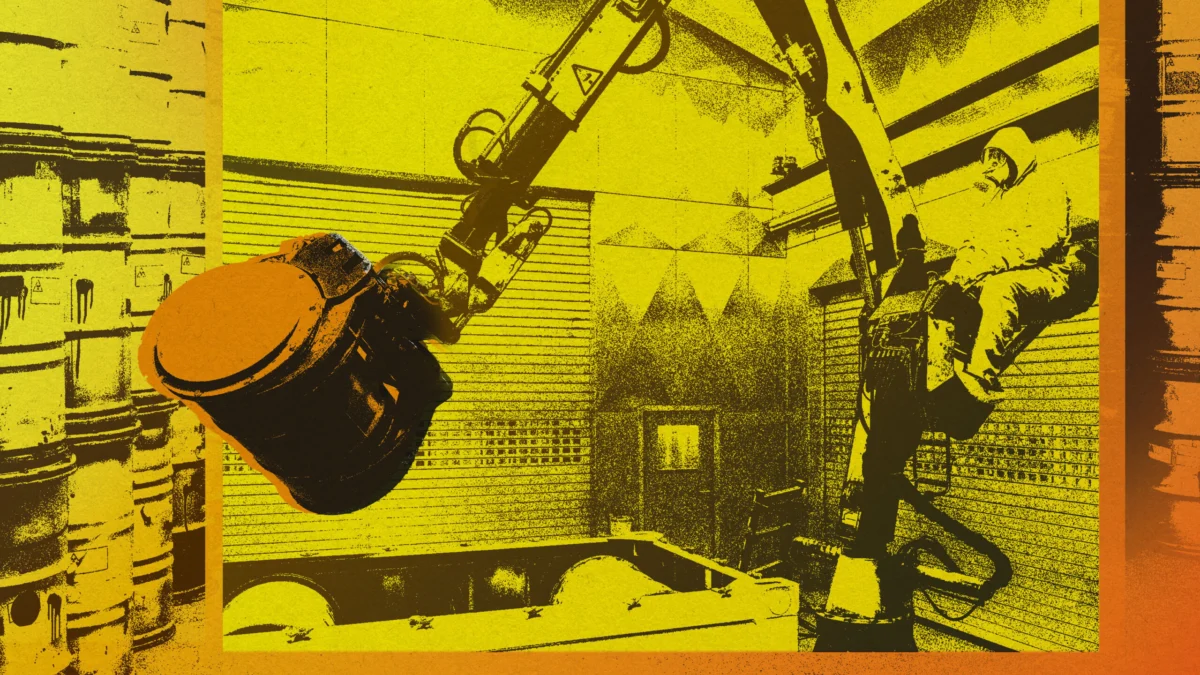
Currently, the global nuclear fleet accounts for approximately 10% of the world’s electricity generation. In doing so, it produces roughly 10,000 metric tons of spent fuel annually. For decades, the management of this material has followed a predictable, if politically fraught, playbook. Most of the world’s 400-plus operating reactors are Light Water Reactors (LWRs). They use low-enriched uranium oxide pellets encased in zirconium alloy tubes. Once the fuel can no longer efficiently sustain a chain reaction, it is "spent." It is then moved to deep, steel-lined concrete pools filled with circulating water to cool the intense thermal heat and provide radiation shielding. After several years of "wet storage," the fuel is typically transferred to "dry casks"—massive steel and concrete containers that rely on passive air cooling.
While this system has proven remarkably safe and effective for temporary storage, it was never intended to be permanent. The scientific consensus points toward deep geologic repositories (DGRs) as the only viable long-term solution. Finland has set the gold standard in this regard; its Onkalo repository, carved into the ancient crystalline bedrock of the Olkiluoto peninsula, is slated to begin operations this year. Conversely, the United States remains in a state of perpetual legislative and political gridlock. Despite designating Yucca Mountain in Nevada as the national repository site in the 1980s, local and political opposition has left the project in a state of suspended animation, forcing more than 70 sites across the country to store their own waste indefinitely.
The introduction of "Generation IV" and advanced reactor designs adds several new layers of complexity to this already strained infrastructure. As Edwin Lyman, director of nuclear power safety at the Union of Concerned Scientists, notes, there is no simple consensus on whether these new designs will simplify or complicate waste management. "Unusual materials will create unusual waste," warns Syed Bahauddin Alam, an assistant professor of nuclear engineering at the University of Illinois Urbana-Champaign.
One of the most prominent shifts involves the use of TRISO (tri-structural isotropic) fuel. Often described as a "technological marvel," TRISO fuel consists of a poppy-seed-sized kernel of uranium, carbon, and oxygen, encapsulated by three layers of carbon- and ceramic-based materials. These kernels are then embedded in larger graphite spheres (pebbles) or hexagonal blocks. Companies like X-energy are betting heavily on this design for their high-temperature gas-cooled reactors.
From a safety perspective, TRISO is exceptional; its ceramic layers act as a containment vessel for each individual kernel, making it nearly impossible for the fuel to melt down. However, from a waste perspective, it presents a volume problem. Because the uranium is dispersed within a large amount of graphite, the resulting spent fuel is significantly bulkier than traditional LWR fuel. Current assessments by the Nuclear Innovation Alliance suggest that because separating the uranium from the graphite layers is prohibitively expensive and technically difficult, the entire bulky package must be treated as high-level waste. On the positive side, X-energy argues that the robust nature of TRISO eliminates the need for initial wet storage, potentially allowing the waste to go directly into dry casks, simplifying the immediate post-operational phase.
The waste profile changes even more dramatically with liquid-fueled molten salt reactors (MSRs). In these designs, the fuel is not a solid pellet but is instead dissolved directly into a fluoride or chloride salt that also acts as the coolant. This approach offers incredible efficiency and inherent safety, as the fuel can be drained into subcritical storage tanks if the system loses power. Yet, this means the entire volume of radioactive salt becomes high-level waste. Managing a liquid waste stream that is chemically reactive and highly radioactive requires entirely different containment strategies than the solid rods the industry is accustomed to.
Furthermore, "fast reactors"—which use high-energy neutrons to extract more energy from fuel—introduce a different set of thermodynamic hurdles. These reactors achieve what is known as "high burn-up," consuming more of the fissile material and leaving behind a more concentrated cocktail of fission products. While this can reduce the total volume of waste relative to the energy produced, the waste that remains is much "hotter"—both radioactively and thermally.
Paul Dickman, a veteran of the Department of Energy and the Nuclear Regulatory Commission (NRC), emphasizes that heat is the primary constraint in repository design. If the waste is too thermally active, it can cause the surrounding rock in a repository to crack or shift, potentially compromising the long-term containment. Consequently, spent fuel from fast reactors may require much longer periods of cooling on the surface before it can be safely interred underground, or it may require more sparsely packed—and therefore more expensive—disposal layouts.
The choice of coolant also dictates the complexity of the waste treatment. TerraPower’s Natrium reactor, backed by Bill Gates, utilizes liquid sodium as a coolant. Sodium is an excellent heat conductor, but it is famously reactive, combusting if it comes into contact with air or water. When sodium gets into the fuel assembly or fuses with the casing, it necessitates specialized chemical processing before disposal. TerraPower plans to mitigate this by using a nitrogen-gas-cleansing process to strip away the sodium before the fuel enters storage pools, but such steps add cost and mechanical complexity to the plant’s operation.
Beyond the chemistry and physics of the waste, the sheer geography of the next nuclear age presents a logistical puzzle. The current model relies on large, centralized power plants, each acting as a hub for its own waste storage. The rise of SMRs and microreactors—some designed to fit on the back of a truck or a shipping container—implies a more decentralized energy grid. If we move from 90 large-scale reactors to hundreds or even thousands of small ones distributed across industrial sites, remote communities, and military bases, the task of monitoring and securing radioactive waste becomes exponentially more difficult.
To address this, some microreactor developers are proposing a "hub-and-spoke" or "take-back" model. In this scenario, a microreactor would be delivered as a sealed unit, operate for several years without refueling, and then be shipped back to a central manufacturing facility for decommissioning and waste extraction. While this avoids leaving "pockets" of waste scattered across the country, it requires a robust and highly secure transportation network capable of moving high-level radioactive materials across public infrastructure—a prospect that historically triggers intense public anxiety and regulatory scrutiny.
Allison MacFarlane, former chair of the NRC and director of the school of public policy and global affairs at the University of British Columbia, argues that the industry must prioritize "waste-by-design." For too long, the back end of the fuel cycle has been treated as an afterthought—a problem for future generations of engineers and politicians to solve. MacFarlane suggests that companies should be held strictly responsible for the waste they produce, and that planning for disposal must be integrated into the initial licensing phase of any new reactor design.
"These reactors don’t exist yet in a commercial sense," MacFarlane notes, "so we don’t really know a whole lot, in great gory detail, about the waste they’re going to produce." Much of the current planning relies on sophisticated computer modeling and laboratory-scale experiments. The transition from "paper reactors" to operational reality will undoubtedly reveal unforeseen chemical interactions and material degradations that will test the flexibility of our current waste management frameworks.
As the industry moves forward, the success of the next generation of nuclear power may not depend on how well these reactors generate heat, but on how well we manage the leftovers. The promise of carbon-free energy is compelling, but it requires a social license that is fundamentally tied to the responsible stewardship of radioactive materials. Whether through the bulky graphite of TRISO fuel, the reactive salts of MSRs, or the high-heat isotopes of fast reactors, the "unusual waste" of the future demands an innovation cycle that matches the ingenuity of the reactors themselves. Without a clear, scientifically sound, and politically viable path from the reactor core to the deep geologic repository, the nuclear renaissance may find itself stalled not by a lack of power, but by the weight of its own legacy.
