

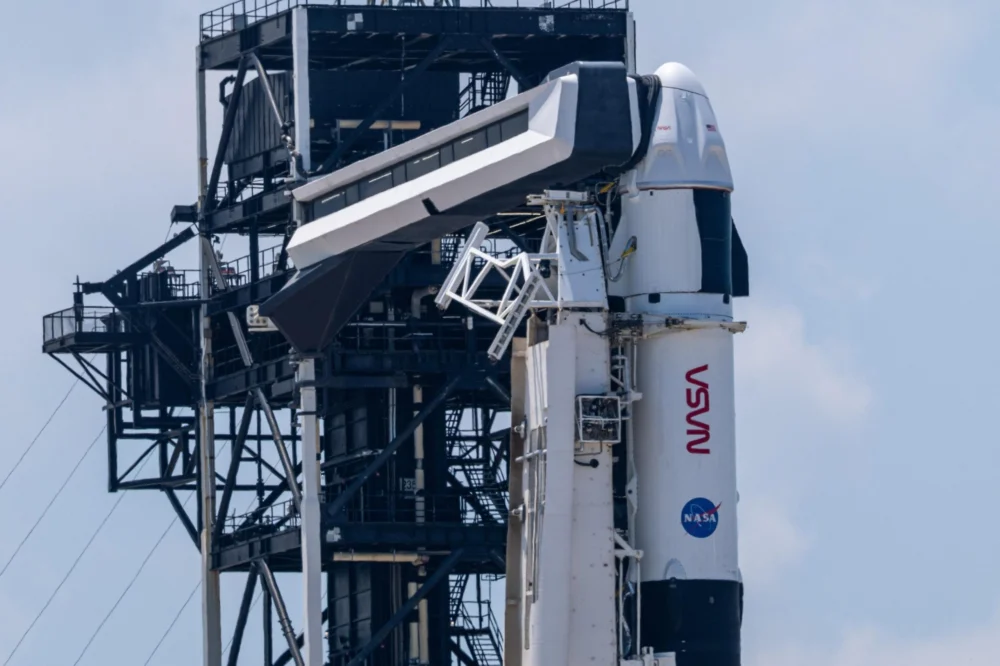
As 2026 unfolds, the global space sector is navigating a profound transition from an era of experimental "firsts" to one of sustained, industrial-scale operations. The novelty of reusable rocketry has given way to a reliable, high-cadence launch manifest that underpins a burgeoning orbital economy. Low Earth Orbit (LEO) is no longer a vacuum of activity but a crowded corridor of operational satellite constellations, while direct-to-device connectivity has moved from the realm of telecommunications theory into the pockets of everyday consumers. This year represents a pivotal moment where the groundwork laid by decades of iterative engineering is finally resolving into a cohesive infrastructure that extends from Earth’s atmosphere to the lunar surface.

The visibility of space activity in 2026 invites a critical examination of the trajectory ahead. To understand where the next wave of breakthroughs is taking shape, one must look past the routine execution of launches and toward the research and development efforts that are currently maturing out of the public eye. The progress of 2026 is defined by a dual-track evolution: the high-profile milestones that capture the global imagination and the "invisible" enablers—software, logistics, and sustainability protocols—that ensure these milestones are more than just fleeting achievements.
The Psychology of Public Engagement in the New Space Age
The relationship between technological progress and public interest is rarely linear. Historical data on information-seeking behavior suggests that while operational systems like GPS or mature satellite internet providers provide consistent utility, they rarely generate the dramatic spikes in public attention associated with experimental risk. For instance, search trends surrounding major aerospace entities often reveal that "utility" programs like Starlink maintain a steady baseline of interest, whereas "visceral" milestones, such as the full-stack testing of heavy-lift vehicles or the first high-resolution images from deep-space observatories, trigger massive surges in engagement.

This "interest gap" is significant for 2026. As the industry scales, many of its most vital advancements—such as improved orbital debris tracking or more efficient bus architectures—remain confined to specialist circles. However, the surges in public awareness occur when years of quiet, iterative engineering suddenly result in a tangible, legible moment of progress. In 2026, we are approaching several such "inflection points" where long-term R&D will finally break through the surface of public consciousness.
1. The Artemis II Milestone and the Cislunar Economy
The most significant visible milestone of 2026 is undoubtedly the Artemis II mission. As the first crewed mission to journey beyond low Earth orbit since the conclusion of the Apollo program in 1972, Artemis II represents a psychological and technical homecoming to deep space. While the mission is designed as a lunar flyby rather than a landing, its success is a prerequisite for the sustained human presence on the Moon envisioned for the latter half of the decade.

Beyond the government-led mission, 2026 is seeing the maturation of the Commercial Lunar Payload Services (CLPS) initiative. Private landers, such as those developed by Intuitive Machines and Astrobotic, are moving from "proof of concept" to "logistical workhorse" status. These missions are no longer just about landing; they are about establishing a cadence of delivery for scientific instruments, resource-prospecting tools, and communication relays. This represents the birth of a true cislunar economy, where the Moon is treated not as a destination for a flag-planting ceremony, but as a site for long-term scientific and industrial activity.
2. The Dawn of Private Orbital Habitats
For over twenty years, the International Space Station (ISS) has served as the sole laboratory for continuous human presence in orbit. However, with the ISS entering its final years of operation, the focus has shifted to the Post-ISS Transition. In 2026, the spotlight is on commercial space stations, specifically the Vast-1 mission.

Vast’s Haven-1 module aims to be the first privately built and operated station to host a crew in orbit. This is a critical proof-of-concept for the future of LEO. If a private entity can successfully manage the life support, safety, and logistical requirements of a crewed habitat, it signals to the global market that LEO is open for business. The implications for pharmaceutical research, materials science, and even orbital tourism are vast, as these platforms will offer more flexible and cost-effective access to microgravity than the government-run stations of the past.
3. Space Domain Awareness and the Kessler Challenge
As the number of active satellites and spent rocket stages in orbit grows, the risk of collisions becomes an existential threat to the industry. In 2026, Space Domain Awareness (SDA) has moved from a niche defense concern to a central pillar of orbital sustainability. The technical challenge is no longer just seeing objects in space, but predicting their behavior with enough precision to avoid the "Kessler Syndrome"—a cascading series of collisions that could render certain orbits unusable.

Missions such as SunRISE and various debris-tracking constellations are deploying new sensors to monitor the space environment in real-time. Furthermore, 2026 marks an increase in international cooperation regarding "active debris removal" (ADR) and "on-orbit servicing" (OOS). Companies are demonstrating the ability to dock with non-cooperative satellites to refuel them or deorbit them safely. These technologies are the "garbage trucks" and "tow trucks" of the new space age; they are rarely the subject of headlines, but without them, the expansion of the space economy would be impossible.
4. Hyperspectral Imaging and Climate Intelligence
Earth observation is undergoing a revolution in 2026, shifting from simple optical photography to complex "climate intelligence." The deployment of hyperspectral sensors allows satellites to see not just the shape of the land, but its chemical composition. This has profound implications for monitoring methane leaks, assessing crop health with granular precision, and tracking the chemical signatures of ocean acidification.

This data is being integrated into global financial and regulatory systems. In 2026, space-based data is no longer just for scientists; it is used by insurance companies to price climate risk and by governments to enforce environmental treaties. The breakthrough here is the democratization of high-fidelity data, where the time between a satellite capturing an image and a decision-maker acting on that data has shrunk from weeks to minutes.
5. Robotic Frontiers: Beyond the Moon
While human spaceflight often dominates the news, robotic exploration in 2026 is pushing into the deep solar system with renewed vigor. The Nancy Grace Roman Space Telescope is nearing its final stages of preparation, promising a field of view 100 times greater than that of the Hubble Space Telescope. Meanwhile, 2026 is a critical year for missions already in transit, such as the Europa Clipper, as they conduct the complex navigational maneuvers required to reach the outer planets.

These robotic missions are increasingly autonomous. In 2026, we are seeing the first widespread use of "onboard intelligence" for deep-space probes. Instead of waiting hours for a signal to travel back to Earth and for a human to send a command, these spacecraft can identify scientific targets of interest and adjust their instruments in real-time. This autonomy is essential for exploring environments like the icy moons of Jupiter or the asteroid belt, where the delay in communication makes manual piloting impossible.
6. Orbital Logistics and Wireless Power Transmission
A major bottleneck for long-term space activity is power and refueling. In 2026, we are witnessing the first credible demonstrations of space-based solar power and orbital refueling depots. The ability to transfer cryogenic fuels in microgravity is a "holy grail" for deep-space exploration; it allows heavy missions to launch with empty tanks and "gas up" in orbit, significantly increasing the mass they can carry to the Moon or Mars.

Simultaneously, research into wireless power transmission is maturing. The concept of capturing solar energy in orbit—where the sun never sets—and beaming it down to Earth via microwaves or lasers is no longer purely speculative. While a full-scale orbital power plant is still years away, the 2026 demonstrations of point-to-point power beaming in orbit are proving that the underlying physics is sound and the engineering is becoming feasible.
7. The Edge Computing Revolution in Orbit
Perhaps the most understated breakthrough of 2026 is the integration of edge computing into satellite architectures. Historically, satellites were "dumb" sensors that beamed raw data to the ground for processing. Today, satellites are being designed as orbital data centers.

By processing data on the satellite itself, operators can reduce the massive bandwidth requirements currently clogging our communication links. For example, a fire-monitoring satellite in 2026 can process an image, identify a new wildfire, and send a high-priority alert to emergency services in seconds, rather than sending gigabytes of raw image data to a ground station for later analysis. This shift is being driven by partnerships between traditional aerospace firms and cloud computing giants like Google, Amazon, and Microsoft, who see orbit as the next great frontier for the global internet.
Industry Implications and the Geopolitical Landscape
The breakthroughs of 2026 are occurring against a backdrop of intense geopolitical competition and shifting economic models. The "Artemis Accords," a set of principles for cooperation in the civil exploration and use of the Moon, Mars, comets, and asteroids, continues to gain signatories, while a parallel lunar coalition led by other global powers offers a competing vision for lunar governance.

Economically, the "Space-as-a-Service" model has become the industry standard. Governments are increasingly moving away from owning and operating their own hardware, choosing instead to buy data, transport, and habitat time from private vendors. This has lowered the barrier to entry for smaller nations and private enterprises, leading to a more diverse—but also more complex—international space community.
Conclusion: The Normalization of the Extraordinary
As we look at the state of space science and technology in 2026, the defining theme is the normalization of the extraordinary. Reusable rockets, commercial space stations, and lunar logistics are becoming the "boring" infrastructure of a modern civilization. However, this normalization is precisely what allows for the next leap in exploration.

The milestones of 2026—whether they are the visible return of humans to cislunar space or the quiet deployment of orbital data centers—all point toward a future where space is an integrated part of the human experience. We are no longer just visiting space; we are beginning to inhabit it, manage it, and rely on it as a fundamental component of our global economy and our understanding of the universe. The "breakthroughs" of this year are the foundations of the next century, proving that while the challenges of space remain immense, our capacity to iterate, innovate, and overcome them is even greater.
