

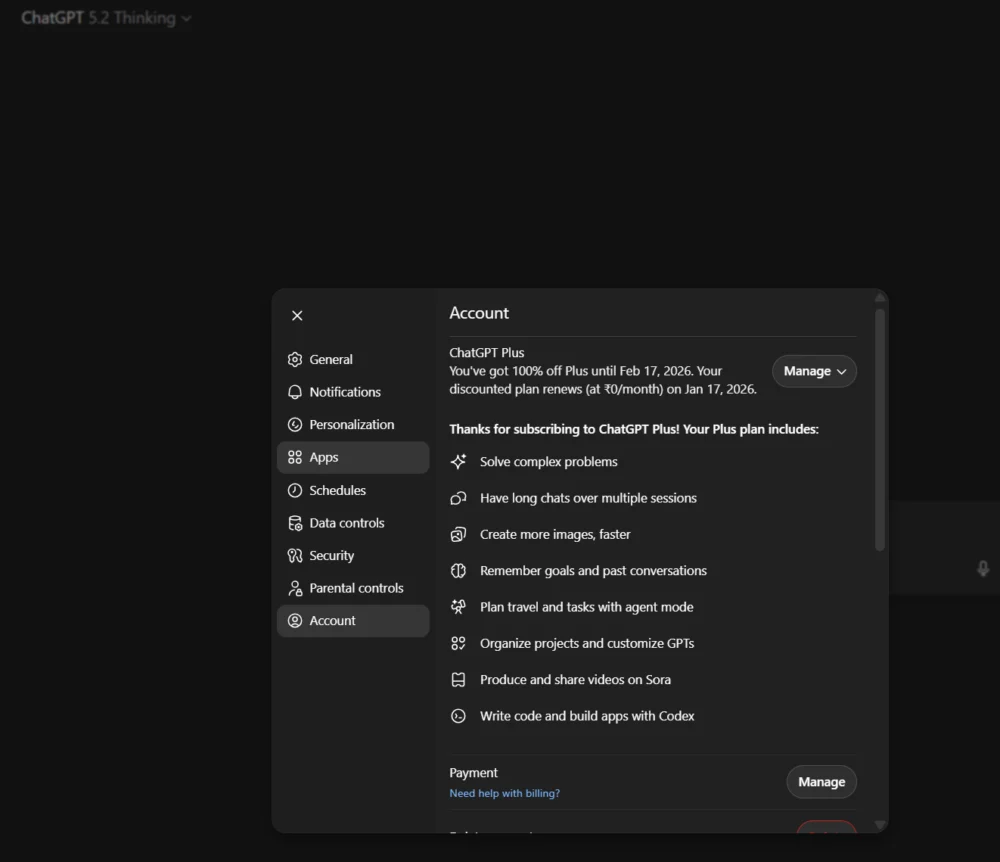
The landscape of generative artificial intelligence is characterized by intense competition and a relentless pursuit of user retention, particularly for premium service tiers that fuel ongoing research and development. In a subtle but significant strategic maneuver, OpenAI has begun implementing a targeted retention tactic designed to keep existing, paying subscribers within its ecosystem, even as they signal an intent to depart. Reports indicate that users attempting to cancel their $20 monthly subscription to ChatGPT Plus are being presented with an immediate, no-cost extension of one month. This initiative appears to be a calculated effort to mitigate subscriber churn by offering a temporary reprieve, potentially encouraging re-evaluation of the service’s value proposition.
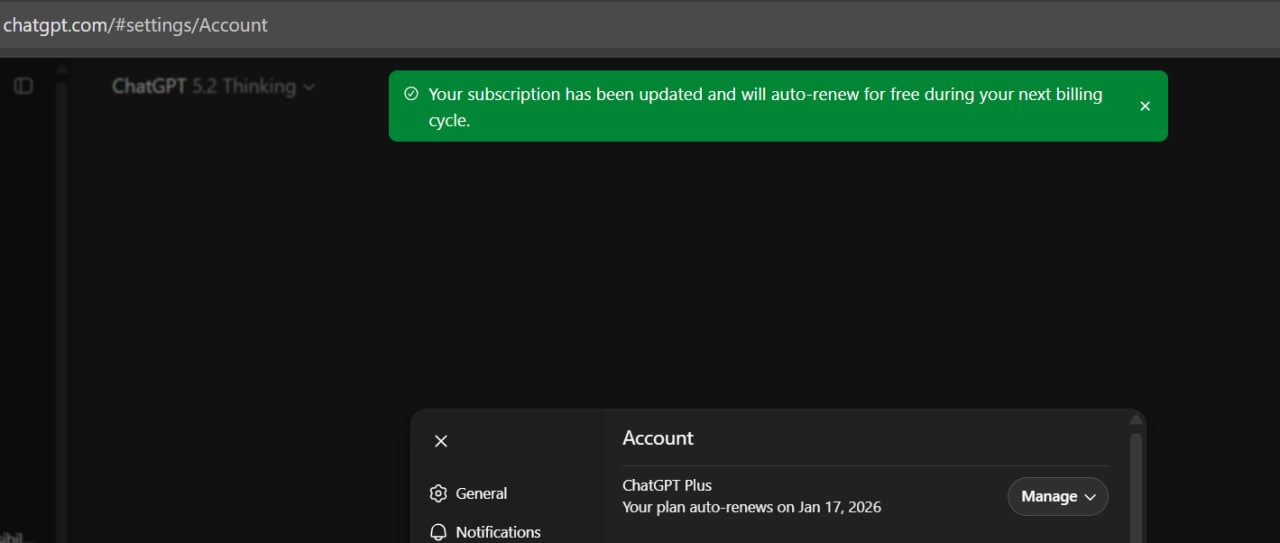
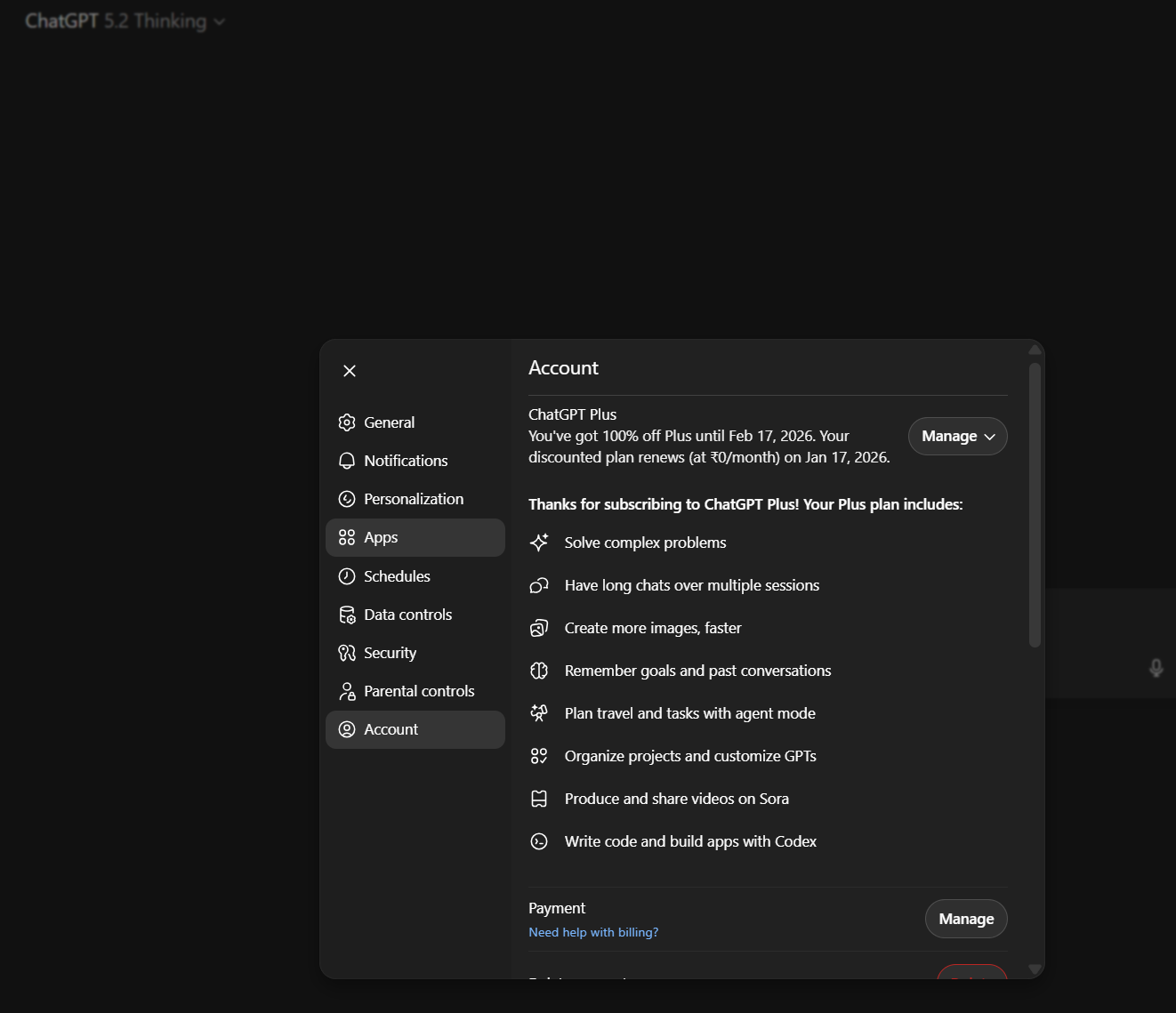
This specific intervention was first observed by technology monitors over the recent weekend. The impetus for these actions often stems from user dissatisfaction or the emergence of viable, specialized alternatives. In one reported instance that surfaced this change, a developer specializing in Flutter and Dart ecosystems articulated a clear preference shift toward Anthropic’s Claude model for their specific use cases, leading to the decision to discontinue the ChatGPT Plus subscription. Upon initiating the cancellation workflow within the ChatGPT interface, the platform dynamically generated an offer: one full month of the premium tier, normally priced at twenty U.S. dollars, rendered entirely free of charge.
This practice, known in marketing as "save offers" or "win-back incentives," is a staple across subscription-based industries, from streaming services to telecommunications. However, its application by a foundational AI provider like OpenAI carries distinct implications. For the subscriber, the immediate benefit is clear: continued access to advanced models (such as GPT-4 and future iterations), priority access during peak load times, and enhanced feature sets, all without immediate financial outlay. For OpenAI, the goal is to insert a pause button into the cancellation process. A month of free service is often deemed a worthwhile investment if it successfully converts a hesitant churner back into a full-paying customer upon the offer’s expiration.

The mechanics of this retention offer are straightforward. Once accepted, the user’s billing cycle is temporarily adjusted to $0/month. The system then automatically schedules the next billing date—which would typically occur around mid-February 2026, based on observed timelines—to revert to the standard $20 charge unless the user manually cancels again before that date. Users are advised to monitor the "Manage" section under their "Payment" settings to confirm the exact date when the automatic transition back to paid service will occur, offering a crucial window for final decision-making.
The geographical scope of this initiative appears to be broad, suggesting it is not a localized experiment but rather a phased, global rollout targeting specific segments of their subscriber base across various regions. The decision to roll it out gradually allows OpenAI to meticulously track key performance indicators (KPIs) related to retention rates, the cost-benefit analysis of the free month, and, crucially, the usage patterns of the users who accept the offer.
Industry Implications: The War for AI Supremacy
This retention effort is symptomatic of the burgeoning "AI subscription wars." While the underlying large language models (LLMs) are often the centerpiece of the competition, the battleground is increasingly shifting toward the quality of the service layer—reliability, feature parity, speed, and, ultimately, customer loyalty.
OpenAI’s dominance following the late 2022 launch of ChatGPT has been continually challenged. Competitors like Anthropic (with Claude), Google (with Gemini), and open-source models are rapidly closing the performance gap, particularly in specialized domains like coding, nuanced reasoning, or multimodal capabilities. For developers, as noted by the user who encountered the offer, the decision to switch often hinges on performance benchmarks against specific workflows. If a competitor offers a model that is demonstrably superior for a developer’s primary tasks (e.g., Dart/Flutter development), the $20 subscription fee becomes an easily justifiable cut.
By offering a free month, OpenAI is essentially buying time. This period allows the user to fully integrate the latest updates—which might include significant performance boosts, new tool integrations, or access to cutting-edge multimodal features—before being confronted with the renewal charge. If the incremental value provided during that free month exceeds the perceived utility of the competitor’s offering, the churn is averted.
Furthermore, this strategy provides OpenAI with invaluable data on why customers leave. Every user who attempts to cancel, regardless of whether they accept the save offer, provides a data point on churn vulnerability. Analyzing the timing and frequency of these cancellation attempts allows the product and engineering teams to pinpoint weaknesses in the service compared to rivals.
Expert Analysis: Subscription Economics in AI
From a business model perspective, retaining a customer is significantly more cost-effective than acquiring a new one. In the context of high-margin digital subscriptions, the Customer Acquisition Cost (CAC) for an active ChatGPT Plus user is already sunk. The cost of providing one free month is marginal compared to the potential Lifetime Value (LTV) of retaining that user for another year or more.
Analysts view this tactic as a maturity signal. Early-stage technology adoption often involves aggressive discounting or free trials to build initial market share. Mature, dominant platforms, facing sustained competitive pressure, pivot toward sophisticated retention mechanics. This suggests that the market has moved past the initial novelty phase of generative AI and into a phase where feature differentiation and service stability dictate long-term revenue.
Moreover, the timing of this offer is critical. OpenAI is constantly iterating. A user who leaves today might miss a substantial update released next week that solves their exact pain point. The free month acts as an enforced "re-trial" of the platform, ensuring that users are basing their churn decisions on the most current version of the product, not outdated perceptions.
The Future Impact and Strategic Trajectories
The widespread implementation of these retention tactics signals several key trends shaping the future of the AI subscription economy:
1. Intensified Feature Velocity: The pressure to provide compelling reasons to stay subscribed means OpenAI must accelerate its release cycle for Plus-exclusive features. We can expect a continuous stream of incremental, yet valuable, upgrades—faster context windows, enhanced custom GPT capabilities, specialized fine-tuning options, or deeper enterprise integrations—to keep the service feeling indispensable month-to-month.
2. Granular Tiering and Custom Pricing: While the current offer is a blanket one-month free pass, sophisticated data analysis may lead to more granular retention strategies. For instance, a user who only uses the code generation feature might be offered a discount on a specialized coding add-on rather than a full Plus renewal. This reflects a broader trend toward personalized pricing based on demonstrated usage patterns and perceived sensitivity to price changes.
3. The Rise of Specialized Models: The developer citing Claude’s superiority in Flutter/Dart development underscores a critical future trajectory: the fragmentation of general-purpose LLMs into highly specialized agents. While flagship models like GPT-4 remain benchmarks, smaller, highly optimized models tailored for specific programming languages, scientific research, or creative industries will erode the "one-size-fits-all" appeal of premium general subscriptions. OpenAI must continuously prove that its flagship offering is superior across all relevant use cases to justify the flat $20 fee.
4. Managing Subscription Fatigue: Consumers are becoming increasingly conscious of their monthly digital expenditure. As more powerful free alternatives emerge (often leveraging open-source models with reduced operational costs), the justification for a recurring $20 fee becomes scrutinized more heavily. OpenAI’s move is an attempt to preempt this subscription fatigue by offering periodic "value injections" disguised as retention bonuses.
The introduction of a free month upon cancellation is more than a simple discount; it is a sophisticated data-gathering operation married to a strategic attempt to extend the customer relationship during a period of high competitive volatility. As the generative AI space matures, these nuanced engagement strategies will become the defining characteristic of how leading providers maintain their hard-won user bases against an ever-growing field of capable challengers. For users, this competitive environment translates into an advantage, as providers are incentivized to reward loyalty—or at least, to fight hard to reclaim customers who have signaled an intent to leave. Monitoring the success rate of this retention offer will provide deep insight into the true elasticity of demand for cutting-edge AI access.
