

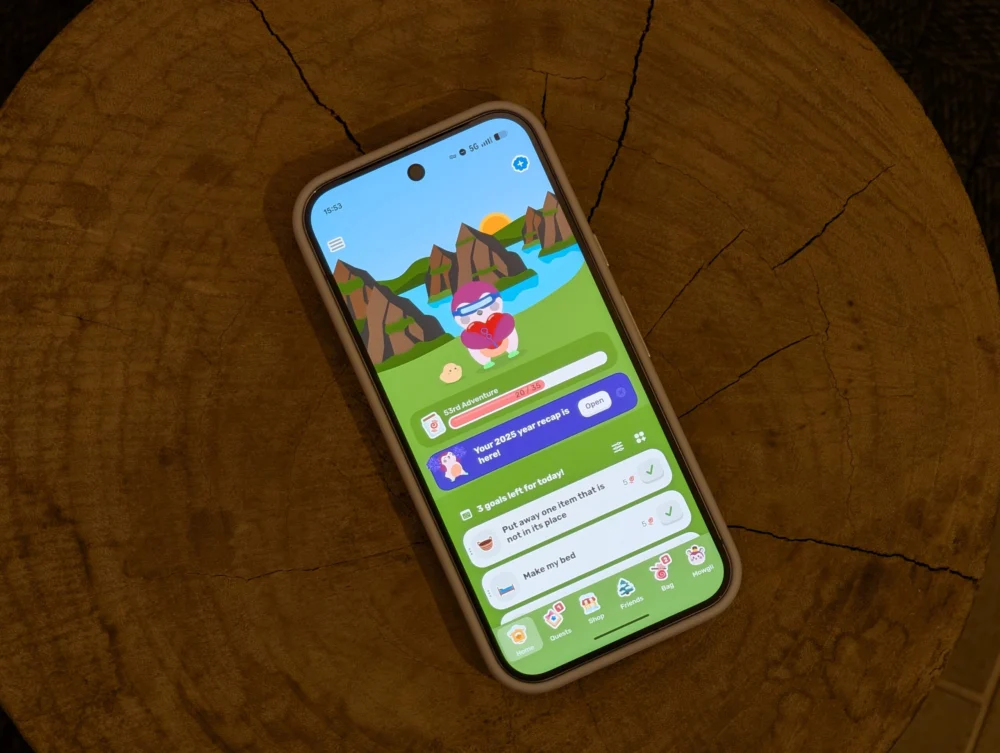
The annual ritual of setting New Year’s resolutions is deeply embedded in cultural consciousness, representing a collective aspiration for self-improvement and forward momentum. This temporal marker, the transition from one calendar year to the next, serves as a psychological reset button, fueling ambitious declarations ranging from physical fitness goals to mastering new professional skills. However, the documented failure rate of these resolutions—often cited as being above 80% by the second week of January—highlights a critical gap between intention and execution. The challenge is rarely a lack of desire; rather, it is the systemic failure to build durable, actionable routines that withstand the friction of daily life. In the modern context, this struggle is increasingly mediated by technology. The proliferation of specialized software tools promises to bridge this gap, offering structure, motivation, and accountability. For the year 2025, a careful evaluation of available digital aids reveals that success hinges not on the sheer volume of features, but on the alignment between the application’s methodology and the user’s intrinsic motivation profile. This analysis focuses on three distinct digital frameworks that have proven exceptionally effective in fostering long-term adherence to self-defined objectives.
The Context of Resolution Failure and Technological Intervention
Before examining the specific applications, it is crucial to contextualize why traditional goal-setting often falters. Psychologically, resolutions are frequently too broad ("Be healthier," "Learn more") and lack the necessary scaffolding for implementation. Research in behavioral science, notably the work pioneered by B.J. Fogg on Tiny Habits, emphasizes that behavior change requires a combination of motivation, ability, and a prompt. Many resolutions fail because they demand high motivation for tasks that are initially difficult (low ability). Technology, when applied correctly, primarily addresses the "ability" factor by lowering the barrier to entry and providing constant "prompts."
The digital landscape for self-improvement is saturated. From simple checklist applications to complex life-logging platforms, users are inundated with choices. This abundance paradoxically leads to decision fatigue and app-hopping—the constant search for the "perfect" system that excuses the user from the hard work of consistent engagement. The three applications detailed below succeed because they each offer a unique psychological lever: visual accountability, intrinsic motivation through gamification, and integration with existing workflow structures.
HabitKit: The Power of Visual Momentum and Commitment Devices
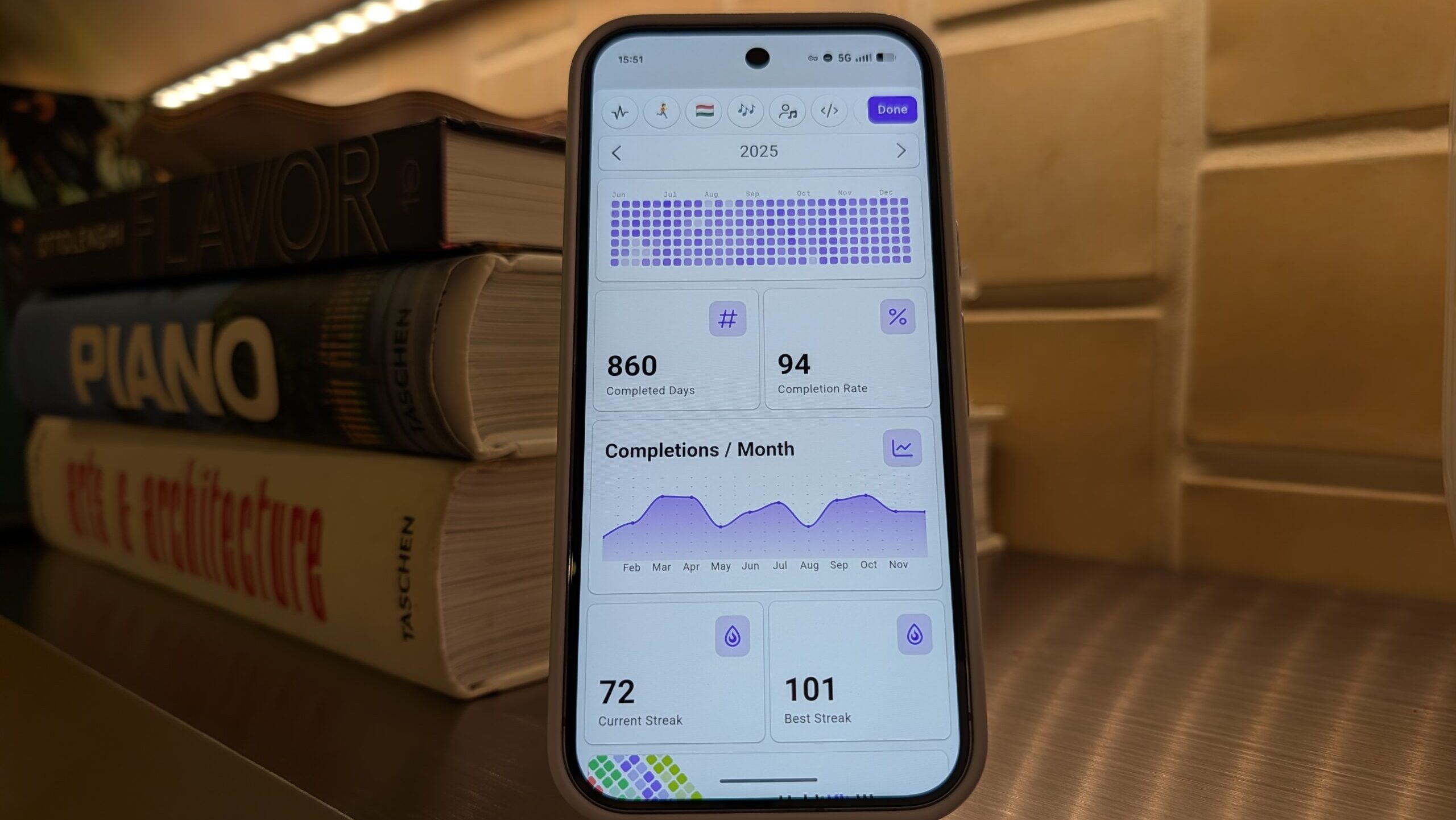
HabitKit distinguishes itself in the crowded habit-tracking market through its ruthless commitment to simplicity, borrowing a proven visualization technique from the world of software development: the contribution graph, or "streak grid." This visual representation, popularized by platforms like GitHub where developers track their code contributions, leverages a fundamental human aversion to breaking visible patterns.
Mechanism of Action and Design Philosophy:
The core interface presents each established habit as a dedicated timeline composed of a matrix of squares, one for every day of the year. When a user logs completion of a defined task (e.g., "Meditate for 10 minutes," or "Write 500 words"), the corresponding square fills with a color corresponding to the intensity or quantity of that day’s effort. This stark, graphical feedback loop is a potent form of commitment device. Unlike a simple "checked box," the contribution graph provides a long-term, spatially encoded record of success and failure. Breaking a chain of green squares is psychologically more impactful than seeing a single missed day on a linear list.
HabitKit’s customization capabilities support nuanced goal setting. Users can define not just binary success/failure, but also quantitative targets (e.g., completing three instances of a task per day). The application intelligently modulates the color saturation of the daily square based on these completions, offering granular feedback that reinforces incremental progress. This sophistication moves beyond simple binary adherence, acknowledging that some habits require variable daily input.
Industrial Implication: The Commoditization of Feedback Loops:
HabitKit’s success signals a trend in productivity software: the appropriation and repurposing of established, successful visual metaphors from unrelated professional domains. By adopting the contribution graph, HabitKit taps into established user recognition and the inherent dopamine release associated with completing a visual pattern. For developers of digital tools, this suggests that efficacy is increasingly tied to familiar, visually satisfying feedback mechanisms rather than purely novel feature sets. Furthermore, the implementation of robust, customizable widgets allows these visual commitments to migrate directly onto the device’s primary interaction surface (the home screen), ensuring the goal is never more than a glance away—a critical prompt in Fogg’s model.

Analytical Depth:
The integrated analytics in HabitKit are noteworthy precisely because they are secondary to the primary visual tracking. They serve to contextualize the visual data, allowing users to zoom out from the daily grind and appreciate macroscopic achievement. Reviewing these statistics is essential for combating the "Valley of Despair" common in long-term habit formation, where short-term effort yields seemingly negligible results. Seeing a 70% completion rate over three months, despite a few bad days, reinforces the cumulative effect of micro-actions.
Finch: Leveraging Intrinsic Motivation Through Affective Computing
While HabitKit appeals to the logical, pattern-seeking side of the brain, Finch addresses the emotional and affective dimension of motivation. This application fundamentally shifts the paradigm from external accountability to intrinsic reward by wrapping habit tracking within a sophisticated layer of digital nurturing and gamification.
The Tamagotchi Effect Reimagined:
Finch functions as a virtual pet simulator, reminiscent of late 20th-century digital pets. However, the health and evolution of the Finch avatar are directly tethered to the user’s successful completion of self-care and personal development tasks. This linkage transforms mundane compliance into an act of stewardship and care. For users whose primary motivation wanes under purely logical systems, the emotional investment in their digital companion becomes the driving force.
Finch tends to prioritize goals related to well-being—hydration, mindfulness exercises, or light physical activity—which are often the first resolutions to be abandoned due to perceived low urgency. By framing these as necessary inputs for the pet’s flourishing, the app creates a powerful emotional urgency.
Expert Analysis: Gamification as a Motivational Bridge:
From a behavioral psychology perspective, Finch excels because it utilizes extrinsic scaffolding to build intrinsic desire. Initially, the user is motivated by the need to feed or care for the pet (extrinsic motivation). Over time, as the user consistently checks off positive behaviors, the pet grows, the environment evolves, and the user begins to derive satisfaction from the act of nurturing itself—the intrinsic reward. Furthermore, the social integration aspect, allowing users to nurture each other’s Finches, introduces a low-stakes form of social accountability, far less punitive than public failure but still effective in reinforcing routine.
Industry Trajectory: The Rise of Wellness-Oriented Productivity:
The success of Finch indicates a maturing consumer desire for productivity tools that do not induce burnout. The market is moving away from "hustle culture" apps toward those that promote sustainable performance by integrating mental and emotional maintenance. Future iterations in this sector will likely see deeper integration of biometric data (via wearables) to dynamically adjust pet needs based on real-time stress or activity levels, creating a truly symbiotic digital relationship.
Google Tasks/Calendar Integration: The Utility of Ubiquitous Infrastructure
The third methodology employed relies not on a dedicated, specialized application, but on leveraging existing, deeply integrated platform infrastructure: Google Calendar coupled with Google Tasks. This approach prioritizes seamless access and cross-platform consistency over specialized motivational features.
The Integration Advantage:
The key strength here is inherent universality. Google’s ecosystem spans virtually every mobile device and desktop operating system. By utilizing Google Tasks—especially since its tighter integration within the Calendar interface—the user embeds their habit commitments directly within their existing scheduling matrix. A habit like "Review project documentation" is no longer an abstract goal in a separate app; it is a recurring task appearing alongside scheduled meetings and appointments.
Analytical Drawbacks and Discipline Requirement:
The analysis of this method reveals a significant trade-off: the sacrifice of motivational mechanics. Unlike HabitKit’s visual graph or Finch’s emotional payoff, Google Tasks offers rudimentary completion tracking. The user must rely almost entirely on pre-existing internal discipline. This system is best suited for goals that are already high in the user’s priority hierarchy or those that require rigid temporal scheduling (e.g., attending a daily class or submitting a weekly report). The benefit of seeing the task populate the main calendar view acts as a scheduling prompt, but the follow-through relies on the user’s executive function without the aid of extrinsic nudges.
Future Impact: Platform Lock-in and Workflow Centralization:
The continued dominance of ecosystem solutions like Google’s (or Apple’s Notes/Reminders) in habit tracking points toward a future where productivity functions become increasingly bundled. Users may opt for the integrated solution not because it is superior in every metric, but because it minimizes context switching and maximizes data synchronization across their digital lives. The industry trend suggests that powerful third-party apps must either offer significantly superior niche functionality (like HabitKit’s graph or Finch’s gaming) or be deeply integrated via APIs to compete effectively against these centralized, ubiquitous tools.
Conclusion: Personalization as the Ultimate Metric
The persistence of New Year’s resolutions throughout the year is fundamentally a personalization problem. The technology employed must match the user’s psychological drivers.
For the individual driven by visual progress and quantitative metrics, HabitKit provides the necessary external structure and satisfying feedback mechanism to maintain consistency. Its GitHub-inspired visualization serves as a public or private contract with the self.

For the user who struggles with internal motivation and needs emotional reinforcement, Finch offers a unique solution, transforming compliance into nurturing through sophisticated gamification. It externalizes the reward system in a way that is engaging rather than demanding.
For the user prioritizing workflow efficiency and cross-platform accessibility, the integration of Tasks within the Calendar framework offers a low-friction, readily available scheduling tool, albeit one that demands higher self-governance regarding motivation.
Ultimately, the digital tool is only an amplifier. These three distinct approaches demonstrate that effective habit formation software caters to different cognitive styles. The longevity of any resolution is less about the calendar date on which it was made and more about the continuous, tailored digital scaffolding that supports the user when motivation inevitably wanes. The key to sustained change in 2025 and beyond lies in matching the application’s methodology—be it visual, affective, or infrastructural—to the user’s enduring behavioral profile.
