

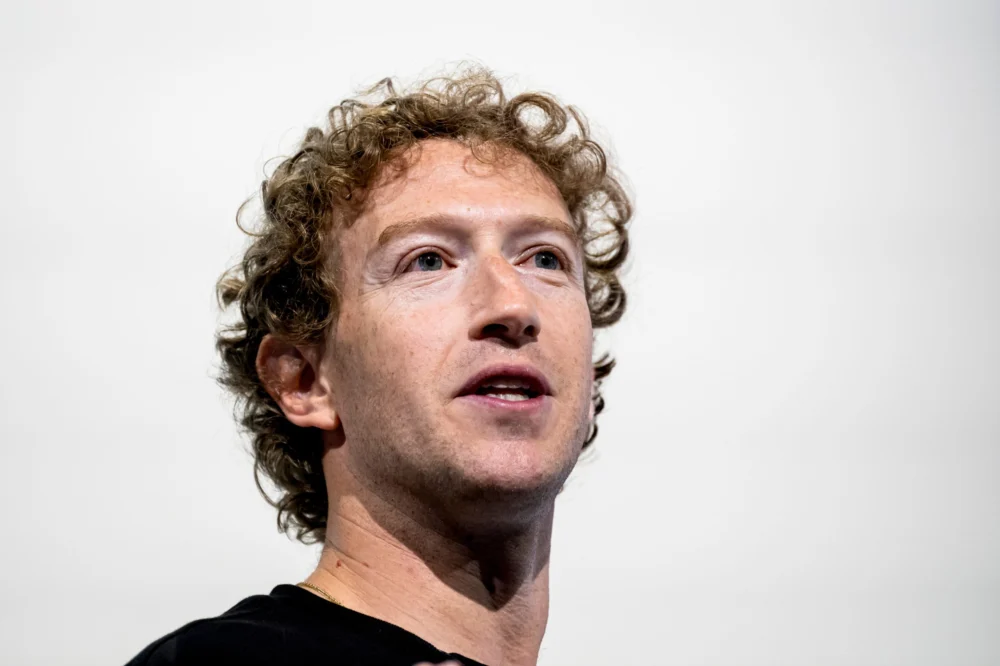
The mythology of the college dropout founder—the visionary who prioritized building over academia—is one of Silicon Valley’s most enduring, yet statistically misleading, narratives. While the folklore is rich with names like Steve Jobs, Bill Gates, and Mark Zuckerberg, rigorous economic analysis consistently demonstrates a stark counter-reality: the overwhelming majority of founders leading successful startups, particularly those achieving ‘unicorn’ status, possess bachelor’s or advanced graduate degrees. Despite this empirical evidence, the appeal of the un-degreed founder is currently experiencing a powerful, almost feverish resurgence, driven primarily by the unprecedented velocity and perceived temporal constraints of the current artificial intelligence boom.
This phenomenon is highly cyclical. VC enthusiasm for founders who jettison formal education waxes and wanes, often peaking during periods of intense technological disruption where first-mover advantage is deemed paramount. The current AI wave, characterized by foundational model breakthroughs and rapid market capture, has created an environment where the opportunity cost of a four-year degree is perceived as catastrophically high. This perception has led to the radical inversion of conventional career metrics, where dropping out is no longer a footnote, but an actively marketed badge of honor.
The Dropout as a Marker of Conviction
The trend is perhaps most visible in the pressurized environment of accelerator programs like Y Combinator (YC), where founders have mere minutes to distill their vision and signal their commitment to potential investors. Anecdotal evidence from recent batches suggests a palpable shift: founders are strategically highlighting their status as dropouts—whether from elite undergraduate programs, demanding graduate schools, or even high school—as a primary credential.
Katie Jacobs Stanton, founder and General Partner of Moxxie Ventures, notes this shift in signaling dynamics. While YC does not formally track dropout rates, the proactive emphasis founders place on this fact during pitches indicates its elevated status in the venture ecosystem. Stanton suggests that "Being a dropout is a kind of credential in itself, reflecting a deep conviction and commitment to building." In this high-stakes context, abandoning the traditional path is interpreted not as a failure to finish, but as a powerful, non-verbal commitment device. It signals to investors that the founder’s belief in their product and the timing of the market is so absolute that they are willing to forego a high-value, high-safety academic safety net.
This conviction is closely tied to the concept of Velocity over Validation. The core calculation facing highly capable young technologists today is stark: spend 18 to 24 months completing a degree, or immediately capture a nascent market driven by generative AI innovation. Kulveer Taggar, founder of the YC-focused venture firm Phosphor Capital, encapsulates this dilemma perfectly, noting a collective "sense of urgency and maybe FOMO." For founders, the internal debate is simplified: "I can finish my degree, or I can just start building."
The Accelerating Pressure of the AI Cycle
The urgency fueling this decision is fundamentally tied to the nature of AI development. Unlike previous tech cycles (e.g., social media or enterprise SaaS), the current landscape requires intense, immediate immersion in complex, rapidly evolving technical domains, often involving access to cutting-edge computational resources and proprietary model weights. A delay of six months can mean missing the window to secure early partnerships, attract key research talent, or establish a moat around a new application layer.
While the spirit of immediate action permeates the ecosystem, it is crucial to recognize that the AI leadership landscape is not dominated exclusively by dropouts. Many highly successful, young AI founders have opted to complete their rigorous technical programs. Michael Truell, CEO of Cursor, is an MIT graduate, and Scott Wu, co-founder of Cognition, holds a degree from Harvard. These examples demonstrate that formal education remains a powerful foundation, particularly in fields requiring advanced mathematical and computational expertise.
However, the magnetic pull of the market remains undeniable. Brendan Foody, co-founder of Mercor, famously left Georgetown to dedicate himself entirely to his startup. This choice reflects a strategic prioritization where the perceived marginal utility of the final academic credits is outweighed by the immediate, exponential gains of market participation.
The perceived necessity of immediate action has led to instances bordering on the extreme. One professor at an elite university recently recounted the story of a final-semester student who abandoned his degree, convinced that the diploma itself would actively diminish his chances of securing venture funding. This demonstrates a profound cultural shift: the diploma, traditionally the ultimate validation of intellectual discipline, is now sometimes viewed by founders as a symbol of hesitancy, a sign that they lacked the necessary radical urgency to seize the moment.
The Nuance of Social Capital and Brand Affiliation
While the ideological debate centers on the diploma, the practical reality of venture capital due diligence is often more nuanced. VCs are not necessarily anti-education; they are anti-delay.
Yuri Sagalov, who spearheads General Catalyst’s seed strategy, suggests that for a student deep into their academic tenure, the decision to drop out late in the game carries little practical weight for investors. "I don’t think I’ve ever felt any different about someone who graduated or didn’t graduate when they’re in [their] fourth year and drop out," Sagalov notes.
The key insight here is the enduring value of the university brand and its associated social network, irrespective of the final parchment. Attending an elite institution—even without graduating—provides intangible benefits: access to top-tier peers who become co-founders or early employees, exposure to world-class research, and the inherent credibility of the institutional name. Sagalov emphasizes that founders retain "a lot of the social value… because you can put the fact that you participated." In the era of digital networking, a LinkedIn profile noting attendance at a top-tier school often suffices, making the formal completion of the degree a less critical hurdle for fundraising. The network, not the coursework, becomes the lasting asset.
Industry Implications: The Maturity and Wisdom Gap
Despite the compelling case for speed and conviction, not all VCs are equally swayed by the current enthusiasm for the dropout archetype. A critical division exists between investors focused solely on rapid technical execution and those prioritizing long-term organizational durability.
Wesley Chan, co-founder of FPV Ventures, represents the latter perspective. Chan is more cautious about investing in founders whose primary credential is their willingness to forgo college. His skepticism stems from a prioritization of "wisdom"—a trait he believes is often underdeveloped in younger founders.
Wisdom, in the context of scaling a technology company, involves more than just technical brilliance. It encompasses strategic foresight, resilience under pressure, effective management of complex corporate governance issues, and the ability to navigate inevitable market corrections and internal conflicts. These skills, Chan argues, are typically found in "older founders or people who have a couple of scars under their belt."
This introduces a significant industry implication: the Maturity Gap. While a 20-year-old dropout might possess the technical acumen and zeal necessary to build a novel AI feature in six months, they may lack the experiential depth required to build an enduring institution capable of weathering legal challenges, geopolitical shifts, or a protracted fundraising drought. Investing in the dropout archetype is fundamentally a bet on maximal technical velocity, often at the expense of organizational maturity and resilience.
For the venture ecosystem, this leads to a bifurcation of risk profiles. Seed-stage investors, aiming for rapid proof-of-concept and a quick exit, may heavily favor the dropout signal, as it implies aggressive time-to-market. Conversely, later-stage investors, tasked with ensuring scalability and corporate governance, may require evidence of the wisdom and experience that often accompany a more traditional professional trajectory or advanced education.
Future Impact and Institutional Response
The current spike in dropout enthusiasm is testing the fundamental value proposition of higher education for elite technologists. If the AI cycle continues to reward immediate market entry so dramatically, top universities face mounting pressure to radically restructure their computer science and engineering programs.
Institutions may need to shift from traditional, regimented four-year cycles to highly flexible, modular programs that allow for sanctioned sabbaticals for building startups, or risk becoming mere pipelines for early talent acquisition rather than degree conferrals. If the perception solidifies that the final years of an elite degree are a liability rather than an asset, these universities will struggle to retain their most ambitious, high-potential students.
Furthermore, the long-term societal impact must be considered. While the narrative glorifies the outlier success stories, the vast majority of dropouts do not become billionaire founders. The current cultural moment encourages a high-risk gamble, which, if generalized, could lead to a generation of ambitious individuals lacking the structural foundations and diverse intellectual exposure that a complete university education provides—foundations often crucial for pivoting when the initial startup idea fails.
The dropout trend, particularly during a transformative period like the AI revolution, serves as a powerful barometer of market exuberance and urgency. It highlights a zero-sum calculation where time is perceived as the scarcest resource. While statistical evidence still favors the credentialed founder, the immediate cultural signal of sacrificing the degree for the dream—a demonstration of extreme commitment to the present technological imperative—has temporarily become the most coveted, if statistically questionable, founder credential in the venture capital arena. The ultimate success of this generation of AI dropouts will determine whether this cyclical fascination becomes a permanent shift in how founder potential is measured.
