

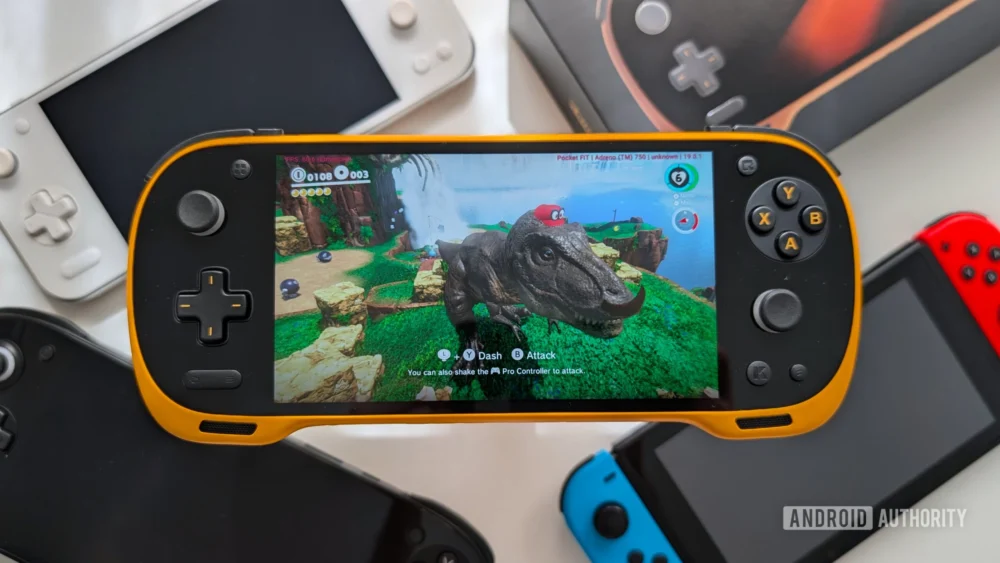
The burgeoning market for high-performance Android gaming handhelds, a sector characterized by fervent community engagement and often aggressive pre-order schedules, is currently grappling with significant logistical turbulence. The latest device to encounter substantial delivery headwinds is the KONKR Pocket FIT, a system that had positioned itself as a compelling, value-oriented challenger in the premium handheld space. Reports emanating from the company’s recent communication channel confirm that backers of the flagship Pocket FIT Elite variant are now facing a protracted waiting period, with promised delivery timelines effectively dissolving into the period immediately following the 2026 Chinese New Year celebrations, suggesting dispatch won’t resume in earnest until early March.
This development casts a shadow over the initial excitement surrounding the KONKR Pocket FIT, which, despite being unveiled before several of its direct competitors, is now seeing its top-tier model fall considerably behind schedule. The official notification, disseminated via an update on the device’s crowdfunding platform, attributed the setback for the Elite model to "multiple recent supply chain disruptions." While the standard Pocket FIT G3 Gen 3 appears to be progressing, albeit slowly, the more powerful Elite iteration—the one sporting the cutting-edge Qualcomm Snapdragon 8 Elite chipset—is now officially in limbo.
For context, the Android handheld ecosystem operates on a razor’s edge of consumer expectation. Unlike established console manufacturers, these boutique and often crowdfunded operations rely heavily on maintaining delivery momentum to justify premium pricing and secure future investment. The KONKR Pocket FIT, in its standard configuration, had garnered positive initial reception, particularly the G3 Gen 3 model, which many analysts lauded as offering an exceptional performance-to-cost ratio. AYANEO, the entity behind the device, indicated that a substantial portion of the standard G3 Gen 3 orders were slated for fulfillment by the end of January, with thousands of units already in the hands of early adopters. However, the narrative shifts dramatically when examining the Elite tier.
The Snapdragon 8 Elite variant represents the pinnacle of the KONKR offering, promising top-tier emulation capabilities, including demanding systems like the Nintendo Switch—a key selling point that attracted a specific segment of power users. The updated communication suggests that while January shipping schedules are being managed for lower-spec models, the Elite component sourcing or assembly faces complexities significant enough to push its completion past the factory shutdowns associated with the Lunar New Year period, which in 2026 is anticipated to conclude in early February. This effectively means a multi-month delay for those who pre-ordered the flagship unit, potentially extending their wait well beyond the initial projections made when the campaign concluded. AYANEO has promised a more granular delivery schedule update in the first week of January, a timeframe that, given the traditional production lull surrounding the holiday, casts an early March delivery window as the optimistic best-case scenario.
Industry Implications and the Volatility of Component Sourcing
The delay affecting the KONKR Pocket FIT Elite is not occurring in a vacuum; it mirrors a broader pattern of volatility currently plaguing the specialized Android handheld manufacturing sector. This segment, which exploded in popularity following the success of earlier devices like the Steam Deck and subsequent Android-based challengers, is acutely sensitive to global component pricing and availability.
Expert analysis suggests that manufacturers are currently navigating an environment characterized by unpredictable pricing for crucial, high-speed memory modules, particularly LPDDR5X RAM. While AYANEO’s official statement cited generalized "supply chain disruptions" rather than specific component costs, the industry consensus points toward sustained upward pressure on memory pricing. This scarcity or price fluctuation can force manufacturers to either absorb the increased cost—thereby eroding thin profit margins—or delay production until better procurement terms are available, or until they can redesign the bill of materials (BOM), which often requires extensive re-certification and testing.
The competitive landscape exacerbates the issue. The delay for the Pocket FIT Elite allows rivals, such as devices utilizing the same or similar high-end Snapdragon silicon that were announced later, to capture market share by achieving timely delivery. For consumers who prioritize performance above all else, a delay of this magnitude translates directly into a competitive disadvantage, as they are unable to access the promised hardware acceleration for demanding emulation workloads. The very positioning of the Elite model—as a premium, performance-first device—makes this logistical slip particularly damaging to brand credibility.
This pattern of launch hiccups is becoming a recurring theme. Other manufacturers in the space have recently faced similar crises, sometimes manifesting as sudden, post-crowdfunding price increases—a move that often sparks intense backlash—or outright cessation of production for certain configurations. These incidents underscore the inherent fragility of small-scale electronics manufacturing reliant on globally sourced, high-demand components. Unlike established firms that can leverage massive economies of scale and long-term supply contracts, these niche players often operate month-to-month, making them susceptible to even minor fluctuations in the semiconductor market.
Erosion of Consumer Trust and the Crowdfunding Conundrum
The reliance on crowdfunding platforms like Indiegogo for final production funding and initial distribution introduces a unique set of risks for consumers. Backers exchange immediate product receipt for a discounted price or access to exclusive features. When these delivery promises are broken, the trust deficit is significant.
In the case of the KONKR Pocket FIT Elite, early adopters who committed significant capital are now facing a scenario where their purchase window has stretched indefinitely, punctuated only by the looming logistical barrier of the Chinese New Year shutdown. This waiting game forces consumers to choose between holding their position, hoping for the best, or potentially canceling their order and seeking an immediately available alternative—a decision often made less appealing by the complexity of refund processes in these cross-border transactions.
This specific type of delay—extending past a major global manufacturing holiday—is particularly frustrating because it signifies a predictable bottleneck that sophisticated project managers should ideally mitigate. The implication is that the component sourcing for the Elite model was not finalized or secured with sufficient lead time to account for the traditional factory slowdown. For a product aiming for the "premium" designation, this level of foresight failure is scrutinized heavily by the enthusiast community.
Furthermore, the contrast between the standard G3 Gen 3’s staggered fulfillment and the Elite’s outright pause creates a two-tiered customer experience. While some backers are enjoying their devices, the most enthusiastic, and often highest-paying, customers are left waiting, leading to internal friction within the user base and negative sentiment that spreads rapidly across online forums dedicated to portable PC and Android gaming hardware.
Future Trends: The Drive for Supply Chain Resilience
The ongoing challenges faced by devices like the KONKR Pocket FIT Elite highlight a critical future trend for the entire handheld computing sector: the imperative for supply chain resilience over mere cost optimization.
Moving forward, successful manufacturers in this competitive space will need to demonstrate verifiable strategies for component redundancy and localized inventory management, even if it entails a slight upfront cost increase. Consumers are increasingly prioritizing guaranteed delivery dates and stability over the steepest possible discount. A device that ships on time, even if it costs 10% more than a delayed competitor, often wins the long-term loyalty battle.
We can anticipate increased scrutiny on the production timelines provided by these manufacturers. The honeymoon period, where consumers tolerated delays simply because the technology was new and exciting, is ending. As the market matures and more established players potentially enter the Android handheld space, the standards for fulfillment will rise sharply. Manufacturers will need to transition from a purely campaign-driven model to a more traditional, continuous manufacturing pipeline to ensure consistent product flow, especially for high-demand configurations like the Snapdragon 8 Elite-powered Elite model.
The KONKR Pocket FIT Elite’s current predicament serves as a potent case study in the dangers of overpromising in a component-constrained global environment. While the device itself may ultimately deliver the performance promised, the journey to the customer’s hands—now stretching potentially into a third or fourth month past initial estimates—will leave a lasting impression on how this specific brand is perceived within the highly discerning community of portable gaming enthusiasts. The next few months will be crucial for AYANEO to regain that lost confidence by demonstrating flawless execution once the factories return to full capacity post-holiday.
