

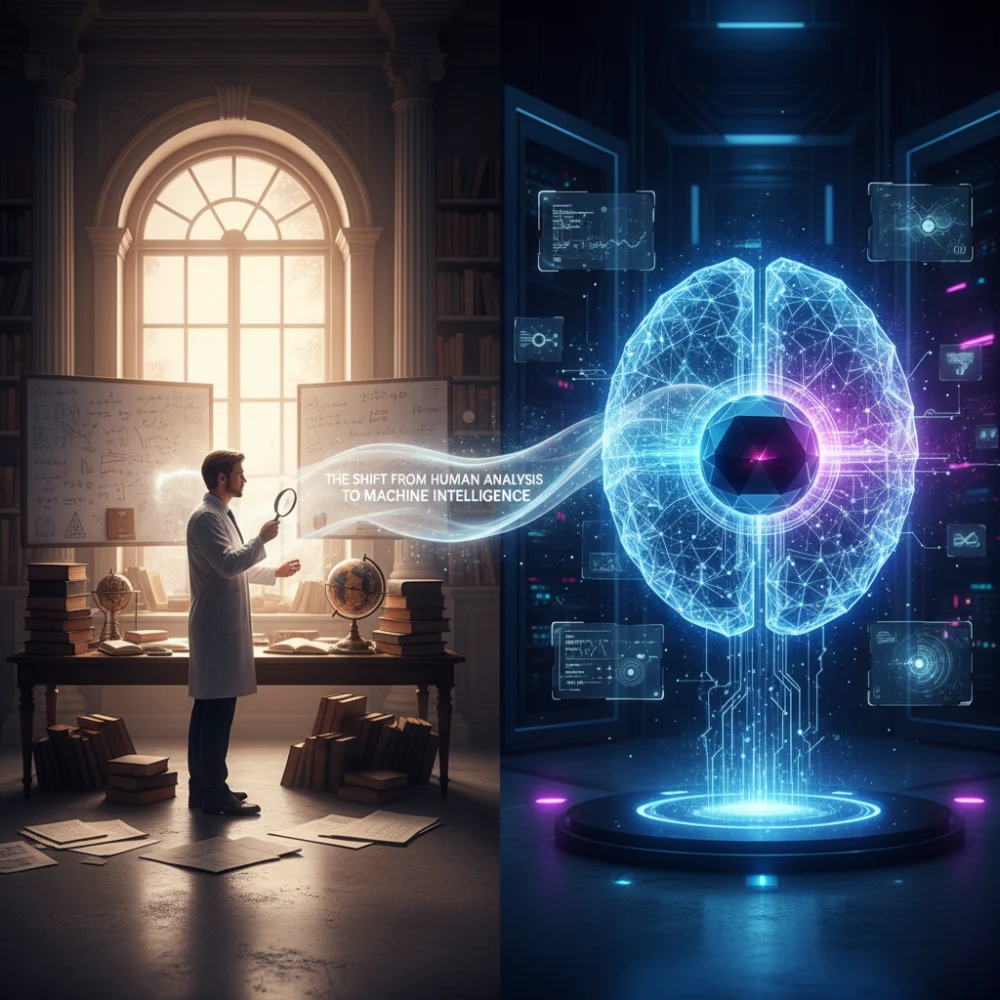
Introduction: A New Era of Analysis
We stand at the cusp of a profound transformation, a shift away from the traditional dominance of human analysis towards a future increasingly shaped by machine intelligence. This evolution, driven by advancements in artificial intelligence (AI), machine learning (ML), and data analytics, is reshaping industries and redefining how we understand and interact with the world.
The Drivers of Change: Why the Shift is Happening
Several key factors are accelerating this transition. The exponential growth of data, far exceeding human capacity to process it, is a primary catalyst. Furthermore, the increasing sophistication of AI algorithms allows machines to identify patterns, make predictions, and automate complex tasks with unprecedented speed and accuracy. The demand for efficiency and cost reduction is another crucial driver, as machine intelligence offers the potential for significant gains in these areas.
Data Overload and the Need for Automation
The sheer volume of data generated daily is overwhelming. Traditional human-led analysis struggles to keep pace. Machine learning algorithms, however, can sift through massive datasets, identifying anomalies and extracting valuable insights that would be impossible for humans to find in a reasonable timeframe. This automation is critical for businesses seeking a competitive edge.
Machine Learning: The Engine of Transformation
Machine learning, a subset of AI, is the driving force behind this shift. ML algorithms learn from data without explicit programming, enabling them to improve their performance over time. This capability is crucial for tasks like fraud detection, predictive maintenance, and personalized recommendations, where patterns evolve continuously.
Impact on Industries: A Sector-by-Sector Look
The impact of this shift is being felt across diverse sectors. In finance, AI is used for algorithmic trading, risk assessment, and fraud detection. Healthcare leverages AI for diagnosis, drug discovery, and personalized medicine. Manufacturing utilizes AI for predictive maintenance and quality control. Retail employs AI for supply chain optimization and customer behavior analysis. The applications are vast and growing.
Financial Services: Revolutionizing Risk Assessment
Financial institutions are increasingly reliant on AI for risk assessment. Machine learning models analyze vast datasets to identify patterns indicative of financial risk, enabling more accurate predictions and proactive risk management strategies. This leads to improved investment decisions and reduced losses.
Healthcare: Transforming Diagnosis and Treatment
In healthcare, AI is assisting in diagnosis through image analysis and pattern recognition. Machine learning algorithms can analyze medical images, such as X-rays and MRIs, to detect anomalies and assist doctors in making more accurate diagnoses. Furthermore, AI is accelerating drug discovery by identifying potential drug candidates and predicting their efficacy.
