

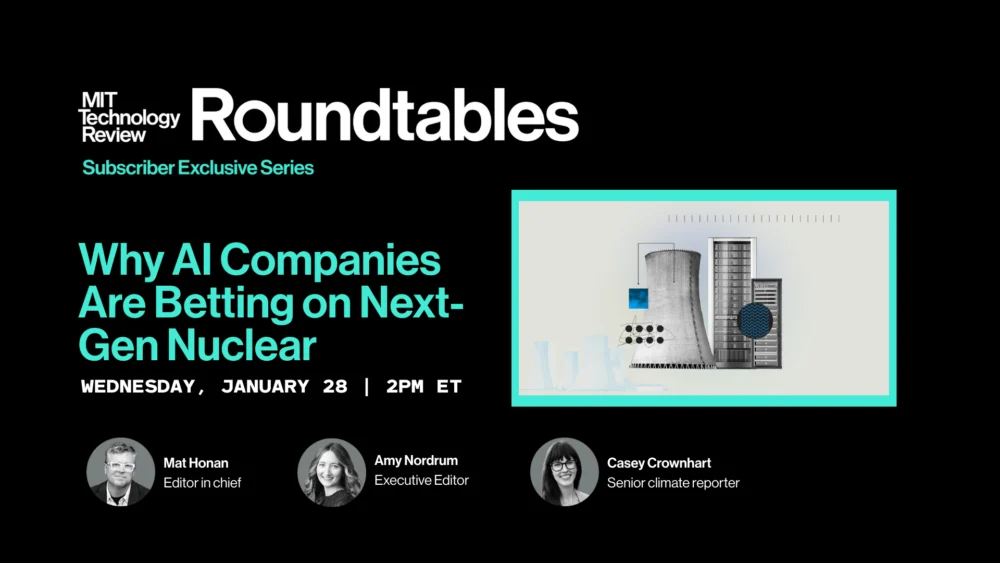
The exponential proliferation of artificial intelligence, particularly the resource-intensive domain of large language models (LLMs) and generative AI, is rapidly colliding with the finite capacity of global energy infrastructure. This looming crisis—often referred to within industry circles as the "megawatt mandate"—has driven some of the world’s most powerful technology firms to engage in a radical strategic pivot: betting heavily on the advancement and commercialization of next-generation nuclear energy. This is not merely an environmental or corporate social responsibility initiative; it is a fundamental calculation of operational survival and sustained technological scaling.
The Exorbitant Energy Calculus of Hyper-Scale AI
The computational demands of modern AI are staggering, creating an energy consumption profile that dwarfs previous technological eras. Training a state-of-the-art LLM can require gigawatt-hours of electricity, comparable to the annual energy use of small cities. While inference (the deployment and running of the model) is less intensive than training, the sheer volume of daily interactions with billions of users means inference alone will soon represent an unprecedented load on the grid.
Current data centers, designed primarily around efficiency and cooling, are increasingly bottlenecked by power supply. While many technology giants have committed to powering their operations with 100% renewable energy, the intermittent nature of solar and wind power presents a critical flaw in supporting 24/7, mission-critical AI services. AI models require continuous, high-density computing capacity. This necessitates "baseload" power—electricity generated reliably around the clock—which only dispatchable sources can provide. When renewables fail to meet demand, data centers often rely on natural gas peaker plants, contradicting corporate decarbonization pledges.
The critical requirement for AI is not just raw energy, but energy density and availability. Hyperscale data centers, often clustered in geographically advantageous locations, need power sources that can be deployed rapidly, scaled modularly, and operate with exceptionally high capacity factors (the ratio of actual output to maximum potential output). Traditional large-scale nuclear plants are too slow to permit and construct, and traditional renewables lack the necessary density per square kilometer to power these massive computational hubs. This gap is precisely where advanced nuclear fission and the distant promise of fusion enter the equation.
A New Atomic Paradigm: SMRs and Advanced Fission
The term "next-generation nuclear" encompasses several innovations designed to overcome the capital intensity, waste management challenges, and public perception issues associated with legacy pressurized water reactors (PWRs). The most immediate and commercially viable solution being pursued by AI firms is the Small Modular Reactor (SMR).
SMRs are defined by the International Atomic Energy Agency (IAEA) as reactors generally producing electrical power up to 300 MWe. Their modularity allows them to be manufactured in factory settings, offering economies of series production rather than the economies of scale that governed traditional nuclear projects. This significantly reduces construction time, standardized design minimizes regulatory friction across different sites, and their smaller footprint makes them ideal for co-location near existing industrial parks or future data center campuses.
Beyond SMRs, investments are also targeting Generation IV reactor designs, such as molten salt reactors (MSRs) and high-temperature gas reactors (HTGRs). These advanced fission technologies often operate at lower pressures, utilize passive safety features (relying on natural physics rather than active systems like pumps), and can utilize fuels more efficiently, sometimes even consuming existing nuclear waste as fuel. For AI companies, these designs offer a compelling trifecta: near-zero carbon emissions, exceptional reliability (capacity factors exceeding 90%), and the potential for long-term fuel security.
While fusion remains a decades-long technological bet, the sheer scale of investment from technology billionaires and venture capital funds—often those closely linked to the same firms building massive AI infrastructure—underscores the desperate need for an ultimate, energy-unlimited solution. For an AI firm forecasting its energy needs fifty years out, investing in fusion now is a hedge against global energy scarcity.
Strategic Investment: From Consumer to Producer
The commitment of technology giants to nuclear power manifests in several critical ways that go beyond standard utility procurement: direct investment, early Power Purchase Agreements (PPAs), and the establishment of dedicated energy divisions.
Historically, technology companies have been large-scale consumers of electricity, negotiating favorable rates from existing utilities. Now, they are acting as strategic anchor tenants, effectively underwriting the construction of new nuclear facilities. By signing long-term PPAs—sometimes spanning 20 or 30 years—AI firms de-risk the massive capital expenditures required for SMR deployment. This financial backing provides the necessary confidence for reactor developers and traditional utilities to secure financing, accelerating the path to commercial operation.
Furthermore, some AI leaders are exploring proprietary development, intending to own and operate the SMRs deployed adjacent to their most critical data centers. This vertical integration strategy is a direct response to grid vulnerability and price volatility. If a data center can generate its own baseload power, insulated from grid fluctuations, geopolitical energy crises, and local regulatory delays, it gains an unparalleled competitive advantage in operational resilience. This localized energy model treats the reactor not as a public utility asset, but as a dedicated piece of mission-critical hardware, akin to a proprietary supercomputer cluster.
Industry Implications and Market Transformation
The aggressive pursuit of nuclear power by the technology sector is poised to fundamentally reshape the electricity market and the physical geography of computation.
First, it validates the commercial viability of SMR technology. The commitment of organizations known for their stringent efficiency metrics and aggressive innovation cycles lends substantial credibility to reactor startups, attracting further private and public investment globally.
Second, it accelerates the trend toward energy localization. For decades, the electricity sector operated on a centralized hub-and-spoke model. AI’s energy demands are reversing this. Instead of building data centers where fiber optics are cheapest, firms will prioritize locations where reliable, dense power generation—i.e., SMRs—can be deployed with minimal regulatory hurdles. This shift could revitalize industrial areas and brownfield sites capable of hosting nuclear facilities, transforming regional economic landscapes.
Third, it forces a reckoning with utility regulatory structures. Traditional rate-of-return regulation is ill-suited for bespoke, corporate-owned nuclear assets. Regulators must develop new frameworks that accommodate private, high-reliability nuclear generation serving a single, massive corporate customer, balancing the need for grid stability with the imperative for decarbonization and technological advancement.
Expert Analysis: Navigating the Hurdles
While the technological promise is immense, the road to widespread nuclear adoption by the AI sector is fraught with complex economic and political obstacles.
The primary hurdle remains financing and timelines. Even with factory production, SMR projects require billions in upfront capital and face lengthy permitting processes, even in highly streamlined regulatory environments. The "first-of-a-kind" (FOAK) costs associated with establishing the supply chain and regulatory precedent for any new reactor design are substantial, necessitating significant government loan guarantees or tax incentives to bridge the gap until true economies of series production are realized.
Public perception, despite decades of safe operation in numerous countries, remains a latent risk. The concept of "nuclear co-location"—placing a reactor near a massive data center, potentially near population centers—requires intensive public outreach, transparent risk communication, and regulatory rigor to secure the "social license to operate." AI companies must become advocates for nuclear safety and waste management, effectively becoming part of the energy infrastructure dialogue.
Furthermore, the skilled labor pool is a constraint. Deploying hundreds of SMRs globally requires a massive influx of specialized engineers, operators, and maintenance staff, a workforce that has dwindled since the peak of nuclear construction in the 1970s. The AI sector, therefore, must also invest in educational pipelines and workforce development alongside reactor technology itself.
The Future Nexus: AI and Atomic Autonomy
Looking ahead, the synergy between AI and next-generation nuclear extends beyond simple power supply. AI is increasingly being leveraged to optimize the nuclear process itself. Machine learning algorithms are being applied to reactor modeling, predictive maintenance, and operational efficiency, promising to lower operating costs and enhance safety margins far beyond what was possible in legacy plants. This feedback loop—AI demanding power, and then optimizing the source of that power—creates a powerful self-reinforcing mechanism for innovation.
The ultimate vision is atomic autonomy for data centers. Imagine a future where a hyper-scale computing facility, perhaps one supporting the global inference needs of a multi-trillion dollar AI service, is entirely self-sufficient, powered by an adjacent cluster of SMRs, managed by AI control systems, and operating with zero operational carbon footprint. This model not only guarantees resilience but offers insulation from the geopolitical instability that frequently affects fossil fuel and traditional utility markets.
This paradigm shift is about more than just megawatts; it is about establishing control over the fundamental resource of the 21st-century economy: reliable energy. For AI companies, securing a dedicated, dependable, and decarbonized power source via next-generation nuclear is not an optional luxury—it is the prerequisite for achieving the next decade of computational scaling and maintaining technological superiority in the global race for artificial general intelligence. The technological elite are moving from being passive consumers of energy to active architects of the future energy grid, and that grid is fundamentally nuclear.
