

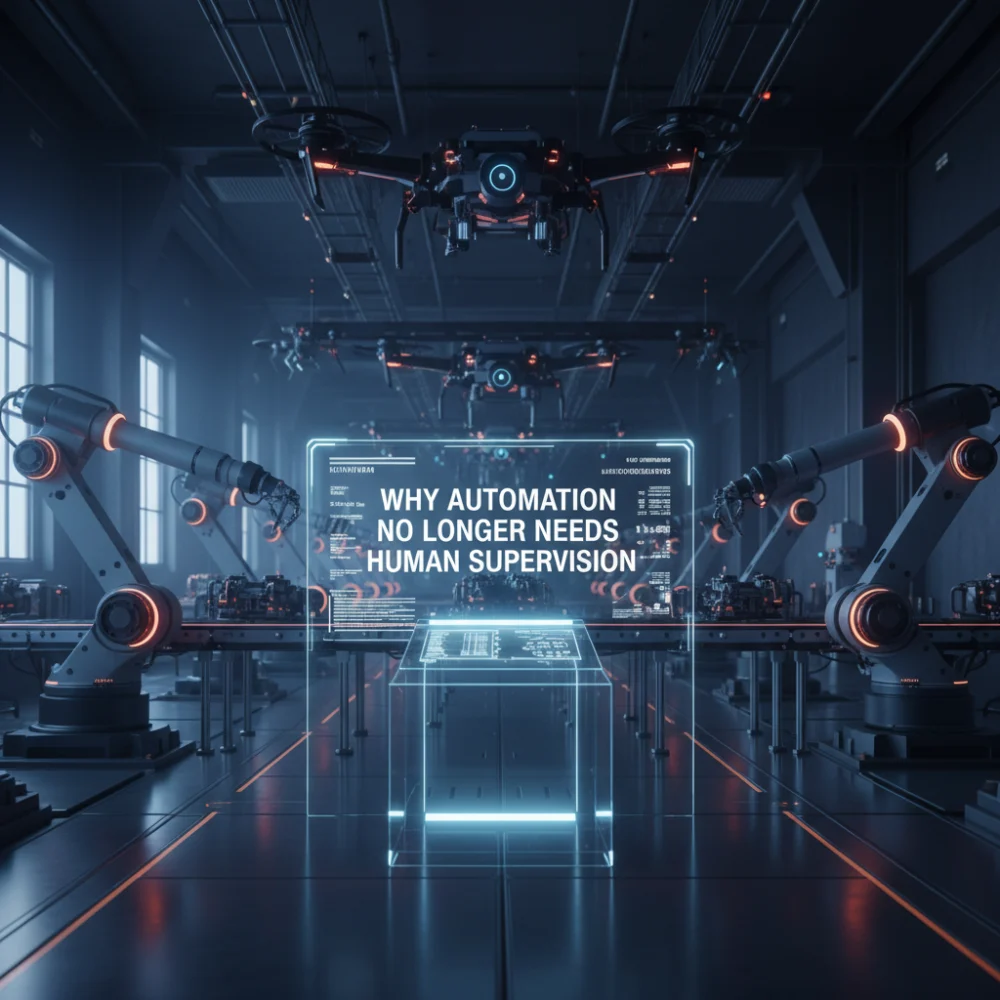
The Evolution of Automation: From Assistance to Autonomy
Automation has undergone a significant transformation over the past few decades. Initially conceived as a tool to assist humans in repetitive tasks, it now possesses the capacity to operate independently, making critical decisions and adapting to dynamic environments without constant human intervention. This evolution is driven by advances in artificial intelligence, machine learning, and sensor technologies.
The Rise of Artificial Intelligence and Machine Learning
At the heart of autonomous automation lies artificial intelligence (AI) and its subset, machine learning (ML). AI provides systems with the ability to reason, problem-solve, and learn from data. ML algorithms enable systems to improve their performance over time without explicit programming. This combination allows automated systems to handle complex scenarios and make informed decisions, reducing the need for human oversight.
The Role of Advanced Sensor Technologies
Autonomous automation relies heavily on sophisticated sensor technologies that provide real-time data about the environment. These sensors can include cameras, lidar, radar, and ultrasonic sensors. The data collected by these sensors is processed by AI algorithms to create a comprehensive understanding of the surroundings, enabling the system to make informed decisions.
Edge Computing and Real-Time Decision-Making
Edge computing, which involves processing data closer to the source, plays a crucial role in enabling autonomous automation. By processing data locally, systems can make real-time decisions without relying on a central server. This is especially important in applications where latency is critical, such as autonomous vehicles and industrial robots.
Case Study: Autonomous Vehicles
Autonomous vehicles are a prime example of automation that no longer requires human supervision. These vehicles use a combination of AI, ML, and sensor technologies to navigate roads, avoid obstacles, and make decisions about speed and direction. While human oversight is still required in certain situations, the level of autonomy is increasing rapidly.
Case Study: Industrial Robotics
In manufacturing, robots are increasingly being used to perform complex tasks without human intervention. These robots are equipped with sensors and AI algorithms that allow them to adapt to changing conditions and make decisions about how to perform their tasks. This has led to increased efficiency and reduced costs for manufacturers.
The Benefits of Autonomous Automation
There are numerous benefits to autonomous automation, including increased efficiency, reduced costs, improved safety, and the ability to operate in hazardous environments. By eliminating the need for human supervision, organizations can free up their employees to focus on more strategic and creative tasks.
