

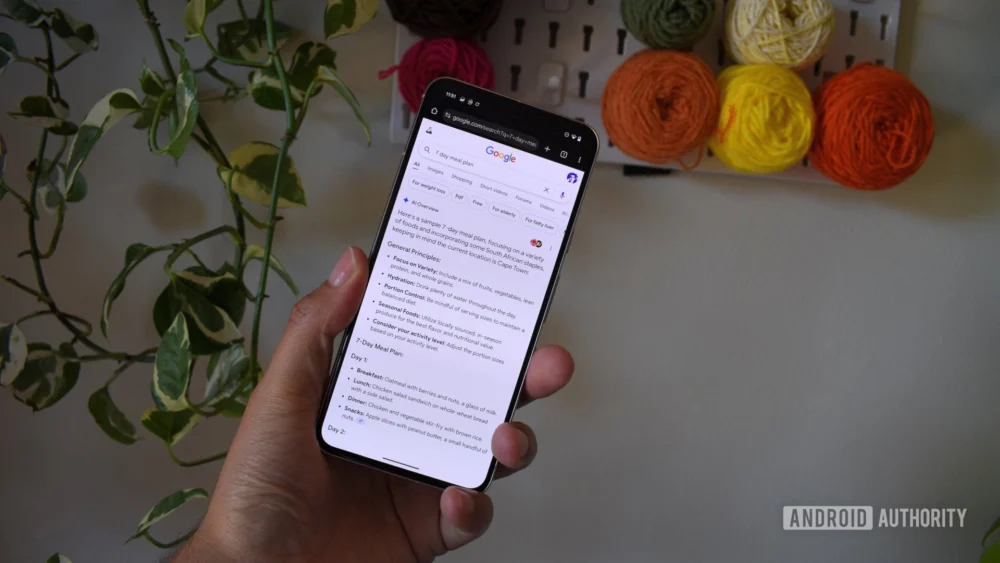
The digital information retrieval landscape is undergoing a significant metamorphosis, driven by the rapid integration of generative artificial intelligence directly into the core search experience. Google has quietly, yet decisively, advanced this evolution by streamlining the pathway between its high-level, synthesized answers—known as AI Overviews—and its more interactive, dialogue-based AI Mode, specifically targeting the vast mobile user base. This enhancement represents a critical pivot: transforming a static answer presentation into a dynamic, multi-turn conversational session without forcing the user to navigate away from the primary search results page.
This development is not merely a minor user interface (UI) tweak; it signifies Google’s deepening commitment to keeping users within its ecosystem for complex information foraging. Previously, users encountering an AI Overview on their mobile devices who required further clarification or deeper context faced a distinct friction point. If the initial, condensed summary failed to satisfy the query’s nuance, the typical path involved either manually formulating a new, more detailed query or clicking through to external source links—a multi-step process often deemed cumbersome on smaller screens. The newly implemented functionality bypasses this interruption. Upon expanding an existing AI Overview via the "Show more" prompt, users are now presented with an "Ask anything" text field. Inputting a follow-up question here immediately transitions the user experience into the fully conversational architecture of AI Mode.
This seamless handoff is a direct parallel to the desktop experience, which has long featured a "Dive deeper in AI Mode" prompt. However, optimizing this flow for mobile—where screen real estate is precious and immediacy is paramount—is technologically and strategically significant. By embedding the conversational prompt directly beneath the expanded summary, Google drastically reduces latency in the query refinement process. This creates a far more natural, human-like interaction, mimicking a dialogue where one query naturally seeds the next.
The underlying technological scaffold supporting this improved experience is equally noteworthy. Google explicitly confirmed that these iterations of AI Overviews benefit from the migration to Gemini 3 as the foundational large language model (LLM). The transition to Gemini 3 is touted to deliver what the company describes as a "best-in-class AI response right on the search results page." For the end-user, this implies not only better contextual understanding but also a reduced likelihood of the factual errors or "hallucinations" that plagued earlier iterations of the AI Overview feature. While the necessary disclaimer remains—"Gemini can make mistakes, so double-check it"—the increased sophistication of the base model is intended to make the initial overview substantially more reliable for low-stakes inquiries.
The Context: The Battle for Search Dominance
To fully appreciate the strategic weight of this mobile integration, one must examine the broader context of the ongoing competition in search and information discovery. The introduction of AI Overviews was Google’s aggressive response to existential threats posed by specialized AI chatbots and alternative search engines. For years, the dominant model was "ten blue links," a directory structure that necessitated user agency to synthesize information across multiple domains. AI Overviews represent a fundamental shift toward "answer engine" functionality, where the platform preemptively aggregates, synthesizes, and presents the final answer.
The friction point that Google is now addressing—the gap between a summary and deeper inquiry—was a recognized vulnerability. Users often engage in iterative questioning to fully understand a topic. If the AI platform cannot fluidly handle this iteration, users revert to established habits, such as opening multiple browser tabs or switching to a dedicated chat interface like ChatGPT or Microsoft Copilot. By enabling fluid, multi-turn conversations directly within the search interface, Google fortifies its position as the default starting point for virtually all online queries, regardless of complexity.
Furthermore, the mobile environment is where the vast majority of instantaneous information needs arise. Commuting, shopping, or quick reference checks often happen on smartphones. Any feature that enhances speed and reduces cognitive load on mobile yields substantial competitive advantages. The immediate availability of conversational refinement transforms the AI Overview from a potentially frustrating dead-end into a launching pad for deeper exploration, all while keeping the user firmly within the Google mobile browsing experience, likely Chrome.
Industry Implications: The Zero-Click Economy Intensifies
The ramifications of this seamless integration extend deeply into the digital publishing and content creation industries. The concept of the "zero-click search"—where the user finds the answer directly on the Search Engine Results Page (SERP) and never navigates to the source website—is amplified by this new feature.
When an AI Overview is presented, it inherently cannibalizes traffic from publishers whose content formed the basis of that summary. The follow-up query mechanism exacerbates this effect. If a user asks a broad question, gets a summary, and then asks a clarifying follow-up question, the likelihood of that user eventually clicking a source link diminishes significantly. They have effectively outsourced the synthesis and cross-referencing work to Google’s AI, receiving a curated, conversational experience without incurring the load times or potential advertising clutter of third-party websites.
For content creators, this tightens the economic vise. Revenue models predicated on high-volume, low-intent traffic (such as affiliate marketing or display advertising) become increasingly vulnerable. Publishers must now innovate beyond merely optimizing for keyword inclusion; they must consider how their structured data and unique insights can be presented in a way that the LLM values highly enough to be cited, or, more critically, how they can offer experiences that the AI cannot replicate—such as proprietary tools, unique community engagement, or highly specialized, up-to-the-minute reporting that lags even Gemini 3’s training cutoffs. The imperative shifts from being found to being cited and integrated in a way that maintains direct user engagement.
Expert Analysis: The Architecture of Context Preservation
From a technical standpoint, the successful integration of AI Overview and AI Mode relies heavily on sophisticated context management. The transition from the initial summary generation pipeline to the conversational mode requires the system to maintain the full context of the original query and the synthesized response provided by the Overview.
AI Mode, functioning as a more robust, persistent chat interface, must ingest the prior summary as the foundational context for the new follow-up query. If a user asks, "How long does it take to cook?" immediately after reading an overview about sourdough bread starter maintenance, the system must infer that the follow-up refers to the fermentation or proofing time, not general cooking time, without the user explicitly restating "sourdough starter." This contextual continuity is the hallmark of advanced conversational AI. The success of this mobile deployment suggests that Google has optimized the serialization and deserialization of this context across the different operational modes of its search architecture.
Furthermore, the choice of Gemini 3 underpinning the Overviews signals a move towards multimodal integration, even if the immediate change is text-based. Gemini’s inherent strength lies in its ability to process and reason across text, code, images, and video. As AI Overviews become more sophisticated, drawing on visual data or complex datasets, the conversational follow-up capability will become essential for users to interrogate the nuances of that multimodal synthesis.
Future Impact and Trends: Personalization and Proactive Search
This latest update signals several critical future trends for search engine development:
1. Deepening User Lock-in: The friction-free conversational flow is a powerful retention mechanism. As the AI becomes more adept at handling complex, multi-step research tasks—like planning a complex itinerary, comparing multiple technical specifications, or troubleshooting an obscure software error—users will naturally default to this integrated environment. This elevates Google Search from an indexer to a comprehensive research assistant operating in real-time.
2. The Rise of Contextual Advertising: If users are spending more time within the AI Mode environment, the opportunity for contextual advertising evolves. Instead of simply serving ads based on the initial search term, Google can serve highly relevant sponsored links or product placements based on the flow of the conversation. For example, if the conversation moves from "best camping stoves" to "lightweight propane tanks for high altitude," the integrated advertising system has a much richer, immediate commercial intent signal to exploit.
3. Shifting Benchmarks for Quality: The primary metric for search quality is moving away from mere relevance (Did the link match the keywords?) toward utility and completeness (Did the AI fully resolve the user’s underlying need across multiple steps?). This puts immense pressure on the underlying LLM to maintain high factual accuracy and logical coherence over extended interactions. Any return to factual errors or broken context in the follow-up stage will swiftly erode user trust in the entire system.
4. Mobile-First AI Development: The prioritization of the mobile rollout confirms that the smartphone remains the primary battleground. Future innovations, including proactive suggestions, personalized knowledge graphs synthesized from user history, and real-time data integration (like local inventory or traffic), will likely debut and be refined on mobile platforms before being rolled out, if at all, to desktop users.
In conclusion, Google’s move to enable instant, conversational follow-ups within mobile AI Overviews is a strategic maneuver designed to cement its dominance in the age of generative search. By smoothing the transition between summarized answers and deep-dive dialogue, the company is betting that convenience and contextual continuity will outweigh the temptation for users to seek fragmented information elsewhere. The success of this feature will be measured not just in engagement metrics, but in the degree to which it fundamentally alters user expectations regarding the speed and fluidity of digital information retrieval.
