

Despite unprecedented progress in global telecommunications, a stark digital divide persists, leaving an estimated 2.2 billion individuals with either unreliable or nonexistent internet access. This connectivity chasm is primarily a function of geography and economics; remote, sparsely populated regions often render the deployment of traditional fiber-optic cables or terrestrial cellular infrastructure financially prohibitive. While massive Low Earth Orbit (LEO) satellite constellations, spearheaded by initiatives like SpaceX’s Starlink and the OneWeb network, have captured the public imagination and achieved significant orbital scale—with nearly 10,000 active Starlink satellites alone—even this space-based infrastructure fails to guarantee ubiquitous, high-quality coverage across all corners of the globe.
A rejuvenated technology, High-Altitude Platform Stations (HAPS), is now emerging from the shadow of previous high-profile failures, presenting a compelling, near-space alternative. HAPS refers to uncrewed aircraft, steerable airships, or persistent drones operating in the stratosphere, typically hovering above 60,000 feet (over 12 miles), where air currents are relatively stable. After a decade of technical setbacks that sidelined the concept, several specialized aerospace companies are now entering crucial testing phases over challenging geographies like Japan and Indonesia, suggesting that 2024 marks the inflection point for this stratospheric internet solution.
Learning from the Stratospheric Setbacks
The concept of using the upper atmosphere as a telecommunications relay is not new, but its history is littered with expensive failures. The most famous attempt was Google X’s Project Loon, launched in 2011, which sought to create a floating network using high-altitude balloons. Loon demonstrated the technical feasibility of beaming internet down from the stratosphere, but it succumbed to fundamental operational challenges. The non-steerable nature of balloons meant that they were constantly subject to unpredictable stratospheric winds. Maintaining a continuous, stationary presence above a target area required the perpetual launch of new balloons to replace those that drifted away, rendering the logistics and economics of the system fundamentally unviable. Google formally terminated the high-profile project in 2021.
Another ambitious project, Facebook’s fixed-wing solar-powered drone, Aquila, also faced significant technical hurdles related to endurance and stability before its discontinuation. These early failures fostered skepticism among industry analysts. Dallas Kasaboski, a space industry analyst at Analysis Mason, notes that the HAPS market has historically been "slow and challenging to develop," haunted by the specter of overambition followed by non-delivery.
However, the current cohort of HAPS developers insists they have engineered solutions to the critical problems of persistence and station-keeping that plagued their predecessors. Instead of relying on passive balloons or early-stage fixed-wing designs, they are deploying sophisticated, solar-powered Unmanned Aerial Vehicles (UAVs) and controllable airships equipped with advanced avionics and high-capacity battery systems.
HAPS 2.0: Engineering Persistence
The primary technical breakthrough involves achieving sustained, stationary flight in the demanding environment of the stratosphere, which experiences temperatures as low as -60 degrees Celsius and requires exceptional energy efficiency.
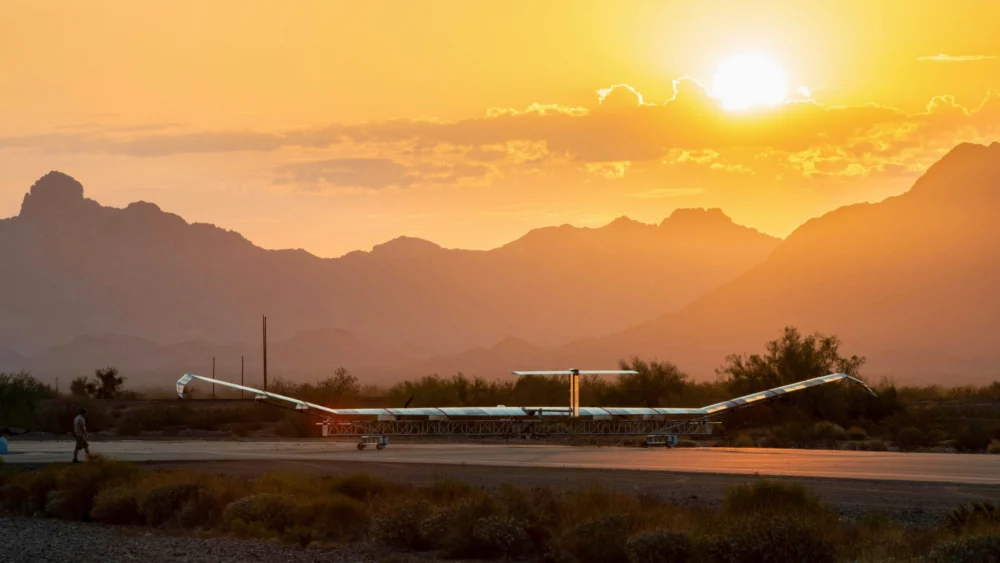
Aalto HAPS, a spin-off from aerospace giant Airbus, is championing the fixed-wing approach with its solar-powered UAV, Zephyr. This aircraft, boasting a 25-meter wingspan, set a HAPS endurance record in 2025 by remaining airborne for 67 consecutive days. According to Pierre-Antoine Aubourg, CTO of Aalto HAPS, the ability to maintain station and operate autonomously transforms the business case for remote connectivity, making it "profitable" where terrestrial mobile network operators often prefer to pay regulatory fines rather than invest in costly infrastructure expansion.
Zephyr is scheduled for critical test runs over southern Japan in the coming months, trialing 5G connectivity for remote island communities. Japan provides a perfect operational testbed due to its archipelago nature, featuring approximately 430 inhabited islands that are often mountainous, remote, and prohibitively expensive to service with traditional cell towers. Aalto HAPS is collaborating with major Japanese telecommunication firms NTT DOCOMO and Space Compass, which are integrating Zephyr directly into their next-generation network architecture. As Aubourg explains, the platform functions simply as a high-altitude cell tower, beaming standard 5G signals directly to users’ smartphones without requiring specialized satellite terminals. This seamless integration is a key commercial advantage.
Concurrently, New Mexico-based Sceye is pioneering the steerable airship model. Its 65-meter, solar-powered, helium-filled vehicle utilizes intelligent avionics and electric fans powered by innovative batteries to actively "point into the wind" and maintain precise geospatial positioning—a capability Loon lacked. Mikkel Frandsen, Sceye’s founder and CEO, highlights the geometric and physical advantages of their design: "We have significant surface area, providing enough physical space to lift 250-plus kilograms and host solar panels and batteries, allowing Sceye to maintain power through day-night cycles." Sceye is partnering with Japanese giant SoftBank to launch pre-commercial trials this year, further cementing the nation’s role as a global laboratory for stratospheric networking.
Industry Implications: The Density Advantage over LEO
The revival of HAPS is not merely about achieving technical persistence; it is fundamentally about offering a commercially viable, high-density alternative to LEO satellite constellations in specific geographical contexts. While LEO systems excel at providing basic coverage over vast, low-density areas like oceans or deserts, HAPS platforms are positioned to dominate the market for connecting underserved but moderately populated remote communities.

LEO satellites, orbiting at a high speed, require immense constellations to guarantee continuous coverage, driving up the initial capital expenditure. HAPS, conversely, can hover over a target area indefinitely. Aubourg notes that while providing LEO connectivity to a single region necessitates deploying a "complete constellation," HAPS can deliver sustained service with just "one aircraft to one location," allowing carriers to tailor fleet size precisely to market demand.
Crucially, HAPS addresses the critical issue of bandwidth dilution, a recognized limitation of LEO systems. Due to the physics of orbital mechanics, LEO satellite beams (often described by industry leaders as analogous to a flashlight beam) cover extremely wide areas. As the number of users within that coverage footprint increases—even in relatively isolated island communities or remote industrial sites—the available bandwidth per user drops significantly. Reports from conflict zones, such as Ukraine, have detailed Starlink bandwidth plummeting from peak speeds of over 200 Mbps to just 10 Mbps under heavy use by military drones and ground robots. Similarly, in island nations like Indonesia, subscribers have reported performance degradation as user density grows.
Frandsen argues that LEO performance becomes suboptimal once user density exceeds roughly one person per square kilometer. HAPS, operating at a much lower altitude (approximately 1/20th the distance of LEO), can focus its signal with greater precision, supporting hundreds of thousands of users simultaneously with superior bandwidth density, much like a terrestrial cell tower but with a far greater coverage radius (up to 15,000 square kilometers per platform).
Economic and Geopolitical Impact
Beyond technical performance, the economic argument for HAPS in addressing the global digital divide is compelling. For millions in developing nations, where survival wages hover around $2 per day, even relatively inexpensive LEO subscriptions (such as Starlink’s $10 per month entry point in parts of Africa) remain unaffordable. HAPS proponents assert that their technology offers a pathway to substantially cheaper connectivity.
World Mobile, a London-based telecommunications company that acquired HAPS developer Stratospheric Platforms, is pushing the envelope on cost-efficiency with its hydrogen-powered UAV, Stratomast. The company claims that its innovative phased array antenna, planned for flight tests this year, could deliver 200 Mbps bandwidth to 500,000 users over an area equivalent to more than 500 terrestrial cell towers.
Richard Deakin, CEO of World Mobile Stratospheric, provided a stark contrast in cost: he estimated that just nine Stratomasts could provide high-speed internet to Scotland’s 5.5 million residents for an annual operational cost equivalent to about 80 cents per person per month. This stands in sharp relief against LEO subscription costs in the UK, which often exceed $100 per month. If these projections hold, HAPS could radically shift the economics of broadband delivery in low-income regions.
Furthermore, HAPS offers a strategic geopolitical advantage. By deploying stratospheric infrastructure, smaller nations gain the ability to maintain complete operational control over their celestial internet-beaming networks, reducing reliance on mega-constellations controlled by larger foreign powers. This autonomy is increasingly valuable amid rising global tensions and concerns over data sovereignty. The platforms also offer rapid deployment capability for disaster relief, as demonstrated by the limited but crucial role Project Loon played after Hurricane Maria struck Puerto Rico.
Regulatory Acceptance and the Road Ahead
The maturation of HAPS technology is coinciding with a crucial period of regulatory acceptance. In the United States, where approximately 8 million households (4.5% of the population) remain entirely offline, the potential for HAPS to connect these segments more cheaply than traditional alternatives has drawn official attention. In late 2023, the US Federal Aviation Administration (FAA) released a detailed 50-page document outlining procedures for integrating large numbers of HAPS into American airspace. This regulatory clarity is vital for commercial scaling, moving the technology from experimental trials to reliable, persistent service delivery.
Despite the renewed momentum and technical leaps, caution remains the dominant posture among financial analysts. The HAPS market is projected to reach a relatively modest $1.9 billion by 2033, dwarfed by the projected $33.44 billion valuation of the LEO satellite internet industry by 2030. The industry’s troubled past, marked by the failures of tech giants like Google and Facebook, means current players are not just innovating; they are actively working to overcome a deep-seated legacy of technical skepticism and financial risk.
Companies like Aalto, Sceye, and World Mobile are attempting to catch up with an LEO industry that has already achieved global brand recognition and deployed infrastructure at scale. Their success hinges on demonstrating sustained operational reliability and proving their projected cost advantages in real-world, commercial settings over the next few years. The scheduled trials over the demanding island geographies of Asia represent the first true test of whether HAPS 2.0 can finally transform the stratosphere into a viable, competitive layer of the global telecommunications infrastructure. The outcome of these tests by the end of this year will determine whether stratospheric connectivity is a niche service or a disruptive force capable of finally closing the stubborn global digital divide.
