

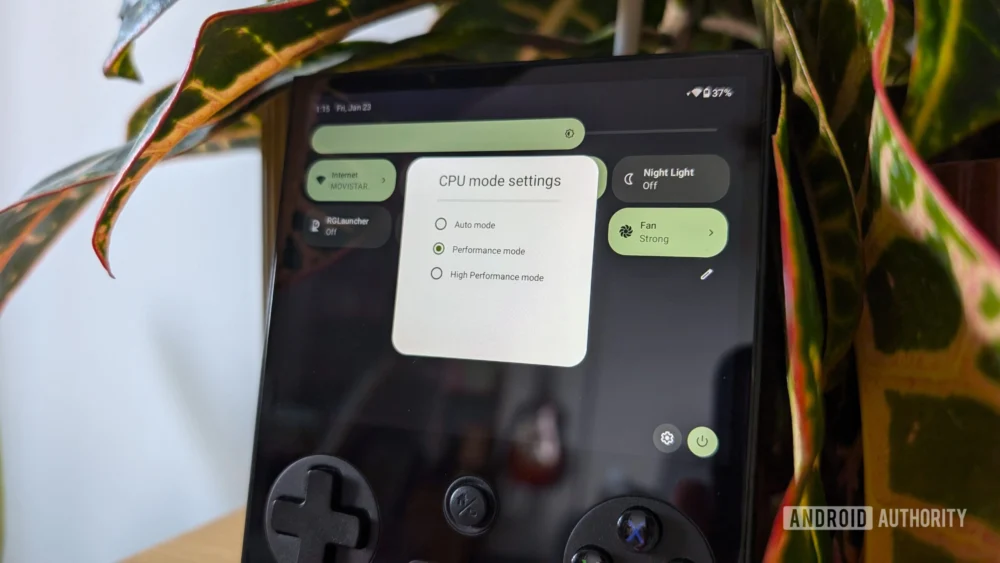
The landscape of dedicated handheld emulation devices has long been characterized by a dichotomy: the highly portable, often D-pad-centric "Game Boy style" form factor, and the larger, dual-analog "Nintendo Switch Lite style" horizontal layout. For years, vertical handhelds, while nostalgic and comfortable for classic 2D gaming, often sacrificed performance or control ergonomics when attempting to tackle more demanding systems like the PlayStation 2 or Nintendo GameCube. ANBERNIC, a persistent innovator in this space, appears to have navigated this challenge with the introduction of the RG 477V, a device that synthesizes component strengths from across its previous catalogue into a surprisingly capable, upright package.
This device arrives at a critical juncture in the emulation scene. The consumer appetite for high-fidelity emulation, pushing into the GameCube, PS2, and even entry-level Nintendo Switch territory, is stronger than ever. Simultaneously, manufacturers are battling over chipset optimization, driver stability, and ergonomic compromises inherent in the vertical design philosophy. The RG 477V is not just an iteration; it represents a calculated risk to prove that the vertical format can handle mid-to-high-tier emulation without crippling user experience.
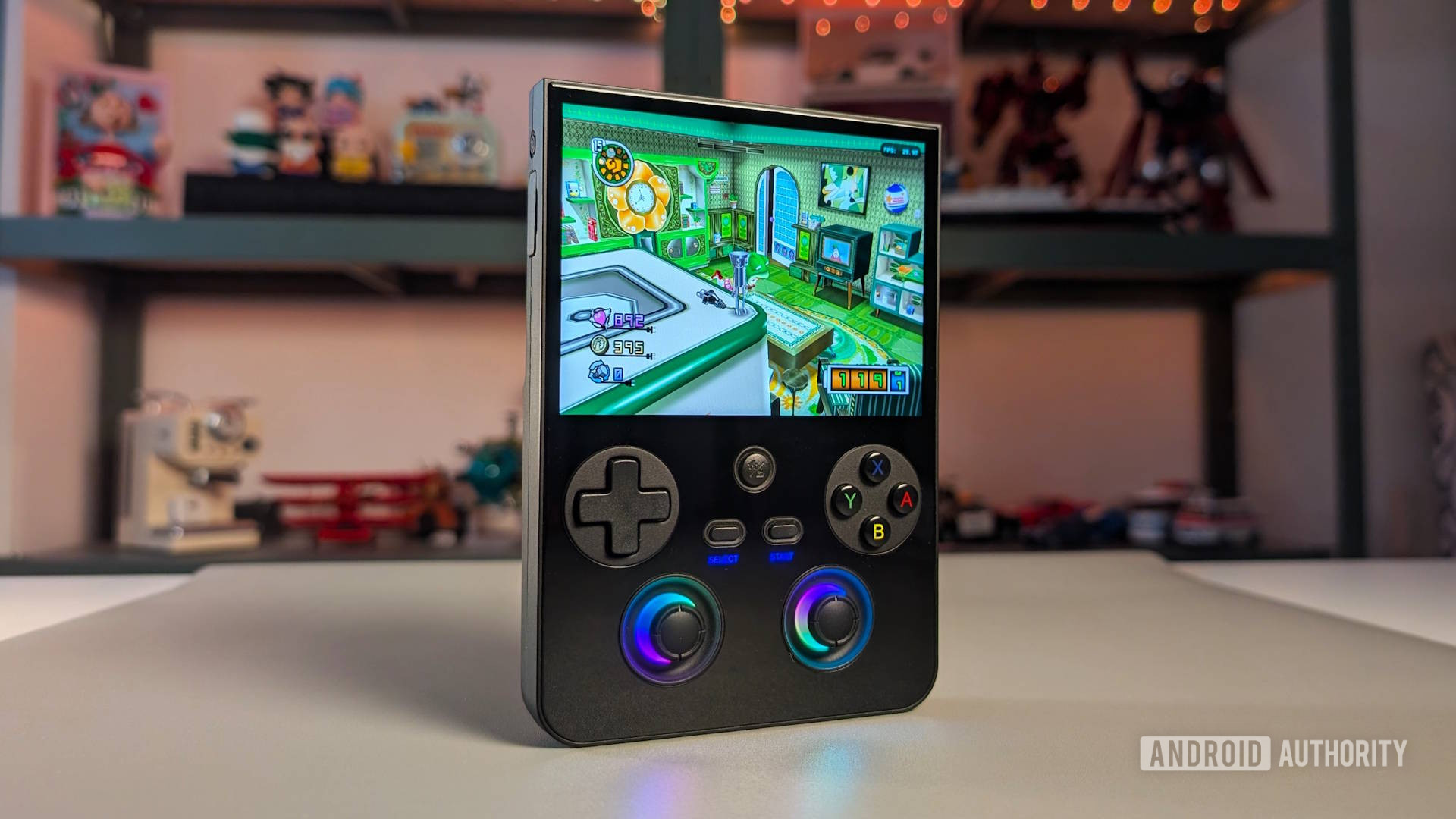
A Necessary Evolution: Contextualizing the Vertical Form Factor
The original Nintendo Game Boy established the vertical handheld as an iconic standard—a sleek, one-handed machine designed for maximum portability and simple inputs. Modern competitors like the Retroid Pocket Classic or the smaller TrimUI devices lean heavily into this heritage, prioritizing form factor fidelity over raw power. However, as emulation software matures, the performance ceiling for these smaller units (often capped by older or less optimized chipsets like the T820) fails to meet the demands of late 90s and early 2000s consoles, which rely heavily on dual-analog control schemes.
The industry has seen other attempts to bridge this gap, often resulting in awkward control placements or thermal throttling. The RG 477V seems to have adopted a "best-of-breed" component strategy, borrowing proven elements—like the high-refresh-rate screen from the RG Slide and the powerful Dimensity 8300 chipset from the RG 477M—and integrating them into a chassis that prioritizes screen real estate while maintaining a vertical profile.
The initial skepticism surrounding the integration of dual analog sticks into a vertical device is understandable. Past attempts have frequently led to thumb fatigue or awkward interference between the sticks and face buttons. The RG 477V addresses this by slightly recessing the sticks closer to the center axis, a subtle design choice that, according to initial assessments, successfully mitigates thumb collision during intense dual-stick gameplay, such as that required by third-person action games or certain platformers.

Ergonomics and Display: The Immersive Compromise
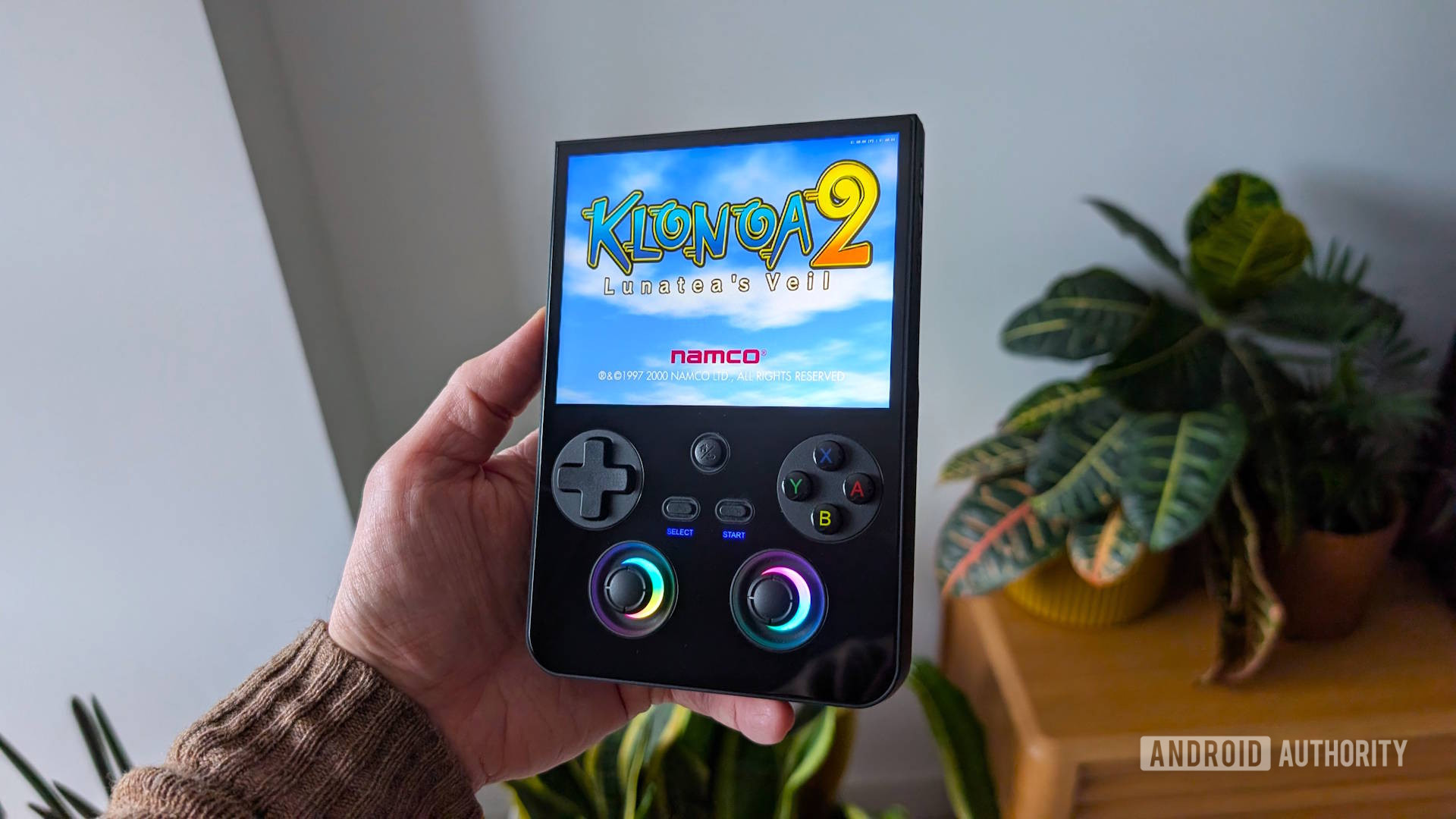
The most immediately striking feature of the RG 477V is its display. The 4.7-inch LCD panel, utilized in other recent ANBERNIC hardware, is a significant upgrade for visual fidelity in this form factor. Crucially, it retains the 4:3 aspect ratio, a non-negotiable feature for purists seeking an authentic presentation of classic console output, minimizing the distracting letterboxing or aggressive stretching associated with 16:9 screens when running older titles. The 120Hz refresh rate is a modern luxury that, when paired with appropriate software features like black frame insertion (BFI), offers visual smoothness often absent in standard 60Hz LCD panels, even when emulating systems that traditionally ran at lower framerates.
The minimization of bezels around this large screen is an engineering feat that keeps the overall device size manageable, though the reviewer notes it remains a "huge" handheld by classic standards. This size increase is the necessary trade-off for accommodating both the large screen and the full complement of modern controls.
The build quality inherits the premium feel of ANBERNIC’s higher-end releases, including the divisive all-glass front panel first seen on the RG 476H. While this contributes to a sleek aesthetic and is reportedly less prone to smudging than anticipated, it remains a subjective point of design, with the gray variant recommended for users sensitive to fingerprints.
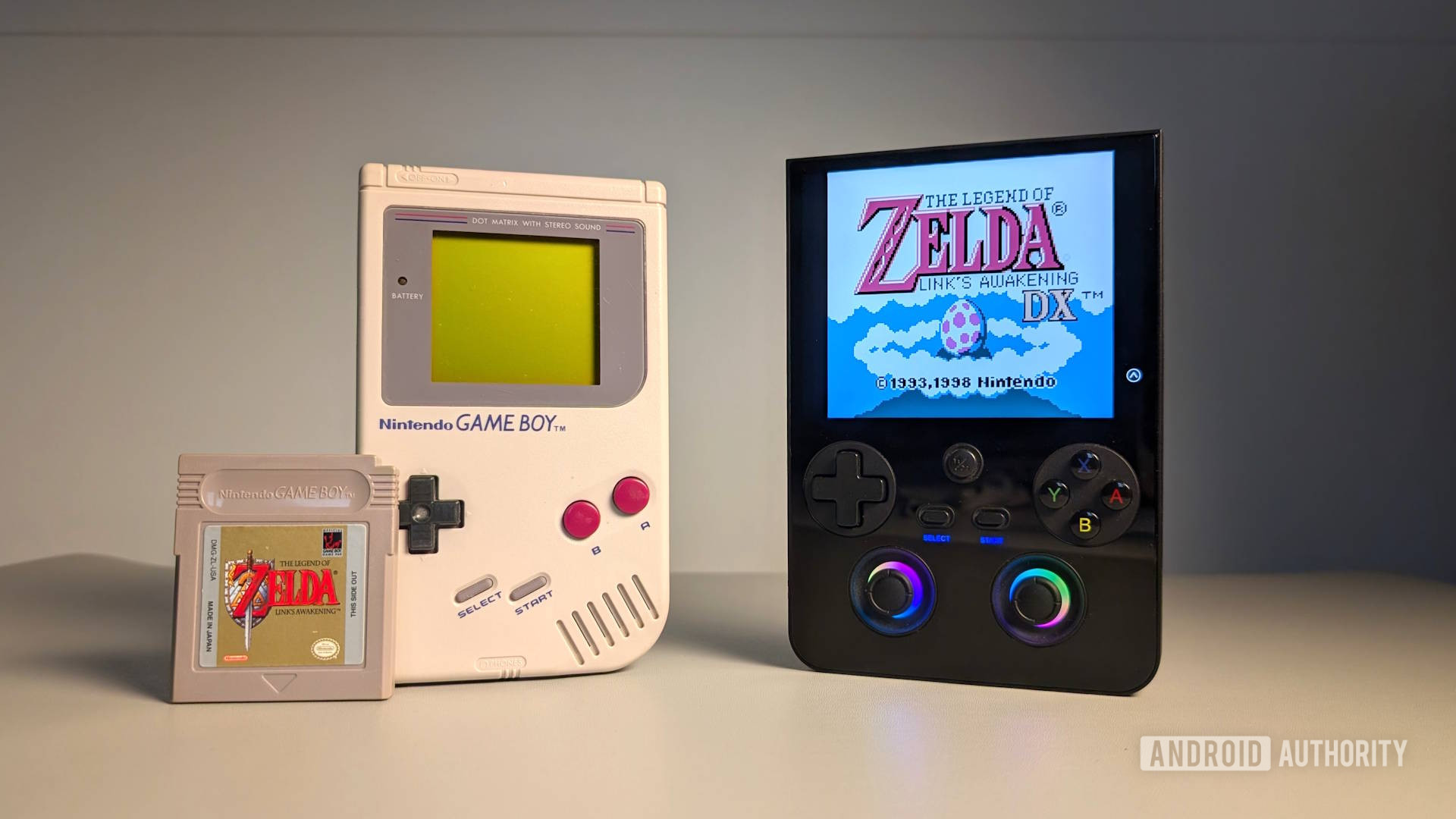
The D-pad, often a source of contention in Chinese-manufactured handhelds, is described as slightly soft or "mushy," yet functionally precise. This suggests that while it may lack the crisp, mechanical feedback of premium alternatives, its input registration remains reliable—a vital characteristic for precision platforming.
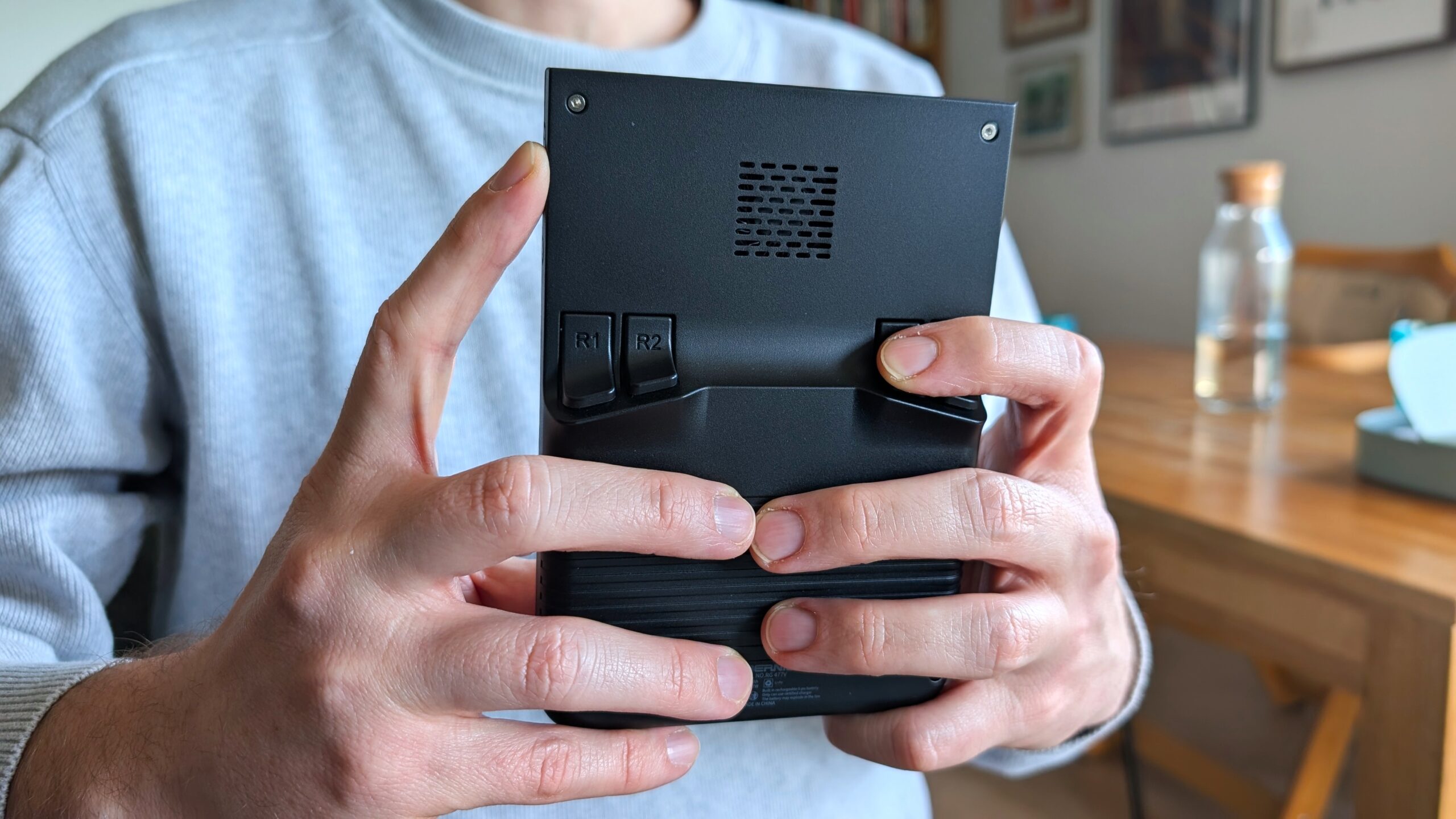
However, the ergonomics falter slightly concerning the shoulder buttons. While the microswitch digital triggers (L2/R2) are quiet and discreet—an improvement over the in-line design of the RG 477M—their placement relative to the sticks creates a significant hurdle for dual-stick heavy genres like first-person shooters. The necessity to stretch the fingers unnaturally to reach the L1/R1 buttons when the thumbs are optimally positioned on the analog sticks introduces palpable fatigue during extended sessions of high-action titles. This singular ergonomic flaw marks the primary limitation for the RG 477V’s appeal to certain modern gaming profiles.
Performance Architecture: The Dimensity 8300 Unleashed
The true story of the RG 477V lies in its processing core: the MediaTek Dimensity 8300 chipset. This component positions the device firmly in the upper echelon of Android-based emulation handhelds. While this chipset was present in the horizontally oriented RG 477M, the performance differential observed in the RG 477V suggests significant gains derived from superior thermal management and potentially better driver integration within this specific build.
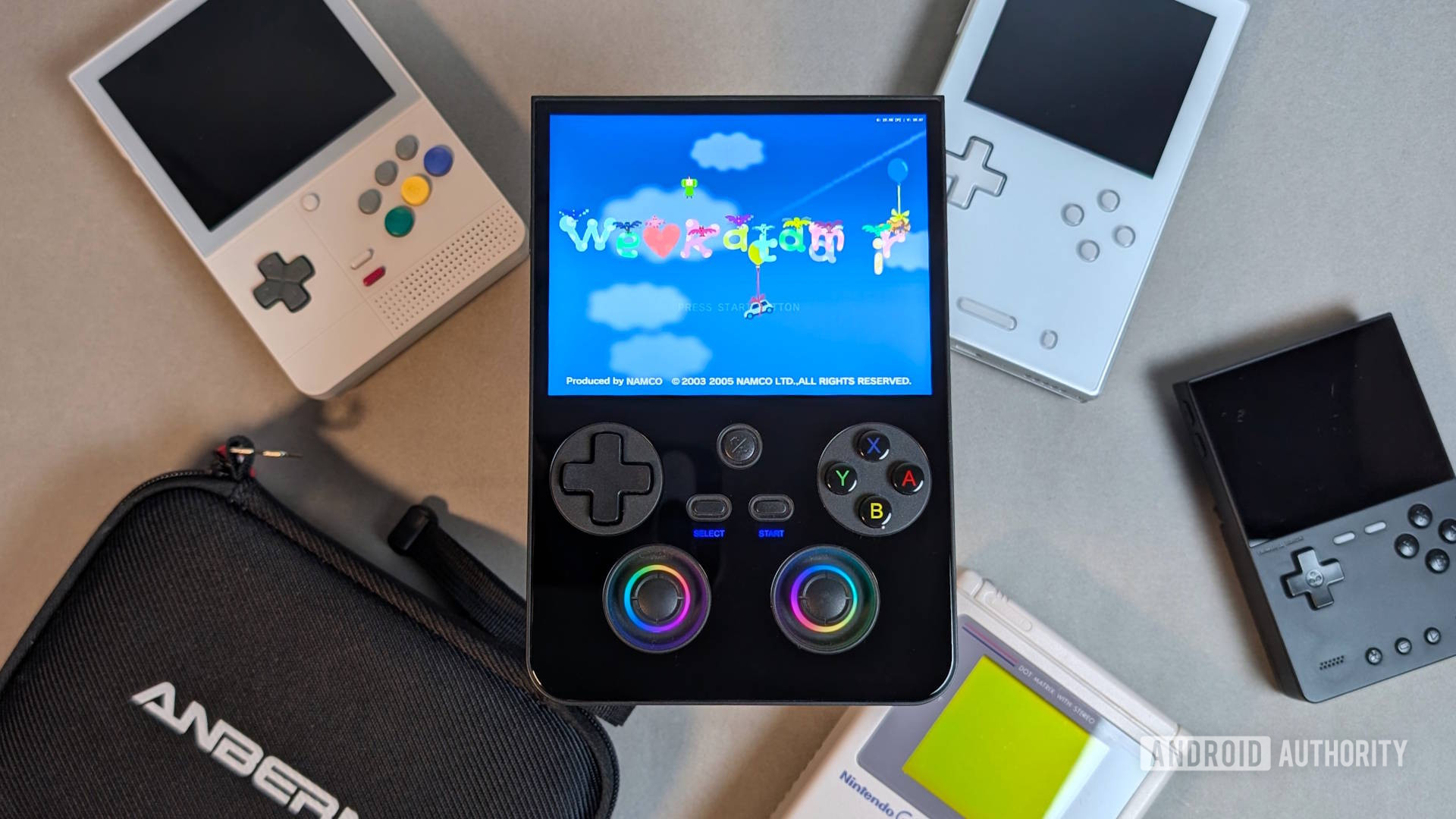
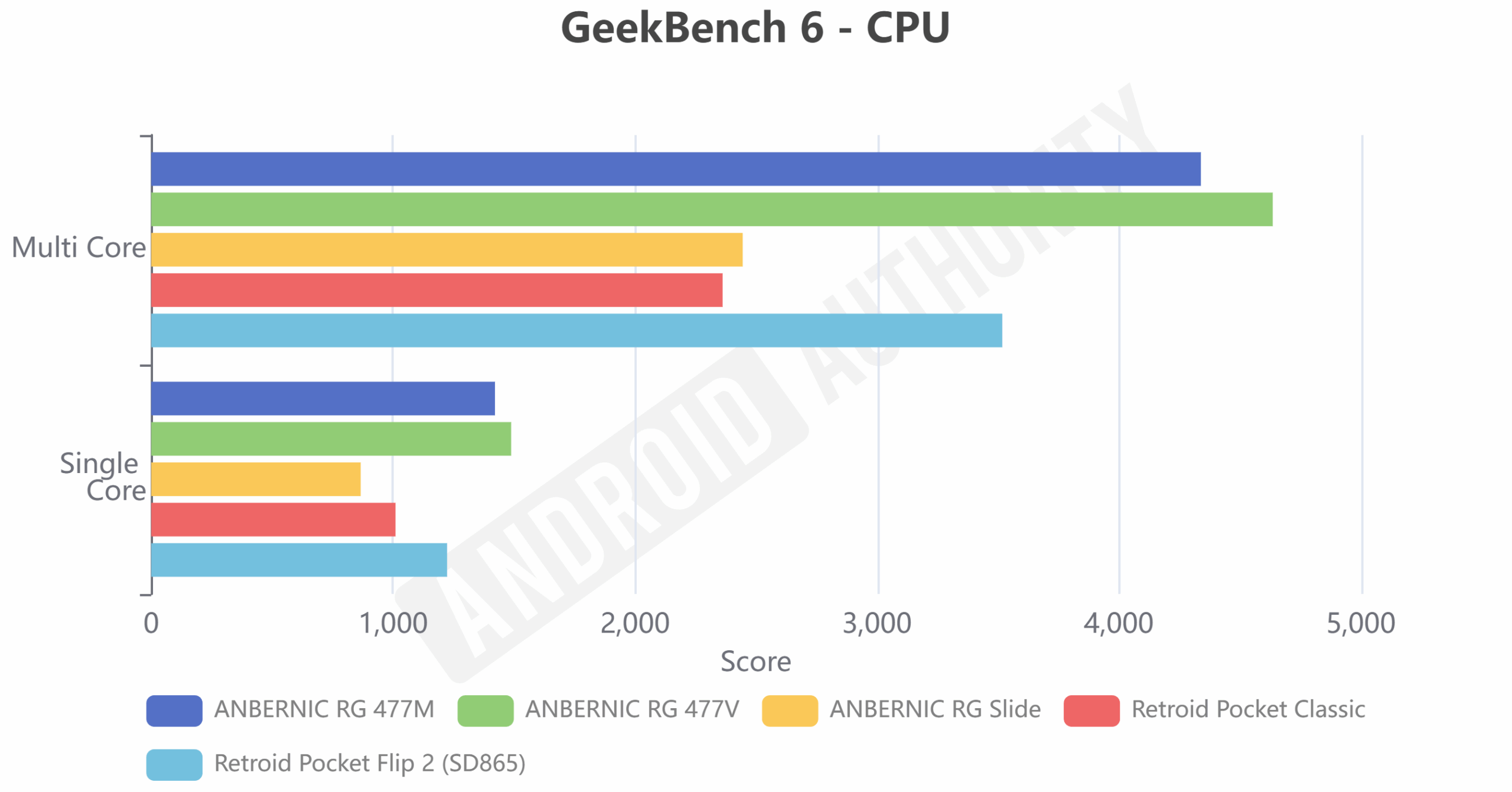
Benchmark analysis shows the RG 477V substantially outperforming the RG 477M and even surpassing competitors utilizing the venerable Snapdragon 865 platform in raw CPU throughput (GeekBench 6). This performance delta is crucial because it translates directly into emulation capability, particularly for the demanding consoles targeted by this device.
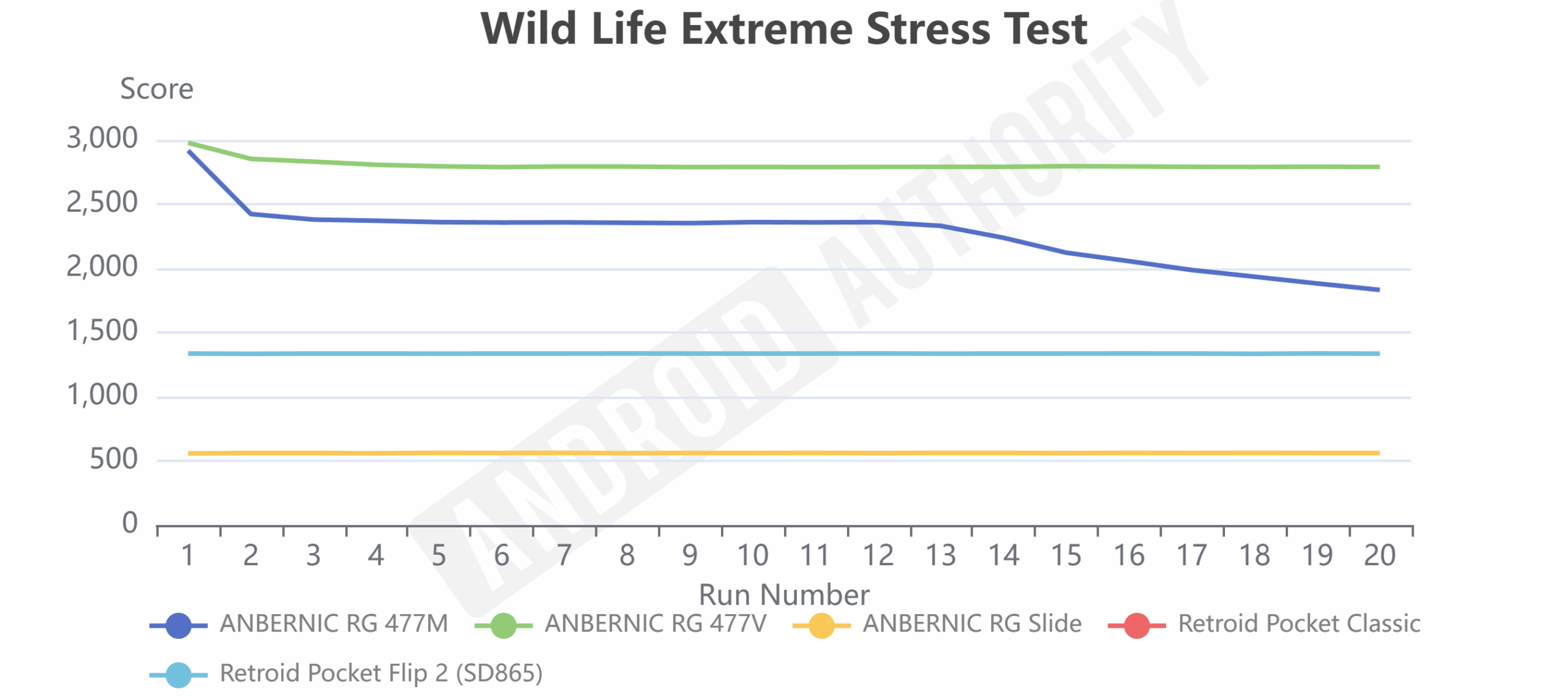
The GPU performance exhibits a similar, impressive uplift. Stability testing using the punishing 3DMark Wildlife Extreme Stress Test revealed a remarkable 93% stability rating. This indicates that ANBERNIC has successfully managed the thermal output of the Dimensity 8300 to sustain near-peak performance over extended periods—a failure point for the 477M, which throttled almost instantly. While the thermal profile runs slightly warmer than some competing Qualcomm-based units, the heat dissipation is intelligently managed, exhausting air away from the user’s hands at the top of the unit, with the fan noise being mostly masked by in-game audio.
The Emulation Sweet Spot: GameCube and PS2 Validation
The core promise of the RG 477V is realized in its ability to smoothly handle GameCube and PlayStation 2 emulation. These systems represent the current "sweet spot" for high-end Android emulation, requiring significant GPU power and stable clock speeds. The reviewer confirmed that, even when running demanding titles at upscaled resolutions approximating the device’s native panel density, performance remained fluid under the standard "Auto" power profile. This suggests that users do not necessarily need to engage the more aggressive (and potentially throttling) "High Performance" mode for these tasks, which is an indicator of efficient system tuning.
The unexpected revelation, however, is the significant leap in Nintendo Switch emulation capability compared to earlier ANBERNIC hardware from mid-2025. The advancements in Mali GPU driver compatibility, particularly with emulators like Yuzu (often referred to as Eden in this context), have drastically improved performance. While graphical anomalies stemming from the lack of proprietary Turnip drivers persist in a few titles, the overall playable library has expanded considerably, marking a major software milestone capitalizing on the hardware’s power.
It must be noted that the 4:3 screen geometry is inherently suboptimal for 16:9 content like Switch or PSP games, resulting in noticeable letterboxing. This reinforces the RG 477V’s identity as a device optimized for its 4:3 presentation, rather than a versatile multimedia powerhouse attempting to conquer every console generation equally. PC emulation, tested via GameHub and Game Native applications, remains underdeveloped due to ongoing driver dependencies, highlighting that the Dimensity 8300’s capabilities are still bottlenecked by external software compatibility in this nascent area.
Software Experience and Battery Longevity
ANBERNIC’s default software package includes a comprehensive suite of pre-installed emulators, facilitating a rapid entry into gameplay. While a dedicated system button accesses a built-in frontend, expert users will likely gravitate toward customizable, more robust third-party launchers like ES-DE or Beacon for superior library management and aesthetic presentation.
Battery endurance supports the device’s performance claims. The 5,500mAh cell consistently delivered approximately five hours of continuous play when running resource-intensive PS2 or GameCube titles. For less demanding systems, battery life extended healthily into the seven to ten-hour range, depending on visual enhancements like shaders. Recharging took about two hours for a full cycle, with a 30-minute fast charge providing roughly 30% capacity—a reasonable metric for an Android-based gaming unit. Standby drain is minimal, affirming efficient background power management.
Industry Implications and Competitive Positioning
The RG 477V forces a recalibration of expectations for vertical handhelds. ANBERNIC is effectively demonstrating that the form factor does not inherently preclude high-end emulation; rather, it demands superior thermal engineering and a willingness to integrate larger chassis dimensions than previously accepted for this style. This device sets a new performance benchmark for vertical units, challenging competitors whose vertical offerings prioritize extreme portability at the expense of modern console compatibility.
In comparison to contemporaries:
- Against Cheaper Vertical Units (e.g., RG Slide): The RG 477V offers a decisive performance leap, moving reliably into the GameCube/PS2 space where its predecessors struggled, justifying a higher price point through tangible emulation access.
- Against Premium Vertical Units (e.g., AYANEO Pocket DMG): While the Pocket DMG often boasts superior build materials and a more powerful chipset (when factoring in driver optimization), the RG 477V’s symmetrical dual-stick layout provides a more cohesive control scheme for dual-analog experiences, despite its own trigger reach limitations.
- Against Horizontal Competitors (e.g., Upcoming Retroid Pocket 6): The most significant competitor remains the horizontal layout. Devices like the anticipated Retroid Pocket 6, promising a Snapdragon 8 Gen 2 and OLED screen, offer ergonomic advantages for shooters and a potentially broader driver base (Snapdragon vs. Mali/Dimensity). However, the RG 477V possesses the immediate advantage of availability and a proven 4:3 display focus. The choice for the consumer becomes a trade-off between optimized vertical ergonomics for classic systems and the superior control layout/display technology of a horizontal flagship.
The future trend in this segment points toward further refinement of the Dimensity series or the integration of newer Qualcomm chips in vertical shells. If ANBERNIC can address the minor trigger reach issue in future iterations while maintaining this thermal efficiency, the vertical format could seriously encroach upon the dominance of horizontal devices for the mid-range performance bracket.
Conclusion: A Triumph of Consolidation
The ANBERNIC RG 477V is, quite simply, the most successful execution of a high-performance vertical emulation handheld to date. It achieves a rare synergy: the nostalgic form factor, an outstanding 4:3 high-refresh-rate screen, and sufficient processing muscle to render the late-6th generation consoles smoothly.
The device’s strengths—its powerful, well-managed chipset, immersive display, and surprisingly effective control placement for movement-based games—outweigh the noted drawbacks, primarily the uncomfortable reach of the shoulder buttons for specific genres. For users whose core gaming library resides within the PS2, GameCube, and late-era 3D handheld eras, and who prioritize the classic vertical form factor, the RG 477V establishes a new echelon of capability. It transcends being a mere nostalgic novelty; it is a serious contender for the best all-around emulation device available today, provided the user accepts the inherent limitations of its vertical architecture for extremely complex or dual-analog-intensive modern titles. This device validates ANBERNIC’s long-term commitment to iterative refinement, delivering a product that feels mature, balanced, and purpose-built for a specific, demanding segment of the retro gaming community.
| Feature | Assessment |
|---|---|
| Display | Exceptional 4.7-inch 4:3, 120Hz LCD; highly immersive. |
| Performance | Dimensity 8300 delivers reliable PS2/GameCube emulation stability. |
| Ergonomics (Sticks/D-pad) | Good for movement games; dual-stick shooters hindered by trigger access. |
| Thermal Management | Significantly improved over 477M; handles sustained load well. |
| Software Status | Excellent for retro systems; Switch emulation is surprisingly strong. |
| Battery Life | Solid 5+ hours under heavy load. |
Final Verdict: The RG 477V is a significant achievement, successfully marrying high-end processing power with the beloved vertical aesthetic, creating the definitive handheld experience for console generations up to and including GameCube and PS2.
