

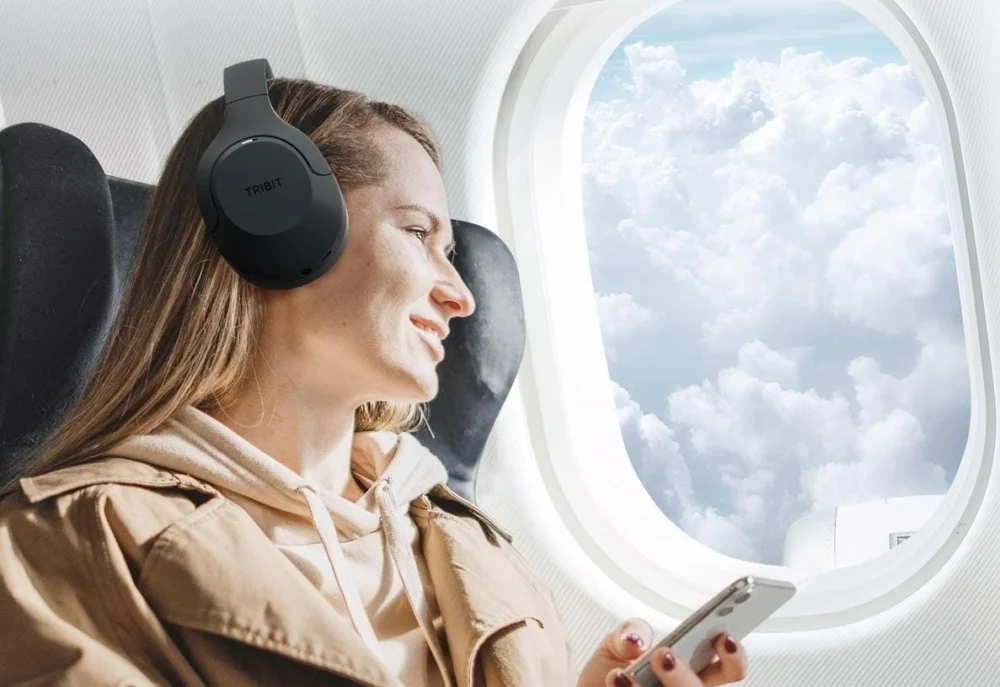
The consumer electronics landscape has long been defined by a stark dichotomy: the premium tier, where household names command several hundred dollars for cutting-edge features, and the budget tier, often characterized by compromised build quality and lackluster performance. However, the release of the Tribit QuietPlus 81 marks a significant shift in this narrative. By delivering a comprehensive suite of advanced features—including hybrid active noise cancellation, triple-digit battery life, and the latest Bluetooth standards—for under £50, Tribit is not merely launching a product; it is challenging the industry’s established pricing architecture.
For the modern consumer, the "good enough" threshold for technology has moved. It is no longer sufficient for a budget pair of headphones to simply play music; they must now facilitate a sanctuary of silence in an increasingly noisy world. The QuietPlus 81 is designed to meet this demand, targeting the "travel-lite" demographic—commuters, students, and frequent flyers who require functional noise isolation without the prohibitive "luxury tax" associated with flagship models. Weighing in at a nimble 283 grams and featuring a collapsible, foldable chassis, these headphones prioritize the ergonomics of mobility.
Technical Sophistication: The Hybrid ANC Paradigm
The centerpiece of the QuietPlus 81 is its Hybrid Active Noise Cancellation (ANC) system. To understand the significance of this feature at a sub-£50 price point, one must look at the mechanics of noise suppression. Unlike basic ANC, which typically utilizes a single microphone to monitor external sounds, hybrid systems employ a dual-microphone array—one "feedforward" mic on the exterior of the ear cup and one "feedback" mic located inside the cup near the driver.
Tribit’s implementation utilizes a total of five integrated microphones, coupled with AI-driven noise-reduction algorithms. This combination allows the QuietPlus 81 to neutralize ambient sounds by up to 45 decibels. In practical terms, this covers a broad frequency spectrum, from the low-frequency drone of jet engines to the mid-range chatter of a crowded office. The inclusion of an AI layer suggests that the digital signal processor (DSP) is capable of distinguishing between consistent environmental noise and transient sounds, providing a more natural-sounding "black" background for audio playback.
To complement the silence, Tribit has opted for 40mm dynamic drivers. While larger drivers are common in over-ear designs, the tuning is where the QuietPlus 81 seeks to distinguish itself. The company claims a sound signature characterized by "deep bass and clear highs," a profile often referred to as a "V-shape" that appeals to the majority of contemporary listeners. However, recognizing that audio preference is subjective, the headphones are integrated with the Tribit smartphone application. This allows users to toggle between six distinct EQ modes or create personalized sound profiles, a level of software support rarely seen in the entry-level market.
Connectivity and the Bluetooth 6.0 Frontier
Perhaps the most surprising technical specification of the QuietPlus 81 is its adoption of Bluetooth 6.0 technology. As the wireless standard evolves, Bluetooth 6.0 introduces enhancements in connection stability and power efficiency. For the user, this translates to a reliable range of up to 50 meters in line-of-sight conditions—a distance that far exceeds the typical 10-to-15-meter range of older standards.
Furthermore, the Bluetooth chipset supports multipoint pairing. In an era where users juggle multiple devices simultaneously—perhaps a laptop for video conferencing and a smartphone for notifications—the ability to remain connected to two sources and switch between them seamlessly is no longer a luxury; it is a productivity requirement. This functionality, paired with a dedicated "Game Mode" that minimizes latency to ensure audio-visual synchronization, positions the QuietPlus 81 as a versatile tool for both professional and recreational use.
The Battery Life Revolution
If the noise cancellation is the QuietPlus 81’s primary selling point, its battery performance is its most formidable competitive advantage. The industry standard for premium ANC headphones typically hovers between 30 and 40 hours of playback. Tribit has shattered these expectations by offering up to 110 hours of continuous playback with the ANC function deactivated. Even with noise cancellation engaged—a process that significantly drains power due to the continuous processing required—the headphones provide a robust 70 hours of use.
This longevity addresses a major pain point for travelers: "range anxiety" for audio devices. A user could theoretically fly from London to Sydney and back multiple times on a single charge. When the battery does eventually deplete, the fast-charge capability provides five hours of playtime from a mere ten-minute connection to a power source. This efficiency is a testament to the advancements in lithium-polymer battery density and the low-power consumption of modern Bluetooth controllers.
Industry Implications: The Democratization of Silence
The launch of the QuietPlus 81 is indicative of a broader trend in the audio industry: the rapid democratization of high-end technology. Five years ago, 45dB of noise reduction and 70-hour battery life were specifications reserved for devices costing £300 or more. Today, the "trickle-down" effect of manufacturing efficiencies and the commoditization of ANC chipsets have allowed brands like Tribit to squeeze these features into budget-friendly packages.

This puts immense pressure on legacy audio giants. When a £50 pair of headphones offers 80% of the performance of a £350 pair, the value proposition of the latter must rely heavily on brand prestige, premium materials (such as leather or magnesium), and niche features like spatial audio or lossless codecs (LDAC, aptX Lossless). For the average consumer, the gap in audible quality is narrowing, making it increasingly difficult to justify the price delta.
Furthermore, Tribit’s inclusion of a "Hearing Protection Mode" via its app—which caps the volume at 85dB—reveals a strategic move to capture the youth market. By making the device safe for children and affordable for parents, Tribit is building brand loyalty with a younger demographic that may eventually graduate to its more expensive offerings.
Expert Analysis: Balancing Value and Performance
From a journalistic and technical perspective, the QuietPlus 81 represents a masterclass in compromise—in the best sense of the word. To achieve this price point, manufacturers must make strategic decisions. While the internal electronics are cutting-edge, the external materials likely lean toward high-grade plastics rather than metals. However, at 283g, this material choice serves the dual purpose of cost reduction and user comfort, as lighter headphones are generally more wearable for extended periods.
The decision to retain physical control buttons rather than touch-sensitive panels is also a calculated move. While touch controls are often marketed as "premium," they are prone to accidental triggers and can be finicky in cold weather. Physical buttons offer tactile feedback and reliability, which aligns with the utilitarian, travel-focused philosophy of the QuietPlus series.
The "Transparency Mode" is another critical inclusion. By using the external microphones to pass ambient sound through to the listener, Tribit ensures that the isolation provided by the ANC does not become a safety hazard in urban environments. This "situational awareness" is a staple of high-end headphones, and its presence here reinforces the idea that the QuietPlus 81 is a fully-featured alternative to more expensive rivals.
Future Impact and Market Trends
Looking forward, the success of the QuietPlus 81 likely signals a new "arms race" in the budget audio sector. We are moving toward a future where "Active Noise Cancellation" is no longer a feature highlight but a baseline expectation for all over-ear headphones, regardless of price.
We can also expect to see further integration of AI not just in noise cancellation, but in personalized soundscapes. As DSP power becomes cheaper, the ability for a headphone to analyze a user’s unique ear canal resonance and adjust the frequency response in real-time will likely be the next frontier for affordable audio.
Moreover, the adoption of Bluetooth 6.0 in a budget device suggests that we are nearing the end of the "connection struggle" era. As these advanced protocols become ubiquitous, issues like dropouts, lag, and complicated pairing processes will fade into technological history.
Conclusion
The Tribit QuietPlus 81 stands as a compelling argument for the "new essentials" in consumer audio. By prioritizing the features that matter most to the everyday user—battery longevity, effective noise suppression, and stable connectivity—while maintaining an aggressive price point of £49.99 / $49.99 / €49.99, Tribit has positioned itself as a disruptor in a crowded market.
For the consumer, the message is clear: you no longer need to sacrifice a significant portion of your travel budget to enjoy a quiet journey. For the industry, the QuietPlus 81 is a warning shot, proving that the era of the high-priced "silence monopoly" is officially over. As high-quality audio becomes more accessible, the focus will inevitably shift from who can provide noise cancellation to who can provide the most seamless, integrated, and long-lasting user experience. In that race, Tribit has just taken a significant lead.
