

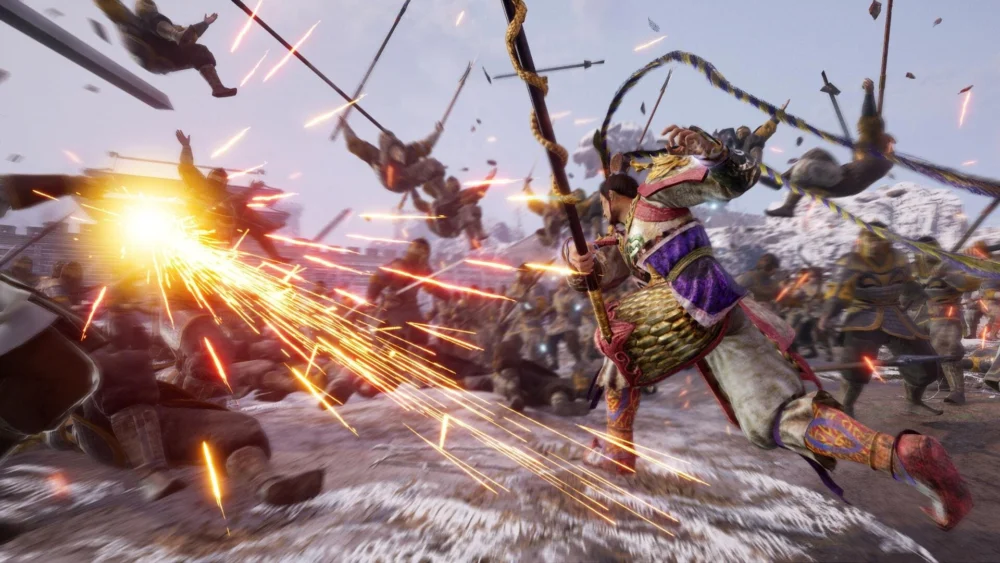
The landscape of tactical action gaming shifted slightly this week as developer Omega Force and publisher Koei Tecmo announced a formal delay for the highly anticipated Dynasty Warriors 3: Complete Edition Remastered. Originally slated for a March 19 launch, the title has been moved to an unspecified future date, leaving fans of the long-running "Musou" franchise to wait a bit longer for what is being billed as the definitive version of a foundational classic. This move, while disappointing to some, reflects a broader industry trend toward prioritizing software stability and "day-one" polish over meeting rigid quarterly windows, especially when handling a property that holds significant nostalgic value for a global player base.
In a public statement addressing the postponement, Tomohiko Sho, the veteran producer at Omega Force, emphasized that the decision was driven by a commitment to the franchise’s legacy. Sho noted that as the first formal remaster of a mainline Dynasty Warriors title, the stakes are uniquely high. "In order to fully satisfy our fans, we have made the decision to further improve the quality of the game," Sho explained via social media. He expressed gratitude for the community’s patience, signaling that the extra development time would be utilized to refine the technical performance and visual fidelity of the title before it hits modern hardware.
The decision to delay Dynasty Warriors 3: Complete Edition Remastered is not happening in a vacuum. Koei Tecmo’s early 2025 release calendar is notably crowded, and the shift may serve a secondary purpose of providing breathing room for other major projects. The publisher is currently preparing for the launch of Nioh 3 on February 6, a title expected to dominate the action-RPG sector on PC and PlayStation 5. Furthermore, the Fatal Frame II: Crimson Butterfly Remake is scheduled for March 12, targeting a multi-platform release across PC, PS5, the Xbox Series X|S, and the Nintendo Switch ecosystem—including the successor tentatively referred to as the Switch 2. By moving Dynasty Warriors 3 out of the March 19 slot, Koei Tecmo avoids internal market cannibalization, ensuring that each of its high-profile releases receives the spotlight it deserves.
To understand the weight of this delay, one must look back at the historical significance of the original Dynasty Warriors 3. Released in late 2001 for the PlayStation 2 and subsequently for the original Xbox in 2002, the game was a watershed moment for Omega Force. While the second entry in the series had established the basic "one versus thousands" premise, Dynasty Warriors 3 perfected the formula. It was the first title in the series to surpass one million copies sold, a milestone that cemented the Musou genre as a permanent fixture in the gaming industry.
Dynasty Warriors 3 was also the entry that introduced several mechanics that remain staples of the series to this day. It pioneered the "True Musou Attack"—a devastating special move triggered when a player’s health is low—and introduced the concept of split-screen cooperative play, which became a defining feature of the franchise’s social appeal. The game’s depiction of China’s Three Kingdoms era, based loosely on Luo Guanzhong’s historical novel, struck a perfect balance between epic historical drama and over-the-top arcade action. For many veterans of the series, Dynasty Warriors 3 represents the "Golden Age" of the franchise, characterized by its challenging difficulty spikes and iconic, if sometimes campy, English voice acting.
The upcoming Complete Edition Remastered aims to capture this magic while modernizing it for a 4K-capable era. The package is set to include not only the base game but also the content from the Xtreme Legends expansion. In the early 2000s, Xtreme Legends acted as a precursor to modern DLC, offering players additional scenarios, new items, and the ability to play as various unaligned officers. By bundling these together, Omega Force is offering a roster of more than 40 playable officers, ranging from the legendary Guan Yu and Lu Bu to the strategic masterminds like Zhuge Liang.

From a technical perspective, remastering a title from the PlayStation 2 era presents a unique set of challenges. Unlike a "remake," which rebuilds the game from the ground up on a modern engine, a "remaster" typically seeks to preserve the original code and logic while enhancing the presentation. For Omega Force, this means upscaling textures, improving frame rates, and potentially reworking the draw distance—a notorious limitation of the original hardware that often led to "pop-in" issues where enemy soldiers would suddenly appear out of thin air. Given producer Tomohiko Sho’s comments regarding "quality improvement," it is likely that the team is working to ensure that the massive scale of the battles feels seamless on hardware like the PS5 and Xbox Series X, which are capable of handling thousands of simultaneous on-screen entities without the slowdown that plagued the original 2001 release.
Furthermore, the mention of the "Switch 2" in the platform list for Koei Tecmo’s upcoming titles highlights a pivotal moment in industry hardware transitions. As developers begin to bridge the gap between the current Nintendo Switch and its more powerful successor, ensuring cross-generational compatibility and performance parity becomes a complex task. The delay of Dynasty Warriors 3 may be partially attributed to the rigorous optimization required to ensure the game runs flawlessly across this diverse array of hardware, from the handheld constraints of the Switch to the high-end specifications of modern PCs.
The industry implications of this delay also point toward a changing philosophy regarding "legacy" content. In previous console generations, remasters were often viewed as quick "cash-ins" to fill gaps in a release schedule. However, in the current market, fans have become increasingly discerning. The backlash faced by other publishers for sub-standard remasters of classic titles has served as a cautionary tale. For Koei Tecmo, Dynasty Warriors 3 is a "sacred cow." A poorly executed remaster would not only hurt immediate sales but could also damage the brand equity of the entire Dynasty Warriors intellectual property, especially as the company looks toward future innovations in the series, such as the recently announced Dynasty Warriors: Origins.
Expert analysis suggests that the delay might also allow for enhancements to the game’s online infrastructure. While the original game was a local co-op powerhouse, the modern remaster is expected to feature robust online multiplayer capabilities. Synchronizing the chaotic, fast-paced action of a Musou game across online networks is notoriously difficult due to the sheer number of moving parts and AI entities that must be tracked across all clients. If Omega Force is utilizing this extra time to refine the netcode, the resulting experience will be far more sustainable for the long-term community.
As we look toward the future, the eventual release of Dynasty Warriors 3: Complete Edition Remastered will serve as a litmus test for the viability of further remasters in the series. If successful, it could pave the way for similar treatments of Dynasty Warriors 4 or 5, both of which are held in high regard by the community. By taking the time to "get it right" with the third entry, Koei Tecmo is signaling that they view their back catalog as a prestigious library rather than disposable content.
For the fans, the "unspecified" nature of the new release date is the most difficult pill to swallow. However, in an era where "launch now, patch later" has become an all-too-common mantra, a developer standing their ground to ensure quality is a refreshing change of pace. The Three Kingdoms era was defined by patience, strategy, and the waiting for the perfect moment to strike; it seems Omega Force is taking a page from that history.
When Dynasty Warriors 3: Complete Edition Remastered finally arrives on PC, PlayStation 5, the Xbox Series X|S, and the Nintendo Switch family, it will carry the weight of twenty-four years of history. With over 40 officers, the inclusion of Xtreme Legends content, and the promise of modernized performance, it remains one of the most significant retro revivals on the horizon. For now, the gates of Hulao Pass remain closed, but the extra time in development suggests that when they finally open, the experience will be worth the wait.
