

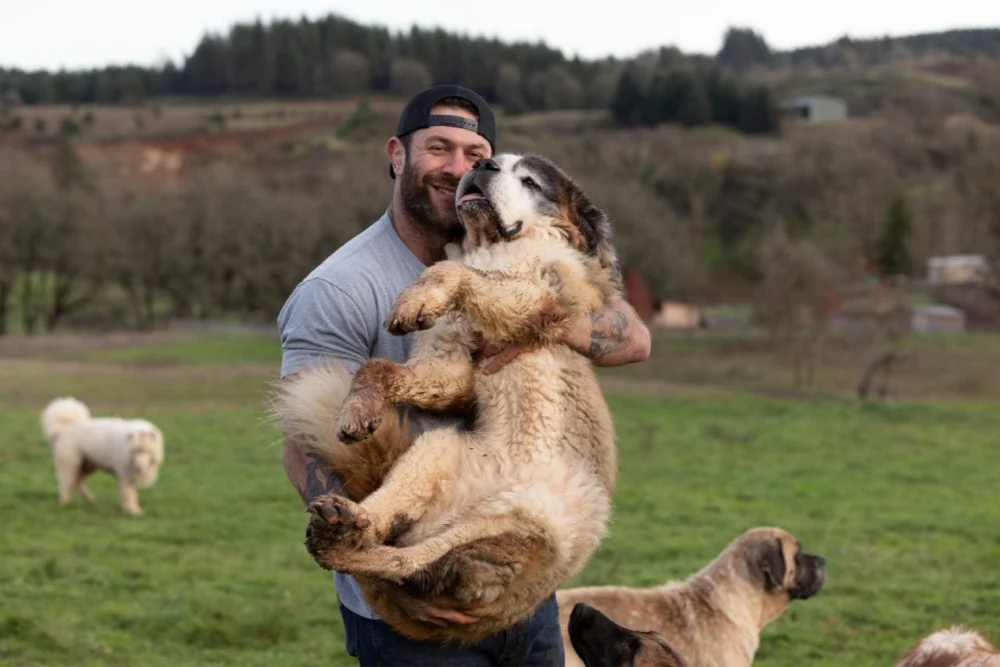
In the landscape of modern animal rescue, few stories are as poignant or as transformative as that of Lee Asher and a St. Bernard named Lillie. What began as a standard adoption from a high-intake shelter in South Los Angeles evolved into a nationwide movement that redefined the potential of holistic pet care and the advocacy for animal welfare. However, as the legal framework surrounding hemp-derived products undergoes a seismic shift in the United States, the very treatments that saved Lillie’s life—and subsequently built an empire of sanctuary and wellness—are facing an existential threat from federal legislation.
The intersection of veterinary medicine, cannabinoid science, and legislative policy has reached a critical juncture. For Asher, the founder of The Asher House, the stakes are not merely theoretical or financial; they are deeply personal. His journey from a corporate professional to a prominent animal advocate was catalyzed by a medical crisis that conventional veterinary medicine could not resolve, highlighting a burgeoning industry of CBD-based pet wellness that now sits in the crosshairs of a looming federal ban.
The Catalyst: A Medical Dead-End and a Holistic Breakthrough
In 2016, Lee Asher encountered Lillie at an animal shelter. With her distinctive missing front teeth and a perpetually protruding tongue, she was the quintessential "underdog" that many prospective adopters overlook. Despite being microchipped, her previous owners never surfaced, allowing Asher to bring her home. The honeymoon period of the adoption was short-lived. During her first night in her new environment, Lillie suffered a catastrophic grand mal seizure that lasted four minutes—an eternity in medical terms.
The ensuing months were a descent into the limitations of traditional pharmacology. Despite aggressive diagnostic testing and the administration of various anti-epileptic drugs, Lillie’s condition worsened. Seizures became a daily occurrence, sometimes striking multiple times within a twenty-four-hour window. The prognosis from veterinary specialists was grim: they had exhausted the available pharmaceutical toolkit. The recommendation was to consider euthanasia to spare the dog further suffering.
It was at this nadir that Asher turned to the burgeoning, yet then-unregulated, world of CBD (cannabidiol). Derived from the hemp plant, CBD is a non-psychoactive compound that interacts with the endocannabinoid system (ECS), a complex cell-signaling system present in all mammals that helps regulate functions such as sleep, immune response, and pain. Unlike THC (tetrahydrocannabinol), CBD does not produce a "high," making it an attractive candidate for therapeutic use in animals.
The results were not instantaneous, but they were definitive. Within the first day of administration, the duration of Lillie’s seizures began to contract. Within a month of consistent dosing, the seizures ceased entirely. This "miracle" recovery did more than just save a dog’s life; it fundamentally altered Asher’s career trajectory and his philosophy on animal husbandry.
From Advocacy to Industry: The Growth of The Asher House
Inspired by Lillie’s resilience, Asher abandoned his corporate career to launch The Asher House. His initial mission was a 90-day, 48-state tour in an RV to promote shelter adoptions. The project resonated with the public, extending into a two-year odyssey that included Alaska and resulted in the adoption of over 500 shelter dogs. When the COVID-19 pandemic halted travel, Asher pivoted to a more permanent solution: a 240-acre nonprofit animal sanctuary in Oregon.
Today, The Asher House sanctuary provides a permanent home for 150 to 200 dogs at any given time, alongside cats, horses, goats, and even parrots. Central to the sanctuary’s operations is the integration of CBD into the daily health regimens of nearly every animal on the property. Asher’s observations of improved coat quality, reduced anxiety, and general vitality led him to establish Asher House Wellness, a line of CBD supplements designed specifically for pets.
However, the scientific community remains cautious. While anecdotal evidence from rescuers like Asher is overwhelming, clinical research on CBD for pets has historically been hampered by the federal classification of cannabis as a Schedule I drug. Although some studies have indicated promising anti-cancer effects and efficacy in managing osteoarthritis and epilepsy in canines, the lack of large-scale, FDA-approved clinical trials creates a vacuum that regulators are now attempting to fill with restrictive measures.

The Regulatory Cliff: The 2025 Hemp Provision
The legislative peace established by the 2018 Hemp Farming Act—which legalized hemp containing less than 0.3% THC on a dry-weight basis—is currently being dismantled. A provision tucked into a late-2025 legislative package, originally designed to resolve a government shutdown, is set to go into effect this November. This new regulation seeks to outlaw any hemp product containing more than 0.4 milligrams of total THC per package.
For industry experts and advocates, this is a "de facto" ban on full-spectrum CBD products. Full-spectrum hemp extracts contain a variety of cannabinoids, including trace amounts of THC, which work together in what scientists call the "entourage effect." This synergy is believed to enhance the therapeutic benefits of CBD. By setting the limit at 0.4mg per package—rather than per dose or as a percentage of weight—the legislation effectively renders the production of potent, full-spectrum oils and topicals impossible.
Asher and other critics argue that this policy ignores the biological reality of how these products are used. For a large animal, such as a St. Bernard or a horse, a therapeutic dose often requires more than the proposed package limit. "It just makes no sense whatsoever," Asher noted, emphasizing that the consequence will be a forced return to expensive pharmaceutical alternatives that, in Lillie’s case, had already failed.
Industry Implications and the Future of Pet Wellness
The impending ban threatens to decapitate a multibillion-dollar industry that has grown around the 2018 Farm Bill. Small businesses that specialize in high-quality, full-spectrum extracts face a choice: reformulate into less effective "CBD isolate" products or shut down entirely. This regulatory volatility creates a significant hurdle for investors and researchers, further delaying the rigorous clinical data the industry needs to achieve mainstream medical legitimacy.
From a veterinary perspective, the ban could drive the market underground. When pet owners are denied legal access to products that have demonstrably improved their animals’ quality of life, they often turn to unregulated sources, where the risk of contamination or inaccurate labeling is significantly higher.
In response to this looming crisis, legislative pushback has begun. Representative Jim Baird (R-IN) recently introduced a bill aimed at postponing the implementation of the THC ban for an additional two years. This delay would ostensibly provide time for more nuanced regulation that distinguishes between intoxicating hemp-derived "recreational" products and non-intoxicating therapeutic supplements.
A Philosophy of Resilience and Care
For Lee Asher, the fight for CBD access is part of a broader mission to honor the resilience of animals. His sanctuary serves as a living laboratory for the idea that neglected or "broken" animals can thrive when given the right combination of love, space, and holistic support. The facility’s "Lillie’s Lighthouse" building stands as a monument to the dog that started it all—a dog whose life was extended by years thanks to a plant compound that is now on the verge of being restricted.
Asher’s advocacy extends beyond the courtroom and the Capitol. He continues to urge the public to choose adoption and to speak out against the hemp ban through dedicated digital platforms. His message is one of radical empathy: the belief that the lessons learned from dogs—resilience, unconditional love, and the ability to find "the light" even after trauma—should inform how we craft the laws that govern their care.
The debate over hemp regulation is more than a technical dispute over milligram counts; it is a conflict over the right to pursue alternative medical pathways for those who cannot speak for themselves. As November approaches, the veterinary community and pet owners across the nation are watching closely, hoping that the "light" Asher speaks of is not extinguished by a stroke of a legislative pen. The legacy of Lillie, and the health of thousands of animals currently benefiting from cannabinoid therapy, hangs in the balance of this unfolding regulatory drama.
