

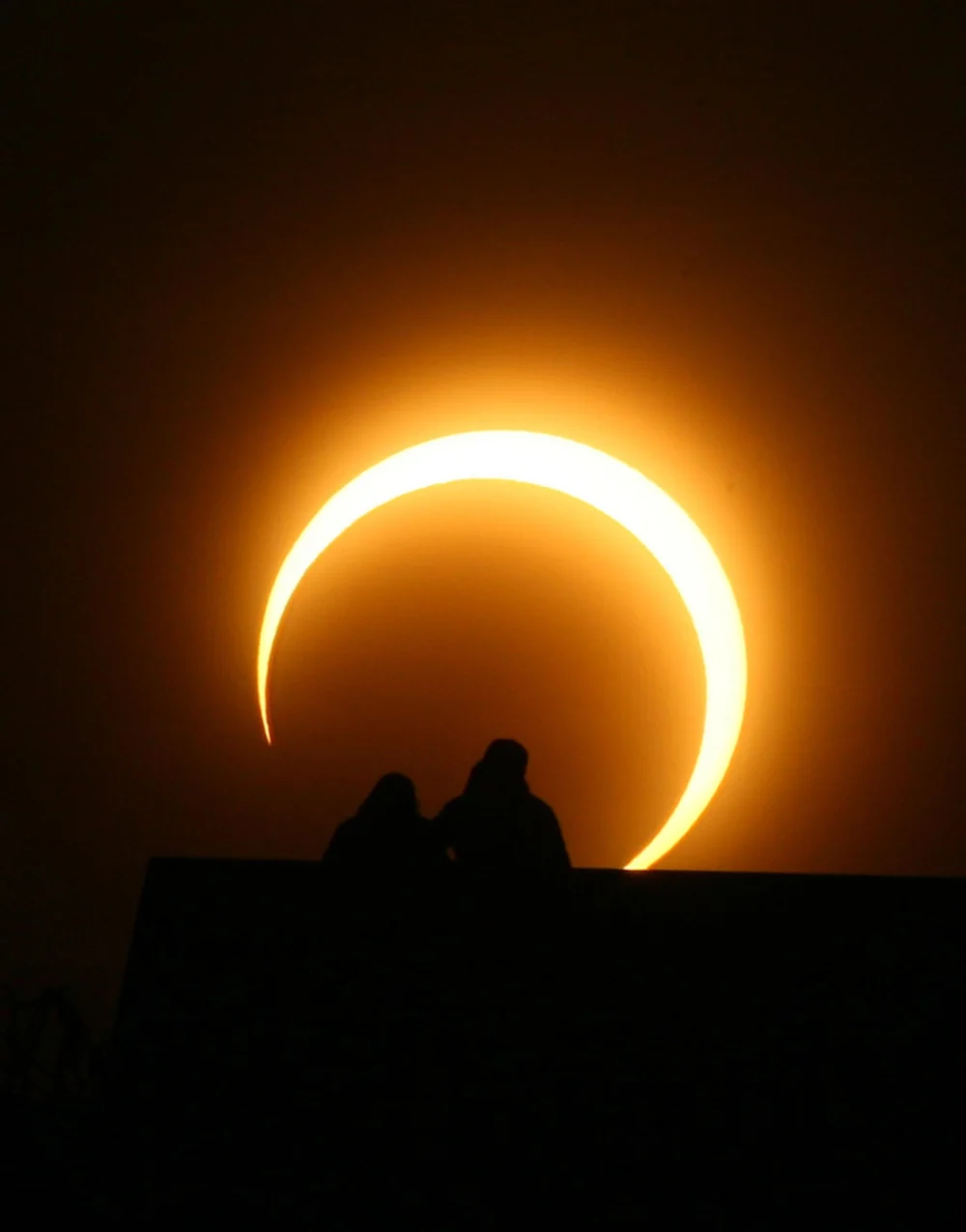
On January 26, 2028, a rare celestial alignment will transform the sky across a massive corridor stretching from the remote Pacific to the ancient cities of the Mediterranean. This event, an annular solar eclipse, will produce a "ring of fire" that is expected to be one of the most-watched astronomical phenomena of the late 2020s. While total solar eclipses often grab the lion’s share of public attention, the 2028 annular event is distinguished by its extraordinary duration and its path through some of the most ecologically and culturally significant regions on Earth. With exactly two years until the moon’s shadow touches the Galápagos Islands, the global community of astronomers, "eclipse chasers," and travel industry stakeholders is already mobilizing for what promises to be a logistical and scientific milestone.
The Mechanics of the "Ring of Fire"
To understand the significance of the 2028 event, one must first distinguish between the types of solar eclipses. A total solar eclipse occurs when the moon is close enough to Earth in its elliptical orbit to completely cover the solar disk, revealing the sun’s corona. In contrast, an annular eclipse occurs when the moon is near apogee—its farthest point from Earth. At this distance, the moon’s angular diameter is smaller than the sun’s. When the two align, the moon appears as a dark silhouette centered over a larger, brilliant solar disk, leaving a thin, fiery outer edge visible.
The 2028 eclipse is particularly noteworthy for its duration. At the point of greatest eclipse, the "ring of fire" will persist for an incredible 10 minutes and 27 seconds. This longevity is a direct result of the moon’s position in its orbit and the Earth’s proximity to the sun during the Northern Hemisphere’s winter. For observers, this means a prolonged period of "false dusk" and a significantly extended window for photographic and scientific observation. However, unlike a total eclipse, an annular eclipse never reaches a stage where it is safe to view with the naked eye. ISO-certified solar filters and "eclipse glasses" must be worn throughout the entire duration of the event to prevent permanent retinal damage.
A Path Through Paradise and the Jungle
The path of annularity—the narrow track where the full "ring" is visible—will begin in the North Pacific before making its first landfall in the Galápagos Islands. For the islands of Isabela and Floreana, the eclipse will offer over seven minutes of annularity with the sun positioned low on the horizon, approximately 16 degrees up. This presents a unique opportunity for landscape photographers to capture the celestial event alongside the islands’ iconic volcanic vistas and unique wildlife.
From the Galápagos, the shadow will sweep across mainland South America, entering through Ecuador and Peru. One of the most significant viewing locations will be Iquitos, Peru, the world’s largest city inaccessible by road. As the shadow moves eastward, it will bisect the Amazon Basin, crossing into Colombia and Brazil. The path will pass directly over major Amazonian hubs like Manaus and Tefé. In these regions, the eclipse presents a fascinating variable for researchers: the impact of a sudden, prolonged drop in solar radiation on the world’s most complex rainforest ecosystem.
The journey continues across the Atlantic Ocean, eventually reaching the Iberian Peninsula and North Africa just as the sun begins to set. This "sunset eclipse" will be visible in southern Portugal and Spain, as well as the northern tip of Morocco near Tangier. For cities like Seville, Málaga, and Valencia, the ring of fire will appear just a few degrees above the horizon, creating a spectacular visual effect as the eclipsed sun sinks into the Mediterranean.
The Economic Engine of Astrotourism
The rise of "astrotourism" has turned solar eclipses into major economic drivers. Data from recent eclipses in North America and Australia suggest that hundreds of millions of dollars are generated through hospitality, transportation, and local commerce in the path of annularity. For the 2028 event, the economic implications are diverse.
In the Galápagos, the eclipse is expected to drive a surge in high-end cruise expeditions. Given the strict environmental regulations and limited terrestrial infrastructure of the archipelago, sea-based viewing will be the primary method for international visitors. This creates a lucrative opportunity for expedition cruise lines, many of which are already seeing bookings for January 2028.
In the Amazon, the challenge is infrastructure. Cities like Iquitos and Manaus have the capacity to host large numbers of tourists, but the remote nature of the surrounding jungle requires careful logistical planning. Local governments in these regions are beginning to view the eclipse as a "destination marketing" event that could bolster long-term tourism interest in the Amazon as a hub for scientific and nature-based travel.

Conversely, in Spain and Portugal, the eclipse will occur during the off-peak winter season. This provides a welcome economic boost to coastal resorts and historic cities that typically see fewer visitors in January. The "sunset ring" over the Mediterranean is expected to draw millions of Europeans to the southern coast, potentially rivaling the summer tourism peaks.
Scientific Research and Citizen Science
While total eclipses are the gold standard for studying the solar corona, annular eclipses offer valuable data for atmospheric science and ionospheric research. The sudden reduction in solar flux during the 10-minute annularity can trigger changes in the Earth’s upper atmosphere, affecting radio waves and satellite communications.
The 2028 event also provides a rare window for biological observation. In the Galápagos, scientists are interested in how the islands’ endemic species—such as the giant tortoises and marine iguanas—respond to the sudden change in light and temperature. Past observations have shown that many animals begin their evening routines during an eclipse, only to become confused when the sun "returns" minutes later.
Furthermore, the 2028 eclipse will be a major event for citizen science. With nearly 40 million people living within the path of annularity, smartphone apps and low-cost sensors will allow the public to contribute to a massive dataset on temperature drops, light levels, and animal behavior. This democratized form of research has become a staple of modern astronomy, providing professional scientists with a granularity of data that was previously impossible to obtain.
The Technological Evolution of Eclipse Chasing
The two-year countdown to 2028 also highlights the role of technology in modern astronomy. High-resolution satellite mapping and advanced weather modeling now allow observers to pinpoint the "centerline" of an eclipse with meter-level precision. Apps like Solar Eclipse Timer and interactive maps from sites like Timeanddate.com have become essential tools for anyone planning a trip.
Moreover, the hardware used to capture these events has evolved. By 2028, mobile photography will likely have advanced to a point where high-dynamic-range (HDR) video of the "ring of fire" will be accessible to the average consumer. For professional astronomers, the 10-minute duration provides a generous buffer to deploy automated telescope arrays and specialized filters to study the sun’s limb and the phenomenon known as "Baily’s Beads"—the shimmering points of light that appear just before and after annularity as sunlight peeks through lunar valleys.
Looking Toward the Future: A Golden Age of Eclipses
The 2028 "ring of fire" is part of a remarkably active period for solar eclipses. Before we reach January 2028, a shorter annular eclipse will occur in February 2026 over Antarctica, though its remote location means it will be witnessed by almost no one. However, the true "big one" for Europe occurs on August 12, 2026, when a total solar eclipse will sweep across Iceland and northern Spain.
For residents of the United States, the 2028 event serves as a bridge to a series of domestic eclipses in the 2030s and 2040s. While the U.S. will see a deep partial eclipse in January 2029, the next "great" American totalities won’t occur until 2033 (Alaska), 2044 (Montana/North Dakota), and the massive coast-to-coast event of 2045.
As the world prepares for the January 26, 2028, alignment, the focus remains on the intersection of nature, science, and human curiosity. Whether it is a researcher in the Amazon, a tourist on a Galápagos boat, or a resident of a Spanish coastal town, the "ring of fire" offers a profound reminder of our place in the solar system. With two years to go, the clock is ticking for those who wish to stand in the moon’s shadow and witness the sun transformed into a golden circle of light.
