

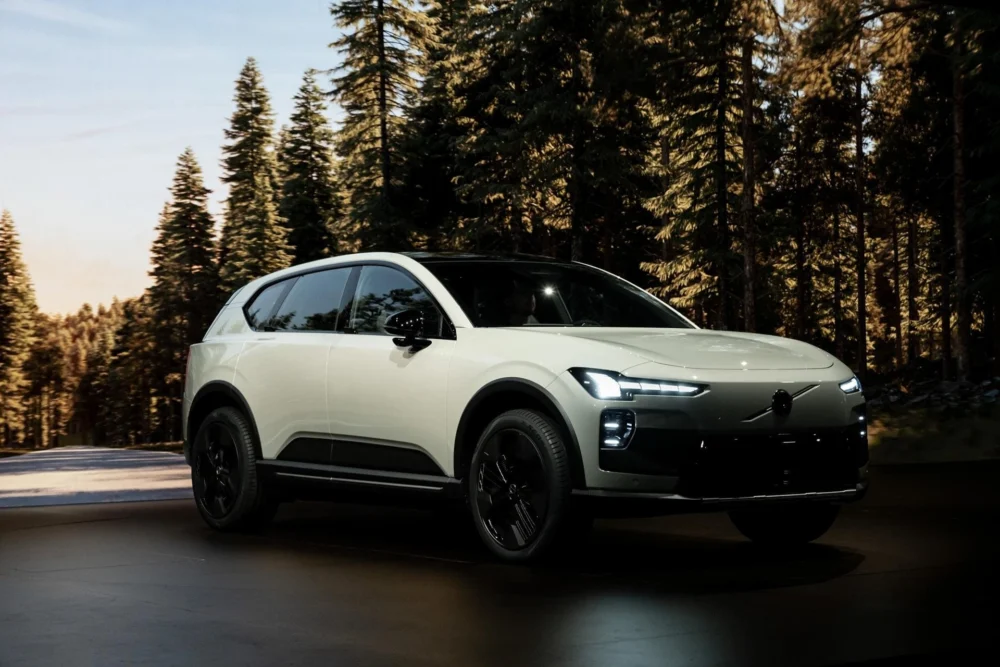
The transition from internal combustion engines to electric propulsion has long been haunted by a singular psychological specter: range anxiety. For over a decade, the primary hurdle for mass-market EV adoption hasn’t been performance or luxury, but the fear of being stranded with a depleted battery. However, as the automotive industry moves toward 2026, the goalposts are shifting. With the unveiling of the Volvo EX60, the Swedish automaker is not merely releasing a new mid-sized SUV; it is debuting a technological manifesto centered on the SPA3 platform, a dedicated electric architecture designed to render range concerns a relic of the past.
The EX60 represents a pivotal moment for Volvo, a brand that has staked its future on a rapid, uncompromising pivot to electrification. While previous electric efforts from the Gothenburg-based manufacturer were often adaptations of existing architectures, the EX60 is the first to utilize the SPA3 platform. This is a "clean sheet" design that signals the end of the "compromise era," where vehicles had to accommodate both battery packs and internal combustion components. By focusing exclusively on electric drivetrains, Volvo has unlocked engineering efficiencies that were previously unattainable.
The SPA3 Revolution: Beyond Traditional Manufacturing
To understand the significance of the EX60, one must look beneath the sheet metal at the SPA3 architecture. Håkan Samuelsson, CEO and President of Volvo, has been vocal about the radical departure this platform represents compared to its predecessor, the SPA2. While the SPA2 was a sophisticated bridge between worlds, the SPA3 is a pure-play electric foundation.
One of the most significant industrial advancements within SPA3 is the implementation of mega casting. Borrowing a page from the playbook of high-efficiency pioneers like Tesla, Volvo is moving away from the traditional method of welding and bolting together hundreds of individual stamped steel or aluminum parts. Instead, large sections of the vehicle’s rear underbody are cast as a single, massive aluminum component. This "megacast" approach dramatically reduces weight, simplifies the assembly line, and enhances structural rigidity. For the consumer, this translates to a vehicle that is not only more efficient but also inherently more agile due to the reduction in unsprung mass and complex joints.
Furthermore, the EX60 introduces "cell-to-body" battery integration. In conventional EVs, the battery cells are housed in modules, which are then placed in a pack, which is then bolted into the car. The SPA3 platform eliminates several of these layers. The aluminum battery housing itself serves as a structural member of the chassis, stiffening the entire frame. This dual-purpose design allows for a larger battery volume within the same physical footprint while simultaneously lowering the vehicle’s center of gravity.
Addressing the Maintenance Paradox
While structural batteries and mega casting offer immense benefits in terms of performance and production costs, they have historically raised red flags regarding repairability. If a battery is "glued" into the structure of the car, what happens when a single sensor or electronic component fails?
Volvo’s Chief Commercial Officer, Erik Severinson, has addressed these concerns with a pragmatic engineering solution. While the battery cells themselves are indeed bonded for structural integrity—making individual cell replacement nearly impossible—Volvo has decoupled the high-failure-rate electronics from the cell pack. By moving the sensitive control units and electronics to a dedicated, easily accessible compartment beneath the rear seat, Volvo has ensured that common electrical issues can be serviced without dismantling the entire structural floor of the vehicle. This "box" approach uses simple welded bus bars to connect to the cells, prioritizing longevity and ease of maintenance. To further instill confidence, Volvo is backing this engineering with a ten-year warranty, guaranteeing 80% battery capacity over a decade of use.
The 500-Mile Threshold and the 800V Advantage
The headline figure for the EX60 is undoubtedly its range. The top-tier P12 variant, equipped with a massive 117kWh net capacity battery, is rated at 503.3 miles on the WLTP cycle. While the P10 and P6 variants offer more modest ranges of 410.1 and 385.3 miles respectively, all three figures represent a significant leap over the current industry average for mid-sized SUVs.
However, range is only half of the equation. The EX60 utilizes a sophisticated 800-volt electrical architecture, a feature currently reserved for high-end performance EVs like the Porsche Taycan or the Hyundai Ioniq 6. This high-voltage system allows for staggering charging speeds. On the P12 and P10 models, the EX60 supports up to 400kW DC fast charging. In real-world terms, this means a driver can add over 200 miles of range in just ten minutes—roughly the time it takes to grab a coffee and use a restroom.
This combination of 500-mile endurance and ultra-fast charging effectively dismantles the two pillars of range anxiety: the fear of running out of power on a long trip and the frustration of long "refueling" stops. By the time the EX60 hits the roads in 2026, the charging infrastructure in key markets is expected to have matured sufficiently to support these 800V speeds, making the EV experience indistinguishable from, or even superior to, the internal combustion experience.

HuginCore: The Software-Defined Vehicle
Beyond the hardware, the EX60 is a flagship for Volvo’s new HuginCore computing architecture. In the past, vehicles relied on dozens of independent Electronic Control Units (ECUs) provided by various third-party suppliers, often resulting in a "fragmented" software experience. HuginCore moves toward a centralized "brain" that manages the entire vehicle’s operations.
This shift to a central compute model allows for much faster software development and seamless over-the-air (OTA) updates. Samuelsson acknowledges that the transition hasn’t always been smooth, citing the software delays and bugs that hampered the initial launches of the EX30 and EX90. However, the company views those struggles as a "painful but necessary" learning phase. The software stack developed and refined for those earlier models will carry over to the EX60, benefiting from years of real-world data and bug fixes. By treating software as a scalable volume business, Volvo aims to provide a user interface and autonomous driving suite that feels as intuitive and responsive as a modern smartphone.
Strategic Market Positioning
The EX60 enters the most competitive segment in the global automotive market: the premium mid-sized SUV. This space is currently defined by the Tesla Model Y, which has become a global sales juggernaut. However, Volvo isn’t just aiming at Tesla; they are taking a direct shot at the German triumvirate of Mercedes-Benz, BMW, and Audi.
The pricing strategy for the EX60 is a calculated move to maintain "premium parity." With a starting price of approximately £56,680 ($77,000), it sits comfortably in the luxury bracket. However, Volvo is focusing on residual values rather than aggressive discounting. By ensuring the car holds its value over time, Volvo can offer competitive monthly leasing and finance rates that rival cheaper competitors.
The primary rival in the 500-mile club is the upcoming BMW iX3. Volvo executives have pointed out that the EX60 offers a slight edge in range and a superior safety heritage. The inclusion of a "world-first" multi-adaptive safety belt—which adjusts its tension and shape based on the specific ergonomics of the occupant—reinforces Volvo’s identity as the industry leader in occupant protection.
The Future of the Lineup: Cross Country and Beyond
Recognizing the diverse needs of the global market, Volvo will also launch a "Cross Country" variant of the EX60. This model will feature increased ground clearance, ruggedized body cladding, and will be exclusively available with the all-wheel-drive P10 and P12 powertrains. This ensures that the SPA3 platform appeals not just to urban commuters, but also to those in regions with harsher climates or unpaved roads.
Notably, the EX60 will not offer a hybrid or plug-in hybrid variant. It is a "pure" expression of Volvo’s electric future. While the company will continue to sell combustion and hybrid models in other segments for the foreseeable future, the EX60 serves as the definitive end of the internal combustion era for Volvo’s mid-sized SUV core.
Industry Implications and the Road Ahead
The arrival of the Volvo EX60 in 2026 will likely be viewed as a watershed moment for the European automotive industry. It proves that traditional "legacy" automakers can successfully pivot to highly integrated, software-defined, and manufacturing-efficient electric platforms that rival or exceed the specifications of "EV-native" startups.
As mega casting and cell-to-body technologies become the industry standard, the cost of producing high-range EVs is expected to drop, eventually reaching "margin parity" with gasoline vehicles. Volvo’s claim that the EX60 will achieve this parity is a bold statement that suggests the era of EVs being more expensive to produce than ICE cars is coming to a close.
For the consumer, the message is clear: the technical limitations that once made electric vehicles a "second car" or a "city car" are evaporating. When a premium SUV can travel 500 miles on a charge and recover half its range in the time it takes to buy a sandwich, the argument against electrification loses its last remaining foothold. The EX60 isn’t just a new car; it is a signal that the electric transition has moved from the early-adopter phase into a new era of uncompromising, long-distance luxury.
