

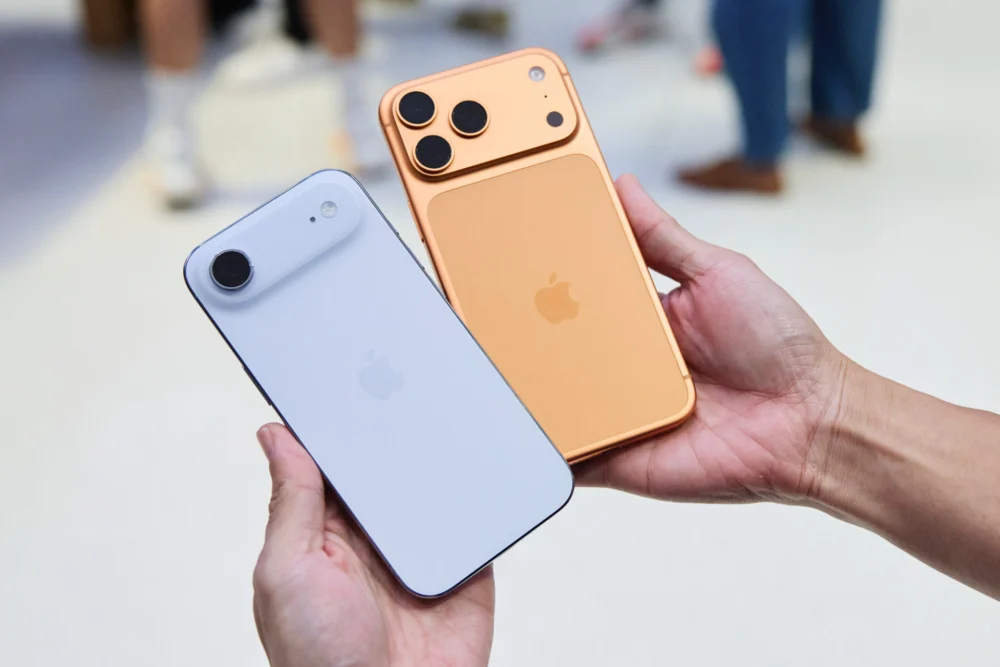
The smartphone landscape in India, the world’s second-largest mobile device market by volume, experienced a profound divergence in 2025. While the overall market volume flatlined for the fourth consecutive year, hovering around 152 to 153 million units shipped, Apple’s iPhone registered its most significant performance to date. The Cupertino giant shipped approximately 14 million units across the full year, vaulting its market share of total shipments to a record 9%. This figure represents a robust two percentage point increase from the 7% share held in 2024, cementing 2025 as the iPhone’s strongest commercial year yet in the subcontinent.
This remarkable surge is not merely anecdotal success; it signifies a fundamental shift in market value distribution. According to industry analysis, the primary catalysts for Apple’s accelerated momentum include a refined product portfolio strategy, the escalating power of aspirational consumer demand among India’s expanding middle and upper-middle classes, and a deliberate, aggressive expansion across crucial sales and distribution channels. The iPhone is rapidly transforming from a niche, ultra-luxury import into an attainable status symbol, fueled by favorable financing options and a robust ecosystem of older-generation devices that keep the entry price point manageable for first-time premium buyers.
Corporate Strategy and Validation
Apple has consistently highlighted India as a pivotal growth vector in its global strategy, a narrative frequently reinforced during quarterly earnings calls. CEO Tim Cook publicly acknowledged setting an "all-time revenue record in India" during the company’s last financial reporting in October. Furthermore, the company’s executives, including CFO Kevan Parekh, emphasized that the active install base for the iPhone in India had reached an unprecedented high. Critically, the quarter also set a new record for device upgraders, underscoring Apple’s success in fostering loyalty and migration within its existing user base, rather than relying solely on acquiring entirely new smartphone users. Although Apple refrains from disclosing granular, country-specific shipment or revenue data, these qualitative declarations validate the market researcher’s findings regarding Apple’s growing dominance in the high-value segment.
The growth strategy extends far beyond mere device shipments; it is a multi-pronged effort to embed the Apple ecosystem deeply within the Indian economy and consumer psyche.
The Manufacturing and Retail Pivot
A cornerstone of Apple’s recent strategic maneuvers has been the localization of its supply chain and the physical expansion of its retail footprint. As part of a broader, geopolitical risk mitigation strategy—often termed ‘China Plus One’—Apple has substantially ramped up local manufacturing in India. This move not only hedges against supply chain disruptions but also allows the company to capitalize on government incentives designed to promote domestic value addition, potentially reducing import duties and improving overall cost efficiency in the long term. Analysts project that this manufacturing scaling will be crucial for maintaining competitive pricing and timely inventory flow, especially for newer flagship models.
Simultaneously, Apple is transitioning away from relying exclusively on third-party authorized resellers. The opening of its fifth official Apple Store in the country—and its first in the key national capital region satellite city of Noida—in December, signifies a deeper commitment to direct consumer engagement. This retail expansion, which formally commenced in 2023, aims to provide the standardized, high-quality Apple experience that builds brand affinity and facilitates easier transitions for consumers exploring the ecosystem for the first time. The physical stores serve as critical hubs for sales, customer support, and the crucial ‘Genius Bar’ service, which is essential for alleviating consumer hesitancy regarding premium product maintenance.
Ecosystem Lock-in through Services
Perhaps the most forward-looking aspect of Apple’s strategy in India is its tailored approach to services. Recognizing the price sensitivity and income disparity inherent in the market, Apple is adjusting its service pricing aggressively to accelerate adoption. Earlier this month, the company introduced the "Apple Creator Studio," a bundled subscription featuring high-value creative applications like Final Cut Pro and Logic Pro. Crucially, this bundle was priced at ₹399 per month (approximately $4.35) for the Indian market. This localized pricing is approximately 66% lower than the $12.99 monthly fee charged in the United States.
This strategic price differentiation for high-end software is a clear indication that Apple is prioritizing ecosystem penetration and long-term recurring revenue over immediate service margins. By making professional tools significantly more accessible, Apple cultivates a user base that is heavily invested in its hardware, making migration to competing platforms economically and practically difficult. This strategy ensures that even if volume growth remains constrained, the total lifetime value (LTV) of the Indian consumer base will dramatically increase.
The Macroeconomic Paradox: Stagnation and Premiumization
Apple’s record year occurred within a macroeconomic environment characterized by broad market stagnation. India’s smartphone market has effectively plateaued at the 152 million unit level for four consecutive years, failing to generate the substantial organic growth previously expected from a rapidly digitizing nation of over 1.4 billion people. Furthermore, the crucial October-December quarter of 2025—a period traditionally boosted by the major festive season sales—saw year-over-year shipments decline by an estimated 8% to 10%.
Industry experts point to several structural factors contributing to this persistent market inertia. Firstly, consumers are adopting longer replacement cycles, holding onto their devices for extended periods due to marginal generational feature upgrades and increased device durability. Secondly, the once-reliable pipeline of feature phone users transitioning to entry-level smartphones has slowed considerably. Lastly, the rising sophistication and widespread availability of refurbished devices offer a compelling, lower-cost alternative to purchasing new budget smartphones, siphoning volume away from the mass market.
Despite this volume stagnation, a significant and highly valuable trend is reshaping the market: premiumization. The segment comprising smartphones priced above ₹30,000 (approximately $327) exhibited exceptional resilience, expanding by 15% year-over-year in 2025. This premium segment now accounts for a record 23% of total smartphone shipments—the highest percentage share ever recorded.
This dynamic environment strongly favors brands with robust, aspirational premium portfolios, most notably Apple. While the mass-market segment, traditionally dominated by Chinese and South Korean manufacturers, struggles with squeezed margins and stagnant demand, the high-end market acts as a continuous engine of value creation.
The Competitive Landscape and Value Disparity
Even with its historic performance in 2025, Apple remains outside the top three smartphone vendors in India by sheer shipment volume. The market hierarchy still reflects the dominance of Android devices catering to the mass and mid-market segments.
In 2025, China’s Vivo led the volume charts, capturing an estimated 23% share of shipments. Samsung followed with 15%, maintaining a strong position across multiple price tiers, while Xiaomi secured 13%. Apple’s 9% share, while historically high, underlines the persistent reality that volume is driven by affordable Android alternatives.
However, focusing solely on volume masks the profound value disparity. While Vivo ships the highest number of units, Apple captures the lion’s share of the industry’s profits and Average Selling Price (ASP). Apple’s success is defined by its ability to capture value, transforming a relatively small volume base into a massive revenue stream, which is the ultimate metric of brand success in the technology sector. This decoupling of volume and value confirms a mature market characteristic: profitability concentrates at the top.
Future Trajectories and Emerging Headwinds
Looking ahead to 2026, market forecasts suggest the volume challenges will intensify. Projections indicate that India’s overall smartphone market volume is likely to contract by approximately 2%. This expected decline is compounded by macroeconomic pressures that will specifically affect the highly competitive budget segment.
A significant warning sign for 2026 is the anticipated increase in global memory prices. Rising costs for components like DRAM and NAND flash memory will exert substantial pressure on manufacturers operating in the sub-₹15,000 (under-$170) segment. These budget vendors will face difficult choices: absorb the higher component costs, cut cashback offers and promotional incentives, trim device specifications to maintain price points, or reluctantly raise retail prices. Any of these actions could further dampen consumer demand in the largest volume bracket.
Despite these headwinds, the trajectory of premiumization is expected to continue unabated. Following a substantial 9% increase in Average Selling Prices (ASP) across the market in 2025, ASPs are forecast to rise by another 5% in 2026. This trend confirms that consumer spending power, particularly at the higher end, remains robust and increasingly focused on quality and brand cachet.
For Apple, this future environment is highly favorable. As the premium segment expands, Apple benefits disproportionately. The company is strategically positioned not only to capture new premium buyers but also to benefit from the growing second-hand and refurbished market for its own older models, which further strengthens the funnel into its high-margin services ecosystem.
The successful navigation of the Indian market by Apple serves as a critical case study in strategic penetration. By aligning aggressive retail expansion, significant manufacturing localization, and highly localized pricing for digital services, Apple has managed to thrive in a challenging, stagnant volume market. The iPhone’s record year in 2025 is less about market expansion and more about market restructuring—a shift from a low-cost, volume-driven ecosystem to a value-centric, premium-focused economy where status and technology integration take precedence over sheer affordability. This ‘great decoupling’ ensures that even if overall shipments remain flat or decline slightly, the market’s economic importance and strategic value to global technology giants like Apple will only continue to accelerate. The long-term implication is a bifurcation of the Indian market, where the top tier becomes increasingly insulated from the cyclical downturns and competitive pressures that define the budget segments below.
