

The glitz and glamour of Hollywood have long served as a facade for a complex, high-stakes industrial machine, but as generative artificial intelligence begins to permeate the creative process, that machine is facing an existential recalibration. Recent public discourse from some of the industry’s most prominent figures—ranging from Academy Award-winning actors to visionary directors—reveals a profound disconnect between the elite "above-the-line" talent and the economic reality facing the thousands of workers who keep the cameras rolling. While A-list stars and blockbuster filmmakers offer comforting platitudes about the limitations of technology, the underlying data suggests a much grimmer future for the industry’s middle class.
The conversation reached a fever pitch following recent comments made by Ben Affleck during a high-profile podcast appearance. Affleck, a seasoned veteran of the studio system, attempted to downplay the disruptive potential of AI, arguing that the technology lacks the "soul" or the nuanced understanding of human experience required to create truly compelling cinema. To a casual observer, his arguments appear grounded in a traditionalist respect for the craft. However, to those tracking the exponential growth of neural networks and large-scale diffusion models, his rhetoric sounds less like a technical critique and more like the "bargaining" phase of grief.
Affleck’s skepticism often centers on the technical hiccups of early-stage AI, such as the infamous "six-finger" problem in image generation that plagued models in early 2023. This is a common fallacy among Hollywood’s elite: judging the permanent potential of a technology by its prototype failures. In the rapidly evolving landscape of machine learning, a problem identified on Tuesday is often solved by Thursday. By focusing on these transient glitches, figures like Affleck are missing the broader structural shift. The reality is that if an audience cannot discern the difference between a human-generated background and an AI-synthesized one, for the purposes of the bottom line, there is no difference.
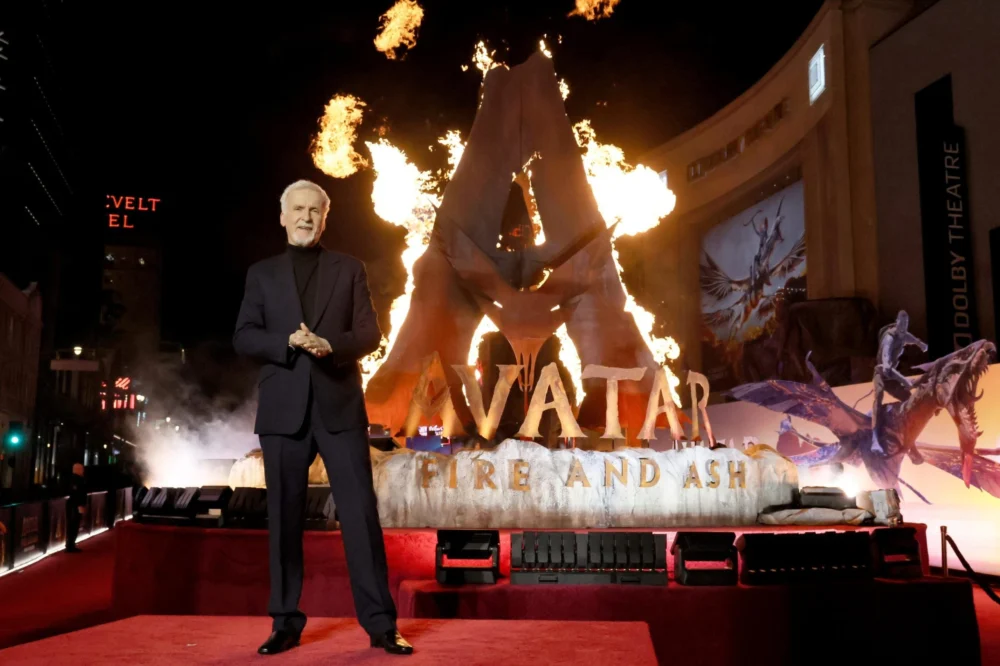
While Affleck’s stance may be attributed to a lack of technical immersion, the narrative becomes more complicated when considering James Cameron. As a filmmaker who has spent decades pushing the boundaries of visual effects and motion capture, and who now sits on the board of Stability AI, Cameron possesses a sophisticated understanding of the tools at hand. Yet, his recent assertions that massive blockbuster budgets can be slashed by hundreds of millions of dollars without costing a single job defy the basic laws of production economics.
In the world of high-end filmmaking, a $300 million saving is not found by switching to a cheaper brand of coffee in the craft services tent. Those hundreds of millions of dollars represent the collective salaries, benefits, and union contributions of thousands of human beings. They represent the drivers who transport equipment, the grips who rig the lighting, the gaffers, the hair stylists, the carpenters building physical sets, and the costumers sewing garments. To claim that such a radical reduction in expenditure can occur while maintaining the current workforce is a mathematical impossibility. It suggests a future where the "celebrity" remains the face of the project, while the industrial infrastructure that once supported them is hollowed out and replaced by silicon.
The irony of this situation is that the very people downplaying the threat—the stars and the visionary directors—are the ones most insulated from it. A-list celebrity is perhaps the only commodity the algorithm cannot yet fully replicate. The "brand" of a movie star carries a parasocial value that audiences still crave. Consequently, Affleck and Cameron’s personal livelihoods are secure. The real victims of the AI transition are the "below-the-line" workers. These are the middle-class laborers who have already been squeezed by decades of "runaway production," where studios move filming to tax-haven states or international locations to shave percentages off the budget.
We are already seeing the physical manifestation of this decline in the very heart of the film industry. The traditional Hollywood studio lot, once the impenetrable fortress of the entertainment world, is beginning to crumble under the weight of shifting economics. A prime example is the recent fate of the Radford Studio Center in Los Angeles. This historic 55-acre site, which hosted everything from silent films to iconic sitcoms like Seinfeld and Gilligan’s Island, recently saw its owners default on a $1.1 billion mortgage. Control of the lot is now passing to lenders led by Goldman Sachs.

The Radford default is a bellwether for the broader industry. As production volumes in Los Angeles decline and the cost of financing rises, the value of physical studio space is being reassessed. In a city plagued by a chronic housing shortage, the land beneath these historic soundstages is increasingly viewed as more valuable for residential redevelopment than for film production. When the "factory floor" of the movie business starts being sold off for real estate speculation, it signals a permanent contraction of the traditional physical production model.
Simultaneously, the industry is witnessing a geographic decoupling. While Los Angeles struggles, companies like Netflix are breaking ground on massive new soundstages in New Jersey. This shift is driven by aggressive tax incentives and a desire to move closer to different labor markets, but even these new facilities will likely be built with an "AI-first" mindset. The soundstages of the future will not need the same massive footprints for physical set construction or the same logistical support for thousands of extras. They will be designed for "virtual production"—environments where LED volumes and real-time rendering engines replace the need for physical locations and traditional set dressing.
The expert-level analysis of this trend reveals a two-tiered collapse. First is the automation of the visual: background actors, set designers, and lighting technicians are being replaced by digital assets. Second is the automation of the logistical: the administrative and support staff required to manage a massive physical production are being streamlined by AI-driven project management and scheduling tools.
The psychological denial prevalent in Hollywood’s upper echelons serves a specific purpose. By framing AI as a "tool for creators" rather than a "replacement for workers," the industry’s leaders can navigate the ethical minefield of labor relations without appearing like the architects of a mass layoff. However, the labor unions—SAG-AFTRA and the IATSE—are increasingly aware that the "bargaining" mentioned by psychologists is happening at the negotiating table. The recent strikes were a precursor to a much longer conflict over the ownership of likeness, the definition of "creative work," and the right to a human-led production environment.
Looking toward the future, the impact of AI on Hollywood will likely follow the trajectory of the manufacturing industry in the late 20th century. The "craft" will remain, but the "industry" will be transformed. We are entering an era of "Lean Cinema," where the barrier to entry for high-fidelity visual storytelling will drop, but the value of human labor within that process will be systematically devalued.
The future of film may involve a democratization of tools, allowing a single creator to produce a visual epic from a desktop computer, but this democratization comes at a steep price for the collective labor force. The "middle-class" of Hollywood—the people who bought homes and raised families on the wages of a steady career in the trades of film—are facing a sunset they did not ask for.
Ultimately, the comments from figures like Affleck and Cameron reflect a desire to maintain the status quo while simultaneously profiting from the disruption. They speak of "soul" and "artistic integrity" to appease the public, while the financial structures they operate within are moving toward a frictionless, worker-less efficiency. As the Radford Studio Center changes hands and the soundstages of New Jersey rise, the reality remains: the algorithm doesn’t need to be "smart" or "soulful" to be profitable. It only needs to be cheaper than the person currently holding the camera, and in the cold calculus of modern Hollywood, that transition is already well underway.
