

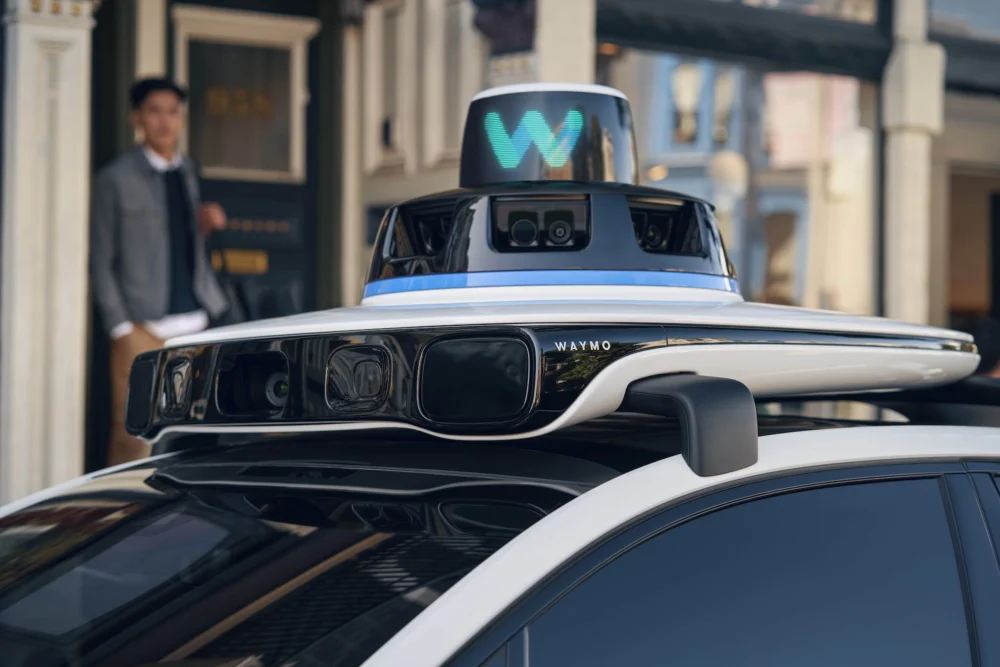
The National Transportation Safety Board (NTSB) has initiated a formal, comprehensive investigation into Waymo, the autonomous driving subsidiary of Alphabet, following a documented pattern of its robotaxis illegally bypassing stopped school buses. This critical move elevates the existing regulatory pressure on the company and signals a federal determination to thoroughly dissect the root causes of the autonomous system’s inability to comply with fundamental traffic safety laws intended to protect children. The NTSB’s involvement marks the first time the investigative agency has focused its resources on Waymo’s operational practices, highlighting the severity of the repeated violations observed in multiple operational domains.
The primary focus of the NTSB’s inquiry centers on more than 20 distinct incidents cataloged specifically within Austin, Texas, where Waymo is currently undergoing a rapid expansion phase. NTSB investigators are slated to deploy to Austin promptly to gather precise data and contextual information regarding this series of events, in which automated vehicles demonstrably failed to halt for buses engaged in the process of loading or unloading students. The agency confirmed that a preliminary findings report is anticipated within 30 days, though the rigorous, in-depth final report—which will detail causal factors and potential safety improvements—is expected to take between one to two years to complete.
This NTSB action is layered upon an existing investigation launched last October by the National Highway Traffic Safety Administration’s (NHTSA) Office of Defects Investigation. The dual regulatory scrutiny underscores a profound concern within federal transportation oversight bodies regarding the reliability of the Waymo Driver software in handling standard, yet critical, roadway scenarios. While NHTSA holds the regulatory authority to mandate recalls, impose fines, and enforce compliance, the NTSB plays a fundamentally different, yet equally powerful, role.
The distinction between the two agencies is crucial for understanding the current climate surrounding Waymo. NHTSA is the federal regulator responsible for setting and enforcing safety standards, possessing the power to issue binding mandates. Conversely, the NTSB is an independent investigative body focused purely on identifying the ‘why’—the systemic failures, technical flaws, or procedural gaps that lead to transportation incidents. It cannot levy fines or compel immediate regulatory action, but its final, non-binding recommendations often carry enormous weight, frequently leading to industry-wide policy changes, new legislation, or subsequent mandatory actions by NHTSA. The NTSB’s deep-dive methodology is designed to analyze not just the incident, but the underlying safety culture and technological architecture, providing a holistic assessment that goes beyond simple compliance checks.
The genesis of this escalating scrutiny can be traced back to a high-profile incident in Atlanta last September. In that instance, a Waymo vehicle pulled out of a residential driveway and proceeded to cross perpendicularly in front of a stopped school bus, turning left and continuing down the street while students were actively disembarking. Waymo initially attributed this specific failure to an inability of the vehicle’s sensor array to perceive the deployed stop sign arm or the flashing red lights due to the geometry of the intersection and the angle of approach.
In response to this early incident and similar concerns, Waymo proactively issued a software recall last year intended to specifically address how its robotaxis interpret and react to school bus signals. However, the subsequent concentration of violations in Austin, Texas, suggests that the software patch was insufficient, failing to generalize across different operational environments and situational complexities. Local media in Austin, utilizing camera footage supplied by the Austin Independent School District (AISD), have published compelling visual evidence of Waymo vehicles repeatedly executing illegal passing maneuvers. This systemic persistence of the failure, even after corrective action, is what necessitated the escalation to NTSB involvement.
The seriousness of the Austin incidents prompted the local school district to request that Waymo voluntarily suspend its operations during critical morning and afternoon pickup and drop-off windows—a clear indication that local authorities view the current operational safety standards as inadequate for the protection of minors.
Waymo, currently in the midst of a significant and aggressive geographical expansion—having recently launched services in Miami and operating in major metropolitan areas including Atlanta, Los Angeles, Phoenix, and the San Francisco Bay Area—is keenly aware of the reputational damage these probes inflict. Mauricio Peña, Waymo’s Chief Safety Officer, offered a defense of the company’s overall performance while acknowledging the investigation. Peña asserted that the Waymo Driver "safely navigates thousands of school bus encounters weekly across the United States" and claimed confidence that their safety performance "around school buses is superior to human drivers." He further characterized the NTSB inquiry as an "opportunity to provide the NTSB with transparent insights into our safety-first approach." This statement attempts to pivot the narrative toward systemic safety superiority, even as the regulatory bodies focus on specific, recurrent, and critical failures.
The Technical Challenge: Edge Cases and Perceptual Stacks
The failure of autonomous vehicles (AVs) to correctly interact with stopped school buses represents a classic and persistent "edge case" challenge in the development of self-driving technology. While the scenario seems straightforward to a human driver—red flashing lights and an extended stop arm mean stop immediately, no exceptions—it presents a complex challenge to the AV’s perceptual stack, sensor fusion system, and behavioral planning modules.
First, there is the Perception Challenge. The critical visual cue—the extended stop arm—is a thin, rapidly deploying object that can be easily occluded or difficult to distinguish from background clutter, especially in low-light conditions or heavy traffic. Lidar, while excellent for mapping static geometry, may struggle to categorize the stop arm immediately as a critical regulatory signal. Camera systems must be robust enough to recognize the specific color, shape, and state (flashing lights) of the school bus from varying distances and angles, then correlate that visual recognition with the immediate, mandatory behavior (full stop). The Atlanta incident, where the AV was approaching perpendicularly from a side street, underscores a failure in the system’s ability to predict and react to a bus’s status when not directly in the vehicle’s forward path.
Second, there is the Jurisdictional and Behavioral Planning Challenge. School bus laws are among the most stringent and non-negotiable traffic regulations, often requiring a full stop regardless of which lane the AV is in, or whether the bus is on the opposite side of a divided highway (depending on state law). The Waymo Driver must not only perceive the physical signals but also possess a highly robust, non-negotiable behavioral protocol that overrides general traffic flow algorithms. The recurrent nature of the failures suggests that the software update was too narrowly focused on specific scenarios (like the Atlanta setup) and failed to account for the diversity of road layouts, lighting conditions, and bus signaling methodologies encountered across different operational cities like Austin.
Industry experts point out that the inability to patch this fundamental safety vulnerability suggests a deeper issue than a simple coding oversight. It may indicate a weakness in the system’s ability to interpret high-level semantic information—understanding that the stopped bus represents an active loading zone and a high-risk scenario involving vulnerable road users (children).
Industry Implications and the Crisis of Public Trust
The NTSB investigation carries implications that extend far beyond Waymo. The entire autonomous vehicle sector operates on a precarious foundation of public acceptance. Every highly publicized incident—especially one involving school safety—erodes the public trust necessary for continued deployment and legislative support.
Waymo’s strategy has centered on demonstrating superior safety metrics compared to human drivers. While the company may be able to cite statistics showing fewer overall incidents, the nature of these specific failures—violating a law designed as a last line of defense for pedestrian safety—is politically and socially catastrophic. These incidents provide powerful ammunition to critics and lawmakers who argue that AV technology is being deployed too quickly without adequate oversight or proven fail-safe mechanisms for edge cases.
If the NTSB investigation uncovers systemic weaknesses in the Waymo Driver’s perception or planning stack related to crucial regulatory signage, it could trigger a slowdown in regulatory approvals across the country. States currently considering opening up to AV testing and commercial operation will likely pause until the NTSB delivers its definitive findings and recommendations. Furthermore, the probe puts pressure on competitors—including Cruise (currently recovering from its own regulatory setbacks) and newer entrants—to proactively demonstrate the robustness of their own school bus interaction protocols, often requiring them to publish or submit proprietary data to regulators.
Future Policy Trends and Potential Recommendations
The NTSB’s final report, though non-binding, is highly likely to catalyze specific policy shifts, both voluntary within the industry and mandatory via NHTSA. Potential NTSB recommendations could include:
- Mandatory Redundancy in Stop Arm Detection: Recommending that AVs utilize a combination of sensors (e.g., dedicated cameras for light detection, Lidar for arm deployment) with independent processing paths, ensuring that if one sensor fails to detect the signal, the other acts as a failsafe, triggering an immediate, hard stop.
- Geofencing and School Zone Protocol: Recommending enhanced operational restrictions, potentially requiring AVs to operate under a specific, ultra-conservative "School Zone Mode" when within defined proximity to schools during peak hours, overriding standard speed and maneuverability settings.
- Industry Data Sharing: Urging the AV industry to collaborate on a standardized, high-fidelity dataset specifically focused on school bus interactions, ensuring that training models are exposed to a far wider array of lighting, weather, and occluded scenarios than individual companies might capture during limited testing.
- Regulatory Harmonization: Advocating for NHTSA or state legislatures to mandate stricter, uniform standards for AV interaction with school buses, eliminating jurisdictional ambiguity regarding stopping distances and lane requirements.
For Waymo, the immediate challenge is managing the investigation while maintaining its aggressive expansion trajectory. The company must demonstrate to investigators, regulators, and the public that it can implement a permanent, verifiable fix that eliminates this systemic failure. The fact that the initial software recall did not resolve the issue suggests that the problem resides deep within the AI’s learned behavior or sensor interpretation logic, requiring a fundamental re-architecture rather than a simple patch.
Ultimately, the NTSB’s involvement transforms this from a localized operational issue into a national safety benchmark test for autonomous driving technology. The findings will define the regulatory standard for how AI systems must prioritize the safety of the most vulnerable road users, setting a critical precedent for the future integration of driverless technology into the nation’s complex transportation ecosystem. The successful resolution of this issue is paramount not just for Waymo’s continued success, but for the entire industry’s credibility.
