


The fallout from the colossal data breach affecting Coupang, South Korea’s dominant e-commerce platform, has culminated in an unprecedented remediation effort. The company has formally announced a total compensation package valued at 1.685 trillion South Korean Won (approximately $1.17 billion USD) intended for the staggering 33.7 million customers whose personal information was compromised in the security incident first identified in November, though originating several months prior. This move underscores the immense financial and reputational stakes involved when a systemic failure impacts nearly the entire consumer base of a nation’s leading digital marketplace.
The rollout of this significant remuneration is scheduled to commence on January 15, 2026, structured as a phased distribution accessible to every Coupang customer, irrespective of their subscription status—including standard users, premium WOW members, and even those who have since deactivated their accounts. This broad inclusion suggests a comprehensive strategy aimed at universal appeasement and minimizing future liability across the entire affected demographic.
The mechanism for compensation is specifically tailored to incentivize continued engagement with the Coupang ecosystem. Each affected customer will receive four distinct, single-use purchase vouchers, collectively valued at 50,000 South Korean Won (roughly $34 USD). These vouchers are strategically segmented across Coupang’s diverse service verticals: 5,000 won for general Coupang product purchases utilizing core services like Rocket Delivery, Rocket Overseas logistics, Seller Rocket fulfillment, and the standard Marketplace; another 5,000 won dedicated specifically to Coupang Eats, the food delivery arm; a substantial 20,000 won allocated for Coupang Travel products; and the final 20,000 won reserved for purchases within the premium R.LUX segment. This tiered structure is clearly designed not just as recompense, but as a mechanism to drive transactional volume across the company’s high-margin and strategic service lines.
Context of the Catastrophe
Coupang, a company with significant American technological roots but operating primarily within the intensely competitive South Korean retail landscape, represents a crucial piece of the nation’s digital infrastructure. Employing approximately 95,000 individuals and generating annual revenues exceeding $30 billion, any disruption to its operations carries national economic weight. The data breach, which officially occurred on June 24 but was only detected in mid-November, represents one of the most severe cybersecurity incidents in South Korean corporate history, directly affecting the personally identifiable information (PII) and transaction histories of a population segment that dwarfs the number of active users in many comparable Western markets. The exposed data included full names, email addresses, physical residential addresses, and detailed order records.

The sheer scale of the exposure immediately triggered a high-level response, with the National Police Agency taking the lead in the subsequent criminal investigation. This elevated response highlights the stringent regulatory environment in South Korea concerning consumer data protection, often perceived as stricter than in many Western jurisdictions, particularly when systemic risk is involved.
The Internal Investigation and Suspect Identification
The trajectory of the investigation has pointed toward an insider threat, a scenario that CIOs and CISOs universally dread. Authorities have identified the primary suspect as a 43-year-old Chinese national who held a position within Coupang’s Information Technology department. Critically, this individual was employed between November 2022 and some point in 2024, retaining access privileges even after their formal departure from the organization. This suggests a critical lapse in offboarding procedures, a fundamental security control failure often overlooked in high-growth environments.
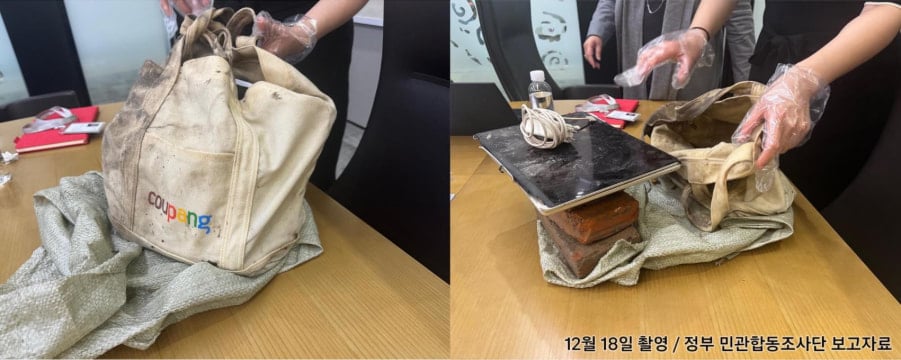
Coupang’s recent updates detail an aggressive recovery effort. The company successfully contacted the former employee earlier this month, leading to a direct meeting where the desktop computer drives containing the exfiltrated sensitive data were successfully retrieved. Further compounding the evidence recovery, a MacBook Air laptop belonging to the suspect was located and retrieved from a river, indicating a deliberate, though ultimately unsuccessful, attempt to physically destroy forensic evidence. The recovery of both primary storage devices, particularly the submerged laptop, provides investigators with crucial, albeit potentially damaged, digital artifacts.
Forensic analysis is being conducted with the assistance of globally recognized cybersecurity firms, including Mandiant, Palo Alto Networks, and the auditing powerhouse Ernst & Young. Current findings suggest the perpetrator managed to access data across 33 million accounts. However, the scope of data retained for potential malicious use appears to be concentrated on approximately 3,000 specific user accounts. Coupang maintains, based on current investigative data, that the former employee did not distribute this data externally to other parties, and furthermore, that the data was subsequently deleted from the suspect’s own devices. While these assurances are intended to mitigate immediate harm, the breach of trust remains profound.
Industry Implications: The Cost of Trust Erosion
The $1.17 billion commitment from Coupang is more than just a financial settlement; it is a direct acknowledgment of the enormous intangible cost associated with a catastrophic data breach in the digital age. For the e-commerce and retail sectors globally, this incident serves as a chilling case study on the vulnerabilities inherent in maintaining massive centralized data repositories.
The Shift in Liability Perception: Historically, data breach costs were often measured in regulatory fines and remediation expenses. Coupang’s proactive, multi-billion dollar compensation package signals a new reality where the perceived value of customer data security is being calculated directly against potential long-term customer churn. In highly saturated markets like South Korea, where platform switching costs are relatively low for consumers, maintaining trust is paramount. The vouchers, while modest on an individual basis ($34 equivalent), when aggregated across 33.7 million individuals, represent a massive outlay intended to anchor customers back into the platform’s ecosystem before competitors can capitalize on the security lapse.
Insider Threat Mitigation: The focus on a former IT employee retaining access highlights a critical vulnerability in privileged access management (PAM). Industry experts consistently stress that once an employee departs, their access—especially to core infrastructure or databases—must be instantaneously revoked. The fact that this individual could operate for an extended period post-departure, even if they left sometime in 2024, points to deficiencies in automated access revocation workflows, identity governance, and continuous monitoring of dormant or recently terminated accounts. This incident will undoubtedly fuel investment in sophisticated, real-time monitoring solutions that look for anomalous activity patterns, irrespective of the user’s active employment status.
Regulatory Scrutiny and Global Standards: South Korea’s regulatory bodies are now under pressure to reassess whether existing data protection frameworks are robust enough to handle breaches of this magnitude originating from inside the organization. This event will likely influence future mandates regarding data residency, encryption standards for PII, and the mandatory forensic reporting timelines for large-scale incidents. Global retailers operating in Asia, particularly those headquartered in the U.S. like Coupang, will face increased scrutiny regarding their alignment with diverse international compliance regimes (GDPR, CCPA, etc.) versus local South Korean mandates.
Expert Analysis: Security Architecture and Digital Forensics
From a security architecture perspective, the narrative strongly suggests a failure in the principle of least privilege combined with inadequate network segmentation. An IT employee, even one with high-level access, should not possess the capability to exfiltrate data pertaining to tens of millions of users without triggering multiple, high-severity alerts that should have been flagged immediately, rather than months later.
The recovery of the suspect’s hardware—the desktop drives and the submerged MacBook Air—is a significant achievement for the investigative team. The successful retrieval of the desktop data suggests that the deletion process was either incomplete or recoverable via standard data recovery techniques applied to magnetic media. The recovery of the laptop from a river, however, presents significant challenges for forensic examiners. Water damage, especially submersion, can compromise NAND flash memory (common in modern laptops) or the platters of traditional hard drives if present. Advanced techniques, potentially involving argon chambers or specialized solvents, will be necessary to extract any remaining usable data for a definitive chain of evidence in potential criminal prosecution.
The reliance on external experts like Mandiant and Palo Alto Networks indicates Coupang is leveraging top-tier threat intelligence and response capabilities. The fact that Mandiant’s involvement is noted suggests a deep dive into the attacker’s methodology, lateral movement (if any), and the specific tools or scripts used for bulk data extraction. Understanding the attacker’s TTPs (Tactics, Techniques, and Procedures) is crucial for hardening the environment against similar, future attacks that might employ different social engineering or technical vectors.
Future Trends: Proactive Defense and Data Minimization
The Coupang incident crystallizes the industry’s accelerating pivot toward two core defensive strategies: Data Minimization and Continuous Adaptive Risk and Trust Assessment (CARTA).
Data Minimization as a Security Strategy: In an ideal state, if Coupang had not retained excessive amounts of historical order data or detailed physical addresses for all 33.7 million users for prolonged periods, the impact radius would have been drastically reduced. Moving forward, leading enterprises will be forced to adopt aggressive data lifecycle management policies, aggressively purging PII that is no longer strictly necessary for current business operations or regulatory compliance. Tokenization and pseudonymization of historical transaction data will become standard practice to render large datasets useless even if breached.
The Evolution of CARTA: The delayed detection—from June to November—highlights the failure of traditional, periodic security audits. Future security models must incorporate CARTA principles, meaning security postures are continuously monitored, assessed, and dynamically adjusted in real-time. This requires leveraging AI/ML-driven Security Orchestration, Automation, and Response (SOAR) platforms to correlate seemingly disparate events across identity, network, and application layers, identifying the subtle behavioral anomalies characteristic of an insider threat before large-scale exfiltration occurs.
Coupang’s multi-faceted compensation plan, while massive in aggregate, is a necessary, reactive measure to stabilize its market position. However, the true long-term cost will be measured by the sustained investment required to fundamentally rebuild trust in its security architecture, moving from a compliance-driven defense to a resilience-centric security posture capable of weathering sophisticated insider attacks. The ripple effects of this breach will mandate more stringent supplier vetting, tighter identity controls for former contractors, and a cultural shift within the organization prioritizing data containment above all else. The industry is watching closely to see if this significant financial outlay translates into a corresponding, measurable improvement in their security maturity.
