

The annual gathering of the world’s most influential leaders in Davos, Switzerland, traditionally occurs amidst the stark, biting cold of the Alpine winter. This year, however, the meteorological conditions offered a peculiar paradox. Instead of the expected deep freeze, the high-altitude resort experienced unseasonably mild temperatures, hovering just above freezing. This unusual warmth, attributed to the Föhn—a dry, downslope wind common in the Alps—served as a quiet, yet potent, environmental metaphor for the central tension of the World Economic Forum (WEF): the collision of pressing global crises, particularly climate change, with the high-pressure rhetoric and strategic maneuvering of political and corporate titans. While the global elite donned their customary formal wear and heavy snow boots, the physical landscape itself signaled a deviation from the norm, mirroring the increasingly unpredictable global climate that dominates serious policy discussions within the Congress Centre.
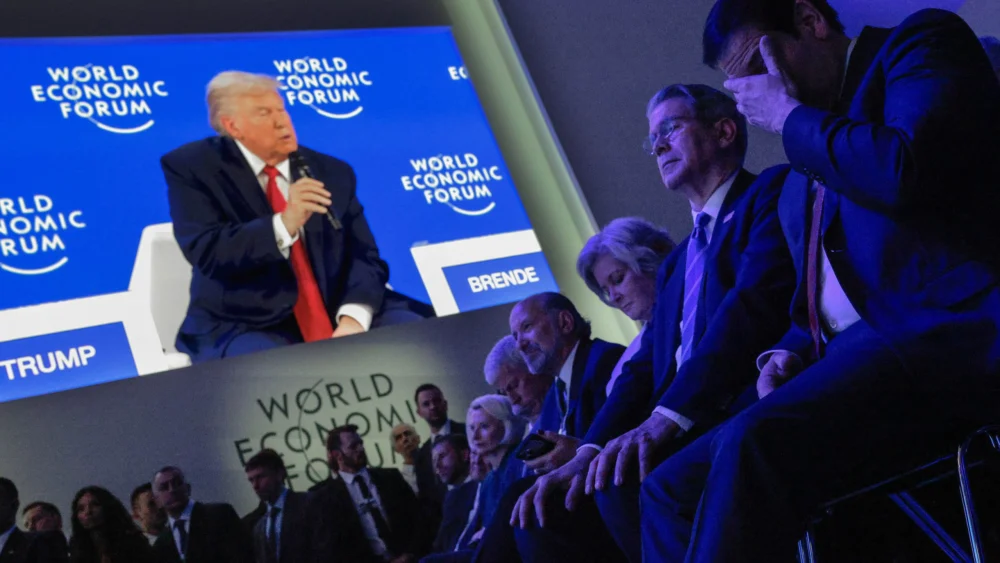
Beneath the veneer of diplomatic decorum and scheduled sessions, the first major wave of attention was captured by the arrival of high-profile political figures. The spectacle surrounding the address by former President Donald Trump exemplified the dominance of political theater over measured policy debate. His ninety-minute discourse was a sweeping, unscripted journey through a disparate range of topics, including macroeconomic policy, resource acquisition (such as the contentious mention of Greenland), renewable energy technologies, luxury goods markets, global trade imbalances, and pharmaceutical pricing structures. The address was characterized by the deployment of familiar political grievances and assertions that often required immediate factual scrutiny.
One notable instance involved the former President’s claims regarding global renewable energy infrastructure. He asserted that China, despite being the dominant global manufacturer of wind turbine components, failed to utilize wind power substantially for its own domestic energy generation. This statement stands in direct opposition to established energy data. China is, in fact, the undisputed global leader in installed wind power capacity and overall wind energy generation, a foundational element of its massive national commitment to renewable energy targets. The dissemination of such verifiable inaccuracies on a global stage underscores a critical challenge at the WEF: the difficulty of maintaining a focus on empirical data and long-term strategic reality when competing with narratives designed for immediate political impact and attention capture.
The sheer gravitational pull of this political grandstanding was physically palpable. The observer noted the difficulty in accessing the primary Congress Hall, finding the entrance choked by a "scrum" of attendees—a physical manifestation of the intense demand for proximity to power and influence. Even securing a spot in the secondary and tertiary overflow rooms required navigating a mass of humanity so dense it was likened, jarringly, to the tightly packed audience at a high-energy music concert. This logistical chaos highlights the central currency of the WEF: access and attention.
The subsequent day’s schedule promised further attention wars, with the anticipation of an unscheduled address by the former President regarding a "Board of Peace," alongside the expected presence of major technology figures like Elon Musk. These events underscore a defining feature of the contemporary Davos experience: the intense competition among disruptive figures—be they political or technological—to seize the finite bandwidth of the world’s economic and governmental leadership.
The Substance of Digital Transformation: AI and the Intelligent Co-worker
In stark contrast to the geopolitical rhetoric was the focus on the substantive technological shifts reshaping global productivity and workforce dynamics. A moderated panel centered on "the intelligent co-worker"—the application and integration of sophisticated AI agents into professional settings—provided a critical counterpoint to the political noise.
The panel was strategically constructed to offer a comprehensive cross-section of the AI ecosystem:
- Christoph Schweizer (CEO, Boston Consulting Group): Provided the macro strategic lens, analyzing how global enterprises adopt AI for competitive advantage and structural transformation.
- Enrique Lores (CEO, HP): Spoke to the hardware and enterprise infrastructure required to support massive AI deployment and integration into existing corporate architectures.
- Kian Katanforoosh (CEO, Workera): Focused on the necessary workforce training and skills transformation required to prepare human employees for collaboration with AI systems.
- Manjul Shah (CEO, Hippocratic AI): Addressed the critical challenges and ethical requirements of deploying AI agents in high-stakes, regulated fields like healthcare.
- Kate Kallot (CEO, Amini AI): Offered an essential perspective on the Global South, emphasizing the need for localized AI development, data sovereignty, and applications relevant to regions like Africa, often overlooked in Western-centric models.
A fascinating semantic shift occurred during the discussion: many panelists exhibited reluctance to fully embrace the terms "co-worker" or even "agent." This hesitation is highly significant from a policy and legal standpoint. By shying away from nomenclature that anthropomorphizes AI, organizations are tacitly affirming the current status of AI as a tool or augmentative capability, rather than an entity possessing legal agency, employment rights, or ethical parity with human staff. This linguistic precision helps delineate legal responsibility and organizational liability, especially in regulated industries.
The core consensus of the panel was the vision of AI as an augmentation layer, exponentially expanding human potential rather than merely automating existing tasks. A potent example of this augmentation was provided by Shah, describing the deployment of specialized AI agents to initiate proactive health and safety checks for 16,000 vulnerable individuals in Texas during a severe heat wave. This demonstrated AI’s capacity to execute vital, high-volume tasks that are impossible for human staff to manage efficiently during a crisis, transforming public health outreach capabilities.
Industry Implications and Future AI Trends
The discussions at Davos confirmed the accelerating shift from focusing solely on large language models (LLMs) to specialized, domain-specific AI agents capable of high-autonomy decision-making within defined parameters. The industry is moving toward "AI composability"—the ability to link multiple specialized agents to achieve complex goals, such as managing supply chain logistics, personalized medical care pathways, or dynamic climate risk modeling.
The perspective from Amini AI was particularly critical, highlighting the challenge of "data colonialism." While major tech firms focus on training models using vast datasets predominantly sourced from the Global North, effective AI deployment in emerging markets requires locally relevant, high-quality data. The discussion emphasized the future trend toward "Sovereign AI" initiatives, where nations or regions develop and control their own foundational models tailored to their linguistic, cultural, and infrastructural specificities. This recognition elevates the conversation beyond pure technology to issues of global equity and digital governance.
The Status Calculus: Decoding the Hierarchy of the Elite
Beyond the formal discussions on politics and technology, the WEF is perhaps most famous for its intricate, often unspoken, social architecture—a complex system of status signaling that determines hierarchy among the world’s most powerful individuals.
The observable signifiers are explicit: the color of one’s identification badge is the most immediate classifier. A white participant badge, often reserved for panel moderators and key contributors, acts as a universally recognized passport, symbolizing a level of necessary involvement that transcends mere attendance. Conversely, one’s lodging location offers a more subtle gauge of influence. Staying in Klosters, a neighboring town forty minutes away by train from the central Congress Centre, immediately places an attendee outside the innermost circle of instant access and convenience, signaling a slightly lower echelon of elite status.
More nuanced, however, are the conversational techniques employed to quickly assess an individual’s standing. The seemingly innocuous question, "Is this your first time at Davos?" serves as a high-stakes social filter. A veteran attendee, someone who has cultivated relationships and navigated the forum for years, possesses a level of gravitas and established network access that a newcomer, regardless of their current title, cannot replicate. Tenure at the WEF is a proxy for sustained relevance and institutional familiarity.
The most revealing glimpse into the rarefied atmosphere of ultra-wealth signaling, however, emerged from a seemingly casual conversation. While changing footwear—a moment of unexpected pedestrian reality amidst the opulence—an individual residing part-time in California expressed a non-committal desire to relocate, citing new tax legislation as the primary impetus. This was the ultimate "cold flex"—a display of power and wealth so effortless it appears almost accidental.
The context of this comment is critical: the specific tax legislation proposed in California targets only the highest tier of wealth, aimed at individuals classified as billionaires. To state publicly and casually that a potential change in residency is being contemplated due to the threat of a billionaire tax is not a complaint about financial hardship; it is a clear, deliberate signal of one’s placement at the absolute apex of the global economic pyramid. It is a declaration that one’s wealth is so immense that even marginal increases in state taxation warrant the logistical inconvenience of migrating across borders.
Expert Analysis of the Cold Flex
From a socio-economic perspective, the "cold flex" embodies a profound challenge to global governance. It illustrates the mobility of ultra-high-net-worth capital and the resultant competition among jurisdictions to offer the most favorable tax regimes. When economic elites can threaten to withdraw their residency and their taxable assets based on policy decisions, it fundamentally constrains the ability of democratic governments to implement progressive tax measures aimed at addressing wealth inequality—a topic paradoxically high on the formal agenda at Davos.
This status dynamic underscores a systemic contradiction within the WEF: the very individuals who benefit most profoundly from the current global capitalist structure, and who possess the flexibility to evade accountability for its societal side effects (like inequality), are simultaneously the ones gathered to discuss solutions to those same side effects. The casual mention of avoiding a billionaire tax, therefore, serves as a quiet, yet authoritative, assertion that capital, not governance, ultimately holds the final veto power over policy decisions.
Conclusion: Navigating the Tensions
The 2024 gathering in Davos was defined by a volatile mix of genuine intellectual engagement and performative power dynamics. The unseasonable warmth served as a continuous, subtle reminder of the climate imperative that underpins all economic discussion. Yet, this essential long-term challenge competed fiercely with the immediate, high-decibel spectacle of political rhetoric and the intense focus on immediate technological disruption, particularly the transformative, yet ethically complex, integration of AI agents.
The future impact stemming from Davos will be measured not by the applause for the political firebrands, but by the quiet, sustained progress made in translating the panel discussions—such as those on high-stakes AI deployment and the necessity of inclusive technological development—into actionable policy and investment strategies.
Ultimately, the event remains a microcosm of the modern global economy: a place where the strategic planning for humanity’s future runs parallel to a highly sophisticated, multi-layered competition for status and influence, where a badge color, a remote hotel room, or a casual remark about tax law can reveal more about the true distribution of global power than any formal declaration delivered from the Congress Hall stage. The challenge for observers and participants alike is to sift through the hot air and the cold flexes to find the threads of substantive change that will define the coming decade.
