

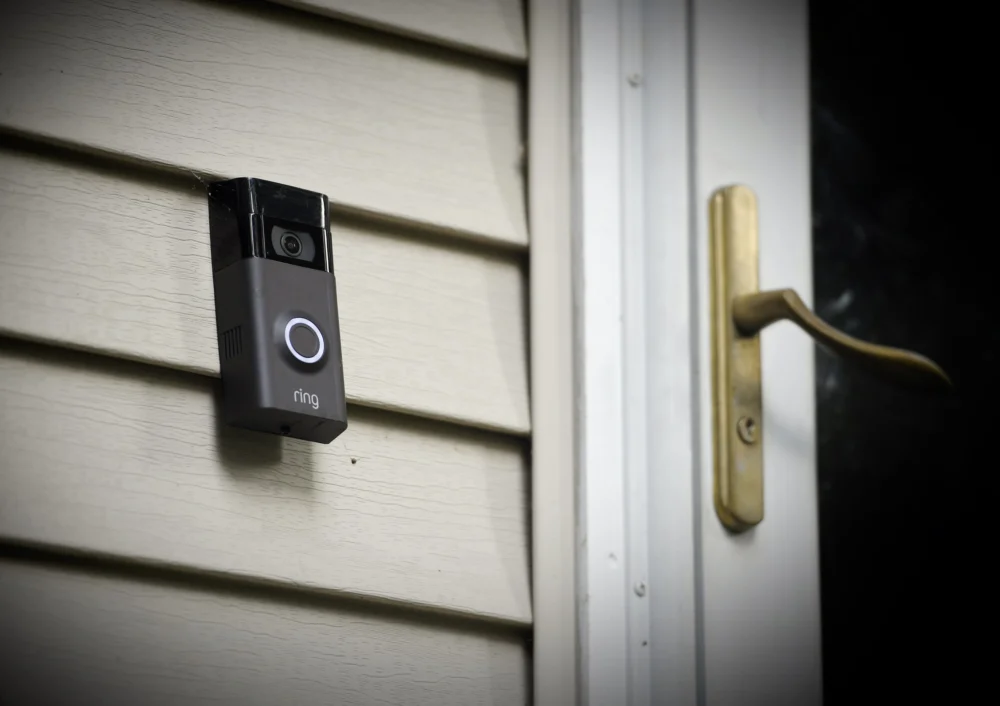
The integrity of digital media, particularly surveillance footage intended to document real-world events, is under unprecedented scrutiny, driven by the increasing sophistication and accessibility of generative artificial intelligence (AI) tools. In a significant move to address this pervasive crisis of trust, Amazon-owned device manufacturer Ring has unveiled ‘Ring Verify,’ a robust, new video authenticity feature designed to provide cryptographic assurance that video captured by its pervasive network of smart home cameras remains unaltered from the moment of capture. This innovation aims to transform Ring videos from mere anecdotal recordings into demonstrably verifiable digital evidence.
Background: The Erosion of Digital Trust in Surveillance
The deployment of widespread, affordable consumer surveillance devices—chiefly doorbell and security cameras—has fundamentally changed how neighborhood incidents, package thefts, and even major events are documented. Ring, commanding a substantial market share in the smart home security sector, sits at the nexus of this documentation ecosystem. However, the utility of this footage is increasingly compromised by the potential for manipulation.
Historically, video manipulation required specialized skills and expensive software. Today, deepfake technology and rudimentary video editing tools, often enhanced by AI features like object removal or synthetic background generation, allow virtually anyone to create compellingly altered footage with minimal effort. This capability poses a massive threat not only to public discourse—as seen in viral, yet fabricated, videos circulating on platforms like TikTok—but critically, to legal and insurance processes where video evidence must be relied upon for factual determination.
For home security footage specifically, the stakes are elevated. When neighbors share video clips of an alleged crime, or when law enforcement agencies utilize footage for investigations, the underlying question of provenance and integrity must be settled immediately. If a video purporting to show a trespasser or a car accident can be easily dismissed as manipulated, the entire evidentiary value of the smart surveillance infrastructure collapses. Ring Verify is a direct response to this technological challenge, seeking to install a digital guardrail against unauthorized alterations, whether malicious (a deepfake) or merely incidental (a well-intentioned but compromising edit).
The Mechanics of Cryptographic Sealing
Ring Verify functions conceptually as a digital, tamper-evident seal, akin to the safety wrapping found on pharmaceutical packaging. The core principle is straightforward: any modification, no matter how minor, will visibly "break" the seal, signaling to the viewer that the content is no longer in its original state.
Technologically, this assurance is achieved through cryptographic hashing and digital signatures applied at the moment the video is recorded and uploaded to Ring’s cloud infrastructure. When a Ring device captures a video clip, the system generates a unique hash—a fixed-length string of characters representing the video’s content. This hash acts as the video’s digital fingerprint. This fingerprint is then cryptographically signed by Ring’s verification server. This signed hash, or "verification seal," is inextricably linked to the original, unedited cloud file.
When a user downloads or shares this video clip, the seal travels with it. The feature is automatically enabled for all videos captured by Ring devices starting from December 2025.
The sensitivity of the system is a critical design choice. The company emphasizes that even minor, non-malicious alterations will trigger the broken seal notification. This includes:

- Trimming or Cropping: Removing frames from the beginning or end of the video.
- Color/Brightness Adjustments: Applying filters or basic editing to enhance visibility.
- Compression Artifacts: Uploading the video to third-party sharing sites (like social media or messaging apps) that re-encode and compress the file, changing its underlying data structure.
The verification process itself is externalized and accessible to any recipient of the shared footage. Users can submit the video link or file to a dedicated online portal (Ring.com/verify), which performs a checksum comparison. The system re-calculates the hash of the submitted video and compares it against the signed, original hash stored on Ring’s servers. If the hashes match, the video is confirmed as original and unmodified. If they differ, the system flags the video as "altered."
It is paramount to note the distinction: a failed verification does not automatically equate to a malicious deepfake. It merely confirms that the video is not the exact digital replica of the file stored securely in the cloud. However, this immediate alert provides the necessary starting point for forensic inquiry, allowing recipients (such as insurance adjusters or investigators) to request the original, unedited file directly from the source user.
Industry Implications and the Quest for Forensic Proof
The introduction of Ring Verify sets a new, elevated standard for video provenance within the consumer IoT space. This move is not merely a product upgrade; it is a critical response to regulatory and legal pressures demanding verifiable evidence in an age of pervasive digital skepticism.
Standardization Pressure on Competitors: Ring’s dominant position means that this verification protocol will likely become a baseline expectation for the entire smart security industry. Competitors like Google Nest, Arlo, and other emerging smart camera providers will face increasing pressure to implement similar, transparent, and verifiable cryptographic stamping mechanisms. Failure to do so risks having their footage deemed less reliable in legal and insurance contexts compared to cryptographically attested Ring footage.
Reshaping Insurance and Liability Claims: One of the most immediate practical applications of Ring Verify lies in insurance claims and civil liability disputes. Currently, video evidence submitted for property damage, theft, or liability assessment often requires significant effort to authenticate. With Ring Verify, footage can immediately provide a high degree of confidence regarding its originality. For insurance companies, this reduces the cost and time associated with forensic analysis of minor claims, streamlining payouts and reducing fraudulent claims based on doctored videos. A video accompanied by a valid Ring Verify seal moves from being merely persuasive to being legally robust.
The Digital Chain of Custody (CoC): For law enforcement, the cryptographic seal provides a crucial element of the digital chain of custody. When police request footage through legal channels, the verification seal helps establish that the evidence they receive is the exact content captured by the camera at the time of the event. While digital signatures alone do not replace comprehensive legal authentication procedures, they provide a powerful, immutable foundation for verifying the initial state of the evidence, dramatically increasing its admissibility in court.
The Cryptographic Catch-22: Privacy vs. Provenance
While Ring Verify represents a major leap forward in content integrity, it introduces a significant trade-off concerning privacy that highlights the inherent tension in modern surveillance technology.
Ring has explicitly stated that the content verification feature is incompatible with videos recorded using end-to-end encryption (E2EE). Videos secured with E2EE will always display as "not verified."
This conflict stems from the technical requirements of the cryptographic signing process. E2EE ensures that video data is encrypted on the recording device and can only be decrypted by the user’s authorized viewing device. The cloud server, therefore, never has access to the clear, unencrypted video content. Ring’s verification protocol, however, requires the server to access the raw data, calculate the cryptographic hash, and apply the verifiable digital signature. This requires a moment of server-side access to the unencrypted data stream.

For users prioritizing maximum privacy and data seclusion, the E2EE feature is non-negotiable, meaning they must forgo the benefit of having cryptographically verified footage. For users prioritizing forensic utility—such as those concerned about insurance claims or providing credible evidence to authorities—disabling E2EE to enable Ring Verify becomes a necessary compromise.
This dichotomy creates a cryptographic Catch-22: users must choose between absolute privacy (unverifiable footage) and absolute provenance (verifiable footage with reduced cloud privacy). This choice necessitates clear communication and transparency from Ring to ensure users fully understand the implications of their security settings. Experts suggest that, over time, the industry will need to develop more sophisticated zero-knowledge proof or distributed ledger architectures that allow for content verification without requiring the central server to decrypt the content, thus reconciling the conflict between E2EE and digital provenance.
Future Trajectories: Decentralization and AI Integration
The implementation of Ring Verify is likely an initial step toward a more standardized, industry-wide approach to digital media authentication. The trajectory of content provenance is moving rapidly toward decentralized and standardized protocols.
Adoption of C2PA Standards: Ring’s system operates similarly to emerging cross-industry standards, such as those promoted by the Coalition for Content Provenance and Authenticity (C2PA). C2PA aims to create a universal technical standard for applying cryptographically secure metadata (or "Content Credentials") to digital media, detailing who created it, what changes were made, and where it was captured. While Ring Verify is currently a proprietary solution linked to its cloud ecosystem, future iterations are expected to align with broader, open-source standards, ensuring that verification remains valid even if the video is shared across multiple platforms and systems outside of the immediate Ring environment.
Integration with Generative AI Detection: As deepfake technology evolves, simple alteration checks (like those currently employed by Ring Verify) will become insufficient. Future iterations of verification systems will need to integrate sophisticated AI detection models. These models will analyze videos not just for cropping or brightness changes, but for tell-tale signs of generative manipulation, such as subtle inconsistencies in shadows, reflections, or motion blur—the signatures of AI synthesis. The cryptographic seal established by Ring Verify acts as the perfect foundation for this, providing a guaranteed original baseline against which future AI detection algorithms can compare potentially synthesized versions.
The Role of Distributed Ledger Technology (DLT): For video evidence to achieve truly immutable status, reliance on a single corporate cloud server (even Amazon’s) must be reduced. The ultimate evolution of provenance will likely involve Distributed Ledger Technology (DLT), or blockchain. By recording the initial cryptographic hash of a video onto a decentralized, immutable public ledger, the provenance of the footage would be verifiable by anyone, regardless of the status or cooperation of the original device manufacturer. This decentralization would provide an even higher level of legal assurance, essential for high-stakes governmental or judicial use cases.
Conclusion
Ring Verify represents a pragmatic and necessary response to the escalating crisis of trust in digital media, particularly within the sensitive realm of home security and evidence collection. By applying cryptographic integrity seals to its video footage, Ring is attempting to restore certainty and authenticity to the documentation of real-world events.
However, the technology highlights the fundamental privacy compromises currently necessary to achieve verifiability. As the industry matures, the challenge will be to develop solutions that offer both absolute, end-to-end privacy and uncompromised, cryptographically assured provenance. For the foreseeable future, Ring’s new protocol ensures that millions of security videos captured daily will possess a verifiable digital fingerprint, significantly bolstering their utility in legal, insurance, and civil contexts, thereby redefining the evidential value of consumer surveillance footage. The success of Ring Verify will likely dictate the speed at which competing smart home platforms adopt similar measures, solidifying content integrity as a critical front in the ongoing evolution of smart technology.
