

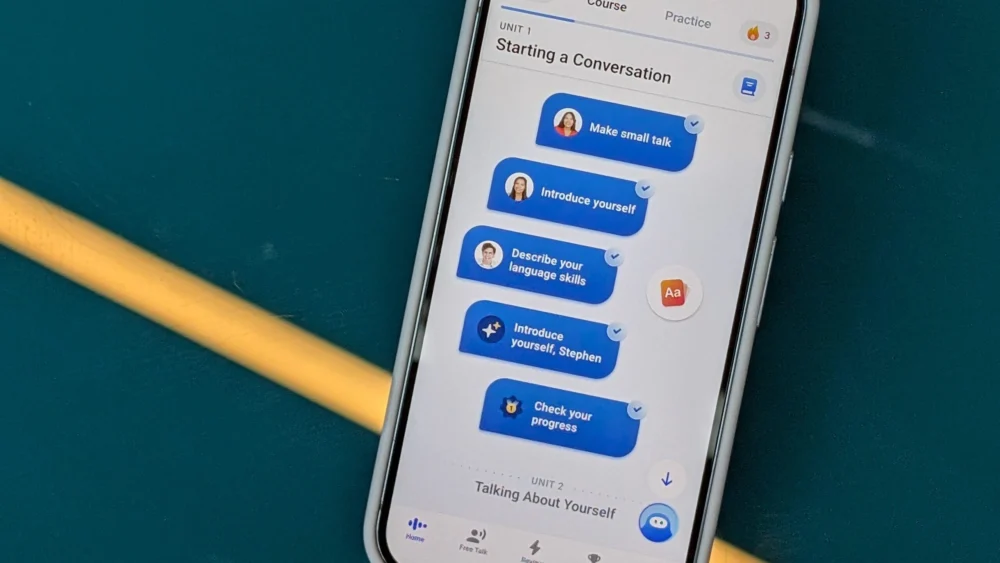
The digital landscape of language learning has exploded over the last decade, transforming what was once a niche pursuit reserved for dedicated academics or travelers into a ubiquitous, pocket-sized endeavor. Millions worldwide now utilize applications ranging from established giants like Duolingo to innovative newcomers focusing on specific methodologies, such as AI-driven conversational platforms like Speak. This proliferation of accessible tools naturally raises critical questions about efficacy, methodology, and, perhaps most importantly, user behavior. A recent comprehensive survey targeting active users of these mobile language platforms has illuminated a single, overwhelmingly common behavioral pattern that appears to underpin sustained engagement, regardless of the specific application chosen.
This finding serves as a crucial data point in the ongoing debate surrounding digital pedagogy. While skepticism often surfaces regarding whether gamified or app-based learning truly fosters fluency—a sentiment echoed in previous community feedback that questioned the ultimate utility of these platforms—the data strongly suggests that the process of engagement is highly standardized among committed learners. The central discovery is the near-universal commitment to daily interaction, a finding that carries significant weight for developers, educators, and learners aiming for measurable progress.
The Context of Digital Language Learning Evolution
To fully appreciate the significance of daily use, one must contextualize the shift from traditional learning models to the current mobile ecosystem. Historically, language acquisition relied heavily on structured classroom environments, textbook memorization, or immersive travel. These methods demanded significant scheduled commitment, often resulting in large, infrequent study blocks. The advent of the smartphone fundamentally altered this calculus. Apps democratized access, reducing the friction associated with starting a lesson—no need to commute to a class or open a heavy grammar book.
However, this accessibility introduced a new challenge: consistency maintenance. With learning now possible anytime, anywhere, the structure that formerly imposed discipline vanished. This is where the architecture of modern language applications becomes paramount. Developers recognized early on that intermittent, long sessions are neurologically less effective for memory consolidation than spaced repetition and frequent retrieval practice. Consequently, the industry pivoted toward designing experiences optimized for brevity and regularity.
The persistence of the "daily habit" strongly implies that users are not just passively consuming content; they are actively adapting their behavior to align with the design philosophy embedded within these digital tools. This is a testament to the power of habit formation, often intentionally engineered through psychological nudges and reward systems intrinsic to the application structure.
Dissecting the Data: The Dominance of Daily Practice
The recent survey results paint a stark picture: an overwhelming 79% of respondents who are actively studying a second language reported using their chosen language learning application on a daily basis. When isolating this group from those who indicated they were not currently studying any new language (approximately 6%), the adherence to daily engagement becomes even more pronounced among the dedicated cohort. Conversely, users who engaged only a few times per week or month constituted a significantly smaller minority.
This trend aligns perfectly with established principles of cognitive science related to vocabulary acquisition and grammatical internalization. The concept of "little and often" trumps "cramming." Neuroplasticity dictates that frequent, low-intensity exposure, particularly when spaced appropriately, optimizes the creation and strengthening of neural pathways associated with the new language. A five-to-ten-minute daily session, while seemingly minor, builds cumulative exposure far more effectively than an intensive two-hour session once on a Saturday.
Furthermore, this daily rhythm combats the "forgetting curve." Every concept learned begins to decay immediately unless reinforced. Daily interaction ensures that newly acquired vocabulary or grammatical structures are revisited before the rate of decay becomes significant, thereby embedding the knowledge more deeply into long-term memory stores.
The Role of Gamification and Behavioral Economics
The ability of these applications to compel daily use is not accidental; it is the result of sophisticated behavioral engineering. Platforms like Duolingo have famously leaned into gamification mechanics—streaks, leaderboards, virtual currencies, and motivational notifications—to create a powerful feedback loop. The commitment to maintaining a "streak" transcends mere academic interest; it becomes a personal achievement, a visible metric of self-discipline that users become reluctant to break.
The author’s personal anecdote about reaching a 1,000-day streak underscores this psychological anchor. While fluency may remain distant, the maintenance of the streak serves as a powerful psychological reward, validating the time investment and preventing the decision fatigue that often derails self-directed learning efforts. The mental barrier to starting a session is significantly lowered when the immediate perceived cost of not starting is the loss of a long-held unbroken chain of accomplishment.
This engineered dependency highlights a key industry implication: success in the digital language learning space is often less about developing novel pedagogical breakthroughs and more about mastering user retention mechanics. The tools that successfully integrate into the user’s daily micro-moments—waiting in line, during a commute, or before bed—are the ones that capture and retain market share.
Methodological Divergence vs. Behavioral Convergence
The discovery of this behavioral convergence (daily use) is particularly interesting when contrasted with the methodological divergence currently characterizing the market. The initial wave of apps focused heavily on vocabulary drilling and pattern recognition, largely passive forms of input. However, newer entrants, such as the AI-driven platform Speak mentioned in community discussions, are shifting the focus dramatically toward active production—specifically, speaking aloud through simulated conversations.
The comparison between these methodologies—passive input versus active output—is central to advanced language acquisition theory. Critics often argue that apps prioritizing drills fail to prepare users for spontaneous, real-world interaction, requiring confidence and improvisation that rote memorization cannot supply. The rise of AI tutors aims to bridge this gap by forcing users to articulate thoughts under pressure, albeit in a simulated environment.
Crucially, the survey indicates that regardless of whether the user is practicing vocabulary recognition (input) or engaging in AI-driven conversation (output), the fundamental prerequisite for perceived progress is frequency. An app emphasizing speaking will only be effective if the user shows up every day to practice verbalizing, just as a flashcard app requires daily review. This suggests that the platform’s underlying philosophy might influence the quality of learning, but the user’s commitment to consistency dictates the quantity of learning achieved.
Expert Analysis: Habit Stacking and Cognitive Load Management
From a cognitive science perspective, the daily habit formation observed is an excellent example of successful "habit stacking." Successful learners are effectively stacking the language practice onto an existing, immutable daily routine (e.g., morning coffee, evening commute). This minimizes the need for conscious willpower, as the prompt to study becomes environmental rather than solely internal.
Educational psychologists often point out that language acquisition involves moving knowledge from working memory (short-term) to long-term memory, a process that requires consolidation, often occurring during periods of rest. Daily, short bursts of activity provide the necessary frequent retrieval cues that keep the information "active" in the cognitive system, allowing the brain to efficiently allocate resources for consolidation overnight.
The low cognitive load associated with these brief sessions is another critical factor. Attempting a multi-hour study session induces mental fatigue, leading to diminished returns and higher dropout rates. A 10-minute drill feels manageable, even when the learner is tired. This low activation energy is the key differentiator between mobile learning and traditional study methods.
Industry Implications and the Future Trajectory
The clear dominance of daily engagement has profound implications for the entire digital language technology sector:
- Prioritization of Retention Metrics: App developers will continue to invest heavily in features that drive daily active users (DAU) over one-time feature development. Metrics like Daily Active User Rate (DAUR) and Streak Integrity will remain more valuable to investors than simple download counts.
- The Rise of "Micro-Habit" Design: Future innovations will likely focus on integrating language learning into even more fragmented moments of the day—think context-aware prompts based on location (e.g., suggesting food vocabulary when near a restaurant) or integration directly into OS-level notifications that require immediate, minimal interaction.
- Subscription Model Justification: The daily requirement strengthens the justification for subscription models. If a user invests time daily, the perceived value proposition of the subscription service increases, leading to lower churn rates compared to platforms where engagement is sporadic.
- Hybrid Learning Integration: For platforms offering tutoring or live classes, the daily app usage acts as essential pre-work or reinforcement. The daily habit builds the foundational confidence and vocabulary necessary for the higher-stakes, high-return activity of live interaction.
Furthermore, the contrast between apps like Duolingo and Speak highlights an evolving consumer expectation. Users are no longer satisfied with just exposure; they demand functionality that directly addresses specific skill deficits. If the survey indicates daily use is the norm, the next competitive frontier will be tailoring what happens during those daily minutes to maximize specific outcomes—be it speaking confidence, reading speed, or grammatical precision.
Beyond the Streak: Towards True Fluency
While the data celebrating daily use is encouraging for user retention, the journalistic responsibility remains to address the ultimate goal: fluency. The author’s admission that a 1,000-day streak does not guarantee fluency is an important reality check. Consistency is a necessary, but not sufficient, condition for mastery.
The industry must grapple with how to evolve these daily interactions from simple reinforcement loops into deeper, more generative learning experiences. If 79% of users are logging in daily, what are they actually achieving during that time? Are they merely recycling the same 500 words, or are they genuinely advancing their communicative competence?
Future research must correlate the frequency of use with measurable proficiency gains across all four core skills (reading, writing, listening, speaking). If daily engagement with grammar drills leads to high test scores but zero conversational ability, the methodology itself is flawed, regardless of user consistency. This necessitates a move towards platforms that utilize daily engagement to foster genuine production, perhaps leveraging advanced generative AI for personalized, complex dialogues that mimic real-world scenarios far beyond the current scope of introductory apps.
In conclusion, the digital language learning community has settled on a remarkably consistent behavioral pattern: daily interaction is the accepted baseline for participation. This habit, strongly reinforced by application design, confirms that for many, language learning has successfully transitioned from an arduous chore to a routine part of the digital day. The next phase of innovation will depend on leveraging this high-frequency engagement to deliver pedagogically richer, more effective pathways toward genuine linguistic competence.
