

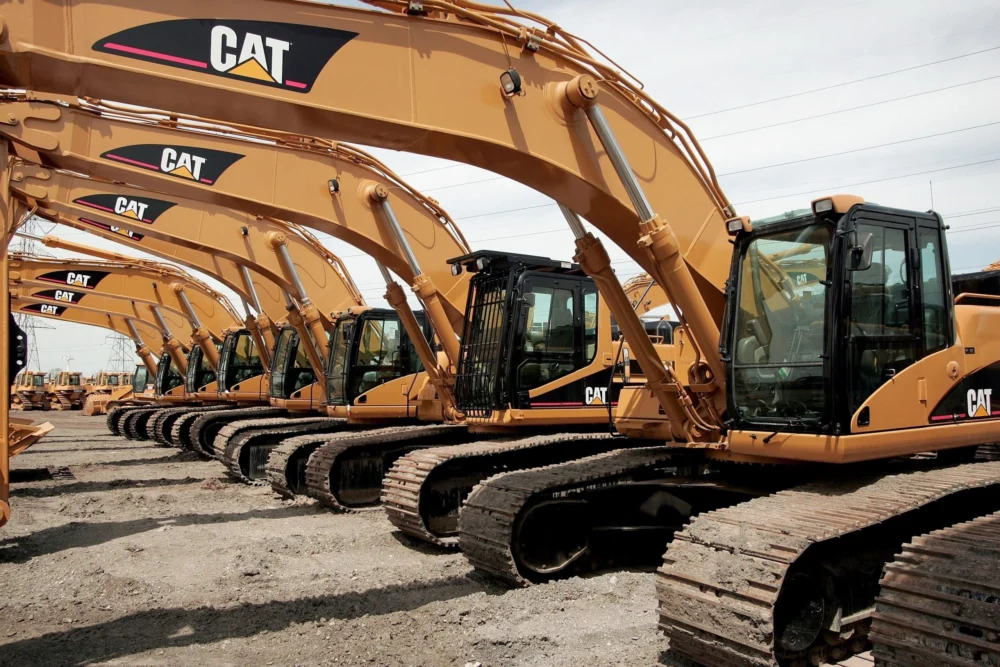
The iconic yellow paint of Caterpillar machinery has, for nearly a century, served as a visual shorthand for the physical construction of the modern world. From the sprawling open-pit mines of Western Australia to the densest urban infrastructure projects in New York and Tokyo, the company’s equipment is the literal engine of industrial progress. However, as the global economy pivots toward a future defined by decarbonization, labor scarcity, and the rapid ascent of artificial intelligence, the nature of Caterpillar’s mission is undergoing a profound transformation. No longer merely a manufacturer of iron and steel, the company is positioning itself as a high-technology titan, orchestrating a complex symphony of robotics, data analytics, and autonomous systems.
In 2024, Caterpillar reported a staggering $64.8 billion in revenue, a figure that underscores its ubiquitous influence across the infrastructure, energy, and resource development sectors. Yet, the most significant story within the company is not found in the sales spreadsheets, but in the evolving architecture of its leadership and technological roadmap. At the center of this shift is Jaime Mineart, who assumed the role of Chief Technology Officer and Senior Vice President in early 2025. Mineart’s trajectory is a testament to the company’s "ground-up" philosophy; she began her journey as an 18-year-old intern while studying mechanical engineering at Purdue University. Today, she oversees the integration of advanced technologies across a global product portfolio, ensuring that the machines building the world are as intelligent as they are powerful.
The appointment of a "lifer" like Mineart to the CTO position signals a strategic emphasis on institutional knowledge paired with radical innovation. For Mineart, the connection to the brand is visceral. She often reflects on how her early days working on massive engines and power systems "saved" her engineering degree by providing a tangible sense of purpose. This perspective is vital in an era where technology can often feel detached from the physical reality of the job site. Mineart’s career has spanned design engineering, sales, and emerging technologies, including a formative stint in Calgary where she witnessed firsthand how electric power systems serve as the lifeblood of remote communities and critical hospitals. This background informs her current mandate: to ensure that every digital advancement serves a concrete customer need.
The Triad of Innovation: Physical, Digital, and Structural
One of the most compelling aspects of Caterpillar’s modern strategy is the collaborative "triad" of leadership that governs its technological output. Mineart (the CTO) works in a tightly integrated partnership with Ogi Redzic, the Chief Digital Officer, and Jamie Engstrom, the Chief Information Officer. This organizational structure is designed to eliminate the silos that often plague legacy industrial firms.
In this ecosystem, Mineart focuses on the "physical" technology—the sensors, engines, and autonomous hardware that live on the machines. Redzic’s digital and marketing teams handle the connectivity, creating the interfaces and applications that allow customers to interact with their fleet data. Meanwhile, Engstrom provides the robust IT architecture and data governance that act as the foundation for the entire enterprise. This synergy is essential for a company that is increasingly moving away from selling standalone hardware and toward providing comprehensive "site solutions."
The urgency of this collaboration is driven by the sheer scale of the opportunity. Mineart has noted that while the pace of innovation within the company is accelerating, the market’s appetite for smarter solutions is insatiable. To meet this demand, Caterpillar has fostered a culture of internal empowerment, encouraging teams to experiment with AI and automation tools to solve longstanding bottlenecks in manufacturing and R&D.
The Evolution of Autonomy: Beyond the Driverless Truck
While many tech companies are still struggling to master autonomous driving on paved city streets, Caterpillar has been operating in the autonomous space for over three decades. The company deployed its first autonomous mining trucks more than 30 years ago, operating in controlled, yet incredibly harsh, environments. However, the current era of autonomy is fundamentally different from the scripted automation of the 1990s.
Today’s autonomy is powered by sophisticated inference engines and real-time data processing. It is no longer just about a truck moving from Point A to Point B without a driver; it is about the truck "understanding" the topography of the mine, predicting its own maintenance needs, and optimizing its fuel consumption in real-time. Mineart emphasizes that technology for its own sake is a hollow pursuit. The true value lies in change management—integrating these autonomous systems into the existing workflows of a customer’s operations without causing disruption.

This customer-centric approach to innovation is particularly relevant in the face of global labor shortages. The construction and mining industries are grappling with a dwindling pool of skilled operators. By introducing high-level automation, Caterpillar is not just increasing productivity; it is lowering the barrier to entry for new workers and significantly improving safety by removing humans from high-risk zones.
Data as the New Bedrock: Helios and Digital Twins
At the heart of Caterpillar’s technological leap is its "Helios" data platform. For years, the company has been collecting vast amounts of telemetry data from its connected fleet—now numbering millions of machines. This data is the raw material for "digital twins," virtual replicas of physical assets and entire worksites. By using these twins, Caterpillar and its customers can simulate "what-if" scenarios, such as how a change in a mine’s haul road grade might impact the long-term health of a truck’s transmission.
The partnership with NVIDIA has been a critical accelerator in this domain. By leveraging advanced compute capabilities, Caterpillar is now performing physics-based modeling and AI-driven simulations that were computationally impossible just 24 months ago. This allows for predictive maintenance at an unprecedented scale, identifying potential failures before they happen and ensuring that a machine—which might cost millions of dollars—never sits idle due to an avoidable mechanical issue.
Investing in the Human Component
Perhaps the most significant challenge in Caterpillar’s digital transformation is not the code, but the people. The transition from traditional mechanical engineering to a software-defined industrial model requires a massive shift in skill sets. To address this, Caterpillar recently pledged $100 million over five years toward upskilling its global workforce.
Mineart was a key architect of this initiative, recognizing that the "labor force of the future" must be fluent in both hydraulics and heuristics. This investment extends beyond the company’s internal walls, targeting regional hubs like Indiana with multi-million dollar grants for technical training. By investing in the ecosystem that supports its machines, Caterpillar is ensuring that its dealers and customers have the expertise required to maintain and operate increasingly complex systems.
The Green Frontier and Future Trends
Looking toward the horizon, the intersection of technology and sustainability represents the next great frontier for Caterpillar. The company is heavily invested in electrification and alternative fuels, such as hydrogen and methanol. Developing a battery-electric mining truck that can operate in sub-zero temperatures or extreme heat requires a complete reimagining of the machine’s "brain" and thermal management systems.
Furthermore, the rise of "microgrids" is positioning Caterpillar as a leader in decentralized energy. As data centers—the backbone of the AI revolution—proliferate, they require massive, reliable power sources. Caterpillar’s energy and transportation division is increasingly providing the modular power solutions that keep the digital world running, often integrating renewable sources with traditional backup power.
Conclusion: The Intersection of Heritage and Innovation
For Jaime Mineart and the thousands of engineers under her purview, the current moment represents a unique alignment of history and possibility. Caterpillar is no longer just a witness to the world’s growth; it is the architect of the digital systems that make that growth sustainable and efficient.
The transition from a hardware-centric manufacturer to a technology-led solutions provider is a high-stakes gamble, but it is one that Caterpillar is uniquely positioned to win. By maintaining its focus on the "dirt-under-the-fingernails" reality of its customers while aggressively pursuing the limits of AI and robotics, the company is proving that the oldest industries can be the most innovative. As Mineart suggests, the work of Caterpillar is nothing less than creating the world around us—only now, that world is being built with equal parts steel and silicon.
