

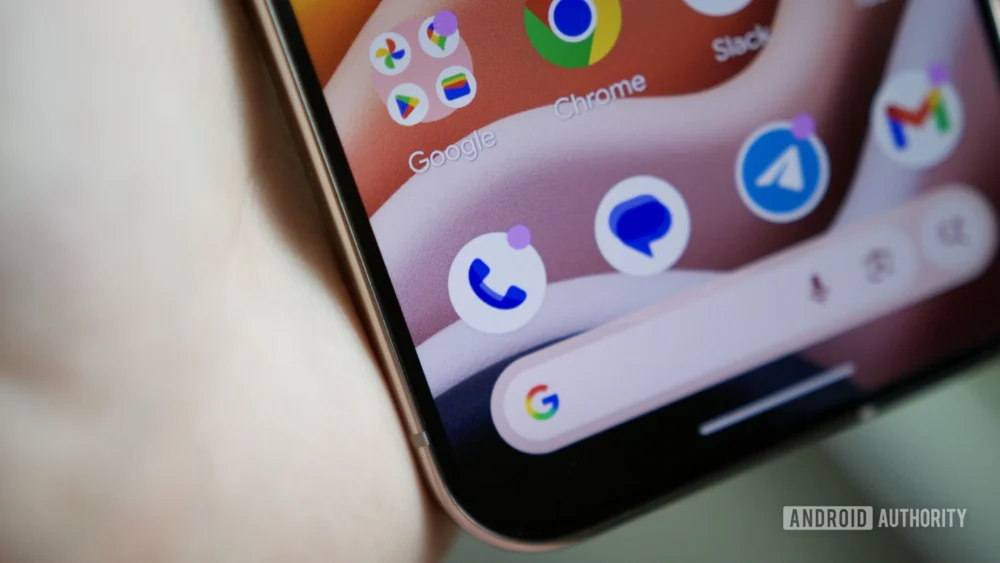
The promise of seamless, AI-enhanced communication on Google’s flagship Pixel devices has encountered a significant, albeit intermittent, setback. Reports are surfacing across the user base detailing a critical failure within the Google Phone application’s "Take a Message" feature, a tool designed to offer a modern, transcribed alternative to traditional voicemail. This flaw, if confirmed to be widespread, represents a serious breach of expected privacy protocols, potentially allowing ambient audio from the user’s environment to bleed into the recording process, or worse, be transmitted to the caller.
The Evolution of Pixel Communication Tools
To fully appreciate the gravity of this audio leakage issue, one must first understand the function and strategic importance of "Take a Message." Traditional mobile communication relied heavily on the carrier-provided voicemail system, an asynchronous method requiring users to dial in or wait for notifications. Google, in its drive to differentiate the Pixel ecosystem, has consistently pushed software features that leverage its proprietary artificial intelligence and machine learning capabilities directly onto the hardware.
"Take a Message" is a prime example of this strategy. Introduced initially, and prominently featured with the launch of the Pixel 10 series, this service activates automatically when a user misses or actively declines an incoming call. Instead of the standard carrier greeting, the system informs the caller that the user is currently unavailable and prompts them to leave a message. Crucially, this message is not merely stored as an audio file; it is processed in real-time by on-device AI, transcribed into text, and then neatly archived within the call history. This allows users to quickly triage communications without listening to lengthy audio files—a substantial productivity enhancement for busy professionals and frequent travelers.
Google demonstrated a commitment to broader Pixel adoption by rapidly rolling out this feature to older, supported devices, encompassing generations back to the Pixel 4 series. This move solidified the feature as a core component of the Pixel calling experience, positioning it as a significant competitive advantage over stock Android implementations on other manufacturers’ devices. However, the recent reports suggest that this advanced functionality is suffering from a fundamental breakdown in its core operational loop: isolating the caller’s voice while ensuring user privacy.
The Nature of the Reported Glitch: Audio Bleed and Interception
The reported malfunction centers on the mechanism designed to switch the audio stream from the user’s environment to the caller’s recording prompt. Users across various Pixel models—from the older Pixel 5 to the cutting-edge Pixel 10—have documented scenarios where, instead of the caller hearing the "Please leave your message after the tone" prompt associated with "Take a Message," they are instead hearing the user’s real-time environment.
One detailed account, originating from a Pixel 5 user, described family members overhearing conversations occurring near the phone while a message was supposedly being recorded by the system. This suggests that the audio capture is not correctly muting the device’s primary microphone or is mistakenly routing the local microphone input into the outgoing audio path designated for the caller’s recording.
More compelling evidence comes from a Pixel 4a owner who experienced what they termed the "wildest glitch." After missing several calls, the caller reported hearing ambient sounds from the user’s location. Critically, the call did not proceed to the standard carrier voicemail interface, but rather initiated the distinct automated sequence characteristic of the "Take a Message" feature. The user verified the bug by deliberately recreating the missed call scenario, noting the visual confirmation of the microphone indicator activating, confirming that the device believed it was correctly recording.
Perhaps the most frustrating aspect for affected users is the partial failure of the recording mechanism itself. In some instances, even when the feature appeared to be functioning, the resulting message recording was incomplete, capturing only the first segment of the caller’s statement before cutting off. This renders the entire purpose of the automated system moot, forcing users back to manual callback procedures.
Expert Analysis: Deconstructing the Technical Failure
From a software engineering perspective, this audio leakage points toward a potential race condition or a failure in the state management within the Google Phone application’s audio routing logic. When a call is missed and "Take a Message" intercepts it, the application must execute a precise sequence:
- State Change: Transition from an active call state (where the microphone feeds the earpiece/speaker) to an automated recording state.
- Input/Output Reassignment: The input stream (microphone) must be reassigned to capture the caller’s voice exclusively, and the output stream must play the pre-recorded prompt to the caller.
- Local Muting/Isolation: Crucially, the user’s device microphone must be isolated from the outgoing stream designated for the caller, preventing any local environmental audio from being broadcast.
The reported symptom—the caller hearing the user’s environment—strongly implies a failure in step 3. The application is likely activating the recording function (as evidenced by the mic indicator), but the audio pipeline intended for the caller is mistakenly receiving the local microphone feed instead of the intended pre-recorded prompt or the caller’s input stream.
This type of bug is particularly insidious because it is intermittent and relies on a specific call-handling sequence (missed/declined call triggering the feature). In a complex, multi-threaded operating system like Android, especially one heavily customized by Google’s Tensor chip architecture and proprietary software layers, synchronization errors between the telephony stack and the application layer can lead to audio routing confusion. Given the bug affects a wide spectrum of hardware generations (Pixel 4 to Pixel 10), the common denominator is likely the software layer—specifically, a recent update to the Google Phone app or a dependency library shared across these devices.
Industry Implications: Trust and AI Integration
This issue transcends a simple user inconvenience; it touches upon the fundamental trust users place in integrated, AI-driven mobile experiences. Features like "Take a Message" are marketed on their sophistication and reliability. When the very tool designed for efficiency compromises the privacy of the user—even inadvertently—it erodes confidence in the entire ecosystem.
For Google, which stakes much of its Pixel marketing on "smart features" powered by AI, this vulnerability presents a significant reputational risk. Competitors, particularly those emphasizing data security or those using third-party calling applications, can leverage these instances to highlight the perceived risks associated with integrating deep, always-on processing capabilities into core communication functions. In an era of heightened consumer awareness regarding data interception and surveillance, any perceived audio leakage, regardless of whether it’s intentional, is treated with extreme suspicion.
Furthermore, the deployment strategy—pushing features rapidly across multiple generations—while beneficial for feature parity, increases the surface area for potential bugs. Debugging becomes exponentially harder when the failure modes manifest differently across various hardware configurations and older OS builds still running on those devices.
Future Impact and Mitigation Strategies
The immediate and most practical advice for affected Pixel owners is a temporary reversion to traditional functionality. Users experiencing this behavior are strongly advised to disable "Take a Message" until a patch is officially released. The disabling procedure involves navigating within the Phone application settings: accessing the hamburger menu, selecting Settings, locating the "Take a Message" submenu, and toggling the feature off. This ensures that missed calls default back to the standard, carrier-managed voicemail system, which, while less feature-rich, is generally understood to adhere strictly to audio isolation during periods of inactivity.
Looking ahead, this incident will undoubtedly influence how Google approaches future feature rollouts that rely on real-time audio manipulation. We can anticipate several shifts:
- Stricter Staging and A/B Testing: Google may adopt more rigorous, staged rollouts for core communication features, isolating new versions to smaller beta pools for longer periods before wider distribution.
- Enhanced Diagnostics: There will likely be pressure to implement more robust, user-facing diagnostic tools within the Phone app that can precisely log the audio path state upon call termination, helping engineers pinpoint exactly when the audio stream crosses from private to public output.
- Security Audits: Expect an internal push for heightened security audits focused specifically on the audio drivers and kernel-level interfaces managed by the Phone application, ensuring that AI processing hooks do not create unintended backdoors or routing errors.
Ultimately, the "Take a Message" bug serves as a sharp reminder that as software integrates more deeply into the intimate functions of our devices, the margin for error shrinks dramatically. The convergence of AI transcription and real-time telephony creates immense utility, but any failure in the underlying state machine can lead to profound privacy violations, demanding immediate and transparent remediation from the platform holder. The industry watches to see how quickly Google can address this vulnerability and restore user confidence in its innovative, yet currently flawed, communication architecture.
