

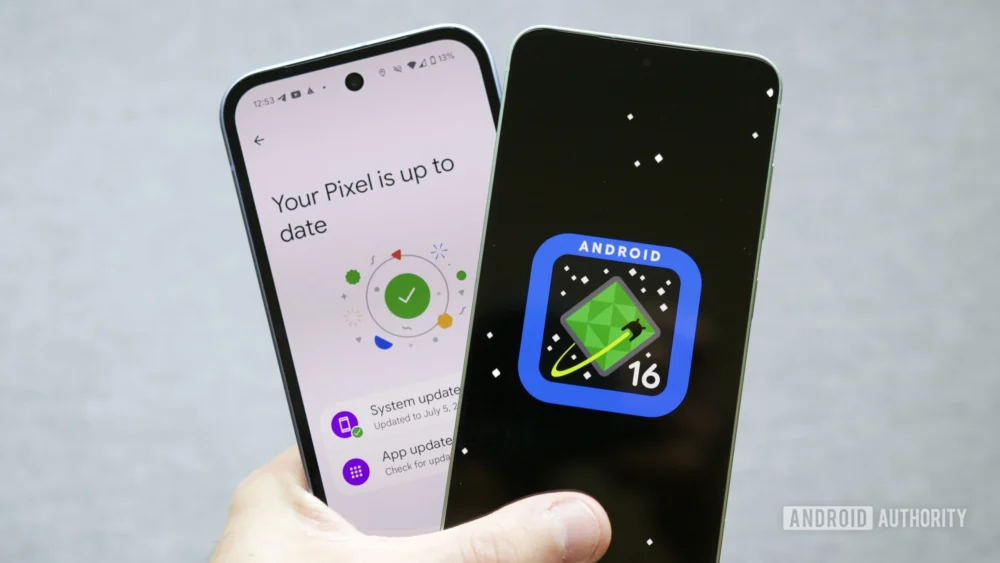
The expected rhythm of Google’s monthly security update schedule for Pixel devices has demonstrably faltered with the January 2026 release, creating a noticeable ripple of anxiety across the user base. Typically, these updates—which are crucial for patching vulnerabilities and often bundle minor feature enhancements—are deployed with predictable regularity, often commencing in the first week of the month. However, the distribution of the January 2026 security patch appears to have been significantly staggered, even by the standards of a sometimes-delayed rollout. More than ten days after the initial deployment was reportedly flagged, a substantial segment of Pixel owners remains without the necessary software revision.
This phenomenon is not isolated to a single device model or carrier configuration; rather, it manifests as a broad, cross-generational issue reflected in online community forums dedicated to Google’s hardware ecosystem. Discussions across platforms like Reddit reveal a consistent pattern of non-receipt, impacting flagship lines such as the Pixel 8 series and the recently launched Pixel 10 family. The uncertainty is compounded by the fact that the issue seems platform-agnostic concerning carrier locking, affecting both unlocked units and those provisioned through major telecommunications providers. Early reports even suggest that newer iterations, including the Pixel 9 and 9a, are encountering the same hold-up, indicating a systemic distribution problem rather than a localized software regression specific to older hardware.
Contextualizing the Delay: The Importance of Timeliness
Google has long staked its reputation on providing timely, pure Android experiences, contrasting its direct-to-consumer approach with the often slower, OEM-dependent update cycles faced by users of other Android manufacturers. The monthly security bulletin is the bedrock of this promise. These bulletins detail critical zero-day exploits and routine security hardening, making prompt application essential for maintaining the integrity of personal data and device security protocols. When a flagship device—or an entire generation of devices—misses the established deployment window, it immediately raises questions about the robustness of Google’s operational pipeline.
Historically, delays have sometimes been attributed to the complexity of regional carrier testing, particularly in markets like Europe, the Middle East, Africa (EMEA), and Japan, which often have different regulatory or network compatibility requirements. The current situation appears to be more complex, as reports suggest even unlocked devices are affected globally. Furthermore, there are specific geographical exclusions noted in official documentation; for instance, the official device support list for the January update seems to narrowly target the Pixel 9a specifically for Verizon customers, leaving the status of other models in those regions ambiguous or unsupported for this particular patch cycle. This selective deployment, or lack thereof, suggests potential region-specific qualification hurdles that Google has yet to clear, or perhaps a deliberate throttling of the release.
Anomaly in the Rollout: Installation Failures and Rollbacks
Adding a layer of technical complexity to the distribution failure is the emergence of reports detailing outright installation failures for those few users who managed to initiate the download. Accounts from owners of devices like the Pixel 10 Pro XL describe an update that appears, downloads, but subsequently fails during the installation phase, sometimes resulting in a crash mid-process. This suggests that the build distributed, or the specific variant targeting these users, might contain a critical bug that forces a self-reversion or blocks installation entirely.
Intriguingly, some users are experiencing a secondary issue: the update notification, once visible, vanishes entirely from the system settings. This pattern—where an update is briefly staged for a device, fails to install, and then disappears from the over-the-air (OTA) update menu—is often symptomatic of Google pulling a specific build identifier back to the server side. This usually occurs when an unforeseen, high-severity bug is discovered shortly after initial deployment, necessitating an immediate halt to prevent wider device instability or security risks. While this proactive rollback demonstrates a commitment to quality control, it simultaneously exacerbates user frustration, as they are left in limbo, unsure whether to wait for a corrected build or proceed with more invasive manual measures.
Industry Implications: Trust, Fragmentation, and Android 16
The consistency of these rollout issues carries significant implications for Google’s standing in the premium smartphone market, particularly as it navigates the transition toward a major OS version update, Android 16.
Erosion of the "Pure Pixel" Promise: For years, the Pixel line has served as the reference point for Android updates. Delays in fundamental monthly security patches undermine this core value proposition. Competitors, particularly Samsung, which has significantly accelerated its own update timelines, stand to gain credibility when the primary proponent of fast updates stumbles repeatedly. In a software-defined hardware landscape, reliability in maintenance releases is as crucial as the initial feature set.
The Shadow of Android 16: The January 2026 update is being deployed against a backdrop of anticipation for the full public release of Android 16, expected later in the year. Security updates often serve as the final proving ground for underlying kernel stability and system partitioning security before a major annual release. If Google is struggling to push a routine patch across its current fleet, it raises legitimate concerns about the readiness of the foundation upon which the next major iteration of the operating system will be built. The industry watches closely, understanding that foundational stability is paramount before feature proliferation.
Carrier vs. Unlocked Dynamics: The inconsistent regional deployment highlights the persistent tension between Google’s control over its hardware and the fragmented control exerted by global carriers. While Google controls the base AOSP code, carrier certifications remain an essential bottleneck for many regions. The fact that unlocked devices are also affected suggests that the delay might originate earlier in the process—perhaps within the Tensor chip firmware validation, the core security framework signing process, or the deployment infrastructure itself—rather than solely resting with individual Mobile Network Operators (MNOs).
Expert Analysis: Diagnosing the Logistical Hurdles
From a systems engineering perspective, a widespread, staggered deployment like this typically points to one of three core logistical failures:
- Staging Server Overload/Misconfiguration: The initial wave of devices may have successfully hit the primary distribution servers, but subsequent attempts by millions of other devices might be timing out or failing due to capacity constraints or incorrect manifest files being served to specific device tiers.
- Regional Certification Backlogs: Despite the perceived generality of the issue, it is highly probable that specific regional certification packages (especially for carrier variants in the US and specific APAC territories) have failed QA checks, forcing Google to pause the global rollout until those specific builds are rectified or segregated.
- Security Audit Hold: In rare cases, especially after a major holiday period when engineering teams might be running lean, a final security audit might have flagged a potential vulnerability within the patch itself, prompting a temporary, indefinite hold until a hotfix can be integrated into the OTA package. Given the reports of installation crashes, a problematic binary in the initial push is a high probability.
The crash reports are particularly telling. When an OTA update process fails mid-way, it often indicates a failure to correctly verify cryptographic signatures during the sideload or installation phase, or an issue with the A/B partitioning system failing to seamlessly transition from Slot A to Slot B during the reboot sequence.
Future Impact and Mitigation Strategies
For the immediate future, users experiencing this delay are left with a difficult choice between patience and proactive intervention. While the manual sideloading of OTA files from Google’s developer repositories remains a viable, data-safe option for technically proficient users, it is not a scalable solution for the average consumer. It shifts the burden of system maintenance from the manufacturer to the end-user, directly contradicting the "it just works" ethos associated with the Pixel brand.
Google’s response, or lack thereof, will dictate the longer-term perception of its software commitment. A swift, transparent explanation detailing the cause—whether it be a certification bottleneck or a newly discovered flaw—is crucial for restoring confidence. In the evolving landscape of smartphone software support, where manufacturers are increasingly pressured to match Apple’s longevity, any perceived instability in the fundamental monthly maintenance cycle is magnified.
Looking forward, Google needs to refine its deployment pipeline to ensure higher redundancy and faster failure detection. This might involve implementing more rigorous pre-release soak tests across all intended regional and carrier builds simultaneously, rather than relying on a phased rollout that exposes the entire user base to unpredictable delays. Until these systemic issues are addressed, the Pixel line will continue to face scrutiny regarding its reliability as the benchmark for the Android ecosystem. Users are advised to continue checking settings regularly, but to exercise caution before attempting manual flashing unless fully comfortable with ADB and fastboot procedures. The collective wait signals that for this month, the promised immediacy of Pixel updates has definitively taken a backseat to an unknown operational challenge.
