

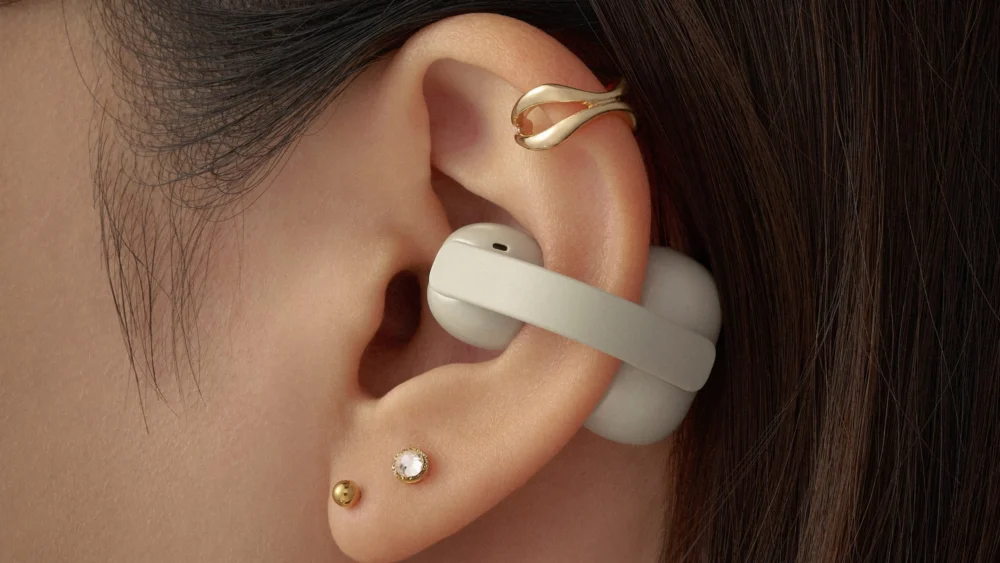
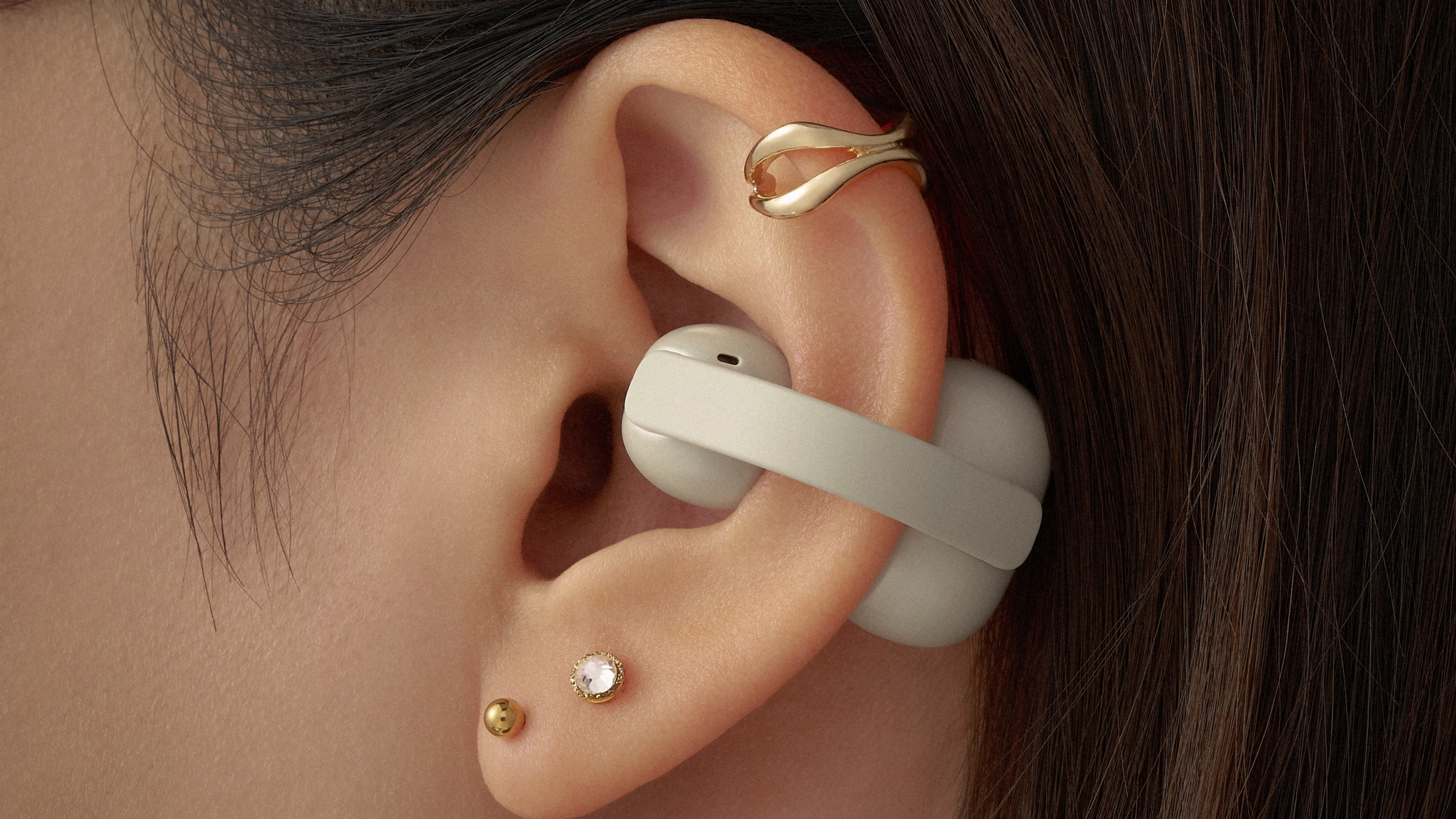
The consumer audio landscape is undergoing a significant evolution, marked by a growing demand for situational awareness alongside high-fidelity sound. At the vanguard of this shift is Sony’s latest foray into the open-ear segment: the LinkBuds Clip. This new offering moves decisively away from the conventional in-ear canal seal or even the traditional ear-hook designs seen in previous generations of ambient listening devices. Instead, the LinkBuds Clip adopts a distinctive, external mounting architecture, fastening onto the auricle with a C-shaped frame that positions the audio drivers adjacent to, rather than inside, the ear canal. This design choice is not merely aesthetic; it fundamentally recalibrates the user experience, aiming for extended, all-day comfort while ensuring environmental permeability.
This design philosophy directly addresses a long-standing tension in personal audio: the trade-off between immersive sound isolation and necessary auditory connection with the surrounding world. For urban commuters, fitness enthusiasts navigating traffic, or professionals needing to remain attentive during office hours, traditional noise-isolating earbuds create a sonic bubble that can become a liability or an inconvenience. The LinkBuds Clip seeks to dissolve this barrier entirely. By resting externally, the device facilitates a passive blend of streamed content and ambient acoustics—be it traffic alerts, public transit announcements, or direct interpersonal communication—without requiring the user to constantly pause playback or physically remove the hardware.
The Engineering of External Comfort and Stability
The choice of a clip-on mechanism, resembling a piece of modern, minimalist jewelry, is predicated on mitigating ergonomic fatigue. Traditional earbuds, even those with minimal insertion depth, can cause pressure buildup or discomfort during hours of continuous wear. Sony’s C-shaped frame is engineered to distribute pressure across the outer contours of the ear, a geometry that theoretically minimizes the strain often associated with prolonged use of in-ear monitors (IEMs). Furthermore, recognizing the inherent variability in human ear morphology, the LinkBuds Clip incorporates removable fitting cushions. These small but crucial accessories allow users to customize the grip and stability, ensuring a secure fit whether the user is stationary or engaged in dynamic physical activity.
While Sony is entering this niche, it is important to contextualize this move within the broader industry. The open-ear category is gaining traction, evidenced by competitive offerings such as the Bose Ultra Open Earbuds and Motorola’s Moto Buds Loop, both of which also utilize ear-cuff or clamping designs. Sony’s entry validates this design trend, suggesting that the market appetite for non-invasive audio solutions is robust enough to support multiple premium contenders. For Sony, the LinkBuds Clip represents an expansion of the LinkBuds family, demonstrating a commitment to exploring form factors beyond the original ring-style driver placement.
Sophisticated Software Tailoring the Open-Ear Experience
The primary challenge inherent in any open-ear design is managing audio quality and leakage. When sound is projected externally rather than channeled directly into the ear canal, two issues arise: potential external noise interference degrading the music, and the music bleeding out, disturbing those nearby. Sony is leveraging advanced digital signal processing (DSP) to mitigate these issues, transforming the open-ear concept from a mere novelty into a practical daily tool.
The LinkBuds Clip features three distinct listening profiles accessible via the companion Sound Connect application. The Standard Mode provides the baseline performance for music playback. More critically, the Voice Boost option employs specialized algorithms to enhance the clarity and presence of human speech frequencies. This mode is crucial for environments where the user needs to clearly discern voices over background din, such as a busy café or station platform, without needing to isolate the audio entirely. Conversely, the Sound Leakage Reduction Mode is optimized for quieter settings, likely by subtly adjusting driver power and frequency response to minimize audible spillover when the user is in close proximity to others, such as on quiet public transport or in an office setting.
Beyond these modes, the package includes features expected of a modern, premium wireless audio product. A robust 10-band equalizer offers granular control over the sonic signature, allowing users to tune the sound profile despite the limitations imposed by the open-air driver configuration. DSEE (Digital Sound Enhancement Engine) upscaling is included, Sony’s proprietary technology designed to restore detail lost during digital compression, aiming to elevate the perceived quality of standard streaming tracks. For connectivity, multipoint Bluetooth ensures seamless switching between two paired devices—for instance, a laptop for a video conference and a smartphone for incoming calls—a vital feature for productivity-focused users. Interaction is managed via intuitive tap controls integrated into the housing.
Advancements in Communication Clarity
Call quality has historically been a weak point for non-sealing earbuds, as ambient noise easily overwhelms the microphone input. Sony appears to have invested heavily in addressing this using a hybrid approach. The LinkBuds Clip integrates a bone conduction sensor alongside advanced AI-based noise reduction. Bone conduction sensors register vibrations directly from the user’s jawbone, which are exceptionally clear indicators of vocalization, largely unaffected by surrounding air turbulence or background noise. When paired with AI algorithms that intelligently filter environmental sounds captured by the external microphones, this system aims to deliver crystal-clear voice transmission even in acoustically challenging locations. This dual-sensor strategy represents a significant technological push to ensure the LinkBuds Clip are as effective for professional communication as they are for personal listening.
Powering the Full Day
Endurance is key for an "all-day wear" device. Sony rates the battery life at an impressive 37 hours total playback when utilizing the charging case. While the individual earbud longevity itself will be subject to real-world testing (especially when using higher volume levels necessary for open-ear listening), the capacity of the case suggests several full days of typical usage before a wall outlet is required. Furthermore, the integration of rapid charging capabilities—providing approximately one hour of playback from a mere three-minute charge—offers a convenient recovery mechanism for users frequently caught with depleted batteries. Durability against the elements is confirmed with an IPX4 rating, providing resistance against sweat and light precipitation, making them suitable for most common workouts and inclement weather conditions.

Market Positioning and Competitive Analysis
Priced at $229.99 in the United States and $299.99 in Canada, the LinkBuds Clip are positioned firmly in the upper echelon of the wireless earbud market. This premium pricing reflects the integrated technology—the bone conduction sensors, sophisticated DSP, and advanced multipoint capabilities—and Sony’s established brand equity in premium audio.
From an industry perspective, this launch signals Sony’s aggressive pursuit of market share in the nascent but rapidly expanding segment of "hearables" designed for blended reality. Traditional noise-canceling headphones offer escape; open-ear solutions offer integration. As augmented reality (AR) devices become more prevalent, the ability of audio peripherals to seamlessly coexist with real-world sensory input becomes paramount. The LinkBuds Clip, with its comfortable, non-invasive form factor, serves as a strong bridge product, preparing consumers for a future where personal technology layers over, rather than replaces, immediate environmental perception.
The availability across major retail channels—Sony.com, Amazon, Best Buy—ensures broad market penetration. While the initial adoption curve for radically different form factors can be slow, the appeal to specific demographics (safety-conscious runners, office workers, or individuals with sensitivity to in-ear pressure) should provide a solid foundation for growth. The color palette—black, greige, green, and lavender—suggests an attempt to appeal to a fashion-conscious consumer base, reinforcing the "jewelry" descriptor often associated with this style of wearable.
Future Trajectory and The Era of Ambient Computing
The LinkBuds Clip represents more than just a new product; it is an indicator of where personal audio technology is heading. We are moving away from audio hardware defined purely by acoustic performance in isolation toward hardware defined by its utility within a complex, connected environment. Future advancements in this space will likely focus on several key areas that the Clip design inherently supports:
- Contextual Audio Augmentation: Building on the Voice Boost feature, expect future iterations to leverage more sophisticated real-time environmental analysis. This could involve automatically adjusting EQ based on road noise levels, or actively suppressing specific frequencies (like a persistent drill sound) while prioritizing others (like a pedestrian crossing signal).
- Seamless AR Integration: As AR glasses become common, earbuds that do not interfere with facial tracking or visual field will be crucial. The external clip design is inherently compatible with head-worn displays, positioning Sony well for future ecosystems.
- Enhanced Biometric Sensing: Given the proximity of the drivers to the skin and bone, there is ample opportunity to integrate more advanced health monitoring features—such as continuous heart rate or core temperature tracking—without requiring a separate, wrist-worn device.
In conclusion, Sony’s LinkBuds Clip is a calculated and significant evolution. It leverages a unique, jewelry-like form factor to solve the core problem of situational awareness in personal audio. By pairing this innovative physical design with mature software controls and sophisticated noise management for calls, Sony is positioning itself not just as a leader in sound quality, but as a critical innovator in how we integrate digital sound into the fabric of daily, real-world experience. The $230 price point suggests this integration is intended for the mainstream, signaling that open-ear audio is rapidly transitioning from niche experiment to mainstream necessity.
