

The global educational technology sector has just welcomed a significant new member to the exclusive unicorn club: Preply, the language learning marketplace established in 2013, has achieved a valuation of $1.2 billion following the successful closure of a $150 million Series D funding round. This financing milestone marks a critical inflection point for the company, solidifying its position not just as a prominent player in the competitive language acquisition market, but as a compelling case study in operational efficiency and geopolitical resilience. The substantial capital injection was led by WestCap, the growth equity firm founded by former Airbnb CFO Laurence Tosi, and included participation from existing investors such as Horizon Capital, Hoxton Ventures, Owl Ventures, and Techstars Berlin.
Crucially, this financial success arrives concurrent with a significant operational achievement: Preply has maintained EBITDA profitability for the preceding twelve months. In an industry often characterized by rapid growth funded by perpetual losses, reaching profitability signals a robust and sustainable business model, lending considerable credibility to its valuation. This financial stability is intrinsically linked to the company’s strategic pivot towards sophisticated integration of Artificial Intelligence (AI), designed not to supplant, but to amplify its vast network of human educators.
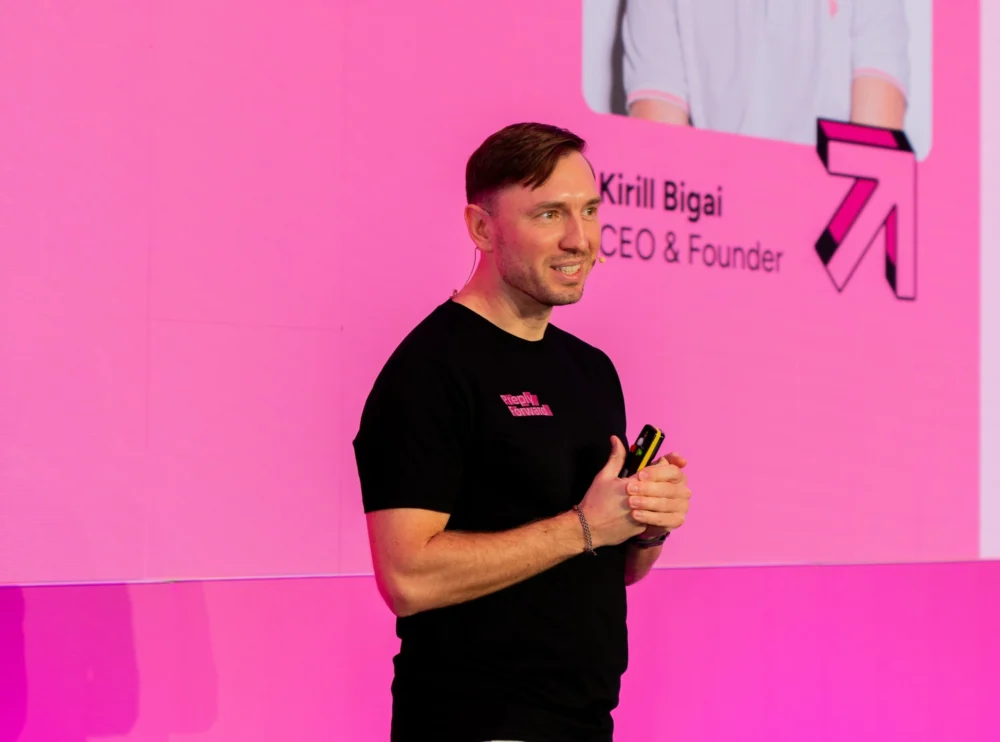
Preply’s core offering revolves around connecting students with a diverse pool of approximately 100,000 self-employed tutors globally for personalized, live instruction. This human-centric approach has historically served as its primary differentiator against the purely gamified, app-based models prevalent in the market. However, recognizing the imperative for efficiency and scalability in the modern digital economy, Preply has aggressively ramped up its AI capabilities. The CEO, Kirill Bigai, emphasizes a forward-looking vision where the future of effective learning is fundamentally "human-guided and amplified by AI."
This strategy places Preply at the forefront of the evolving EdTech debate concerning the appropriate deployment of AI. Competitors focused on digital self-study tools, such as Duolingo, have faced intense scrutiny and internal pushback after signaling intentions to become an "AI-first company," leading to concerns over the wholesale replacement of human contractors and curriculum developers. Preply has navigated this tightrope carefully, assuring stakeholders and its expansive tutor base that the technology serves as an enhancement layer.
The functional application of AI within the Preply ecosystem is multifaceted. On the administrative side, AI tools automate tedious tasks for tutors, such as generating detailed lesson summaries, developing tailored homework assignments, and providing instantaneous feedback loops. This reduces the non-instructional overhead for educators, allowing them to focus on high-value, personalized interactions. Furthermore, and perhaps more critical for scalability, AI algorithms are instrumental in optimizing the marketplace’s matching process. By analyzing learner preferences, proficiency levels, learning styles, and tutor expertise and performance data, the system significantly improves the probability of a successful, long-term student-tutor pairing, thereby increasing retention rates and maximizing the effective utilization of the tutor marketplace.
To maintain momentum in this hybrid model, Preply is aggressively expanding its AI talent acquisition efforts. While the company operates global offices in major tech hubs—including Barcelona, London, and New York—a crucial and strategically important center for this development remains Kyiv, Ukraine.
The decision to maintain and even bolster operations in Kyiv is a profound statement on both corporate commitment and organizational resilience, particularly given the ongoing Russian invasion. Although the company’s official headquarters are located in the U.S., reflecting its early establishment roots, Preply’s founders, including CEO Kirill Bigai, are Ukrainian. The commitment to supporting their home country extends far beyond philanthropic donations; it is woven into the fabric of their operational strategy.
Approximately 150 of Preply’s 750 global employees are based in the Kyiv office. Operating under the persistent threat of aerial strikes, regular disruptions, and infrastructural damage, particularly during harsh winter months marked by widespread power outages, presents monumental operational challenges. Bigai detailed the necessary investments made to ensure continuity and safety: the Kyiv office is equipped with multiple industrial-grade generators, ensuring uninterrupted electricity, consistent internet access, and warmth. This facility operates 24 hours a day, seven days a week, providing a secure, reliable hub for local team members. This commitment transforms the office from a simple workspace into a vital infrastructure resource for its employees.
The environment of constant adaptation engendered by the war has, paradoxically, cultivated a unique organizational strength. Bigai expressed profound admiration for his Ukrainian team, noting that navigating uncertainty and crisis fosters "significant resilience and creativity." This forced evolution in operational agility and rapid problem-solving has, according to the leadership, made Preply stronger, proving that excellence and growth are achievable even under extreme duress. This narrative of operational perseverance resonates deeply with investors looking for evidence of a robust, adaptable management structure capable of navigating unforeseen global risks.
Industry Implications: The EdTech Market Shift
Preply’s successful funding round and profitability underscore a broader trend in EdTech: the revalidation of the synchronous, human-led learning model, especially for complex skills like language acquisition. While early EdTech waves focused heavily on asynchronous content delivery and gamification (as seen with free-to-play apps), the limitations of these models for achieving fluency and practical conversational skills have become apparent. Language acquisition, beyond basic vocabulary, requires nuanced, real-time feedback, cultural context, and adaptive practice that only a human instructor can effectively provide.
Preply has mastered the marketplace structure, positioning itself as the critical nexus between the demand for highly personalized instruction and a massive, decentralized supply of tutors. This model inherently possesses strong unit economics, as the company operates on a lower overhead than traditional language schools, capturing a commission on high-value transactions—the live tutoring session.
The expert analysis suggests that the $1.2 billion valuation reflects investor confidence in the hybrid model’s ability to bridge the gap between affordability and efficacy. By using AI for efficient administration, scheduling, and preparatory work, Preply drives down the overall cost of delivering high-quality, personalized human instruction, thereby expanding the total addressable market far beyond the traditional, expensive private tutoring segment.
The key industry implication is that future success in EdTech may hinge on the quality of the AI-human collaboration, not the complete substitution of human roles. Preply’s model serves as a blueprint for sectors beyond language, demonstrating how generative AI can be integrated to standardize quality and maximize consistency across a large, heterogeneous network of independent contractors—a persistent challenge for all gig-economy marketplaces.
Capital Deployment and the Path to Public Markets
The substantial $150 million Series D capital will be primarily directed toward scaling the AI development team and expanding global marketing efforts to capture greater market share. However, the choice of lead investor, WestCap, offers profound insights into Preply’s long-term strategic trajectory.
Laurence Tosi, formerly the Chief Financial Officer of Airbnb during its pivotal growth and pre-IPO stages, brings specialized expertise in guiding high-growth marketplace models toward public offerings. While CEO Bigai maintains that Preply has "no timeline or concrete IPO plans yet," he explicitly acknowledged WestCap’s "phenomenal experience in taking companies public," indicating that public market readiness is a primary consideration moving forward.
WestCap’s investment signals confidence not only in Preply’s current financial metrics (EBITDA profitability) but also in the scalability and defensibility of its hybrid technology stack. The EdTech sector has seen mixed success in public markets; investors are increasingly scrutinizing profitability and sustainable growth over mere user volume. Preply’s combination of high-margin live tutoring and efficient AI automation positions it favorably to meet the rigorous financial metrics required for a successful IPO.
The Geopolitical Context: Ukrainian Tech Resilience
Preply’s achievement is not an isolated incident; it adds a significant chapter to the narrative of Ukrainian technological prowess and resilience. The company joins a growing, distinguished cohort of unicorns with deep Ukrainian roots, including the Grammarly writing assistant and various FinTech organizations. These companies, often founded by Ukrainian entrepreneurs and maintaining significant development centers in the country, demonstrate the deep pool of technical talent and the extraordinary ability of the local tech ecosystem to continue innovating and scaling globally despite overwhelming conflict.
The concept of "wartime innovation" speaks to how necessity drives efficiency. Companies operating in Ukraine have been forced to implement advanced business continuity protocols, ensuring data integrity, employee safety, and operational uptime in highly unstable environments. For Preply, this translates into a highly disciplined, crisis-tested organization. The leadership’s decision to remain fully committed to the Kyiv office reinforces national pride and provides critical economic stability for hundreds of families, transforming the company into a pillar of local support.
This commitment extends beyond mere employment. It fosters a corporate culture defined by mutual support and high levels of dedication. Bigai noted that the shared experience of enduring challenges and supporting one another has resulted in a team that is not only resilient but creatively driven. For a global company managing a decentralized workforce of 100,000 tutors, organizational cohesion and a strong central identity are invaluable assets.
Future Impact and Trends
Looking ahead, Preply is poised to shape several key trends within the language learning market.
First, the company is set to become a benchmark for AI integration in human services. Its success will validate the model where AI handles the logistics and consistency, freeing human experts for complex, personalized instruction. Expect other tutoring and consulting platforms across various disciplines (from coding to executive coaching) to adopt similar hybrid architectures.
Second, the focus on AI matching capabilities suggests a future where personalization extends far beyond simple level assessment. As the models become more sophisticated, they will predict instructor success based on subtle indicators of personality compatibility and teaching methodology, drastically reducing the high churn rate often associated with introductory lessons on competitor platforms.
Third, the company’s trajectory towards a potential IPO, backed by late-stage experts like WestCap, will provide a much-needed financial anchor for the EdTech sector. A successful public offering for a profitable, AI-enabled tutoring marketplace would likely unlock further venture capital investment into similar human-centric models globally, shifting capital away from purely content-driven apps.
In summary, Preply’s unicorn status is more than just a financial metric; it represents the maturation of the hybrid learning model, where technology elegantly supports, rather than replaces, the human element essential for complex cognitive skill acquisition. Moreover, it stands as a powerful testament to the enduring entrepreneurial spirit and operational determination of the Ukrainian tech ecosystem, proving that innovation and global growth can thrive even amidst the most formidable geopolitical headwinds. The blueprint for EdTech’s future is clearly drawn: resilient, profitable, and intelligently augmented by artificial intelligence.
