

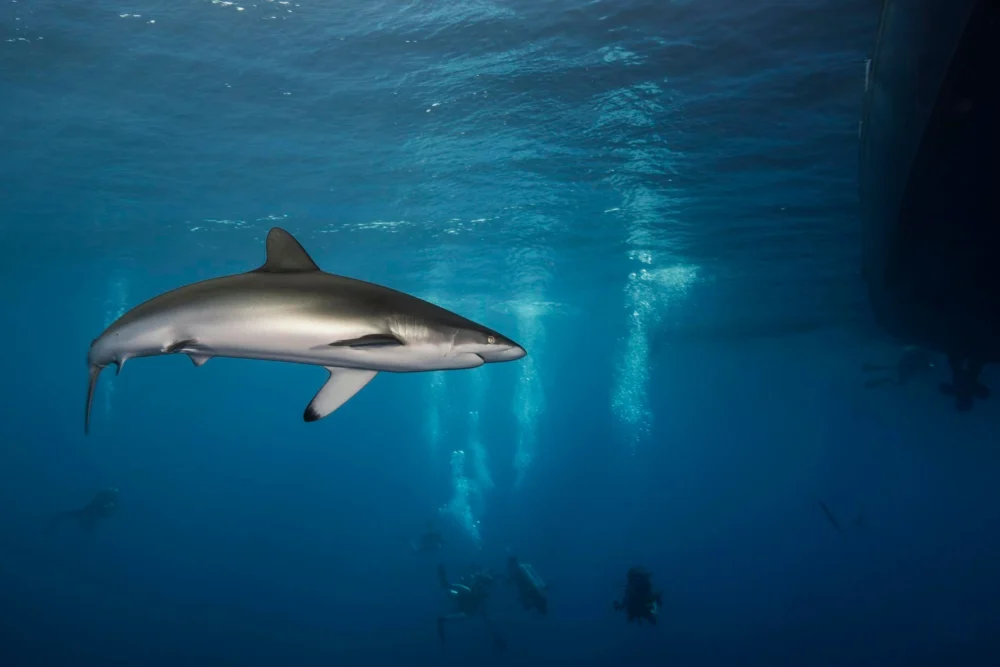
The silky shark (Carcharhinus falciformis) is a masterpiece of evolutionary engineering. Named for the unusually smooth, fine-grained texture of its dermal denticles, it is a creature defined by fluid motion and relentless transit. These apex predators are the silver ghosts of the open ocean, patrolling the pelagic zones where the deep blue meets the sunlit surface. However, the very mobility that has allowed the species to thrive for millennia is now becoming its greatest liability in an era of industrial fishing and fragmented conservation efforts. New data emerging from the Eastern Tropical Pacific (ETP) suggests that our primary weapon against biodiversity loss—the Marine Protected Area (MPA)—is fundamentally mismatched with the biological reality of the species it is intended to save.
For decades, the global conservation community has operated under a "fortress conservation" model: draw a line on a nautical chart, prohibit or restrict extraction within those boundaries, and wait for nature to heal. In coastal ecosystems, such as coral reefs or mangrove forests, this strategy has yielded spectacular results. When a habitat is stationary, a stationary sanctuary works. But the silky shark does not recognize human-drawn coordinates. A groundbreaking study, utilizing sophisticated satellite tracking technology, has revealed a sobering truth: even within the world’s most celebrated marine reserves, highly mobile species are spending nearly half their lives in a "no-man’s land" of industrial exploitation.
The Eastern Tropical Pacific is a theater of immense ecological and economic significance. Stretching from the shores of Central and South America out to the remote volcanic outposts of the Galápagos, Revillagigedo, and Cocos Islands, it is a region fueled by complex upwellings and nutrient-rich currents. These waters support some of the most productive tuna fisheries on the planet, which in turn sustain coastal economies and global food chains. Yet, this productivity attracts more than just fish; it attracts a massive industrial fleet. The byproduct of this intersection is a high rate of bycatch, where sharks, turtles, and marine mammals are inadvertently swept into the machinery of global commerce.
In response to declining populations, regional governments have been ambitious. Between 2010 and 2023, more than 50 MPAs were established in the ETP, covering a staggering 2.5 million square kilometers. High-level diplomatic commitments, such as those made at COP26 by Panama, Ecuador, Colombia, and Costa Rica, aimed to create interconnected biological corridors. On paper, it appeared to be a triumph of international cooperation. In practice, the silky shark’s movements suggest these "paper parks" may be leaking the very biodiversity they are meant to contain.
To understand the disconnect, researchers from a consortium of elite institutions—including the Guy Harvey Research Institute, the Save Our Seas Foundation Shark Research Centre, and the Charles Darwin Foundation—embarked on an unprecedented tracking mission. They equipped 40 adult silky sharks near the Darwin and Wolf Islands in the Galápagos Marine Reserve with fin-mounted satellite transmitters. For nearly two years, these tags beamed back the movements of a species that global populations have seen plummet by an estimated 47 to 54 percent over the last four decades.
The data was an indictment of the status quo. On average, the tracked sharks spent only 47 percent of their time within the confines of the Galápagos Marine Reserve. While the reserve is often cited as the "gold standard" of marine protection, it could not tether a species built for the high seas. Upon crossing the invisible threshold of the MPA, these sharks entered what researchers describe as a "gauntlet" of longline and purse-seine fishing vessels. The study logged one individual traveling an astonishing 28,000 kilometers in less than two years—a journey that took it far beyond the reach of any national jurisdiction or protective mandate.
This spatial mismatch is not merely a biological curiosity; it is a systemic failure of policy. Silky sharks are currently listed as Vulnerable on the IUCN Red List, primarily because they are among the most frequently caught sharks in pelagic fisheries and a staple of the international shark fin trade. Their preference for the "high seas"—the international waters that lie beyond the 200-nautical-mile Exclusive Economic Zones (EEZs) of coastal states—places them in a legal grey zone. In these regions, enforcement is sparse, and the drive for short-term economic gain often overrides long-term ecological stability.

Dr. Jeremy Vaudo, a lead author of the study and a researcher at the Guy Harvey Research Institute, noted that the sharks showed a distinct tendency to migrate west and northwest into unprotected waters. This suggests that while the current MPAs protect the "nodes" of shark activity—the islands where they congregate—they fail to protect the "edges" and the migratory paths. If a sanctuary only protects an animal for half of its life, it is not a sanctuary; it is merely a temporary reprieve.
The industry implications of these findings are profound. For the commercial fishing sector, sharks are often viewed as a nuisance—a source of gear damage and a "waste" of quota. However, the ecological collapse of shark populations has top-down effects that can destabilize the very fisheries the industry relies on. Without apex predators to regulate the mid-level consumers, the balance of the ocean’s food web begins to tilt, often leading to unpredictable and detrimental shifts in fish stocks.
The solution, according to experts like Dr. Pelayo Salinas de León of the Charles Darwin Foundation, requires a radical departure from traditional conservation. The era of static boxes must give way to the era of dynamic management. This involves integrating real-time satellite data into fishing regulations, allowing for "mobile MPAs" that shift based on the observed movements of migratory species or changing oceanographic conditions like El Niño cycles.
Furthermore, the study highlights a glaring lack of fundamental biological knowledge. We currently do not know where silky sharks mate or where they give birth in the ETP. Without identifying these critical life-stage nurseries, conservationists are essentially flying blind. Protecting a shark in the open ocean is of little use if its birth grounds are being decimated by coastal development or unregulated near-shore fishing.
As we look toward the future, the challenge of protecting the silky shark becomes a litmus test for the "30 by 30" initiative—the global goal to protect 30 percent of the world’s oceans by 2030. If we achieve this target by simply drawing more static boxes in areas of low economic interest, we will have failed. The success of future ocean governance will be measured not by the total square mileage under protection, but by the degree to which that protection aligns with the biological reality of the species at risk.
The technological tools to fix this are already within our grasp. AI-driven predictive modeling can now forecast where sharks are likely to be based on water temperature and chlorophyll levels. If this data were shared with fishing fleets in real-time, "avoidance zones" could be established seasonally, reducing bycatch without necessitating the permanent closure of vast swaths of the ocean. However, this requires a level of transparency and international cooperation that the industrial fishing sector has historically resisted.
Ultimately, the plight of the silky shark is a reminder that the ocean is a singular, fluid system. Our attempts to manage it through a patchwork of national regulations and isolated parks are an exercise in futility if they do not account for the wanderlust of the inhabitants. The silky shark is telling us that our borders are irrelevant. The question is no longer whether we can draw better lines on a map, but whether we are brave enough to follow the animals into the deep, unprotected blue and change how we interact with the entire ocean, not just the pieces we choose to save. If our conservation strategies remain anchored to the seafloor while the life they protect moves with the current, we are not just failing the silky shark; we are failing the very engine of our planet’s survival.
