

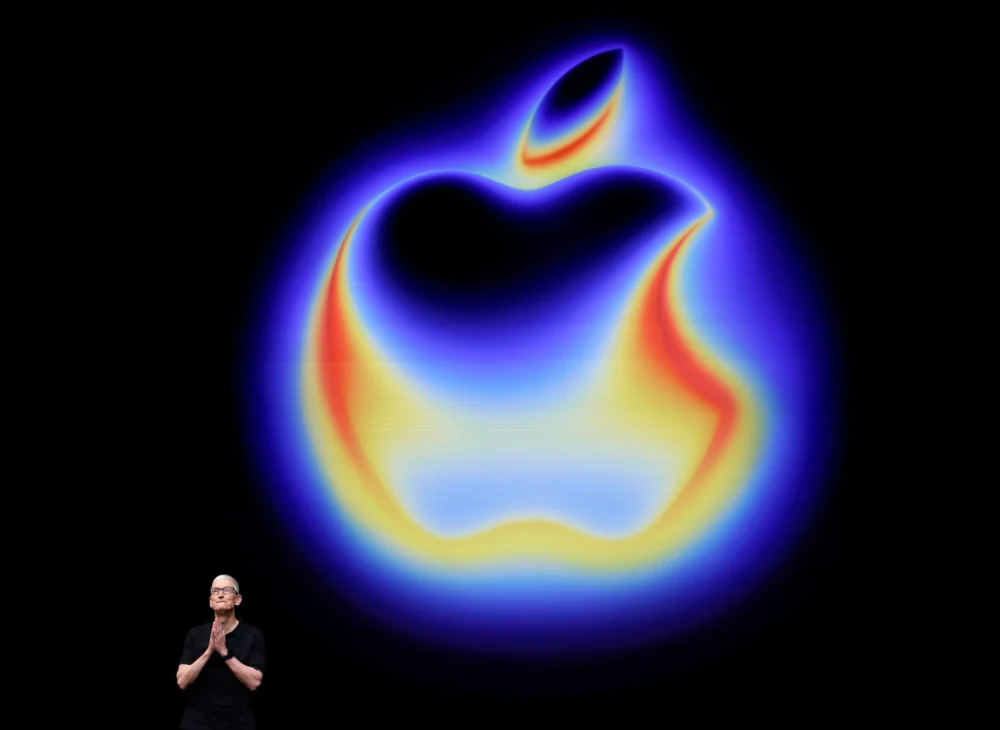
In a move that signals a seismic shift in the hierarchy of Silicon Valley, Apple has officially entered into a multi-year collaboration with Google to integrate the Gemini generative artificial intelligence models into its upcoming "Apple Intelligence" suite. This partnership, which brings together the world’s most successful consumer hardware company and the pioneer of modern internet search, marks a departure from Apple’s traditional "not invented here" philosophy. For decades, Apple has prided itself on vertical integration, controlling every aspect of the user experience from the silicon in its chips to the pixels on its displays. However, the sheer velocity of the generative AI revolution has forced a strategic pivot, leading Cupertino to look toward Mountain View to provide the cognitive engine for the next generation of Siri.
The joint statement released by the two tech giants was uncharacteristically direct. It confirmed that the next generation of Apple Foundation Models—the underlying software that allows devices to understand language, images, and user intent—will be built upon Google’s Gemini models and cloud infrastructure. This integration is poised to power a reimagined Siri, one that Apple claims will be more personalized, contextually aware, and capable of handling complex multi-step tasks that have long eluded the voice assistant. While Apple Intelligence will still rely on on-device processing and its new "Private Cloud Compute" for many tasks, the "heavy lifting" of large-scale linguistic reasoning will be outsourced to Google’s state-of-the-art architecture.
The Strategic Pivot: Buy vs. Build
Apple’s decision to adopt Gemini highlights a significant realization within the company’s executive leadership: the economics of building a world-class Large Language Model (LLM) from scratch are fundamentally different from developing an operating system or a processor. To date, Apple has utilized proprietary foundation models with approximately three billion parameters, employing a "mixture-of-experts" (MoE) design. While these models are efficient for on-device tasks like text autocorrect or basic image categorization, they lack the "emergent properties" and vast knowledge bases found in behemoths like Google’s Gemini or OpenAI’s GPT-4.
Industry analysts suggest that by choosing Gemini, Apple is effectively acknowledging that there is diminishing marginal utility in reinventing the wheel. The capital expenditure required to train a frontier-class model—running into the billions of dollars for compute power and data acquisition—is a hurdle that even a company with Apple’s cash reserves must weigh against the speed of market entry. By partnering with Google, Apple secures a "best-in-class" foundation immediately, allowing its internal engineers to focus on what Apple does best: the interface, the user experience, and the seamless integration across the iPhone, iPad, and Mac.
A Partnership Rooted in History
The collaboration may come as a surprise to those who view Apple and Google as bitter rivals in the smartphone operating system wars. However, the two companies have a long-standing, mutually beneficial financial relationship. For years, Google has paid Apple billions of dollars annually to remain the default search engine on Safari. This arrangement has provided Google with a direct pipeline to the world’s most affluent consumer base while padding Apple’s services revenue.
The AI deal is, in many ways, an evolution of this "coopetition." We have already seen this play out in the browser space. While Apple maintains Safari as its first-party browser, it has historically made it increasingly easy for users to migrate to or utilize Google Chrome on macOS and iOS. Despite the privacy-centric marketing of Safari, a significant portion of the Apple user base resorts to Chrome for its superior compatibility with web-based business tools and marketing services. The precedent for Apple "making room" for Google’s software inside its walled garden is well-established; the Siri-Gemini deal simply moves that integration from the application layer to the core of the operating system.
The OpenAI Shadow
One of the more intriguing subplots of this deal is the role of OpenAI. Rumors within the industry suggest that Apple held extensive talks with Sam Altman’s firm before finalizing the agreement with Google. Some reports indicate that OpenAI may have declined a primary role as Apple’s exclusive model provider, preferring to maintain its autonomy or focus on its deep-seated partnership with Microsoft.
If OpenAI indeed "jilted" Apple, it left the door wide open for Google to reclaim its status as the dominant force in the AI landscape. For Google, being the brain behind Siri is a massive distribution win. It ensures that Gemini is not just a standalone app or a feature within a browser, but a fundamental utility used by hundreds of millions of people daily for everything from scheduling appointments to summarizing emails. This level of integration is something that cannot be achieved through a simple app store download.

Technical Ramifications and the Privacy Challenge
The technical marriage of Apple’s hardware and Google’s AI models raises several questions regarding performance and privacy. Apple has been vocal about its "Private Cloud Compute" (PCC) initiative, which aims to extend the privacy and security of the iPhone into the cloud. The company asserts that even when tasks are sent to the cloud for processing, the data is encrypted and inaccessible to anyone—including Apple and, presumably, Google.
However, the integration of Gemini means that Apple’s "Foundation Models" will be syntactically and logically tied to Google’s technology. This creates a complex data pipeline. Apple must ensure that the "industry-leading privacy standards" it markets to its users are not compromised when a query is offloaded to Gemini. The challenge lies in maintaining the "Walled Garden" experience while the gates are open to Google’s servers. If successful, it could set a new standard for "Privacy-Preserving AI," where third-party intelligence is utilized without third-party data harvesting.
Industry Implications: The AI Arms Race
The Apple-Google alliance creates a formidable counterweight to the Microsoft-OpenAI partnership. For the past two years, Microsoft has enjoyed a "first-mover" advantage, integrating GPT-4 into its Azure cloud services and its Windows "Copilot" features. By aligning with Google, Apple has effectively neutralized that advantage, ensuring that its devices remain competitive in the eyes of consumers who are increasingly looking for "smart" features.
Furthermore, this deal may signal the beginning of the end for the "independent" AI model maker. If the world’s largest platform holders (Apple, Microsoft, Meta) are either building their own models or forming exclusive alliances with the top tier of AI researchers, the barrier to entry for new startups becomes nearly insurmountable. We are witnessing the consolidation of the AI industry into a few massive hubs of power, where distribution is as valuable as the underlying code.
The Future of the User Interface
Looking further ahead, the ramifications of this deal extend beyond the iPhone. Many experts in the field of human-computer interaction believe we are approaching a "Post-App" era. As Siri (powered by Gemini) becomes more capable, the need to interact with individual apps via a touchscreen may diminish. If a user can simply tell their device to "book a flight, find a hotel within five miles of the conference, and send the itinerary to my spouse," the AI handles the navigation of multiple apps in the background.
This shift toward "ambient computing" suggests that the smartphone, as we know it, may eventually be replaced by a more invisible interface—perhaps through wearables or voice-first devices. By securing a high-level AI partner now, Apple is preparing for a future where the hardware "brick" is less important than the intelligence residing within it. The iPhone becomes a conduit for a personalized digital assistant that knows the user’s habits, preferences, and private data, all while leveraging the massive computational power of Google’s cloud.
Conclusion
The partnership between Apple and Google for the future of Siri is more than just a software update; it is a realignment of the technological landscape. It reflects a world where the complexity of AI is so great that even the most powerful companies on Earth must collaborate to meet consumer expectations. While Apple maintains its brand identity and its focus on hardware and privacy, it is now leaning on Google’s scientific breakthroughs to remain relevant in the age of generative intelligence.
As this multi-year collaboration unfolds, the true test will be in the hands of the users. Will the new Siri finally live up to the promise made a decade ago? Or will the integration of a competitor’s AI create a fragmented experience that erodes Apple’s carefully cultivated ecosystem? One thing is certain: the race toward the "Singularity" or a truly intelligent personal assistant has entered a new, more aggressive phase. The "Intelligence Handshake" between Cupertino and Mountain View may well define the next decade of personal computing.
