

Enterprise Resource Planning (ERP) systems have always served as the central nervous system for complex organizations, their evolution mirroring the progression of commercial technology itself. From the rudimentary Material Requirements Planning (MRP) systems running on mainframes in the 1960s—which pulled critical inventory and production data out of physical file cabinets and into digital silos—to the Manufacturing Resource Planning (MRP II) iterations of the 1980s, the initial decades of ERP were defined by centralization and digitization. The subsequent era, characterized by client-server architectures throughout the 1990s, democratized access and coincided with the mainstream adoption of personal computing. This foundation set the stage for the 21st-century revolution, where Software-as-a-Service (SaaS) and cloud computing decoupled infrastructure from the application layer, offering unprecedented elasticity and accessibility, fundamentally changing the economics of enterprise software deployment.
Yet, despite these seismic shifts, the fundamental architectural paradigm of ERP has remained stubbornly monolithic. While modern cloud ERPs offer excellent functionality within their prescribed domains (Finance, HR, Supply Chain), they often perpetuate a dependency model where innovation is constrained by the vendor’s roadmap and integration remains a costly, brittle affair. This structural rigidity has created a significant technological debt, frustrating organizations that need rapid adaptation and specialized, best-of-breed capabilities.
We now stand at the precipice of the fourth major transformation of enterprise systems, driven by the synergistic convergence of two powerful technological forces: composable architecture and agentic artificial intelligence. This dual evolution is not merely an incremental update to existing software; it represents a profound philosophical shift in how organizations define, build, and operate their core business functions, signaling the definitive end of the monolithic ERP dependency model.
The Rise of Composable Architecture
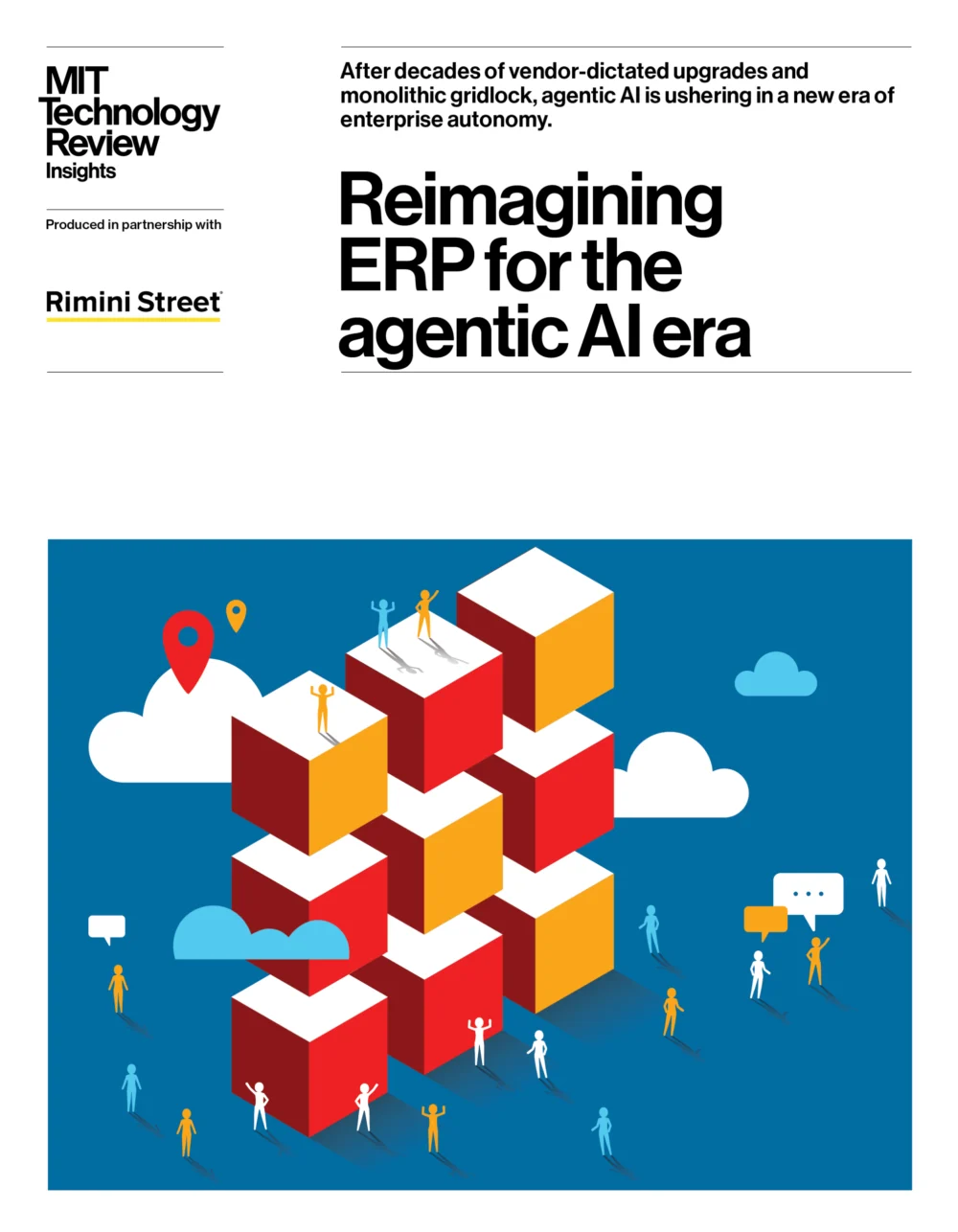
Composable ERP represents a fundamental decoupling of business capabilities. Instead of relying on a single, massive suite provided by one vendor, organizations can now assemble their critical functions—such as general ledger accounting, specific procurement logic, or complex manufacturing scheduling—from a diverse portfolio of interchangeable, purpose-built modules. This architectural approach relies heavily on modern microservices design and robust, standardized APIs, transforming the enterprise software ecosystem from a fixed menu into an à la carte experience.
The immediate benefit of composability is the mitigation of vendor gridlock. When a specific functional module becomes obsolete, fails to meet performance benchmarks, or is simply superseded by a superior third-party tool, organizations can swap out that single component without undertaking a costly, multi-year "rip and replace" project for the entire core system. This liberation enables unprecedented speed of iteration, allowing enterprises to rapidly adopt emerging technologies or pivot business models without being constrained by the slowest-moving vendor in their ecosystem. Furthermore, it allows highly specialized industries—such as pharmaceutical R&D or advanced aerospace manufacturing—to integrate niche, highly specialized software that traditional ERP vendors often fail to adequately support.
Agentic AI: The Intelligent Orchestrator
While composability provides the necessary structural flexibility, it is agentic AI that provides the intelligence and coordination required to make this decentralized architecture functional and efficient. Agentic AI, often leveraging large language models (LLMs) and deep reinforcement learning, differs significantly from the predictive or descriptive analytics previously integrated into ERP. These autonomous agents are designed not just to analyze data, but to perceive environments, set goals, plan complex actions, execute those plans across multiple systems, and adjust their strategies based on real-time feedback.

In a composable environment, the primary challenge is ensuring seamless data flow and coordinated action between modules that may originate from disparate vendors and were never designed to interact natively. Agentic AI acts as the intelligent middleware, interpreting high-level business objectives (e.g., "Reduce inventory holding costs by 15% without impacting fulfillment times") and breaking them down into granular, executable steps. An agent might autonomously interact with a third-party logistics planning module, a core financial reconciliation service, and a specialized demand forecasting application, translating and orchestrating the necessary data exchanges and transactional calls across all systems.
This capability eliminates the need for extensive, custom-coded integrations that characterized previous decades of enterprise integration. Instead, the intelligence layer handles the messy work of interoperability, enabling a true, functional collaboration across formerly disconnected data silos.
Expert Analysis: Quantifying the Performance Dividend
The integration of agentic capabilities into the newly flexible ERP landscape is poised to deliver significant and measurable performance gains that surpass the marginal improvements of past upgrades. Early empirical data underscores the transformative potential. Studies indicate that organizations that successfully transition to AI-driven ERP architectures can anticipate substantial operational improvements. These include gains of approximately 25% in overall workforce productivity and a boost in user satisfaction approaching 30%.
Perhaps more compelling are the efficiency metrics related to core processing. The automation and intelligent prioritization enabled by agents can lead to reductions in processing time—particularly in areas like month-end closing, procurement cycles, or supply chain re-optimization—of up to 45%. Crucially, the agents’ ability to analyze vast, disparate datasets and synthesize complex scenarios translates directly into improved decision accuracy, estimated to increase by as much as 60%. This accuracy improvement moves business intelligence from retrospective reporting to proactive, autonomous decision-making.
For chief financial officers (CFOs), this means not just faster reporting, but a system that can flag anomalous transactions, predict cash flow constraints, and automatically reallocate working capital based on predefined risk parameters, all without human intervention in the execution phase. For chief operating officers (COOs), this translates to supply chains that self-heal from minor disruptions, negotiating new supplier contracts or rerouting shipments dynamically when external events (like geopolitical shifts or severe weather) impact established routes.
Industry Implications and Sector-Specific Transformation
The impact of the agentic, composable ERP is not uniform; it will manifest differently across major sectors, providing tailored competitive advantages.
Manufacturing and Supply Chain: The traditional linear supply chain is giving way to complex, self-adjusting networks. Agentic ERP allows for hyper-dynamic production scheduling. An agent monitoring machine wear and tear (via IoT data) can autonomously communicate with the maintenance planning module and the resource scheduling module to shift production tasks to another facility or machine before a failure occurs, optimizing overall equipment effectiveness (OEE) while minimizing disruption. This moves beyond predictive maintenance into prescriptive, self-optimizing manufacturing processes.

Retail and E-commerce: In this sector, the core challenge is managing inventory volatility and delivering hyper-personalized customer experiences at scale. Agentic ERP facilitates the "headless ERP" concept, where the backend functions are completely decoupled from the customer-facing front end. Agents can monitor real-time social media sentiment, local weather patterns, and competitive pricing, feeding this data directly into the pricing engine and inventory allocation modules. If a local trend spikes demand for a certain product, agents can autonomously initiate emergency fulfillment orders, adjust local store inventory levels, and recalibrate dynamic pricing—a level of responsiveness impossible with rigid, centrally coded systems.
Financial Services: Compliance, risk management, and fraud detection are areas ripe for agentic disruption. Agents can be deployed to continuously monitor transactional data against evolving global regulatory frameworks (e.g., Basel III, GDPR). When a new regulation is issued, the agent updates its behavioral parameters and autonomously ensures all financial processes across the decentralized system comply, documenting the necessary audit trails automatically. This moves compliance from a burdensome, periodic human effort to a continuous, intelligent function.
Navigating the Implementation Hurdle and Future Trends
The shift to the autonomous enterprise, while offering monumental benefits, is not without significant hurdles. The primary challenge lies in data governance and security. In a monolithic system, data security is centralized and controlled by a single perimeter. In a composable, agent-driven environment, data is highly distributed, crossing numerous vendor boundaries and residing in various cloud environments. Ensuring consistent access control, maintaining data integrity, and establishing robust security protocols across a decentralized landscape requires sophisticated new governance models and highly skilled cybersecurity teams capable of managing API-level security and zero-trust architectures.
Furthermore, the operationalization of agentic systems requires a profound shift in organizational culture and skills. IT teams must evolve from system administrators and integration specialists into AI architects and policy designers. Their role shifts from managing code and infrastructure to defining the goals, constraints, and ethical guardrails for autonomous agents. This skills gap represents a critical bottleneck for rapid adoption.
Looking ahead, the long-term trend points toward the complete dissolution of ERP as a recognizable, boxed product. Instead, ERP will become an invisible, highly personalized nervous system for the organization. We will see the maturation of hyper-personalization in enterprise software, where the mix-and-match architecture is tailored not just to the industry, but to the specific operational profile of a single company, perhaps even adapting dynamically to individual user preferences and roles.
The concept of the "self-programming organization" will emerge, where the enterprise system learns and optimizes its own operational workflows based on agent feedback loops, autonomously deploying new microservices or retiring inefficient processes. This future state promises an organization capable of true organizational elasticity, where operational capacity scales and contracts not based on pre-defined cloud provisioning, but based on real-time, intelligent assessment of market demand and internal resource constraints.
The convergence of composability and agentic AI resolves the decades-old conflict between standardization and flexibility in enterprise software. It provides the freedom to innovate outside the restrictive boundaries of traditional vendor roadmaps and unlocks the capacity for true, rapid iteration across all critical business functions. This moment represents a once-in-a-generation opportunity for early adopters to shed the technical debt of the past and establish a dominant, agile competitive posture in the emerging intelligence economy. The era of the monolithic ERP is concluding; the era of the fluid, autonomous enterprise has begun.
