

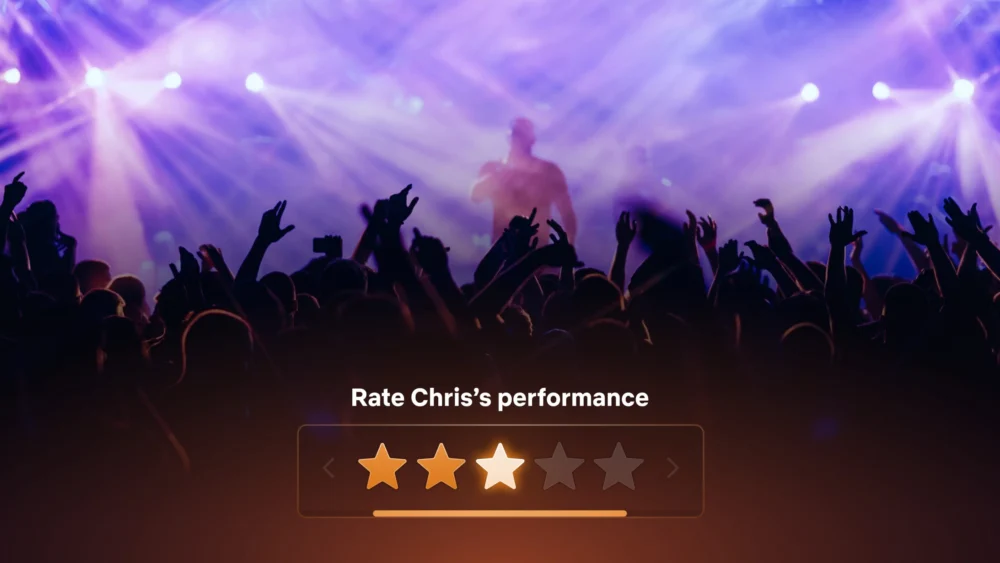
The global streaming leader, Netflix, has initiated a significant technical and content pivot with the worldwide deployment of a live, interactive voting feature, fundamentally redefining the relationship between its audience and its broadcast programming. This capability debuted concurrently with the premiere of the highly anticipated live-streamed talent competition, Star Search, on January 20, serving as the immediate proving ground for this critical infrastructure enhancement. This move signals Netflix’s aggressive commitment to synchronous content consumption and audience engagement, blending the technical sophistication of a modern streaming architecture with the immediate feedback loop long characteristic of traditional linear television.
Subscribers now possess the ability to influence the outcome of live events directly, employing two distinct interaction modalities: a classic multiple-choice selection mechanism, or a standardized five-star rating scale designed to gauge instantaneous audience sentiment toward a performance or segment. Crucially, the system is designed for maximum accessibility, supporting input via the primary viewing interface—the smart TV remote—as well as through the secondary, ubiquitous mobile Netflix application, encouraging a dual-screen engagement pattern common in modern media consumption habits.
The Engineering Challenge of Global Real-Time Tallying
While the user interface appears seamless, the underlying technological challenge of implementing a global, low-latency, real-time voting system within a streaming environment built primarily for asynchronous video-on-demand (VOD) is substantial. Netflix has confirmed that the voting mechanism operates globally, requiring the platform’s extensive backend infrastructure to tally millions of concurrent votes instantaneously. This necessitates sophisticated global content delivery network (CDN) management, highly distributed database architecture, and robust API endpoints capable of handling intense, sudden spikes in transactional data volume.
A key constraint designed to preserve the integrity and synchronous nature of the live broadcast is the strict time limit imposed on voting windows. Viewers are allotted a brief, predefined period to cast their selection. Once this window elapses, the data pipeline closes, and any subsequent votes are rendered invalid. This feature directly reinforces the concept of "appointment viewing," ensuring that only active participants watching the content as it happens can exert influence. This technical limitation effectively segregates the synchronous, interactive audience from those watching delayed or time-shifted replays, marking a clear departure from the company’s established VOD ethos.
The technical groundwork for this widespread rollout was laid through calculated testing phases. Initial experimentation with live audience feedback commenced in mid-2025, notably during Dinner Time Live with David Chang, which functioned as a beta environment for testing latency, scalability, and cross-device functionality. Confirmation of the feature’s imminent wide launch was provided by Netflix Chief Technology Officer, Elizabeth Stone, during a major industry conference in late 2025. Stone emphasized the strategic intent behind the integration, stating that it was an early example of enabling subscribers to "feel like they’re part of the story, influence the storyline, and feel immersed in that," thereby bridging the gap between passive viewing and active participation.
Strategic Context: Combatting Churn with Synchronicity
Netflix’s investment in live content and interactive tools is a strategic response to the evolving dynamics of the streaming wars and the persistent issue of subscriber churn. For years, the company dominated the market by offering unparalleled volume and convenience (binge-watching). However, as competitors like Disney+, Amazon Prime Video, and Max have matured, content libraries have become saturated, and the differentiation based solely on volume has diminished. The market has shifted its focus from what is available to how it is consumed and how sticky the experience is.
Traditional broadcast television, despite its structural limitations, historically excelled at creating cultural moments through synchronous, shared experiences—the Super Bowl, major awards shows, and, critically, live reality competitions where audience voting determines outcomes. These events foster immediate social conversation and create urgency, compelling viewers to tune in at a specific time.
Netflix is systematically attempting to recapture this vital sense of urgency. The introduction of live content—from high-profile stand-up specials like Everybody’s Live with John Mulaney to major sports rights acquisitions, including specialized NFL holiday broadcasts and high-profile WWE programming—is designed to anchor viewers to the platform at specific times. The integration of live voting elevates this strategy, turning passive viewership into a consequential, participatory act. This participation creates a higher switching cost; viewers are less likely to cancel a subscription if they are actively invested in the real-time outcomes of a long-running series or talent show.

Industry Implications and the New Interactive Layer
The widespread deployment of live interactive voting places Netflix in direct competition not only with established television networks that rely on audience polls (like NBC’s The Voice or ABC’s Dancing with the Stars) but also with emerging digital interactive platforms like Twitch and specialized gaming streams.
Unlike Twitch, which relies on text-based chat commands and third-party overlays for interaction, Netflix is integrating these features directly into the foundational viewing layer across all supported devices. This standardization makes the experience accessible to the mass market, not just tech-savvy gamers. This move also builds upon Netflix’s earlier, more experimental forays into interactive storytelling, such as the Black Mirror: Bandersnatch film. However, Bandersnatch was a static, asynchronous decision-tree narrative; the live voting feature represents a dramatic leap into genuine, synchronous audience influence on unfolding events.
Data Harvesting and Content Optimization:
From a business intelligence perspective, the data generated by this system is immensely valuable. Traditional VOD metrics primarily measure completion rates and time spent watching. Live voting, however, provides high-fidelity, synchronous engagement data.
- Granular Sentiment: Instead of relying on post-show social media sentiment (which is often noisy and unrepresentative), Netflix captures precise, moment-to-moment feedback. If 80% of the audience gives a contestant five stars in the first 30 seconds of a performance, this provides actionable data on audience preference, far exceeding the utility of a simple "thumbs up" or "thumbs down" rating applied days later.
- Monetization Potential: This synchronous interaction creates novel avenues for advertising and sponsorship. Imagine a scenario where a beverage company sponsors the live voting segment, offering micro-targeted ads based on the real-time demographics of the voters, or offering a quick poll sponsored by a specific brand immediately following a voting window. This is a paradigm shift from standard programmatic VOD advertising, moving closer to the highly valuable, real-time ad placement models of traditional live sports.
The Future of Narrative: Blurring Lines Between Gaming and Broadcast
The technology powering live voting is not an isolated development; it represents the convergence of several threads in Netflix’s ongoing diversification strategy. The company has already made significant strides in integrating dedicated gaming experiences playable directly on smart TVs, demonstrating the technical feasibility of complex input processing through TV interfaces. The live voting feature now merges the technical framework established for interactive TV gaming with the content strategy centered on live broadcasting.
Looking beyond reality television, the long-term impact of this interactive framework on scripted and unscripted content is profound.
- Live Scripted Interactivity: While immediate audience influence over major plot points in a high-budget drama might be too risky initially, the technology enables lighter forms of real-time input. Imagine a live, multi-episode mystery where the audience votes on which clue the protagonist should investigate next, or a live comedy special where viewers vote for the next city the comedian will tour.
- Hybrid Events: The platform can facilitate hybrid media events that transition seamlessly between pre-produced segments and live participatory moments. This structure is ideal for specialized sports commentary or analysis shows where viewer polls about strategy or referee decisions can be integrated instantly into the broadcast.
- Metaverse Connection: As the digital media landscape gravitates toward shared virtual spaces, the live voting system could serve as a crucial bridge. Imagine concurrent viewing parties in virtual reality where participation in the Netflix poll simultaneously translates into in-world consequences or visual cues for avatars. This enhances the feeling of a collective, shared experience, leveraging the platform’s massive global scale.
Technical and Regulatory Hurdles
Scaling this system globally introduces considerable complexity, especially concerning network latency and fairness. While Netflix has vast infrastructure, ensuring that a vote cast in Mumbai registers at the same moment as a vote cast in São Paulo is a complex challenge, particularly when the result must be tallied and reflected back on the screen within seconds. Furthermore, the integrity of the voting process itself is paramount, especially when the results determine real-world consequences (e.g., advancing a contestant). Robust anti-fraud and anti-bot mechanisms must be deployed to prevent external manipulation, a perennial problem that has plagued traditional broadcast voting for decades.
Furthermore, international regulatory standards surrounding audience participation and voting transparency vary widely. Netflix must navigate these disparate legal requirements to ensure the global application of the feature remains compliant and trustworthy, particularly in territories where media regulation is stringent.
In essence, by moving aggressively into the live, interactive sphere, Netflix is acknowledging that the future of premium streaming involves more than just a massive catalog; it requires building a platform capable of hosting dynamic, consequential, and synchronous cultural events. The live voting feature, debuting with Star Search, is not merely a gimmick; it is the launch of a foundational technology that underpins Netflix’s strategy to solidify its role as the dominant global media destination in an increasingly fragmented digital ecosystem, transforming passive viewers into active stakeholders in the content itself.
