

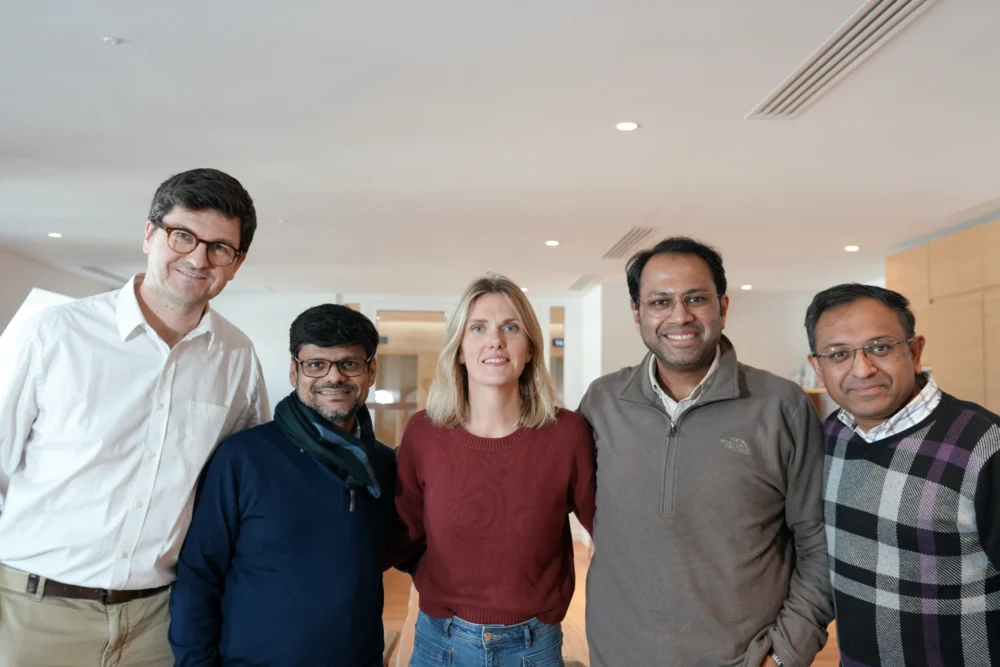
The global landscape of digital experience optimization (DXO) has been fundamentally reshaped by a strategic move from private equity firm Everstone Capital. Everstone has successfully engineered the merger of two prominent, geographically distinct rivals: India’s Wingify, known for its flagship conversion rate optimization (CRO) platform VWO, and France’s AB Tasty, a leading provider of experimentation and personalization software. This convergence is designed to create an integrated DXO powerhouse with annual revenues exceeding $100 million and a customer base surpassing 4,000 globally.
This platform-building strategy culminates just over a year after Singapore-headquartered Everstone acquired a controlling stake in the bootstrapped Indian startup Wingify for $200 million. The resulting combined entity is poised to challenge established industry giants like Optimizely and Adobe, leveraging a deep product suite and a newly consolidated global footprint.
The Strategic Imperative for Integration
The decision to merge Wingify and AB Tasty is not merely a financial consolidation; it represents a sharp strategic response to evolving enterprise demands in the marketing technology (MarTech) space. Historically, businesses have relied on disparate tools for different stages of the digital journey: one for A/B testing, another for personalization, and often a third for feature flagging or product analytics. As digital transformation matured, the complexity of integrating these siloed systems became a significant operational burden for growth, product, and marketing teams.
The newly merged platform aims to solve this fragmentation by offering a holistic, end-to-end solution for experimentation and personalization. Sparsh Gupta, co-founder of Wingify and the designated CEO of the merged entity, articulated that the tie-up was a “natural convergence” born out of a recognition that the market increasingly demands integrated, unified platforms. Both companies, while competitive, had operated in adjacent spheres—Wingify with a strong focus on core A/B testing and conversion, and AB Tasty specializing in advanced personalization and feature delivery. Combining these capabilities immediately broadens the value proposition, providing a unified toolset that can drive measurable improvements across the entire customer lifecycle, from initial site visit to sustained engagement.
Crucially, the consolidation provides immediate geographic scale. While Wingify had successfully cultivated a global customer base of over 3,000 brands, including Forbes, Walt Disney, and Cigna, the merger with Paris-based AB Tasty, which serves more than 1,000 brands like L’Oréal and Samsonite, significantly deepens the platform’s presence across Europe. The combined business estimates that roughly 90% of its annual revenue will originate from the mature markets of the U.S. and Europe, giving it a truly multinational reach with teams spanning North America, Latin America, Europe, and Asia-Pacific.
Everstone’s Platform Play and Financial Engineering
Private equity firms have increasingly shifted their focus from simple financial engineering to complex operational value creation, often through "buy-and-build" strategies. Everstone’s acquisition of Wingify in 2025 established the foundational platform, and the integration of AB Tasty marks the critical second phase.
As the largest institutional shareholder, Everstone is injecting substantial additional capital into the transaction. While specific financial terms remain confidential, this capital infusion serves several strategic purposes beyond mere acquisition cost. Gupta confirmed that a primary objective was to streamline or "clean up" AB Tasty’s existing capital table, ensuring a clear runway for future growth and simplifying the integration process under one corporate structure. The deal involves a cash component alongside equity rollover for AB Tasty’s leadership, ensuring key founders maintain vested ownership stakes in the newly formed enterprise.
Significantly, the strategy is explicitly centered on growth and value creation, rather than typical cost-cutting measures often associated with M&A. Both Wingify and AB Tasty were already operating profitably prior to the merger. Gupta underscored that there are no planned layoffs, reinforcing that the rationale is strictly focused on product expansion and market penetration. This approach mitigates the common post-merger risk of talent flight and organizational disruption, particularly critical in high-growth software sectors where expertise is paramount.
Leadership and Organizational Synergy
The success of any merger hinges on effective post-deal integration, particularly at the executive level. The new entity will draw its leadership from the strengths of both organizations, ensuring continuity and expertise across key functions.
Sparsh Gupta assumes the role of Chief Executive Officer. He will be supported by Wingify co-founder Ankit Jain, who steps into the crucial position of Chief Product and Technology Officer (CPTO), tasked with unifying the underlying technologies and driving the AI roadmap. The leadership representation from AB Tasty is equally robust: co-founder Rémi Aubert will take on the role of Chief Customer and Strategy Officer, focusing on customer success and long-term market direction, while co-founder Alix de Sagazan will serve as Chief Revenue Officer (CRO), leading global sales and market expansion efforts.
This carefully balanced executive team structure suggests a commitment to merging organizational cultures and operational best practices, rather than simply absorbing one company into the other. The combined workforce will number close to 800 employees globally, with 11 offices worldwide. Although the bulk of the engineering talent remains rooted in India, the organization will maintain a strong international profile, with approximately 350 staff based outside India. The merged entity will be headquartered in New Delhi.

Industry Implications and Competitive Dynamics
The formation of this new DXO platform arrives amid a feverish wave of consolidation within the broader MarTech and enterprise SaaS sectors. The motivation for this consolidation is clear: enterprises are desperate to reduce vendor sprawl and integrate AI capabilities seamlessly across their growth stacks.
The competition in the DXO space is intense, dominated by established players. Adobe, through its Experience Cloud, offers a sprawling, integrated suite, while Optimizely (itself a product of private equity-backed consolidation) remains a focused, high-end competitor in the experimentation domain. The newly combined Wingify/AB Tasty entity now possesses the scale, customer density, and financial backing required to operate credibly at this enterprise level.
Expert-Level Analysis: The AI Imperative
The core battleground for digital experience platforms moving forward is Artificial Intelligence. Simple A/B testing—the statistical comparison of two variants—is increasingly viewed as a legacy approach. Modern DXO demands predictive personalization, automated traffic allocation (multi-armed bandits), and AI-driven insights that suggest the next best action for marketers and product managers.
Sandeep Singh, Managing Director at Everstone Capital, noted that the combination of VWO (Wingify’s product) and AB Tasty creates “among the most comprehensive product offerings in the category.” This comprehension must be anchored in sophisticated machine learning.
The merged company has signaled a commitment to heavy investment in AI-led capabilities. This is critical for several reasons:
- Scaling Personalization: AI moves personalization beyond rule-based segments to dynamic, real-time adjustments based on user behavior and context.
- Optimizing Experimentation Velocity: AI can accelerate the testing process, allowing thousands of micro-experiments to run simultaneously and automatically directing traffic to winning variants faster than manual methods.
- Cross-Channel Coherence: As customers interact across web, mobile, and other digital touchpoints, the platform must use AI to ensure a consistent, optimized experience, preventing disjointed or conflicting messaging.
The success of the new entity will largely depend on how quickly and effectively it can unify the product roadmaps and deliver genuinely differentiated AI functionality that surpasses what customers could achieve by integrating separate best-of-breed tools themselves.
The Macro Trend of PE-Led SaaS M&A
This transaction underscores a powerful structural shift in the software industry: the crucial role of private equity in engineering scale. Recent market reports confirm that PE firms are aggressively pursuing software M&A to assemble scaled, AI-ready platforms. This strategy provides several advantages:
- De-Risking Investment: By merging two profitable, established entities, Everstone mitigates the risk inherent in single-asset ownership and creates a diversified revenue base (4,000+ customers).
- Accessing Global Markets: The merger instantly provides a mechanism for cross-selling existing products into new geographical strongholds—Wingify into AB Tasty’s European base, and vice versa.
- Creating a Viable Exit: A larger, more complex, and globally diversified platform is inherently more attractive for a future strategic buyer (like a major cloud vendor or a larger PE fund) or a public listing, commanding a significantly higher valuation multiple than the sum of its parts.
Data consistently shows private equity accounting for a large percentage of enterprise SaaS M&A deals, driven by the perceived necessity of platform consolidation to capture the next wave of technological value fueled by generative AI. Firms are actively seeking opportunities to build robust, sticky software ecosystems that are essential infrastructure for enterprise growth.
Future Outlook and Execution Challenges
While the strategic vision is clear and the financial backing is substantial, the path forward involves significant execution challenges. Unifying two complex software platforms, built by separate engineering teams across different continents, is technically demanding.
The new leadership, under Sparsh Gupta and Ankit Jain (CPTO), must navigate the delicate balance between rapid integration and maintaining the high standard of service required by 4,000 global enterprise customers. Gupta has indicated that the immediate goal is to keep the customer experience unchanged in the near term while gradually expanding the platform’s depth. This methodical approach is vital; any disruption in service could lead to customer attrition in a highly competitive market where switching costs, while high, are not insurmountable.
The long-term success of the merged entity hinges on its ability to leverage its newfound scale to innovate faster than its competitors. By centralizing product development and focusing the combined resources on AI-led personalization and feature delivery, the platform can aim to move beyond traditional optimization and become a mission-critical component of enterprise digital product management.
Everstone’s commitment extends beyond capital, including the establishment of an advisory board composed of industry veterans to guide the combined company’s trajectory. The creation of this integrated, $100 million-plus revenue DXO giant signals a definitive move away from niche tools toward comprehensive, scalable experimentation platforms, confirming that in the age of digital transformation, fragmentation is rapidly giving way to consolidation.
