

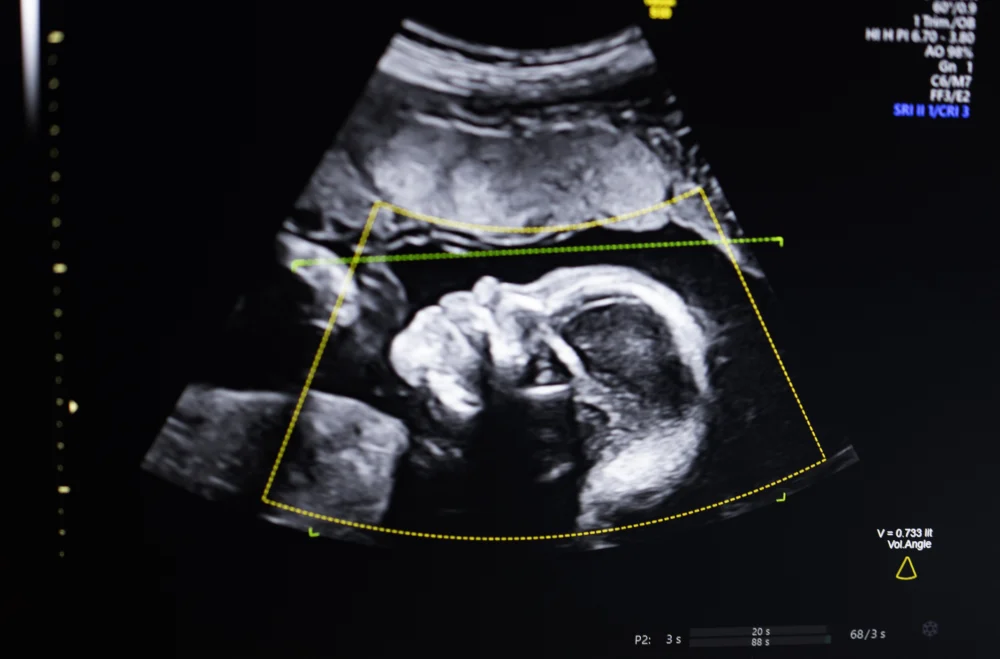
The digital transformation of diagnostic medicine achieved a significant milestone with the recent announcement that BioticsAI has secured clearance from the U.S. Food and Drug Administration (FDA) for its sophisticated artificial intelligence software designed to augment fetal ultrasound analysis. This regulatory approval validates a powerful computer vision platform intended to standardize and elevate the quality of prenatal imaging, a critical step in mitigating the persistent crisis surrounding maternal and fetal health outcomes in the United States.
BioticsAI’s clearance marks the transition of a high-profile startup—recognized for its technological prowess and potential impact, including a win at a major 2023 startup competition—from the proof-of-concept phase into commercial clinical deployment. The core technology leverages deep learning models to process standard two-dimensional ultrasound images, performing real-time quality assessments, ensuring anatomical completeness, and automating detailed reporting, thereby streamlining complex clinical workflows that are often bottlenecks in diagnostic care.
The genesis of BioticsAI is deeply rooted in the practical realities of obstetrics. CEO and founder Robhy Bustami, having grown up immersed in the world of maternal healthcare through his family—including his mother, aunt, and uncle, all practicing obstetricians—witnessed firsthand the systemic challenges and variability inherent in prenatal monitoring. This intimate knowledge of the clinical environment, combined with a background in computer science acquired at UC Irvine, provided the foundational insight necessary to target the most impactful pain points. In 2021, Bustami co-founded BioticsAI alongside Salman Khan, Chaskin Saroff, and Dr. Hisham Elgammal, uniting engineering expertise with specialized medical knowledge to tackle the core issue of diagnostic inconsistency.
The Critical Need for Diagnostic Standardization
The prenatal ultrasound examination is universally acknowledged as the cornerstone of contemporary pregnancy surveillance. It provides essential non-invasive visual data used to monitor fetal growth, assess placental health, and, most critically, screen for structural abnormalities. However, the efficacy of this diagnostic tool is inherently limited by several factors, primarily the dependence on operator skill and the often-low inherent quality of the images produced by standard equipment. As Bustami has noted, this variability in image quality often translates directly into the risk of misdiagnosis or delayed detection of critical fetal anomalies, which can have tragic consequences.
The stakes are particularly high in the U.S., which, paradoxically for a high-income nation, struggles with some of the worst maternal mortality and morbidity rates globally. These poor outcomes are not evenly distributed; profound racial and socioeconomic disparities mean that women of color, particularly Black women, face significantly elevated risks of maternal death and adverse fetal outcomes. This grim reality underscores the urgency for technological interventions that can introduce reliability and consistency where human and systemic factors currently fail.
BioticsAI’s platform is engineered to directly address this inconsistency. By utilizing computer vision AI, the software acts as an intelligent co-pilot, meticulously reviewing the scan in real-time. It verifies that all necessary anatomical structures have been captured—a crucial element of achieving a "complete" Level II ultrasound—and assesses the technical quality of the captured views. This level of algorithmic rigor ensures that regardless of whether the scan is performed in a specialized tertiary care center or a remote, resource-constrained clinic, a standardized benchmark of image acquisition and diagnostic completeness is met.
Navigating the Regulatory Landscape: A Blueprint for MedTech
The journey from a foundational AI model to FDA clearance is notoriously rigorous, often proving to be the graveyard of promising health technology startups. BioticsAI’s successful clearance, achieved in just under three years, offers a compelling case study in efficient regulatory strategy.
Bustami emphasized that the primary developmental hurdle was not the technical challenge of building the AI models themselves—which were trained on a massive and diverse dataset encompassing hundreds of thousands of ultrasounds—but rather ensuring their robust and reliable performance in heterogeneous, real-world clinical settings. The regulatory process demanded irrefutable evidence that the technology could perform consistently across varied patient demographics and equipment types.
This focus on real-world equity became a cornerstone of their validation strategy. Algorithmic bias, where AI models perform poorly on data representing minority groups because the training data lacked sufficient representation, is a pervasive threat in medical AI. BioticsAI tackled this head-on, validating the software’s performance specifically across diverse patient subgroups. “In an environment where disparities in healthcare outcomes are well documented, it was critical to demonstrate consistent performance across patient subgroups, not just in idealized cases,” Bustami stated. This commitment to equitable performance was essential not only for ethical reasons but also for meeting the increasingly stringent requirements of the FDA, which is keenly focused on validating clinical efficacy across all intended user populations.
The speed of the clearance process highlights an integrated operational philosophy. The BioticsAI team deliberately synchronized their engineering, product development, clinical validation, and regulatory pathway from the project’s inception. This parallel processing, rather than a sequential handoff from development to compliance, allowed for proactive adjustments based on anticipated regulatory feedback. This approach minimizes rework and accelerates the timeline for market entry, a critical advantage in the highly competitive and capital-intensive MedTech sector.
Industry Implications and Expert Analysis
The FDA clearance for BioticsAI signals a significant shift in the operational dynamics of diagnostic imaging, particularly within obstetrics. This technology moves beyond simple image recognition and enters the realm of diagnostic augmentation, fundamentally altering the roles of sonographers and specialized radiologists.
Impact on Workflow and Efficiency: Sonographers, who face immense pressure to capture dozens of precise fetal anatomical views during a typical scan, often struggle with time constraints and the variability of patient positioning. BioticsAI’s automated assessment capabilities provide instantaneous feedback, reducing the need for repeat scans and minimizing the cognitive load on the operator. This translates directly to increased throughput and reduced burnout in busy clinical settings. Furthermore, automated, complete reporting accelerates the time-to-diagnosis, allowing clinicians to focus more on patient interaction and complex case interpretation rather than clerical tasks.
Addressing the Sonographer Shortage: The healthcare system is grappling with a severe shortage of skilled sonographers and specialists in maternal-fetal medicine. AI tools like BioticsAI can effectively serve as an extension of specialized expertise, bringing high-quality diagnostic standardization to facilities that may not have immediate access to highly experienced specialists. By ensuring the data captured is of sufficient quality and completeness, the system facilitates more effective remote review and consultation (tele-ultrasound), democratizing access to high-level diagnostic interpretation.
The Competitive Landscape: BioticsAI is entering a rapidly expanding segment of the medical AI market. According to recent market analyses, the global market for AI in medical imaging is projected to experience robust compound annual growth rates, driven primarily by the need for diagnostic efficiency and accuracy. While competitors exist in general radiology AI, BioticsAI’s specific focus on the unique challenges of fetal ultrasound—a domain requiring extreme precision due to the transient nature of the imaging target and the profound impact of misdiagnosis—gives it a distinct competitive advantage. Their early regulatory success provides a strong barrier to entry for potential rivals.
Future Trajectory and Expansion
With FDA clearance secured, BioticsAI is now poised to execute its aggressive scaling strategy. The immediate focus is on integrating the AI platform across diverse health systems nationwide, targeting both large hospital networks and smaller community clinics where the need for diagnostic augmentation is often most acute.
The platform is designed for seamless integration into existing clinical infrastructure, minimizing disruption to established electronic health records (EHR) and Picture Archiving and Communication Systems (PACS). This ease of adoption is vital for overcoming institutional inertia often associated with introducing new medical technology.
Looking ahead, the company plans substantial feature expansion into broader areas of fetal medicine and reproductive health. Current efforts are concentrated on Level II anomaly screening, but the potential application of their computer vision models extends to:
- Longitudinal Monitoring: Developing AI tools that can track fetal growth curves and flag subtle deviations over multiple scans, moving from a snapshot assessment to continuous surveillance.
- Advanced Doppler Analysis: Utilizing AI to precisely measure blood flow velocities in critical fetal vessels, which is key for detecting conditions like fetal growth restriction and preeclampsia risk.
- Integration with 3D/4D Imaging: Extending the quality and completeness checks to three-dimensional ultrasound data, which provides deeper anatomical detail but requires more complex rendering and interpretation.
As Bustami affirms, the company is focused not just on distribution but on deepening the clinical impact of its technology. “We are positioned to scale both distribution and clinical impact while continuing to deepen the power of our technology,” he remarked. This signifies a commitment to iterative development, ensuring the platform evolves alongside advancements in AI and clinical guidelines.
Ultimately, the successful regulatory clearance of BioticsAI’s fetal ultrasound platform represents a major victory for the application of high-precision AI in a field desperately needing standardization and equity improvements. It sets a new benchmark for diagnostic rigor in prenatal care, promising a future where algorithmic precision acts as a universal safety layer, helping to reduce diagnostic error and, critically, improve outcomes for mothers and infants across all demographic groups. The deployment of this technology could mark a critical turning point in the nation’s efforts to address its long-standing maternal health crisis, moving the standard of care from highly variable manual interpretation toward a reliable, AI-augmented diagnostic workflow.
