

The ambitious, multi-year, multi-billion-dollar endeavor by Meta Platforms, Inc. to define and dominate the next iteration of the internet—the metaverse—has officially culminated in a significant organizational capitulation. Last week, the company initiated a substantial restructuring within its flagship Reality Labs (RL) division, reportedly shedding approximately 1,500 employees, representing a crucial 10% of the unit’s staff. This operational curtailment signals a profound strategic reversal for an organization that, just four years prior, had irrevocably linked its corporate identity and future valuation to the success of virtual reality (VR) and its immersive digital worlds.
The financial and human cost of this failed paradigm shift is staggering. Meta funneled an estimated $73 billion into Reality Labs, a sum that eclipses the GDP of several smaller nations, yet the division has never achieved profitability. For shareholders and industry analysts, this profligate spending on a persistently loss-making venture had become a persistent source of concern, ultimately necessitating the sharp deceleration of VR development in favor of more immediately viable technological frontiers, specifically generative artificial intelligence (AI) and subtle, ambient augmented reality (AR) hardware.

The Decimation of the Virtual Frontier
The recent cuts have been surgical, targeting the creative core of Meta’s VR ecosystem. Several in-house VR game development studios have been shut down or significantly downsized. Among the high-profile casualties are developers responsible for key VR titles, including Armature Studio, known for the critically acclaimed Resident Evil 4 VR; Twisted Pixel, creator of Marvel’s Deadpool VR; and Sanzaru Games, which developed Asgard’s Wrath. Even Camouflaj, the team behind the highly anticipated Batman: Arkham Shadow VR game, felt the heavy hand of the layoffs.
Furthermore, Meta’s commitment to its existing VR content portfolio is weakening. Supernatural, the high-value VR fitness application acquired for an estimated $400 million, will cease new content production, entering what is ominously termed "maintenance mode." Complementing the consumer product cuts, Meta also discontinued its enterprise VR initiative, Workrooms, signaling the end of the hope that virtual collaboration environments would swiftly replace conventional office setups.
This latest wave of cuts is the consequence of a longer, slow-motion budgetary collapse. Reports from late last year indicated that Meta was already planning to slash the Reality Labs budget by up to 30%. Concurrently, the company paused its initiative to license the Meta Horizon operating system—the foundational software for its Quest headsets—to third-party hardware manufacturers. This retreat from platform expansion demonstrates an admission that the market penetration required to sustain an open VR ecosystem has not materialized, nor is it imminent.

The Strategy Behind the Rebrand: Escaping the Facebook Legacy
To fully grasp the magnitude of this reversal, one must revisit the fundamental motivations behind the 2021 corporate rebranding from Facebook to Meta. The strategic decision was not merely about pursuing a nascent technology; it was an existential necessity driven by a tarnished public image and a desire to secure the company’s future independence.
The "Facebook" brand had become synonymous with systemic crises: the fallout from the Cambridge Analytica data privacy scandal; the damning testimonies of whistleblower Frances Haugen regarding internal knowledge of the platform’s adverse effects on youth mental health; ongoing Congressional scrutiny concerning digital surveillance; and its documented role in the global spread of misinformation and monopolistic business practices. The shift to Meta was a massive, expensive public relations effort designed to create distance from this toxic legacy and pivot toward a futuristic, less scrutinized platform.
Moreover, the metaverse was framed as a forward-looking strategy, anticipating that younger demographics, specifically Generation Z, were already prioritizing social interaction within immersive gaming environments like Fortnite and Roblox over traditional feed-based social media. Meta aimed to capture this shift by establishing Horizon Worlds as the definitive virtual social platform, thus circumventing the social inertia plaguing its core products.

The Flaws in the "Build in the Open" Philosophy
The core failure of Meta’s VR gambit was twofold: a lack of market maturity combined with a premature, aggressive platform monetization strategy. Meta adhered to a "build in the open" philosophy, rapidly deploying early-stage products to gather consumer feedback and iterate. While this model can accelerate development for established product categories, it failed spectacularly for the metaverse because there was insufficient organic consumer demand for the product in its early, flawed state.
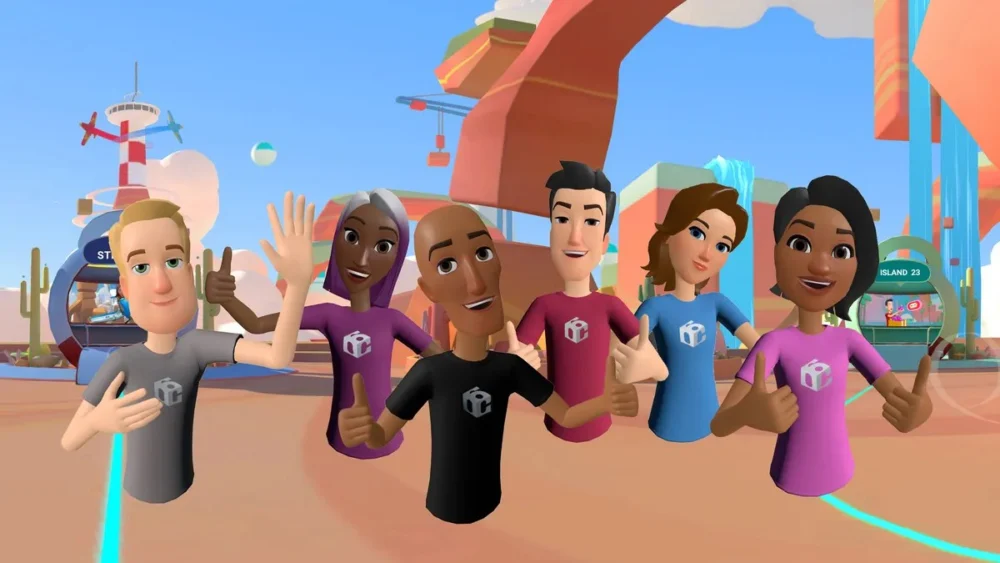
Early versions of Meta’s virtual environments were aesthetically unappealing and technically deficient. The widely mocked, rudimentary, and—famously—legless avatars embodied the lack of polish. The infamous viral meme featuring CEO Mark Zuckerberg’s blocky avatar underscored the vast chasm between the trillion-dollar futuristic promise and the cartoonish reality of the product being delivered. Analysts and investors, including McKinsey & Co. and Citi, had offered hyper-optimistic forecasts, predicting a multi-trillion-dollar metaverse economy by 2030. These heady projections, coupled with Meta’s aggressive internal investment, created an enormous bubble of expectation that the mediocre product simply could not sustain.
Compounding the product deficiencies was the abysmal user adoption rate relative to Meta’s scale. While Meta’s family of applications (Facebook, Instagram, WhatsApp, Messenger) boasts over 3.5 billion daily active users, the numbers for its metaverse properties were negligible. The Meta Horizon app has accrued downloads in the tens of millions, but the key metric of sustained engagement remained weak. Despite some growth in average sessions per daily active user in the U.S. for the Horizon app, these figures were utterly insufficient to justify the colossal investment required to bootstrap a new computing platform. Furthermore, the overall VR headset market, while dominated by Meta (holding roughly 77% of shipments), has shown consistent annual decline, underscoring a fundamental lack of broad consumer enthusiasm for head-mounted displays as a primary interface.

The Fatal Error: Mismanagement of the Developer Ecosystem
A critical strategic error, rooted in Mark Zuckerberg’s stated desire to escape the platform control of Apple and Google, directly undermined the metaverse’s potential. Zuckerberg viewed the metaverse as an opportunity to forge a new, self-governed app ecosystem, free from the 30% revenue cuts imposed by the mobile duopoly. He publicly criticized the "lack of choice and high fees" that he believed stifled innovation.
However, Meta’s execution was spectacularly counterproductive. Instead of offering developers competitive rates to entice them onto the fledgling platform, Meta proposed a punitive revenue structure. The company announced plans to take a staggering 47.5% cut on the sale of digital assets within Horizon Worlds—a 30% hardware platform fee combined with a 17.5% application fee for Horizon Worlds itself. This move, telegraphing a profound and premature focus on monetization, alienated the very creative community necessary to build out a compelling virtual world. Developers, realizing they would earn less on Meta’s untested platform than on established gaming consoles or mobile stores, had little incentive to commit resources to VR development.
Ethical Blind Spots and Trust and Safety Failures
Beyond financial and technical missteps, Meta repeated critical errors from its Facebook era by failing to prioritize user safety and governance in its rush to scale. The immersive nature of VR amplified existing online harms, leading to alarming reports of sexual harassment and, in extreme cases, virtual sexual assault and gang rape within Horizon Worlds.

Meta’s response was characteristically reactive. The "Personal Boundary" feature, which created a spatial buffer between avatars, was only introduced after widespread reports of harassment surfaced. Even then, the implementation was hesitant, eventually allowing users to disable the feature entirely when interacting with "friends," demonstrating a reluctance to impose necessary friction that could hinder growth metrics.
The company’s governance framework was underdeveloped from the start. Users facing abuse often found the reporting mechanism inadequate; if they removed their headset to disengage from the trauma, they frequently lost the necessary video and audio evidence to file a successful report. Policies defining abuse and outlining consequences were vague, promising only that Meta would "take action on users" without detailing the nature of such consequences. This systemic failure to proactively integrate robust trust and safety protocols—an ongoing ethical critique of Meta’s social media empire—proved particularly damaging in the intimate and psychologically immersive context of virtual reality. The lack of diversity in the development teams, especially the underrepresentation of women, likely contributed to a profound misunderstanding of how safety concerns might manifest in virtual environments.
Industry Implications and the Tectonic Shift to AI
The dramatic contraction of Reality Labs carries significant industry implications, signaling the cooling of investor enthusiasm for pure VR consumer platforms. Meta’s retreat leaves a vacuum, but not necessarily a complete void. The immersive technology landscape is rapidly differentiating. The expensive, isolating, fully-enclosed VR headset, Meta’s preferred form factor, is being sidelined by devices that blend reality with digital layers.

The rise of Apple’s competing vision—high-end mixed reality (MR) focused on productivity and sophisticated spatial computing—offers a fundamentally different approach. While Apple has yet to achieve mass market traction, its strategy avoids the "metaverse as a social network" model that Meta attempted to force.
Crucially, Meta itself has already shifted its focus to the next platform: Ambient AI. The success of its Ray-Ban Meta smart glasses serves as a powerful validation for this new direction. These AR glasses, offering discreet, socially acceptable features like hands-free recording, music streaming, and, most importantly, integrated Meta AI chat capabilities, have seen surging consumer interest. Recent reports suggest the glasses are outselling traditional Ray-Bans in some retail channels, prompting Meta to consider doubling production output.
This success demonstrates that consumers prefer augmented reality that enhances the real world subtly, rather than virtual reality that demands complete immersion and isolation. The forthcoming Ray-Ban Display glasses, which integrate a visual display for alerts and navigation, further solidify this shift toward lightweight, AI-powered hardware that integrates seamlessly into daily life.

The Future Trend: From Immersive Worlds to Ubiquitous Intelligence
Meta’s pivot reflects a wider industry consensus: the immediate future of computing lies not in dedicated virtual worlds but in ubiquitous, context-aware intelligence facilitated by generative AI and wearable technology. With competitors like OpenAI and Amazon exploring dedicated AI hardware devices, the capital and talent Meta previously dedicated to VR must now be deployed to compete in the Generative AI arms race.
Meta has already demonstrated significant growth in its AI application use, with Meta AI surpassing one billion monthly active users across its social properties. The company’s investment in large language models (LLMs) and its forecasts for generative AI revenue—projected to reach trillions of dollars by the next decade—highlight the new corporate obsession.
The metaverse, as conceived by Meta in 2021—a massive, singular virtual social space accessed via bulky headsets—is dead. The reality of the market dictated that the technology was too cumbersome, the product too unpolished, and the financial strategy too extractive to succeed. Meta’s $73 billion investment now serves as a cautionary tale: a testament to the risks of betting the entire company on a technology that lacked immediate consumer pull and failed to learn from the ethical and platform governance mistakes of the past. The strategic focus has moved from selling immersive worlds to selling embedded intelligence, confirming that the Quest headsets, while continuing to exist, are now merely a secondary platform in a company overwhelmingly dedicated to dominating the age of AI.
