

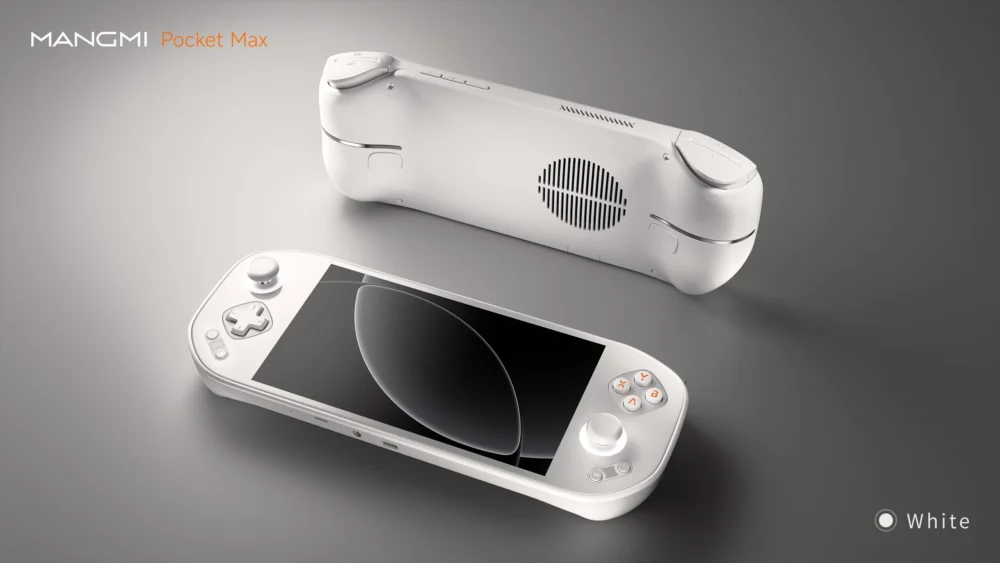
The landscape of portable gaming devices, particularly those dedicated to emulation and cloud streaming, has experienced an unprecedented Cambrian explosion in recent years. While established giants and numerous ambitious startups vie for market share, the emergence of a new contender always warrants close scrutiny. MANGMI, a company that established a foothold with the well-received budget-oriented AIR X, is now making its second major play with the fully detailed specifications of the Pocket Max. This device appears to position itself not as an outright flagship contender, but as a highly competitive, feature-rich mid-range offering, betting heavily on screen quality, endurance, and user-configurable hardware.
MANGMI’s strategy appears to involve leveraging established, proven silicon to maximize battery life and control costs, while investing heavily in user-facing components that directly impact the day-to-day gaming experience. The core processing unit selected is the Qualcomm Snapdragon 865 System-on-a-Chip (SoC). While this chipset powered flagship Android devices several years ago, its inclusion today places the Pocket Max squarely in the upper-midrange segment of the current handheld market. Paired with 8GB of LPDDR4X RAM and 128GB of UFS 3.1 storage, the configuration is robust enough to handle the vast majority of demanding Android games and complex emulation layers, including early PlayStation 3 and demanding Switch titles, albeit requiring careful tuning and expectation management compared to devices running the latest Snapdragon 8 Gen 3 variants.
The immediate standout feature, however, is the colossal power source underpinning the system: an 8000mAh battery. This capacity is highly significant, matching or even exceeding the cells found in some of the current premium Android handhelds, such as the AYN Odin 3 and the AYANEO Pocket S2 Pro. Given the relative thermal and power efficiency of the Snapdragon 865 compared to the latest, more power-hungry chips, this battery promises exceptional longevity. In the world of portable gaming, battery life remains a critical differentiator, often trumping raw processing power for users focused on extended retro emulation sessions or prolonged remote play sessions.
This immense endurance is slated to drive a genuinely striking visual interface: a 7-inch AMOLED panel capable of a 144Hz refresh rate, running at a Full High Definition (FHD) resolution. This combination is exceptionally compelling. AMOLED technology inherently provides perfect blacks, superior contrast ratios, and vibrant color saturation—qualities that greatly enhance the visual fidelity of both modern cloud streams and classic 2D sprite-based games. Furthermore, the 144Hz refresh rate, when coupled with a capable SoC, ensures buttery-smooth motion, a feature typically reserved for much pricier devices employing the latest silicon. The potential drawback, as the original report noted, is that powering a 7-inch, high-refresh-rate AMOLED panel requires substantial energy, which will be the ultimate test against the large 8000mAh cell. The success of the Pocket Max will hinge on MANGMI’s ability to optimize Android and its proprietary front-end software to manage this display’s power draw effectively.
Contextualizing the Mid-Range Strategy in a Saturated Market
The handheld emulation market has matured rapidly. Initially dominated by low-powered, small-screen devices focused purely on up to the N64/PS1 era, the segment quickly evolved under pressure from devices capable of running SteamOS-based Windows environments or high-end Android chips. MANGMI’s decision to target the mid-range with the Pocket Max is a calculated maneuver against two primary competitors: the high-end Android niche (like premium AYANEO or GPD models) and the aggressively priced lower-midrange (exemplified by Retroid).
By selecting the Snapdragon 865, MANGMI avoids the complexity and cost associated with integrating newer, more powerful chips that demand superior cooling solutions and higher price tags. This allows them to allocate budget resources elsewhere—namely, the display and the battery—areas where users often feel the most immediate impact. This "feature balancing" is crucial for a secondary market entrant. They cannot beat the high-end flagships on raw power, so they must offer superior user experience metrics in other domains.
The 7-inch form factor itself represents a sweet spot. It is large enough to provide an immersive experience for modern ports and cloud gaming but remains manageable for portability, contrasting with the bulkier 8-inch and 9-inch devices that begin to encroach on true laptop-sized territory.
Architectural Innovation: The Magnetic Module System
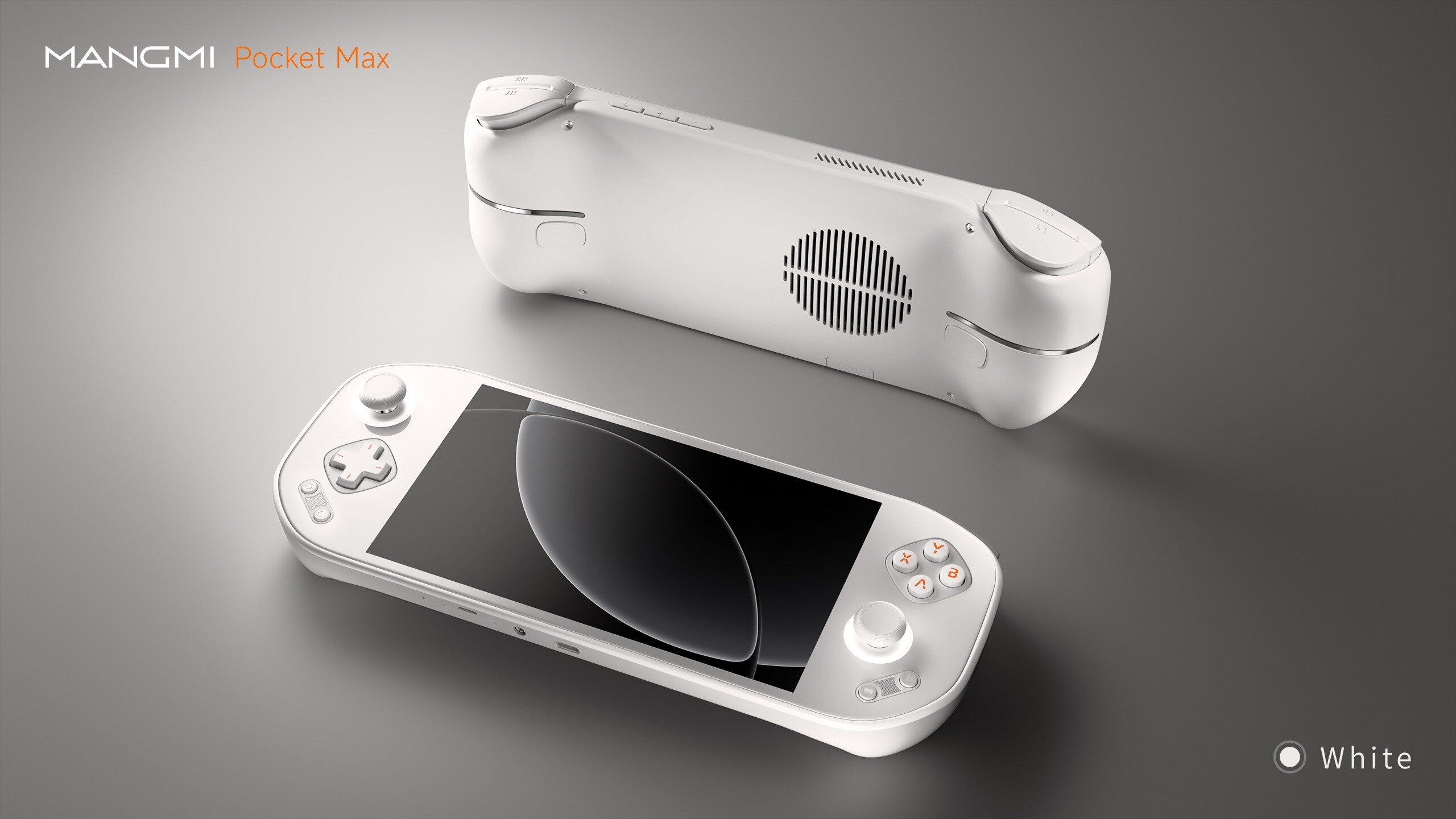
Beyond the core specifications, the Pocket Max introduces a design element that speaks directly to the evolving definition of customizable hardware: the "Magnetic Module" system. This feature allows users to physically detach and reorient key input components, specifically the directional pad (D-pad) and face buttons.
This concept is not entirely unprecedented; AYANEO has explored similar ideas with its "Magic Module," and GameSir/Hyperkin have hinted at it with the X5 Alteron controller design. However, integrating this into a monolithic handheld chassis signals a significant shift in industrial design philosophy for this category.
Expert Analysis of Modularity:
Modularity in peripherals is generally praised for its versatility. For a handheld designed to cater to a wide array of emulation needs, this is particularly valuable. A user primarily focused on fighting games might prefer an arcade-style 8-way gate D-pad or a specific button layout for complex inputs, while a user focused on classic JRPGs might prefer a traditional cross D-pad. Being able to swap these modules (presumably with different configurations, like a traditional D-pad versus four separate buttons, or perhaps different stick heights) without opening the device or relying solely on software remapping adds tangible value.
However, modularity introduces engineering challenges:
- Durability and Connection Integrity: The magnetic connection must be robust enough to withstand intense gaming sessions (rapid stick movements, aggressive button mashing) without disconnecting or introducing input lag or wobble.
- Software Integration: The operating system must instantly recognize the swapped module layout, requiring sophisticated firmware or driver support.
- Cost and Expansion: While the initial system may be included, MANGMI has an opportunity (or a risk) to monetize additional specialized modules in the future, potentially increasing the total cost of ownership for enthusiasts.
If executed flawlessly, this magnetic system could set a new standard for user-centric design in the Android handheld space, moving beyond fixed layouts common since the inception of the PSP and Nintendo DS.
The Crucial Variable: Pricing and Market Positioning
As the analysis concludes, the entire proposition of the MANGMI Pocket Max boils down to the unannounced pricing structure. The specifications paint a picture of a device built for high-quality visual consumption and marathon sessions, but the Snapdragon 865 anchors it to a specific performance ceiling.
The most direct comparable product mentioned is the Retroid Pocket 6, which features the significantly more powerful Snapdragon 8 Gen 2 and a slightly smaller, though still high-quality, 5.5-inch 120Hz AMOLED screen, starting at $220.
Market Comparison Implications:
For the Pocket Max to succeed, MANGMI must price aggressively below the $220 mark, likely targeting the sub-$200 segment.
- If priced at $199 or lower: The combination of the massive 8000mAh battery and the superior 7-inch AMOLED display could easily outweigh the performance deficit against the 8 Gen 2 in the Pocket 6 for users prioritizing screen real estate and battery endurance over absolute emulation capability (e.g., running PS2/GameCube titles perfectly). It becomes the premier choice for media consumption and lighter emulation.
- If priced above $220: The Pocket Max struggles significantly. Consumers paying a premium will logically opt for the newer architecture of the competition, which offers better future-proofing for demanding emulation tasks.
The success of the initial AIR X suggests MANGMI understands budget constraints, making a sub-$200 launch plausible. This pricing strategy would position the Pocket Max as a "visual fidelity and endurance champion" within the sub-$200 category, rather than a "raw power contender."
Industry Implications and Future Trends
The introduction of the Pocket Max highlights several burgeoning trends in the portable PC/handheld gaming ecosystem:
1. The AMOLED Renaissance: For years, manufacturers prioritized LCD panels due to cost and response time concerns. The current generation shows a decisive pivot toward AMOLED across all tiers, driven by decreasing panel costs and consumer demand for HDR-capable, high-contrast visuals, especially for streamed content (like Xbox Game Pass Ultimate or NVIDIA GeForce NOW). MANGMI’s inclusion of a 7-inch 144Hz AMOLED panel solidifies this as the expected baseline for any serious mid-to-high-end contender.
2. The Return of the "Big Battery" Standard: Earlier Android handhelds often settled for 5000mAh or less, leading to frustratingly short sessions. The industry is now standardizing around 7000mAh to 8000mAh cells, recognizing that users are demanding multi-hour performance under heavy load. MANGMI is correctly adhering to this new endurance expectation.
3. Customization as a Core Feature: The magnetic modularity points toward a future where hardware is expected to adapt to user preference rather than the user adapting to fixed hardware. If MANGMI can successfully market and support this system, it could force competitors to invest in similar user-swappable input solutions, shifting focus from incremental SoC upgrades to ergonomic and functional customization. This democratizes the "Pro" controller concept into the handheld form factor.
4. The Snapdragon 865 as a "Goldilocks" Chip: For manufacturers targeting the $150-$250 bracket, older flagship chips like the 865, 888, or 7+ Gen 1 are becoming strategic choices. They offer performance far exceeding legacy emulation needs, possess strong developer support within the Android ecosystem, and critically, are far easier to cool and manage thermally than cutting-edge 4nm or 3nm process chips. This allows companies to focus R&D budgets on the physical chassis, display, and battery integration.
The MANGMI Pocket Max is shaping up to be a device defined by strategic compromises that favor tangible user experience gains. It trades the bleeding edge of processing power for market-leading battery life and a superb visual display, wrapped in an innovative, customizable shell. The final verdict on its success, however, awaits the definitive MSRP announcement in the coming weeks, which will determine if these impressive specifications translate into genuine market disruption. The industry is watching closely to see if MANGMI can translate the promise of its AIR X into a dominant mid-range proposition with the Pocket Max.
